
BuddhistCatholicContemplativeEvangelicalGeneral ChristianHinduJewishLatter-day SaintMuslimNew VisionsProgressive Christian
Beliefs
- Buddhist
- Catholic
- Contemplative
- Evangelical
- General Christian
- Hindu
- Jewish
- Latter-day Saint
- More Voices
- Muslim
- New Visions
- Pagan
- Progressive Christian
Topics
- Religion News
- Food and Religion
- Sports and Religion
- Religious Art
- Religious Music and Entertainment
- Religious Events
- History and Religion
- Style and Religion
- Politics and Religion
- Women in Religion
- Recreation Outdoors and Religion
- Business Finance and Religion
- Careers Workplace and Religion
- Education and Religion
- Family Parenting and Religion
- Health Fitness and Religion
- Home and Religion
- Relationships and Religion
- Technology and Religion
- Travel and Religion
Columnists
- Buddhist Columnists
- Business Finance and Religion Columnists
- Careers Workplace and Religion Columnists
- Catholic Columnists
- Contemplative Columnists
- Education and Religion Columnists
- Evangelists Columnists
- Family Parenting and Religion Columnists
- General Christian Columnists
- Health Fitness and Religion Columnists
- Hindu Columnists
- History and Religion Columnists
- Home and Religion Columnists
- Jewish Columnists
- More Voices Columnists
- Latter Day Columnists
- Muslim Columnists
- New Visions Columnists
- Nonreligious Columnists
- Pagan Columnists
- Politics and Religion Columnists
- Progressive Columnists
- Recreation Outdoors and Religion Columnists
- Relationships and Religion Columnists
- Religion News Columnists
- Religious Art Columnists
- Religious Events Columnists
- Religious Music and Entertainment Columnists
- Sports and Religion Columnists
- Style and Religion Columnists
- Technology and Religion Columnists
- Travel and Religion Columnists
- Women in Religion Columnists
Resource Library
- 2026 Calendar
- Library of World Religions
- The 100 Most Holy Places on Earth
- Patheos Answers
- Podcasts
- Videos
- Faith Leaders Database
- Anglican Episcopalian
- Bahai
- Baptist
- Buddhism
- Christianity
- Confucianism
- Eastern Orthodoxy
- Hinduism
- Holiness and Pentecostal
- ISKCON
- Islam
- Judaism
- Lutheran
- Methodist
- The Church of Jesus Christ of Latter-day Saints
- New Age
- Paganism
- Presbytarian and Reformed
- Protestantism
- Religion Behind the Scenes
- Roman Catholic
- Scientology
- Shia Islam
- Sikhism
- Sufism
- Sunni Islam
- Taoism
- Zen
- See all religions
Research Tools
 Ad-Free & Subscriber Log-In Subscription Support
Ad-Free & Subscriber Log-In Subscription Support
Follow Patheos 

- Trending:
- Forgiveness
- |
- Marriage
- |
- Consciousness
- |
- Death Penalty
- |
- Election
- |
- Halloween
 Talk with the Preacher
- Home
- Progressive Christian
- Sin
Sin
Last updated on: October 14, 2015 at 8:00 pm by Amy Butler
Sin 2015-10-14T20:00:00-04:00 Amy Butler
Patheos Explore the world's faith through different perspectives on religion and spirituality! Patheos has the views of the prevalent religions and spiritualities of the world.
Speaking of Sin: Sin
Welcome to the first Sunday of the season of Lent. In the liturgical calendar of the church year, Lent is a period of 40 days leading up to the celebration of resurrection, Easter Sunday. It is characterized in churchy circles by frequent conversation about giving something up or taking on some spiritual practice, and worship involving more than your usual opportunity for confession (and no alleluias).
In general, Lent is a time of increased solemnity during which we are supposed to be thinking about our humanity, the temporal nature of our existence and the way we tend to mess things up in the very short time we’re here.
That subject tends to be just a bit uncomfortable for those of us who have left our pulpit pounding, fire and brimstone, rule following, black and white, get-it-right-or-you’re-going-to-hell faith behind us for a more sophisticated way of understanding relationship with God.
We feel dis-ease with terms like sin, iniquity, damnation, transgression, unrighteousness, judgment, repentance, penance, salvation, even…which makes Lent a bit of a tricky time for us.
Though we all—every single one of us—feel its effects, we don’t much like to speak of sin. We fear offending people, turning people off to church, or coming across like Bible-thumping weirdos. We’d like to gloss sin over a bit, just to avoid the discomfort, not just of looking closely at our own sin, but of having real, honest conversations with others about their sin…not to mention the corporate sin we share.
All of those things are basically true, to my experience anyway, but as theologian Barbara Brown Taylor posits in her book, Speaking of Sin, in watering down or surrendering the theological language of sin we have rendered ourselves speechless in the face of a reality common to all human living.
The fact is, we don’t know how to talk about sin with each other.
And that’s dangerous, Taylor says. Because if we don’t know how to speak of sin, there’s a very real chance that we won’t know how to speak…of grace. Speaking of sin, in fact, may be our “only hope,” she says.
So, during the season of Lent we’re going to be talking each week about a different word/concept related to sin, trying to get our heads around ideas that are pretty theologically deep, a bit more sophisticated and multi-layered than we may have thought, and totally outside our comfort zones.
(I can feel you planning your out of town weekend trips right this minute.)
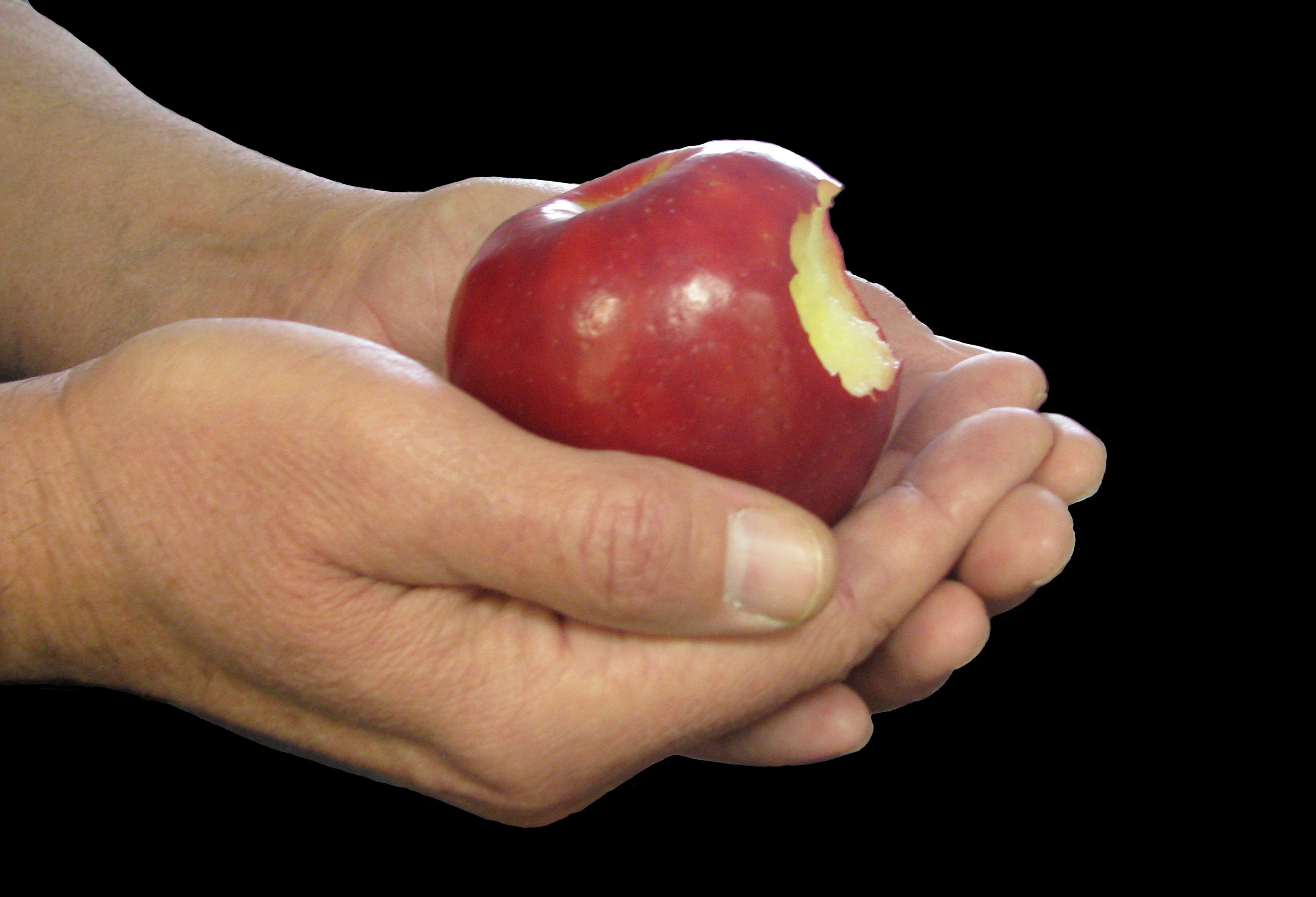 In these next few weeks we’ll try to reclaim the language of sin to give us some sense this Lent of this human reality so that we will not wallow in the abyss of our own vile failures…but instead begin to see a way forward, to learn again the language of grace.
Imagine that you are sick.
For over awhile now you’ve been feeling symptoms that are a bit worrisome. You’re dragging everyday, no energy at all. Your head is pounding—sometimes you think you might even be running a fever. Sneezing, scratchy throat, chills, nauseous. You’ve tried to ignore these symptoms, but they’re getting harder to ignore; you’re barely making it through the day and you get desperate enough to make an appointment with the doctor.
After a full exam, intense questions about symptoms, checking your throat, your ears, your chest, taking blood, even hitting your knee with that little rubber hammer thing, the doctor comes back into the exam room to tell you her diagnosis. And she says: “Well, it looks pretty bad. Your respiratory tract proteases have cleaved viral haemagglutinin allowing an ongoing neuraminidase facilitated release of progeny virions.”
You can see your doctor speaking.
You believe she is speaking English.
You know you feel terrible.
You don’t understand.
And, not understanding her words, you cannot form any coherent thoughts about how you might begin to feel better.
Your stomach sinks; you knew it was fatal.
If you had been able to hear the diagnosis, however, in words that you actually understood, that is, had she said four words which mean exactly the same thing as what she’d actually said: “You have the flu,” you would have realized, finally, why you feel so terrible.
And you would have known before she even said it that the best way for you to proceed in an attempt to feel better probably involved something like: lots of fluids, rest, Tylenol, and someone to wait on you hand and foot.
We have to know the language of sin to begin understanding its realities; we have to find and reclaim the words in order to help us speak of our very real human situation. And so we begin this Lent speaking of the word “sin” itself.
We are not the first to undertake this. No, long before Jesus arrived on the scene, way before Augustine thought up the Doctrine of Original Sin, and thousands of years before Jonathan Edwards’ famous attempt at church marketing, his sermon “Sinners in the Hands of and Angry God,” since the beginning of the human experience, as a matter of fact, people were telling stories trying to understand and explain this human state of “fallenness.”
Our scripture lesson today, in fact, is the Judeo-Christian version of that story, and it’s pasted in to the second chapter of the book of Genesis, the second version of the creation story. (Did you know there are two?)
The first version, in chapter one, tells the story of a God who benevolently orders chaos from afar. It’s like God is a grandparent, sitting in a recliner, feet up, smiling and watching, over the years, a grandchild laughing, learning to crawl, taking first steps, learning to read, playing the piano…coming into his own. God watches and guides as the universe is brought into order, and then God sits back and says, “Wow, that’s good. That’s really, really good.”
But then, strangely, the text seems to reverse, go back to tell the story again because there were a few things it forgot to include.
In chapter two, the second version of the creation story, God is not sitting back exclaiming about all the wonderfulness of creation. Instead, God is in the middle of everything, getting his hands dirty by scooping clay and performing abdominal surgery as a form of matchmaking.
And that’s when the compiler of our creation myth thinks to include an explanation for that question we either like to avoid or, alternately, love to yell about (with signs and megaphones): sin.
This creative story involves Adam, and Eve (in an often disputed role), along with a snake and an apple. (Perhaps not how I would have narratively structured it, but extra points for creativity.) These chapters explain what similar stories from every human culture in the history of the world seek to explain: a human ability to choose and the human reality of making a poor choice, resulting in consequences. That is, sin.
No matter what we want to call it, whom we want to blame for its existence, or which story we tell to explain it, we can’t get away from sin. There are experiences we have and decisions we make that connect us to each other and to God, and there are experiences we have and decisions we make that alienate us from each other and from God. And this is the lens through which our faith offers us the words and ideas to begin to talk about sin.
And this way of talking about sin—separation—is not the way we’re used to talking about sin.
Since the Enlightenment especially, we humans have measured the world through codification and scientific method. Barbara Brown Taylor says we’ve come to understand sin using either a law metaphor or an illness metaphor.
When we view sin using a law metaphor we understand sin as breaking the rules. That is, there are certain rules in the world—good and bad, right and wrong—and you either successfully follow the rules, or your fail by breaking them. And when you break them, you get punished—there have been many creative extensions of this, including special punishments for certain sins.
We love the law metaphor for talking about sin because it allows us a very convenient tool for categorizing others and ourselves. There’s no mutual accountability in this view of sin; in fact, it pits us against each other. There are the rule breakers: sinful, and there are the rule followers: not sinful…and we’re pretty sure we know who is bad and who is good.
Another way we look at sin is using an illness metaphor, and this view of sin is likely more prevalent in more liberal strains of Christianity. In this view, sin is a sickness. And, that makes sense because sickness is, in fact, debilitating–not unlike sin. But here’s the thing. Everybody gets sick sometimes, and we generally get sick because of things that are out of our control. Nobody really chooses to get a disease, and they can’t be held responsible for the effects of that disease.
In other words, we might behave a certain way because of something that was done to us—in our childhoods, or in a traumatic experience. Our behavior may be sinful, but it’s not our fault, and—worse—we don’t have much choice in the matter.
This way of viewing sin is problematic because it doesn’t allow for any personal choice, freedom, responsibility or accountability.
Of course, hints of both of these metaphors can be found in our holy text. But there are three Hebrew words used throughout the Bible to convey a sense of sin, and they are not that simple. They mean: having good intentions but missing the mark; acting wrongly—intentionally breaking the commandments; and all-out rebellion, turning our backs on God.
And while all three of these in some variations contain law and illness metaphors, the sense they convey is more multi-layered and sophisticated than the more straightforward ways we tend to look at sin. They all convey some sense of separation from God, a state of being “out of sync” with the one who created us.
And so, that’s where we’ll start. Remember: there are experiences we have and decisions we make that connect us to each other and to God, and there are experiences we have and decisions we make that alienate us from each other and from God.
Sin is separation from God, the sense that something is wrong, out of sync, and I need to change.
We humans…we want so desperately to speak definitively of the mystery that enshrouds our lives. Many wise thinkers have tried to boil the human experience down to something manageable, understandable, contained.
Some have even written elaborate stories about snakes and apples and gardens and a God who is alternately benevolent and exacting.
But the truth is that there’s no way to sufficiently explain this life we live, individually and corporately. Life is mystery; we know only that there is something inside us that longs for relationship…and there are so many things that keep us separated from God and from each other.
Today we begin to take back our theological language of those things, of sin.
We can talk about sin. We have to talk about sin.
For, remember, without the language of sin…we cannot find the language of grace. And, right about now—looking out over the season of Lent stretching ahead of me, I think I’m going to need a little grace.
How about you?
Previous Post

March 5, 2014
Ashes, Ashes
Browse Our Archives
Select a Category Answering the Call Being the Church Curating Wisdom Laughing Out Loud Living in Relationship Practicing Discipleship Reclaiming Baptist Speaking from the Pulpit Uncategorized
Select a Month July 2018 June 2018 May 2018 April 2018 March 2018 January 2018 December 2017 November 2017 October 2017 September 2017 June 2017 May 2017 April 2017 March 2017 February 2017 January 2017 December 2016 November 2016 October 2016 September 2016 August 2016 July 2016 June 2016 May 2016 April 2016 March 2016 February 2016 January 2016 December 2015 November 2015 October 2015 September 2015 August 2015 July 2015 June 2015 May 2015 April 2015 March 2015 February 2015 January 2015 December 2014 November 2014 October 2014 September 2014 August 2014 July 2014 June 2014 May 2014 April 2014 March 2014 February 2014 January 2014 December 2013 November 2013 October 2013 September 2013 August 2013 July 2013 June 2013 May 2013 April 2013 March 2013 February 2013 January 2013 December 2012 November 2012 October 2012 September 2012 August 2012 July 2012 June 2012 May 2012 April 2012 March 2012 February 2012 January 2012 December 2011 October 2011 September 2011 August 2011 July 2011 June 2011 May 2011 April 2011 March 2011 February 2011 January 2011 December 2010 November 2010 October 2010 September 2010 August 2010 July 2010 June 2010 May 2010 April 2010 March 2010 February 2010 January 2010 December 2009 November 2009 October 2009 September 2009 August 2009 July 2009 June 2009 May 2009 April 2009 March 2009 February 2009 January 2009 December 2008 November 2008 October 2008 September 2008 August 2008 July 2008 June 2008 May 2008 April 2008 March 2008 February 2008 January 2008 December 2007 November 2007 October 2007 September 2007 August 2007 July 2007 June 2007 May 2007 April 2007 March 2007 February 2007 January 2007 December 2006 November 2006 October 2006 September 2006 August 2006 July 2006 June 2006 May 2006 April 2006 March 2006 February 2006 January 2006 December 2005
Search for:
Recent Posts
- Sabbath as Radical Witness
- Learning Leadership: A Pilgrimage to Hawaii
- A Prayer for the Living of These Days
- Sabbath as Relationship
- Dressing Up Faith
Recent Comments
Archives
- July 2018
- June 2018
- May 2018
- April 2018
- March 2018
- January 2018
- December 2017
- November 2017
- October 2017
- September 2017
- June 2017
- May 2017
- April 2017
- March 2017
- February 2017
- January 2017
- December 2016
- November 2016
- October 2016
- September 2016
- August 2016
- July 2016
- June 2016
- May 2016
- April 2016
- March 2016
- February 2016
- January 2016
- December 2015
- November 2015
- October 2015
- September 2015
- August 2015
- July 2015
- June 2015
- May 2015
- April 2015
- March 2015
- February 2015
- January 2015
- December 2014
- November 2014
- October 2014
- September 2014
- August 2014
- July 2014
- June 2014
- May 2014
- April 2014
- March 2014
- February 2014
- January 2014
- December 2013
- November 2013
- October 2013
- September 2013
- August 2013
- July 2013
- June 2013
- May 2013
- April 2013
- March 2013
- February 2013
- January 2013
- December 2012
- November 2012
- October 2012
- September 2012
- August 2012
- July 2012
- June 2012
- May 2012
- April 2012
- March 2012
- February 2012
- January 2012
- December 2011
- October 2011
- September 2011
- August 2011
- July 2011
- June 2011
- May 2011
- April 2011
- March 2011
- February 2011
- January 2011
- December 2010
- November 2010
- October 2010
- September 2010
- August 2010
- July 2010
- June 2010
- May 2010
- April 2010
- March 2010
- February 2010
- January 2010
- December 2009
- November 2009
- October 2009
- September 2009
- August 2009
- July 2009
- June 2009
- May 2009
- April 2009
- March 2009
- February 2009
- January 2009
- December 2008
- November 2008
- October 2008
- September 2008
- August 2008
- July 2008
- June 2008
- May 2008
- April 2008
- March 2008
- February 2008
- January 2008
- December 2007
- November 2007
- October 2007
- September 2007
- August 2007
- July 2007
- June 2007
- May 2007
- April 2007
- March 2007
- February 2007
- January 2007
- December 2006
- November 2006
- October 2006
- September 2006
- August 2006
- July 2006
- June 2006
- May 2006
- April 2006
- March 2006
- February 2006
- January 2006
- December 2005
Categories
- Answering the Call
- Being the Church
- Curating Wisdom
- Laughing Out Loud
- Living in Relationship
- Practicing Discipleship
- Reclaiming Baptist
- Speaking from the Pulpit
- Uncategorized
Meta
Follow Us!
TAKE THE
Religious Wisdom Quiz
What did Jesus do for His disciples at the Last Supper?
Select your answer to see how you score.
Washed their feet Gave them money Fed them fish Sent them away
Related posts from Talk with the Preacher

A Prayer for the Living of These Days


Invitation, a Meditation for Maundy Thursday

Simple Gifts: When a Letter is Not Enough
TRENDING AT PATHEOS Progressive Christian

Why Christians Have a Sacred Duty to Vote:...
The Bible offers strong support for the sacred duty to vote. Here...

What Being a Modern-Day Apostle Means to Me
In my last column, I discussed the ins and outs of modern-day...

Did Ancient China Once Worship the God of...
Across human history, a common thread weaves through the origins of the...

Love Your Neighbor – Including Earth-Kin: Lev. 19,...
God’s command to love your neighbor means acting in an ethical and...

Lead a Church Study of “Jesus and Lao...
Guest writer Jack Thomas (The Irreverent Reverend) reflects on leading his church...

Principles for Understanding the Apostolic Ministry Today
Whenever people discover that my formal ministry title is "apostle," as in...
view all Progressive Christian blogs
Ad-Free & Subscriber Log-In Subscription Support
- About Us
- 2026 Calendar
- Videos
- Podcasts
- Library of World Religions
- Faith In Media Tracker
- Advertise With Us
- Write for Us
- Privacy Policy
- Terms of Service
- Do Not Sell My Data
- Contact Us
- Radiant Digital
- Manage Newsletter Subscriptions
- Unsubscribe From Notifications
- Sitemap
Copyright 2008-2026, Patheos. All rights reserved.
Subscription Support Ad-Free & Subscriber Log-In
Follow Patheos