
BuddhistCatholicContemplativeEvangelicalGeneral ChristianHinduJewishLatter-day SaintMuslimNew VisionsProgressive Christian
Beliefs
- Buddhist
- Catholic
- Contemplative
- Evangelical
- General Christian
- Hindu
- Jewish
- Latter-day Saint
- More Voices
- Muslim
- New Visions
- Pagan
- Progressive Christian
Topics
- Religion News
- Food and Religion
- Sports and Religion
- Religious Art
- Religious Music and Entertainment
- Religious Events
- History and Religion
- Style and Religion
- Politics and Religion
- Women in Religion
- Recreation Outdoors and Religion
- Business Finance and Religion
- Careers Workplace and Religion
- Education and Religion
- Family Parenting and Religion
- Health Fitness and Religion
- Home and Religion
- Relationships and Religion
- Technology and Religion
- Travel and Religion
Columnists
- Buddhist Columnists
- Business Finance and Religion Columnists
- Careers Workplace and Religion Columnists
- Catholic Columnists
- Contemplative Columnists
- Education and Religion Columnists
- Evangelists Columnists
- Family Parenting and Religion Columnists
- General Christian Columnists
- Health Fitness and Religion Columnists
- Hindu Columnists
- History and Religion Columnists
- Home and Religion Columnists
- Jewish Columnists
- More Voices Columnists
- Latter Day Columnists
- Muslim Columnists
- New Visions Columnists
- Nonreligious Columnists
- Pagan Columnists
- Politics and Religion Columnists
- Progressive Columnists
- Recreation Outdoors and Religion Columnists
- Relationships and Religion Columnists
- Religion News Columnists
- Religious Art Columnists
- Religious Events Columnists
- Religious Music and Entertainment Columnists
- Sports and Religion Columnists
- Style and Religion Columnists
- Technology and Religion Columnists
- Travel and Religion Columnists
- Women in Religion Columnists
Resource Library
- 2026 Calendar
- Library of World Religions
- The 100 Most Holy Places on Earth
- Patheos Answers
- Podcasts
- Videos
- Faith Leaders Database
- Anglican Episcopalian
- Bahai
- Baptist
- Buddhism
- Christianity
- Confucianism
- Eastern Orthodoxy
- Hinduism
- Holiness and Pentecostal
- ISKCON
- Islam
- Judaism
- Lutheran
- Methodist
- The Church of Jesus Christ of Latter-day Saints
- New Age
- Paganism
- Presbytarian and Reformed
- Protestantism
- Religion Behind the Scenes
- Roman Catholic
- Scientology
- Shia Islam
- Sikhism
- Sufism
- Sunni Islam
- Taoism
- Zen
- See all religions
Research Tools
 Ad-Free & Subscriber Log-In Subscription Support
Ad-Free & Subscriber Log-In Subscription Support
Follow Patheos 

- Trending:
- Forgiveness
- |
- Marriage
- |
- Consciousness
- |
- Death Penalty
- |
- Election
- |
- Halloween
 Talk with the Preacher
- Home
- Progressive Christian
- The Men of Judges: Ehud
The Men of Judges: Ehud
Last updated on: October 14, 2015 at 8:00 pm by Amy Butler
The Men of Judges: Ehud 2015-10-14T20:00:10-04:00 Amy Butler
Patheos Explore the world's faith through different perspectives on religion and spirituality! Patheos has the views of the prevalent religions and spiritualities of the world.
The Men of Judges: Ehud
Judges 3: 12-25
Becky Vaughn was telling me a story the other day about her grandfather, who apparently was a bit of a wild child. In her family, she told me, everybody loves to tell stories about him, some of which are pretty funny. A favorite, she said, was one about when he got himself a motorcycle, against his parents’ wishes. One day, coming home on his motorcycle, he couldn’t figure out how to make the bike slow down or stop. This resulted in him flying, full speed, into a bank of dense shrubbery that left him splayed, arms and legs extended, against the side of the hedge, while the motorcycle sped right through and kept going.
Gotta love a good family story. And we’ve got one today.
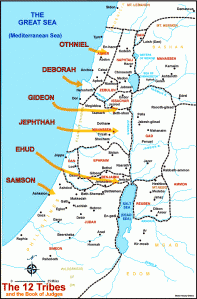 True to form, Ehud’s story begins with the predictable refrain used over and over by the writers of the book of Judges: “The Israelites again did what was evil in the sight of the Lord; and the Lord strengthened King Eglon of Moab against Israel, because they had done what was evil in the sight of the Lord…but when the Israelites cried out to the Lord, the Lord raised up for them a deliverer, Ehud, son of Gera, the Benjaminite.”
So, here we go again with the cycle of Judges: the people turn away from God; God gets mad and sends their enemies to conquer them; they say sorry, we’ll never do it again, please bail us out; and God raises up a deliverer, a judge.
So as the story begins we learn that the Israelites had been captives of the Moabites for about 14 years, and every year they were forced to bring a tribute to the Moabite king, Eglon. This particular year, their new judge Ehud had the task.
We don’t know all that much about Ehud except his Dad’s name was Gera, he was from the tribe of Benjamin, and…he was left handed. Like many things in this story, scholars are conflicted about what this meant. One camp would say that Ehud was disabled—either because he really was left handed and back then everybody thought that was weird, or because he really had some challenge with his right hand that forced him to have to use his left hand. Another camp would say that warriors from the tribe of Benjamin often trained for battle by binding their right arms to their side and practicing with their left hands to make them more adept for battle.
Whatever the reason, Ehud’s lefthandedness is an important part of the story, because the text tells us that he made a sword, a very sharp sword about 18 inches long, and hid it under his clothes on his right thigh. This was super sneaky, because being left handed, he could easily grab the sword to accomplish his plan: the assassination of King Eglon—about whom know nothing other than he was the Moabite King, he was really, really, really fat, and he apparently was not the sharpest tool in the shed…
…because when Ehud came in to the throne room to make his tribute on behalf of the Israelites, Ehud went right up to the king and said, “I have a secret to tell you.” Well, Eglon was so curious that he emptied his throne room—sent all his guards and attendants out into the hallway and closed the door.
I got to thinking about this part of the story this week and I remembered Allyson Robinson telling me about attending a luncheon or reception or something with Michelle Obama. So, picture this: Allyson goes through the receiving line to greet Mrs. Obama. When she gets there she says, “Hey Michelle, I have a secret to tell you!” And Mrs. Obama wants to hear Allyson’s secret so much that she clears everybody out—all the other guests, all her employees, all the Secret Service personnel—to hear Allyson’s secret.
Ridiculous, right? (No offense, Allyson. I’m sure the secret was awesome.)
So, even if you didn’t read the text you can guess what happens next. Ehud pulls out the sword and plunges it into the stomach of King Eglon. And here’s another funny/weird part of this story. Eglon is so fat that the sword gets lost. And then there are lots of other details here which can be summed up by just saying that the end result of this action was really, really gross.
So, having killed the king, Ehud then locks the doors to the throne room, sneaks out the back door or through the porch or out the window or something.
Meanwhile, all the king’s attendants are sitting around outside the throne room doors waiting, waiting, waiting for Ehud to finish telling his secret. The time goes on for a long while and they wonder among themselves: should we go in? After discussing at length they reach the conclusion that the king is using the bathroom (on the throne??) so they should give him a little more time and privacy.
Finally they get tired of waiting and find a way in, which is when they discover dead King Eglon.
Meanwhile, Ehud has snuck back to the camp of the Israelites and organized them for battle. They came down and attacked the Moabites with Ehud as their leader, and they won. And the land was at peace for 80 years.
During the school year I drive to my kids’ schools a lot. I mean, a lot. And I know this route by heart: down Carroll Avenue to University Drive to Viers Mill Road to Northwood Road. I can drive this route without even thinking about it. The other day I set out to run errands in the opposite direction and I got all the way to Viers Mill Road before I realized I wasn’t going where I meant to go; I was on autopilot to the kids’ schools.
I thought about that experience as I worked with this text this week. As you know, I preach a lot of sermons, and my approach in my preaching is to build a bridge from the ancient text to our personal experience, you know, to mine some devotional application, some insight into the character of God. Because I do this almost involuntarily by now, I had a really hard time with this text.
Why?
Because there is no personal devotional application here. There’s no revelation about the character of God, either. In fact, God doesn’t even appear at all, aside from the Judges formula at the beginning. This is not a suggestion that people who are lefthanded are holy. It’s not a spiritual commentary on whether it’s bad to be fat. It’s not a biblical sanction against unjust or oppressive authority. And it’s not even a morality tale, as Rachel pointed out last week.
It’s just a story.
It’s a family story that was told to remind everybody why the Israelites felt like they needed a king a little later in the story. And because of that, by distant relation, it’s our story, too. Like, a family story.
And I think it’s important to know those family stories, don’t you?
Previous Post

August 7, 2013
Guest Blogger Amy Sullivan: Mission Trips
Next Post
August 12, 2013 Ten Years: Some Pastoral Reflections
Browse Our Archives
Select a Category Answering the Call Being the Church Curating Wisdom Laughing Out Loud Living in Relationship Practicing Discipleship Reclaiming Baptist Speaking from the Pulpit Uncategorized
Select a Month July 2018 June 2018 May 2018 April 2018 March 2018 January 2018 December 2017 November 2017 October 2017 September 2017 June 2017 May 2017 April 2017 March 2017 February 2017 January 2017 December 2016 November 2016 October 2016 September 2016 August 2016 July 2016 June 2016 May 2016 April 2016 March 2016 February 2016 January 2016 December 2015 November 2015 October 2015 September 2015 August 2015 July 2015 June 2015 May 2015 April 2015 March 2015 February 2015 January 2015 December 2014 November 2014 October 2014 September 2014 August 2014 July 2014 June 2014 May 2014 April 2014 March 2014 February 2014 January 2014 December 2013 November 2013 October 2013 September 2013 August 2013 July 2013 June 2013 May 2013 April 2013 March 2013 February 2013 January 2013 December 2012 November 2012 October 2012 September 2012 August 2012 July 2012 June 2012 May 2012 April 2012 March 2012 February 2012 January 2012 December 2011 October 2011 September 2011 August 2011 July 2011 June 2011 May 2011 April 2011 March 2011 February 2011 January 2011 December 2010 November 2010 October 2010 September 2010 August 2010 July 2010 June 2010 May 2010 April 2010 March 2010 February 2010 January 2010 December 2009 November 2009 October 2009 September 2009 August 2009 July 2009 June 2009 May 2009 April 2009 March 2009 February 2009 January 2009 December 2008 November 2008 October 2008 September 2008 August 2008 July 2008 June 2008 May 2008 April 2008 March 2008 February 2008 January 2008 December 2007 November 2007 October 2007 September 2007 August 2007 July 2007 June 2007 May 2007 April 2007 March 2007 February 2007 January 2007 December 2006 November 2006 October 2006 September 2006 August 2006 July 2006 June 2006 May 2006 April 2006 March 2006 February 2006 January 2006 December 2005
Search for:
Recent Posts
- Sabbath as Radical Witness
- Learning Leadership: A Pilgrimage to Hawaii
- A Prayer for the Living of These Days
- Sabbath as Relationship
- Dressing Up Faith
Recent Comments
Archives
- July 2018
- June 2018
- May 2018
- April 2018
- March 2018
- January 2018
- December 2017
- November 2017
- October 2017
- September 2017
- June 2017
- May 2017
- April 2017
- March 2017
- February 2017
- January 2017
- December 2016
- November 2016
- October 2016
- September 2016
- August 2016
- July 2016
- June 2016
- May 2016
- April 2016
- March 2016
- February 2016
- January 2016
- December 2015
- November 2015
- October 2015
- September 2015
- August 2015
- July 2015
- June 2015
- May 2015
- April 2015
- March 2015
- February 2015
- January 2015
- December 2014
- November 2014
- October 2014
- September 2014
- August 2014
- July 2014
- June 2014
- May 2014
- April 2014
- March 2014
- February 2014
- January 2014
- December 2013
- November 2013
- October 2013
- September 2013
- August 2013
- July 2013
- June 2013
- May 2013
- April 2013
- March 2013
- February 2013
- January 2013
- December 2012
- November 2012
- October 2012
- September 2012
- August 2012
- July 2012
- June 2012
- May 2012
- April 2012
- March 2012
- February 2012
- January 2012
- December 2011
- October 2011
- September 2011
- August 2011
- July 2011
- June 2011
- May 2011
- April 2011
- March 2011
- February 2011
- January 2011
- December 2010
- November 2010
- October 2010
- September 2010
- August 2010
- July 2010
- June 2010
- May 2010
- April 2010
- March 2010
- February 2010
- January 2010
- December 2009
- November 2009
- October 2009
- September 2009
- August 2009
- July 2009
- June 2009
- May 2009
- April 2009
- March 2009
- February 2009
- January 2009
- December 2008
- November 2008
- October 2008
- September 2008
- August 2008
- July 2008
- June 2008
- May 2008
- April 2008
- March 2008
- February 2008
- January 2008
- December 2007
- November 2007
- October 2007
- September 2007
- August 2007
- July 2007
- June 2007
- May 2007
- April 2007
- March 2007
- February 2007
- January 2007
- December 2006
- November 2006
- October 2006
- September 2006
- August 2006
- July 2006
- June 2006
- May 2006
- April 2006
- March 2006
- February 2006
- January 2006
- December 2005
Categories
- Answering the Call
- Being the Church
- Curating Wisdom
- Laughing Out Loud
- Living in Relationship
- Practicing Discipleship
- Reclaiming Baptist
- Speaking from the Pulpit
- Uncategorized
Meta
Follow Us!
TAKE THE
Religious Wisdom Quiz
I went uninvited before the king, risking death, saying 'If I perish, I perish.' Who am I?
Select your answer to see how you score.
Deborah Ruth Vashti Esther
Related posts from Talk with the Preacher


Learning Leadership: A Pilgrimage to Hawaii

A Prayer for the Living of These Days

TRENDING AT PATHEOS Progressive Christian

Why Christians Have a Sacred Duty to Vote:...
The Bible offers strong support for the sacred duty to vote. Here...

What Being a Modern-Day Apostle Means to Me
In my last column, I discussed the ins and outs of modern-day...

Did Ancient China Once Worship the God of...
Across human history, a common thread weaves through the origins of the...

Love Your Neighbor – Including Earth-Kin: Lev. 19,...
God’s command to love your neighbor means acting in an ethical and...

Lead a Church Study of “Jesus and Lao...
Guest writer Jack Thomas (The Irreverent Reverend) reflects on leading his church...

Principles for Understanding the Apostolic Ministry Today
Whenever people discover that my formal ministry title is "apostle," as in...
view all Progressive Christian blogs
Ad-Free & Subscriber Log-In Subscription Support
- About Us
- 2026 Calendar
- Videos
- Podcasts
- Library of World Religions
- Faith In Media Tracker
- Advertise With Us
- Write for Us
- Privacy Policy
- Terms of Service
- Do Not Sell My Data
- Contact Us
- Radiant Digital
- Manage Newsletter Subscriptions
- Unsubscribe From Notifications
- Sitemap
Copyright 2008-2026, Patheos. All rights reserved.
Subscription Support Ad-Free & Subscriber Log-In
Follow Patheos