
BuddhistCatholicContemplativeEvangelicalGeneral ChristianHinduJewishLatter-day SaintMuslimNew VisionsProgressive Christian
Beliefs
- Buddhist
- Catholic
- Contemplative
- Evangelical
- General Christian
- Hindu
- Jewish
- Latter-day Saint
- More Voices
- Muslim
- New Visions
- Pagan
- Progressive Christian
Topics
- Religion News
- Food and Religion
- Sports and Religion
- Religious Art
- Religious Music and Entertainment
- Religious Events
- History and Religion
- Style and Religion
- Politics and Religion
- Women in Religion
- Recreation Outdoors and Religion
- Business Finance and Religion
- Careers Workplace and Religion
- Education and Religion
- Family Parenting and Religion
- Health Fitness and Religion
- Home and Religion
- Relationships and Religion
- Technology and Religion
- Travel and Religion
Columnists
- Buddhist Columnists
- Business Finance and Religion Columnists
- Careers Workplace and Religion Columnists
- Catholic Columnists
- Contemplative Columnists
- Education and Religion Columnists
- Evangelists Columnists
- Family Parenting and Religion Columnists
- General Christian Columnists
- Health Fitness and Religion Columnists
- Hindu Columnists
- History and Religion Columnists
- Home and Religion Columnists
- Jewish Columnists
- More Voices Columnists
- Latter Day Columnists
- Muslim Columnists
- New Visions Columnists
- Nonreligious Columnists
- Pagan Columnists
- Politics and Religion Columnists
- Progressive Columnists
- Recreation Outdoors and Religion Columnists
- Relationships and Religion Columnists
- Religion News Columnists
- Religious Art Columnists
- Religious Events Columnists
- Religious Music and Entertainment Columnists
- Sports and Religion Columnists
- Style and Religion Columnists
- Technology and Religion Columnists
- Travel and Religion Columnists
- Women in Religion Columnists
Resource Library
- 2026 Calendar
- Library of World Religions
- The 100 Most Holy Places on Earth
- Patheos Answers
- Podcasts
- Videos
- Faith Leaders Database
- Anglican Episcopalian
- Bahai
- Baptist
- Buddhism
- Christianity
- Confucianism
- Eastern Orthodoxy
- Hinduism
- Holiness and Pentecostal
- ISKCON
- Islam
- Judaism
- Lutheran
- Methodist
- The Church of Jesus Christ of Latter-day Saints
- New Age
- Paganism
- Presbytarian and Reformed
- Protestantism
- Religion Behind the Scenes
- Roman Catholic
- Scientology
- Shia Islam
- Sikhism
- Sufism
- Sunni Islam
- Taoism
- Zen
- See all religions
Research Tools
 Ad-Free & Subscriber Log-In Subscription Support
Ad-Free & Subscriber Log-In Subscription Support
Follow Patheos 

- Trending:
- Forgiveness
- |
- Marriage
- |
- Consciousness
- |
- Death Penalty
- |
- Election
- |
- Halloween
 Talk with the Preacher
- Home
- Progressive Christian
- We Are the Church: Blessing Our Commitments
We Are the Church: Blessing Our Commitments
Last updated on: October 14, 2015 at 8:30 pm by Amy Butler
We Are the Church: Blessing Our Commitments 2015-10-14T20:30:13-04:00 Amy Butler
Patheos Explore the world's faith through different perspectives on religion and spirituality! Patheos has the views of the prevalent religions and spiritualities of the world.
We Are the Church: Blessing Our Commitments
John 2:1-11
Did you ever notice how often Jesus and weddings go together in the Gospels? Jesus was forever talking about weddings and the Kingdom of God, comparing a wedding celebration to life in relationship with the Divine. Weddings were among his favorite sermon illustrations!
We preacher types also love to use the metaphor of weddings in our preaching, too. Everybody understands what a wedding is like; many of us have lived through our own: from the choosing of the flowers to the elaborate seating charts to the crazy relatives. The parallels we could draw with the Kingdom of God…well, the possibilities are endless. But, and you may already have noticed this yourself, even though Jesus and weddings go together often in the Gospel, it has become customary in our society to separate wedding services from the regular, Sunday morning worship of the church.
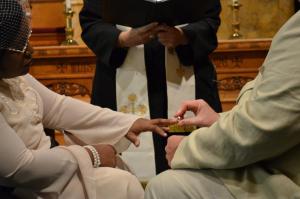
In fact, having a wedding in worship is so unusual there may be some of us here today who have never participated in such a wedding. Well, all of that’s going to end today, because this morning as part of our worship we will witness two members of our community exchange the vows of marriage…right in the middle of everything.
As we prepare to witness Djuna and Jeff’s wedding vows in a few moments, we have a very familiar text guiding our worship this morning: Jesus’ famous first miracle, the wedding at Cana where he turned water into wine. The questions that surround this passage are endless, including but not limited to: Why would Jesus choose this miracle as his first ever public miracle? Was it really wine Jesus manufactured…like, real, alcoholic wine? Whose wedding was this, anyway? Even with all the questions surrounding this miracle, it’s worth our time to take a little bit of a closer look.
 Jesus and his disciples, along with Jesus’ mother had been invited to a wedding in Cana. This area of town was a rough area largely populated by Gentiles, but there must have been a Jewish community there because it was in that community that this wedding took place. Weddings back then were huge community affairs, usually lasting seven full days and including all kinds of ceremony and celebration.
In this instance there was an urgent social faux pas that threatened to ruin the wedding: the bride and groom had run out of wine. As you might imagine, it was a great burden on a family’s resources to throw a big party for seven whole days, so it was the custom back then that friends would supply wine ahead of time, just to help make sure there was enough. If you ran out of wine it was an indication that you didn’t have enough friends. Embarrassing.
But that wasn’t Jesus’ problem, as he pointed out when his mother came to him asking for his help. Jesus was an invited guest; he was not responsible for dealing with the crisis of the wine. However, seeing the situation, Jesus instructed the stewards attending to the wedding to fill six stone water jars with water, which he turned into wine…wine so fine that the head steward was confused about why they’d saved the best for last. In that moment Jesus stepped away from being a sideline observer and right into the thick of everything that was going on.
And perhaps it is right there, right at that point, that we find the lesson for us today. Because nobody ever gets married in a vacuum. In fact, no commitment we ever make is made all by ourselves. We need each other to remind one another that living in relationship, living in community, is worth the risk and the considerable cost. Why? Because the God we worship is a God of relationship, and our relationships with each other reflect to the world around us all the possibility of relationship with God.
In an article in the New York Times this week, columnist Maggie Shipstead wrote: “Binding yourself to another person with the intention of fidelity and the hope of lasting happiness is a daredevil leap of faith…”. When I read this I thought, yes, Maggie, you are absolutely correct. Making promises like we make when we marry is serious business. And so, we must do it in the company of a community of people who will not stand on the sidelines of our lives, but who will instead jump right in and be there in all the trouble and pain and hope and possibility that life together holds.
So, really, who better to help us do this than our church family? On its best days, the church is a community in which all of us present have made a commitment to each other…a big commitment to invest and support and live in relationship in the context of a community where we live out the mandate of the Gospel in this world.
And, communities like this are few and far between.
Our church family should model for us the loving commitment of God, who engages over and over again in relationship with us, despite our failures, for the purpose of redeeming our lives and redeeming the world. When we marry, just like when we join the church, we make a public commitment, supported by those around us, to reflect God’s best intentions for our lives and for our world. We publicly say: we intend to live in life-giving relationship with each other, and as we do, we will point others toward God.
A friend recently told me about a visit he made to Paris a few months ago. Following the advice of a guidebook specializing in out-of-the-way bed and breakfasts, he ended up staying in a flat overlooking Saint Paul’s cathedral, very near the river. From the little balcony in his flat, my friend could sit and practically stare straight at one of the side walls of the massive cathedral, a Baroque style church built in 1642 and run since then by Jesuit monks.
My friend told me that he had been under the impression that churches in Europe were dead…dusty old mausoleums kept standing as historical monuments. But when he awoke every morning to the peals of church bells and took his coffee out to the balcony, he could see that that was not the case at St. Paul’s. People streamed in and out of the cathedral doors on every side of the building, all day long. There was a priest was conducting mass, there were children playing in the aisles while their parents lit candles and people sitting in silence and tourists taking pictures and the organ singing in the high stone arches and neighbors crossing the square through the church with their grocery bags full. It didn’t look like a dead mausoleum to my friend…in fact, it looked alive in fresh and unique ways, a place where the sacred and the mundane not only collided but knit themselves together to create something beautiful. The church.
The best day of cathedral watching came on Friday, when coffee in hand, my friend watched a bride and groom process in through the main doors of the cathedral, all the way down to the front rail, with their attendants following them. Supportive family members were there to watch them take their vows during the mass, but you know who else was there? You guessed it: a priest saying the wedding mass, parents pausing at the side altars, picking up their children and holding them high enough so they could catch a glimpse…people raising their eyes from their private prayers to pay attention to what was going on…tourists putting down their cameras for a few moments as they witnessed the ceremony…the organ quieting while the voice of the priest rose and fell…and neighbors crossing the square through the church stopping, shifting their grocery bags to the other hip and repeating the congregational responses in the mass. A whole community of people—the church—there—supporting the couple who were taking their vows.
That day at St. Paul’s was a living testimony to the truth that no commitment we make is ever truly private, that we need each other to be witnesses as we declare our intention, and that loving committed relationships are nurtured and fed by the blessing of community.
This is the holy honor of being the church together. We surround each other with our presence. We comfort each other in times of grief. We recognize and affirm faith in one another. We nurture gifts and possibilities in each other. And we gather together to put one more stitch in the beautiful tapestry that is the church when we pause for a few holy moments from the crazy pace of life to worship together as we witness and bless a deep and holy commitment.
We are the church. And as the church at worship we surround Djuna and Jeff and stand to sing them to the altar where they will make their vows to one another. Shall we stand and sing?
Previous Post

July 19, 2012
Decline Fatigue: Some Thoughts
Next Post
July 26, 2012 Southern Baptist No More
Browse Our Archives
Select a Category Answering the Call Being the Church Curating Wisdom Laughing Out Loud Living in Relationship Practicing Discipleship Reclaiming Baptist Speaking from the Pulpit Uncategorized
Select a Month July 2018 June 2018 May 2018 April 2018 March 2018 January 2018 December 2017 November 2017 October 2017 September 2017 June 2017 May 2017 April 2017 March 2017 February 2017 January 2017 December 2016 November 2016 October 2016 September 2016 August 2016 July 2016 June 2016 May 2016 April 2016 March 2016 February 2016 January 2016 December 2015 November 2015 October 2015 September 2015 August 2015 July 2015 June 2015 May 2015 April 2015 March 2015 February 2015 January 2015 December 2014 November 2014 October 2014 September 2014 August 2014 July 2014 June 2014 May 2014 April 2014 March 2014 February 2014 January 2014 December 2013 November 2013 October 2013 September 2013 August 2013 July 2013 June 2013 May 2013 April 2013 March 2013 February 2013 January 2013 December 2012 November 2012 October 2012 September 2012 August 2012 July 2012 June 2012 May 2012 April 2012 March 2012 February 2012 January 2012 December 2011 October 2011 September 2011 August 2011 July 2011 June 2011 May 2011 April 2011 March 2011 February 2011 January 2011 December 2010 November 2010 October 2010 September 2010 August 2010 July 2010 June 2010 May 2010 April 2010 March 2010 February 2010 January 2010 December 2009 November 2009 October 2009 September 2009 August 2009 July 2009 June 2009 May 2009 April 2009 March 2009 February 2009 January 2009 December 2008 November 2008 October 2008 September 2008 August 2008 July 2008 June 2008 May 2008 April 2008 March 2008 February 2008 January 2008 December 2007 November 2007 October 2007 September 2007 August 2007 July 2007 June 2007 May 2007 April 2007 March 2007 February 2007 January 2007 December 2006 November 2006 October 2006 September 2006 August 2006 July 2006 June 2006 May 2006 April 2006 March 2006 February 2006 January 2006 December 2005
Search for:
Recent Posts
- Sabbath as Radical Witness
- Learning Leadership: A Pilgrimage to Hawaii
- A Prayer for the Living of These Days
- Sabbath as Relationship
- Dressing Up Faith
Recent Comments
Archives
- July 2018
- June 2018
- May 2018
- April 2018
- March 2018
- January 2018
- December 2017
- November 2017
- October 2017
- September 2017
- June 2017
- May 2017
- April 2017
- March 2017
- February 2017
- January 2017
- December 2016
- November 2016
- October 2016
- September 2016
- August 2016
- July 2016
- June 2016
- May 2016
- April 2016
- March 2016
- February 2016
- January 2016
- December 2015
- November 2015
- October 2015
- September 2015
- August 2015
- July 2015
- June 2015
- May 2015
- April 2015
- March 2015
- February 2015
- January 2015
- December 2014
- November 2014
- October 2014
- September 2014
- August 2014
- July 2014
- June 2014
- May 2014
- April 2014
- March 2014
- February 2014
- January 2014
- December 2013
- November 2013
- October 2013
- September 2013
- August 2013
- July 2013
- June 2013
- May 2013
- April 2013
- March 2013
- February 2013
- January 2013
- December 2012
- November 2012
- October 2012
- September 2012
- August 2012
- July 2012
- June 2012
- May 2012
- April 2012
- March 2012
- February 2012
- January 2012
- December 2011
- October 2011
- September 2011
- August 2011
- July 2011
- June 2011
- May 2011
- April 2011
- March 2011
- February 2011
- January 2011
- December 2010
- November 2010
- October 2010
- September 2010
- August 2010
- July 2010
- June 2010
- May 2010
- April 2010
- March 2010
- February 2010
- January 2010
- December 2009
- November 2009
- October 2009
- September 2009
- August 2009
- July 2009
- June 2009
- May 2009
- April 2009
- March 2009
- February 2009
- January 2009
- December 2008
- November 2008
- October 2008
- September 2008
- August 2008
- July 2008
- June 2008
- May 2008
- April 2008
- March 2008
- February 2008
- January 2008
- December 2007
- November 2007
- October 2007
- September 2007
- August 2007
- July 2007
- June 2007
- May 2007
- April 2007
- March 2007
- February 2007
- January 2007
- December 2006
- November 2006
- October 2006
- September 2006
- August 2006
- July 2006
- June 2006
- May 2006
- April 2006
- March 2006
- February 2006
- January 2006
- December 2005
Categories
- Answering the Call
- Being the Church
- Curating Wisdom
- Laughing Out Loud
- Living in Relationship
- Practicing Discipleship
- Reclaiming Baptist
- Speaking from the Pulpit
- Uncategorized
Meta
Follow Us!
TAKE THE
Religious Wisdom Quiz
I married an unfaithful wife to illustrate God's relationship with Israel. What was my wife's name?
Select your answer to see how you score.
Bathsheba Jezebel Delilah Gomer
Related posts from Talk with the Preacher


Learning Leadership: A Pilgrimage to Hawaii

A Prayer for the Living of These Days

TRENDING AT PATHEOS Progressive Christian

Why Christians Have a Sacred Duty to Vote:...
The Bible offers strong support for the sacred duty to vote. Here...

What Being a Modern-Day Apostle Means to Me
In my last column, I discussed the ins and outs of modern-day...

Did Ancient China Once Worship the God of...
Across human history, a common thread weaves through the origins of the...

Love Your Neighbor – Including Earth-Kin: Lev. 19,...
God’s command to love your neighbor means acting in an ethical and...

Lead a Church Study of “Jesus and Lao...
Guest writer Jack Thomas (The Irreverent Reverend) reflects on leading his church...

Principles for Understanding the Apostolic Ministry Today
Whenever people discover that my formal ministry title is "apostle," as in...
view all Progressive Christian blogs
Ad-Free & Subscriber Log-In Subscription Support
- About Us
- 2026 Calendar
- Videos
- Podcasts
- Library of World Religions
- Faith In Media Tracker
- Advertise With Us
- Write for Us
- Privacy Policy
- Terms of Service
- Do Not Sell My Data
- Contact Us
- Radiant Digital
- Manage Newsletter Subscriptions
- Unsubscribe From Notifications
- Sitemap
Copyright 2008-2026, Patheos. All rights reserved.
Subscription Support Ad-Free & Subscriber Log-In
Follow Patheos