
BuddhistCatholicContemplativeEvangelicalGeneral ChristianHinduJewishLatter-day SaintMuslimNew VisionsProgressive Christian
Beliefs
- Buddhist
- Catholic
- Contemplative
- Evangelical
- General Christian
- Hindu
- Jewish
- Latter-day Saint
- More Voices
- Muslim
- New Visions
- Pagan
- Progressive Christian
Topics
- Religion News
- Food and Religion
- Sports and Religion
- Religious Art
- Religious Music and Entertainment
- Religious Events
- History and Religion
- Style and Religion
- Politics and Religion
- Women in Religion
- Recreation Outdoors and Religion
- Business Finance and Religion
- Careers Workplace and Religion
- Education and Religion
- Family Parenting and Religion
- Health Fitness and Religion
- Home and Religion
- Relationships and Religion
- Technology and Religion
- Travel and Religion
Columnists
- Buddhist Columnists
- Business Finance and Religion Columnists
- Careers Workplace and Religion Columnists
- Catholic Columnists
- Contemplative Columnists
- Education and Religion Columnists
- Evangelists Columnists
- Family Parenting and Religion Columnists
- General Christian Columnists
- Health Fitness and Religion Columnists
- Hindu Columnists
- History and Religion Columnists
- Home and Religion Columnists
- Jewish Columnists
- More Voices Columnists
- Latter Day Columnists
- Muslim Columnists
- New Visions Columnists
- Nonreligious Columnists
- Pagan Columnists
- Politics and Religion Columnists
- Progressive Columnists
- Recreation Outdoors and Religion Columnists
- Relationships and Religion Columnists
- Religion News Columnists
- Religious Art Columnists
- Religious Events Columnists
- Religious Music and Entertainment Columnists
- Sports and Religion Columnists
- Style and Religion Columnists
- Technology and Religion Columnists
- Travel and Religion Columnists
- Women in Religion Columnists
Resource Library
- 2026 Calendar
- Library of World Religions
- The 100 Most Holy Places on Earth
- Patheos Answers
- Podcasts
- Videos
- Faith Leaders Database
- Anglican Episcopalian
- Bahai
- Baptist
- Buddhism
- Christianity
- Confucianism
- Eastern Orthodoxy
- Hinduism
- Holiness and Pentecostal
- ISKCON
- Islam
- Judaism
- Lutheran
- Methodist
- The Church of Jesus Christ of Latter-day Saints
- New Age
- Paganism
- Presbytarian and Reformed
- Protestantism
- Religion Behind the Scenes
- Roman Catholic
- Scientology
- Shia Islam
- Sikhism
- Sufism
- Sunni Islam
- Taoism
- Zen
- See all religions
Research Tools
 Ad-Free & Subscriber Log-In Subscription Support
Ad-Free & Subscriber Log-In Subscription Support
Follow Patheos 

- Trending:
- Forgiveness
- |
- Marriage
- |
- Consciousness
- |
- Death Penalty
- |
- Election
- |
- Halloween
 Talk with the Preacher
- Home
- Progressive Christian
- Everything Changes: From Indifference to Interdependence
Everything Changes: From Indifference to Interdependence
Last updated on: October 14, 2015 at 8:30 pm by Amy Butler
Everything Changes: From Indifference to Interdependence 2015-10-14T20:30:15-04:00 Amy Butler
Patheos Explore the world's faith through different perspectives on religion and spirituality! Patheos has the views of the prevalent religions and spiritualities of the world.
Everything Changes: From Indifference to Interdependence
John 10:11-18
Christ is risen!
Christ is risen, indeed!
For the past few weeks, since Easter to be exact, we’ve been reading Gospel accounts of Jesus’ post resurrection appearances. Today is different. As you may have noticed, there’s no story of Jesus appearing suddenly in a locked room, joining in on the disciples’ potluck.
Today we go back a little in the gospel of John to hear some words of Jesus describing himself as the “good shepherd”.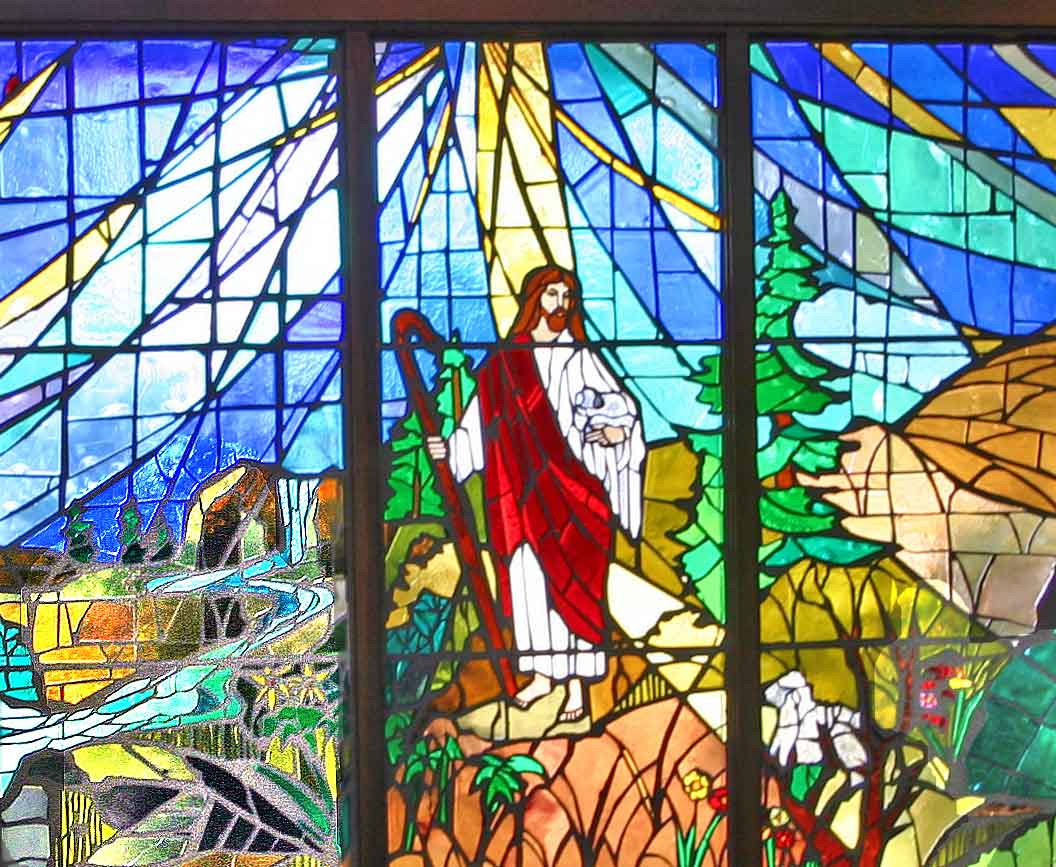
Well, that’s very nice. We all like to imagine Jesus the gentle shepherd, his long, wavy brown hair blowing in the afternoon breeze, his blue eyes twinkling with mischief, his robes swaying as he picks up a little fluffy white lamb and puts it gently on his shoulders.
Yes, that’s all very nice, but it doesn’t help all that much with this post resurrection situation, in which we find ourselves shaking our heads, wondering what just happened, trying to get our minds around resurrection. What really did happen, and how does life change for us in the light of the unbelievable?
Today the lectionary leads us back to a story about Jesus’ ministry, and part of our work today is to try to figure out why. It could be an oversight by the planners of the lectionary, right? Or we could be reading this for a reason.
It was St. Ignatius, founder of the Jesuit order and Spanish knight who lived in the mid 1500s who reminded us to, “think with the church,” and so today we will trust that the planners of the lectionary had a reason for leading us today to the good shepherd passage in John’s gospel.
Maybe we misunderstood the first…or second or third time, or, like most in the crowd, shook our heads in disbelief when we heard Jesus’ teachings.
But now, now everything changes. In the light of the resurrection, how can we think with the church, as Ignatius said, to understand a little more clearly what Jesus really meant?
And so today we follow the rest of the Christian church (like sheep…) to the words of Jesus long before he was crucified and resurrected, in John chapter 10.
If there’s anything I learned growing up as one of five children, it was a fool-proof strategy for Easter egg hunt dominance. Since I am the oldest I had a natural advantage, but that didn’t stop me from discovering and perfecting some tried and true strategies.
For example, to dominate at Easter egg hunting, preparation is key. Clear advantage number one: take off those shiny, pinching church shoes and put on sneakers. You can get around the yard much more quickly and effectively in sneakers!
Make sure you have a big basket with lots of room—it won’t help anything if the eggs you find fall out of the basket.
Scout out the search site ahead of time. Offer to help your Mom water the plants…or take out the garbage…or feed the dog. It’s worth your parents’ suspicion to gain a few advanced minutes in the yard.
Plan your strategy ahead of time. Will you dominate by quickly appropriating the easiest eggs, or will you leave the most obvious ones for the amateurs and go instead for those second tier eggs—the ones everyone can find with just a little effort? Will you grab the colorful ones first, and hope the green ones blend in until you can get back to them?
Point your opponents in strategic directions. That is, “helpfully suggest” to the littler kids that you saw an egg “over there”—away from the mother lode.
Run faster, look harder, grab quicker…whatever it takes.
And best strategy ever: offer to help your parents hide the eggs.
It took me very little time this week to remember some of these genius strategies I perfected in the dog eat dog Easter egg hunts of my childhood. That fact in itself is rather troubling, as I now am pretty sure that, in the light of resurrection, dominance and exploitation of those who are weaker might not have been the true message of Easter.
And maybe something like that is key to why the church reads passages like the good shepherd passage during the weeks following Easter. In case we missed the point…in case we thought Easter was all about us…in case we thought of resurrection as a get out of jail free card, in case we sit back relieved that we’re finally and totally off the hook…we hear again Jesus’ words about being the good shepherd, and they remind us one more time that resurrection is a reality that changes all of us in the here and now, that moves us from indifference to the fate and wellbeing of others, to an interdependence that reminds us our lives are tied together…that we belong to each other…and that all of us belong to God.
Faith is not a competition to see who gets to the end first.
Who wins is of no consequence to God, even in Easter egg hunts.
Dog eat dog is nowhere to be found in our life together.
In the light of the resurrection, everything changes, and we are moved from indifference to interdependence, a reality in which my wellbeing and yours are critically intertwined.
If we go back to look closely at Jesus’ words we must read them within the context in which they were preached to hear the deeper message. Turn with me in your Bibles to our Gospel passage today, John 10:11-18, on page 872 of your black pew Bibles.
The parable of the good shepherd comes after repeated, frustrating attempts at conversation between Jesus and the Pharisees. The Pharisees were some of the ruling religious party in the temple, remember. They were the pious ones, in charge of making sure everyone followed the rules. They were the overachievers, the ones who had worked for years to perfect the best strategy for getting to the front of the line, the top of the pile, when it came to relationship with God.
Right before the parable of the good shepherd, Jesus had been teaching in the temple, as was his custom. He and the Pharisees got into discussion after discussion about who Jesus was, exactly, and conversation got so heated—the misunderstandings so intense—that Jesus had to run and hide—they had picked up stones to throw at him they were so frustrated with what they were experiencing.
Outside the temple, things got even more confused. As Jesus was passing along the road he ran into a man who had been blind from birth. Jesus healed the man, but the day happened to be the Sabbath, and in the eyes of the Pharisees Jesus had broken the law. Arguments ensued—Jesus was accused of violating religious rules; the Pharisees just couldn’t understand why Jesus would break the law. Jesus just couldn’t understand why the Pharisees didn’t put the wellbeing of one of their weaker members above everything else.
And so, it was into that context that Jesus told the parable of the good shepherd. When he did, you could hear that he was presenting a completely different paradigm than the standard by which all of them were living by up until that point. It was radical. It was different. It invited them to change…everything.
In Jesus’ parable, he talks about a herd of sheep. I don’t know about you, but I don’t often interact with sheep. The closest I have ever come was a year that I lived inNew Zealand and worked for a few weeks on a sheep farm during the season of shearing. That experience was enough to teach me that it takes a real calling to be in charge of a group of sheep. Their care and upkeep is not for the faint of heart (or nose).
You and I don’t know much about sheep, but everyone listening to Jesus talk that day surely knew what it took to manage a herd of sheep. While those listening would certainly have been a mixture of tradespeople, they lived in a society in which sheep were very important. Their milk, their wool, their meat, their use as sacrifices in the temple, their presence on the hillsides of Galilee…everyone was acquainted with the reality of sheep, and so they surely caught the differentiation Jesus was making when he talked about the good shepherd and the hired hand.
The good shepherd, Jesus pointed out, lays down his life for the sheep. He is not like a hired hand—someone who is hired to care for a flock. Oh, no, no! The good shepherd would do anything for the sheep—it is his duty to insure their well-being and good health, safety and nourishment. Why? Well, because, the good shepherd owns the sheep. He invests everything he has in those sheep because he and the sheep depend on each other. The hired hand, by contrast, does not. And since the hired hand has no investment in the sheep, the last thing he’d be willing to do is to lay down his life for them. The hired hand is there to make a buck; he is there to do a job and nothing more. The shepherd and the sheep belong to each other. Do you see the difference?
“I am the Good Shepherd,” Jesus said. In the new reality of God’s kingdom, we belong to each other…we depend on each other.
I wondered this week about how mutual investment changes relationships. By coincidence, I’ve been wondering for awhile about the Capital Bikeshare program, especially since a new rack of bicycles was installed last year right across the street from Calvary’s front door. You know those red bikes that are all over the city?
So I called John Lisle, head of media relations for the DC Department of Transportation. He proudly let me know that DC was the first city in theUSto launch a bikeshare system in 2010. The collaborative qualities of the program, he bragged, are countless. Not only is the entire idea built on the idea that people pay into a system and share responsibility for and use of the bikes, but now the system is shared with Arlington and soon with the cities of Alexandria and Rockville.
I tell you, John Lisle is the perfect person to be doing media relations for the DoT, because when he talks about Capital Bikeshare he’s almost giddy. He calls the program “genius” and claims that when people pay an annual membership they seem to have some ownership over the bikes—so much so that incidences of vandalism or neglect are very, very low. People like the convenience of having a bike where and when they need it, and so they take care of the bikes. And with mutual investment, the city can afford bikes all over—enough for everyone who wants to ride.
It’s striking to me that we followers of Christ, people who live in the light of the resurrection, have a powerful metaphor for how our lives now change…right across the street from the sanctuary. The Capital Bikeshare models a little bit of exactly what Jesus was talking about when he explained the difference between the good shepherd and the hired hand.
Because, don’t forget, in the light of resurrection, everything changes. We are not followers of the one who rose to overcome death just so we can get what we want or climb to the top of the pile at the expense of others. No, in the light of resurrection we see that we follow the one who models a relationship in which he cares so deeply for us he would even give up his very life for us.
He is wholly invested in who we can become; he will act ever and always in our best interests and for our highest good.
And in the light of the resurrection, so may it be with us, among one another. We are followers of the one who would lay down his life for us, and as such we claim ownership for each other. We must care for each other as we’d care for ourselves. We must nurture and love each other as if we had a stake in each other’s wellbeing…because we do.
There is no more independence and walled off indifference. We belong to each other, just as we belong to God. We rise and fall together; our lives are predicated on the investment we make in the success of the other.
Indifference to interdependence. This can be a hard word to hear, especially in our society of fierce, independent, private individualism.
But in the light of resurrection, everything changes.
When we experience again the one who would lay down his very life for us, we begin to hear even more distinctly the radical call to live our lives for others.
In the light of resurrection, we belong to God; and we belong to each other. May it be so. Amen.
Previous Post

April 15, 2012
Everything Changes: From Fear to Faith
Next Post
May 6, 2012 Everything Changes: From Barren to Bountiful
Browse Our Archives
Select a Category Answering the Call Being the Church Curating Wisdom Laughing Out Loud Living in Relationship Practicing Discipleship Reclaiming Baptist Speaking from the Pulpit Uncategorized
Select a Month July 2018 June 2018 May 2018 April 2018 March 2018 January 2018 December 2017 November 2017 October 2017 September 2017 June 2017 May 2017 April 2017 March 2017 February 2017 January 2017 December 2016 November 2016 October 2016 September 2016 August 2016 July 2016 June 2016 May 2016 April 2016 March 2016 February 2016 January 2016 December 2015 November 2015 October 2015 September 2015 August 2015 July 2015 June 2015 May 2015 April 2015 March 2015 February 2015 January 2015 December 2014 November 2014 October 2014 September 2014 August 2014 July 2014 June 2014 May 2014 April 2014 March 2014 February 2014 January 2014 December 2013 November 2013 October 2013 September 2013 August 2013 July 2013 June 2013 May 2013 April 2013 March 2013 February 2013 January 2013 December 2012 November 2012 October 2012 September 2012 August 2012 July 2012 June 2012 May 2012 April 2012 March 2012 February 2012 January 2012 December 2011 October 2011 September 2011 August 2011 July 2011 June 2011 May 2011 April 2011 March 2011 February 2011 January 2011 December 2010 November 2010 October 2010 September 2010 August 2010 July 2010 June 2010 May 2010 April 2010 March 2010 February 2010 January 2010 December 2009 November 2009 October 2009 September 2009 August 2009 July 2009 June 2009 May 2009 April 2009 March 2009 February 2009 January 2009 December 2008 November 2008 October 2008 September 2008 August 2008 July 2008 June 2008 May 2008 April 2008 March 2008 February 2008 January 2008 December 2007 November 2007 October 2007 September 2007 August 2007 July 2007 June 2007 May 2007 April 2007 March 2007 February 2007 January 2007 December 2006 November 2006 October 2006 September 2006 August 2006 July 2006 June 2006 May 2006 April 2006 March 2006 February 2006 January 2006 December 2005
Search for:
Recent Posts
- Sabbath as Radical Witness
- Learning Leadership: A Pilgrimage to Hawaii
- A Prayer for the Living of These Days
- Sabbath as Relationship
- Dressing Up Faith
Recent Comments
Archives
- July 2018
- June 2018
- May 2018
- April 2018
- March 2018
- January 2018
- December 2017
- November 2017
- October 2017
- September 2017
- June 2017
- May 2017
- April 2017
- March 2017
- February 2017
- January 2017
- December 2016
- November 2016
- October 2016
- September 2016
- August 2016
- July 2016
- June 2016
- May 2016
- April 2016
- March 2016
- February 2016
- January 2016
- December 2015
- November 2015
- October 2015
- September 2015
- August 2015
- July 2015
- June 2015
- May 2015
- April 2015
- March 2015
- February 2015
- January 2015
- December 2014
- November 2014
- October 2014
- September 2014
- August 2014
- July 2014
- June 2014
- May 2014
- April 2014
- March 2014
- February 2014
- January 2014
- December 2013
- November 2013
- October 2013
- September 2013
- August 2013
- July 2013
- June 2013
- May 2013
- April 2013
- March 2013
- February 2013
- January 2013
- December 2012
- November 2012
- October 2012
- September 2012
- August 2012
- July 2012
- June 2012
- May 2012
- April 2012
- March 2012
- February 2012
- January 2012
- December 2011
- October 2011
- September 2011
- August 2011
- July 2011
- June 2011
- May 2011
- April 2011
- March 2011
- February 2011
- January 2011
- December 2010
- November 2010
- October 2010
- September 2010
- August 2010
- July 2010
- June 2010
- May 2010
- April 2010
- March 2010
- February 2010
- January 2010
- December 2009
- November 2009
- October 2009
- September 2009
- August 2009
- July 2009
- June 2009
- May 2009
- April 2009
- March 2009
- February 2009
- January 2009
- December 2008
- November 2008
- October 2008
- September 2008
- August 2008
- July 2008
- June 2008
- May 2008
- April 2008
- March 2008
- February 2008
- January 2008
- December 2007
- November 2007
- October 2007
- September 2007
- August 2007
- July 2007
- June 2007
- May 2007
- April 2007
- March 2007
- February 2007
- January 2007
- December 2006
- November 2006
- October 2006
- September 2006
- August 2006
- July 2006
- June 2006
- May 2006
- April 2006
- March 2006
- February 2006
- January 2006
- December 2005
Categories
- Answering the Call
- Being the Church
- Curating Wisdom
- Laughing Out Loud
- Living in Relationship
- Practicing Discipleship
- Reclaiming Baptist
- Speaking from the Pulpit
- Uncategorized
Meta
Follow Us!
TAKE THE
Religious Wisdom Quiz
An entire city of 120,000 people repented, yet I was angry when God relented from judgment. Why was I displeased?
Select your answer to see how you score.
Because they were enemies Because I looked foolish Because my prophecy failed Because God showed mercy
Related posts from Talk with the Preacher


Learning Leadership: A Pilgrimage to Hawaii

A Prayer for the Living of These Days

TRENDING AT PATHEOS Progressive Christian

Why Christians Have a Sacred Duty to Vote:...
The Bible offers strong support for the sacred duty to vote. Here...

What Being a Modern-Day Apostle Means to Me
In my last column, I discussed the ins and outs of modern-day...

Did Ancient China Once Worship the God of...
Across human history, a common thread weaves through the origins of the...

Love Your Neighbor – Including Earth-Kin: Lev. 19,...
God’s command to love your neighbor means acting in an ethical and...

Lead a Church Study of “Jesus and Lao...
Guest writer Jack Thomas (The Irreverent Reverend) reflects on leading his church...

Principles for Understanding the Apostolic Ministry Today
Whenever people discover that my formal ministry title is "apostle," as in...
view all Progressive Christian blogs
Ad-Free & Subscriber Log-In Subscription Support
- About Us
- 2026 Calendar
- Videos
- Podcasts
- Library of World Religions
- Faith In Media Tracker
- Advertise With Us
- Write for Us
- Privacy Policy
- Terms of Service
- Do Not Sell My Data
- Contact Us
- Radiant Digital
- Manage Newsletter Subscriptions
- Unsubscribe From Notifications
- Sitemap
Copyright 2008-2026, Patheos. All rights reserved.
Subscription Support Ad-Free & Subscriber Log-In
Follow Patheos