
BuddhistCatholicContemplativeEvangelicalGeneral ChristianHinduJewishLatter-day SaintMuslimNew VisionsProgressive Christian
Beliefs
- Buddhist
- Catholic
- Contemplative
- Evangelical
- General Christian
- Hindu
- Jewish
- Latter-day Saint
- More Voices
- Muslim
- New Visions
- Pagan
- Progressive Christian
Topics
- Religion News
- Food and Religion
- Sports and Religion
- Religious Art
- Religious Music and Entertainment
- Religious Events
- History and Religion
- Style and Religion
- Politics and Religion
- Women in Religion
- Recreation Outdoors and Religion
- Business Finance and Religion
- Careers Workplace and Religion
- Education and Religion
- Family Parenting and Religion
- Health Fitness and Religion
- Home and Religion
- Relationships and Religion
- Technology and Religion
- Travel and Religion
Columnists
- Buddhist Columnists
- Business Finance and Religion Columnists
- Careers Workplace and Religion Columnists
- Catholic Columnists
- Contemplative Columnists
- Education and Religion Columnists
- Evangelists Columnists
- Family Parenting and Religion Columnists
- General Christian Columnists
- Health Fitness and Religion Columnists
- Hindu Columnists
- History and Religion Columnists
- Home and Religion Columnists
- Jewish Columnists
- More Voices Columnists
- Latter Day Columnists
- Muslim Columnists
- New Visions Columnists
- Nonreligious Columnists
- Pagan Columnists
- Politics and Religion Columnists
- Progressive Columnists
- Recreation Outdoors and Religion Columnists
- Relationships and Religion Columnists
- Religion News Columnists
- Religious Art Columnists
- Religious Events Columnists
- Religious Music and Entertainment Columnists
- Sports and Religion Columnists
- Style and Religion Columnists
- Technology and Religion Columnists
- Travel and Religion Columnists
- Women in Religion Columnists
Resource Library
- 2026 Calendar
- Library of World Religions
- The 100 Most Holy Places on Earth
- Patheos Answers
- Podcasts
- Videos
- Faith Leaders Database
- Anglican Episcopalian
- Bahai
- Baptist
- Buddhism
- Christianity
- Confucianism
- Eastern Orthodoxy
- Hinduism
- Holiness and Pentecostal
- ISKCON
- Islam
- Judaism
- Lutheran
- Methodist
- The Church of Jesus Christ of Latter-day Saints
- New Age
- Paganism
- Presbytarian and Reformed
- Protestantism
- Religion Behind the Scenes
- Roman Catholic
- Scientology
- Shia Islam
- Sikhism
- Sufism
- Sunni Islam
- Taoism
- Zen
- See all religions
Research Tools
 Ad-Free & Subscriber Log-In Subscription Support
Ad-Free & Subscriber Log-In Subscription Support
Follow Patheos 

- Trending:
- Forgiveness
- |
- Marriage
- |
- Consciousness
- |
- Death Penalty
- |
- Election
- |
- Halloween
 Talk with the Preacher
- Home
- Progressive Christian
- Art, Darkness, and Advent
Art, Darkness, and Advent
Last updated on: October 14, 2015 at 8:30 pm by Amy Butler
Art, Darkness, and Advent 2015-10-14T20:30:19-04:00 Amy Butler
Patheos Explore the world's faith through different perspectives on religion and spirituality! Patheos has the views of the prevalent religions and spiritualities of the world.
 I am feeling disgustingly culturally savvy since taking in the Rembrandt in America installation at the North Carolina Museum of Art recently. I took Art Appreciation in college, of course, but didn’t really appreciate anything artsy much until I happened to (strangely) birth a son who is a very gifted artist.
Who knew?
And so, I try to be as conversant as I can, which is usually not that much.
Thanks to the NCMA show, however, I had the opportunity to get really close to some actual paintings of Rembrandt’s, and even in my own limited awareness I marveled at the passage of time between when his brush touched that canvas and when I stood there staring at it.
With about 50 paintings in the total installation, the display was very accessible for someone like me—a novice art critic—and presented in such a way that I learned quite a bit about Rembrandt, his life, his style of painting, his influence on the world of art.
The paintings in the exhibit were mostly portraits—apparently that was in vogue at the time Rembrandt was working. It was his business to realistically paint people while they sat for him (like taking a photograph), but he also painted quite a few biblical figures and characters from Greek mythology.
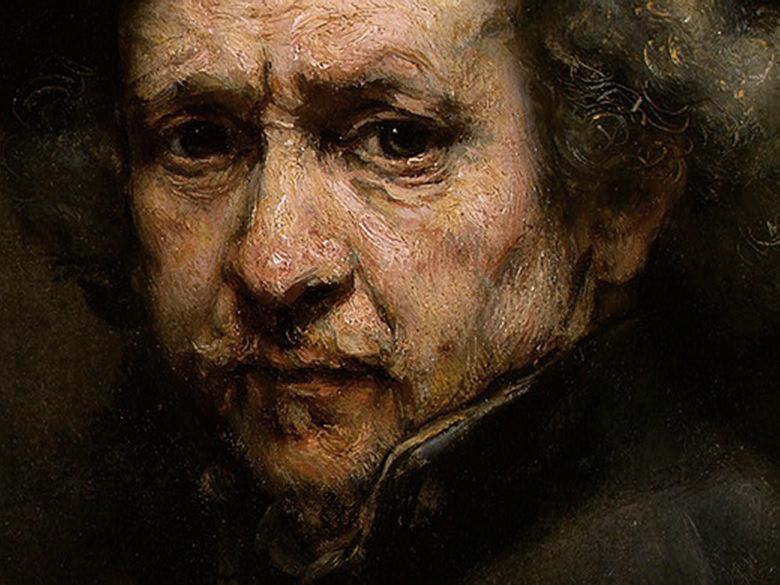 Even I could tell why he was so popular: the people he painted told stories. Their faces and expressions, the look in their eyes, the posture of their bodies…all of these told the truth about their lives. In a self portrait painted shortly before his death, for example, even the most inexperienced art critic could look and see a man bearing the heavy weight of life—in Rembrandt’s case it was the deaths of his children, romantic problems galore, and personal financial ruin. Can you see it in his eyes? Masterful.
However, the most striking thing in the works of Rembrandt, the images that stayed with me as I left the exhibit to head into the reality of Advent, was the light.
Rembrandt was a master of the light—he showed light and darkness with such radiant clarity and precision that it was easy to see the edges on which the people he painted walked. By using the light and the dark, Rembrandt showed the reality of life—the real thing, not just a vague representation. He painted grief and pain, hope and promise, the contrasts telling stories far more detailed than a portrait would normally tell.
I thought about that after I left the museum—the stark contrast between light and darkness, and how the contrast is critical if you want to tell the story. Shards of light in between the shadows highlight marks of joy and grief that decorate Rembrandt’s subjects…that surely decorate our own visages, even though we may not be able to translate them with the drama and precision he did.
This Advent, while we wait for the light, I think there’s something to be said for welcoming the darkness, too. Painful as it is, without the darkness the light can’t tell a story. Without the falling of the night, new dawn can’t creep over the edges to discover anew what seemed lost before.
Rembrandt painted and lived with heavy darkness, but he never stopped depicting the light. He knew that even with the shining of a very small ray of light, the story could be told.
Light and darkness, living in tension together. They tell stories about our lives that we may not ever be able to say out loud with words. By their contrast they remind us that hope is coming, that the abyss does not tell the whole story, and that the story will be told, finally, with the coming of the light.
Previous Post

October 30, 2011
Chasing Sainthood
Next Post
December 25, 2011 It's All About You
Browse Our Archives
Select a Category Answering the Call Being the Church Curating Wisdom Laughing Out Loud Living in Relationship Practicing Discipleship Reclaiming Baptist Speaking from the Pulpit Uncategorized
Select a Month July 2018 June 2018 May 2018 April 2018 March 2018 January 2018 December 2017 November 2017 October 2017 September 2017 June 2017 May 2017 April 2017 March 2017 February 2017 January 2017 December 2016 November 2016 October 2016 September 2016 August 2016 July 2016 June 2016 May 2016 April 2016 March 2016 February 2016 January 2016 December 2015 November 2015 October 2015 September 2015 August 2015 July 2015 June 2015 May 2015 April 2015 March 2015 February 2015 January 2015 December 2014 November 2014 October 2014 September 2014 August 2014 July 2014 June 2014 May 2014 April 2014 March 2014 February 2014 January 2014 December 2013 November 2013 October 2013 September 2013 August 2013 July 2013 June 2013 May 2013 April 2013 March 2013 February 2013 January 2013 December 2012 November 2012 October 2012 September 2012 August 2012 July 2012 June 2012 May 2012 April 2012 March 2012 February 2012 January 2012 December 2011 October 2011 September 2011 August 2011 July 2011 June 2011 May 2011 April 2011 March 2011 February 2011 January 2011 December 2010 November 2010 October 2010 September 2010 August 2010 July 2010 June 2010 May 2010 April 2010 March 2010 February 2010 January 2010 December 2009 November 2009 October 2009 September 2009 August 2009 July 2009 June 2009 May 2009 April 2009 March 2009 February 2009 January 2009 December 2008 November 2008 October 2008 September 2008 August 2008 July 2008 June 2008 May 2008 April 2008 March 2008 February 2008 January 2008 December 2007 November 2007 October 2007 September 2007 August 2007 July 2007 June 2007 May 2007 April 2007 March 2007 February 2007 January 2007 December 2006 November 2006 October 2006 September 2006 August 2006 July 2006 June 2006 May 2006 April 2006 March 2006 February 2006 January 2006 December 2005
Search for:
Recent Posts
- Sabbath as Radical Witness
- Learning Leadership: A Pilgrimage to Hawaii
- A Prayer for the Living of These Days
- Sabbath as Relationship
- Dressing Up Faith
Recent Comments
Archives
- July 2018
- June 2018
- May 2018
- April 2018
- March 2018
- January 2018
- December 2017
- November 2017
- October 2017
- September 2017
- June 2017
- May 2017
- April 2017
- March 2017
- February 2017
- January 2017
- December 2016
- November 2016
- October 2016
- September 2016
- August 2016
- July 2016
- June 2016
- May 2016
- April 2016
- March 2016
- February 2016
- January 2016
- December 2015
- November 2015
- October 2015
- September 2015
- August 2015
- July 2015
- June 2015
- May 2015
- April 2015
- March 2015
- February 2015
- January 2015
- December 2014
- November 2014
- October 2014
- September 2014
- August 2014
- July 2014
- June 2014
- May 2014
- April 2014
- March 2014
- February 2014
- January 2014
- December 2013
- November 2013
- October 2013
- September 2013
- August 2013
- July 2013
- June 2013
- May 2013
- April 2013
- March 2013
- February 2013
- January 2013
- December 2012
- November 2012
- October 2012
- September 2012
- August 2012
- July 2012
- June 2012
- May 2012
- April 2012
- March 2012
- February 2012
- January 2012
- December 2011
- October 2011
- September 2011
- August 2011
- July 2011
- June 2011
- May 2011
- April 2011
- March 2011
- February 2011
- January 2011
- December 2010
- November 2010
- October 2010
- September 2010
- August 2010
- July 2010
- June 2010
- May 2010
- April 2010
- March 2010
- February 2010
- January 2010
- December 2009
- November 2009
- October 2009
- September 2009
- August 2009
- July 2009
- June 2009
- May 2009
- April 2009
- March 2009
- February 2009
- January 2009
- December 2008
- November 2008
- October 2008
- September 2008
- August 2008
- July 2008
- June 2008
- May 2008
- April 2008
- March 2008
- February 2008
- January 2008
- December 2007
- November 2007
- October 2007
- September 2007
- August 2007
- July 2007
- June 2007
- May 2007
- April 2007
- March 2007
- February 2007
- January 2007
- December 2006
- November 2006
- October 2006
- September 2006
- August 2006
- July 2006
- June 2006
- May 2006
- April 2006
- March 2006
- February 2006
- January 2006
- December 2005
Categories
- Answering the Call
- Being the Church
- Curating Wisdom
- Laughing Out Loud
- Living in Relationship
- Practicing Discipleship
- Reclaiming Baptist
- Speaking from the Pulpit
- Uncategorized
Meta
Follow Us!
TAKE THE
Religious Wisdom Quiz
According to James, if you show favoritism, what have you become?
Select your answer to see how you score.
False teachers Lawbreakers Hypocrites Judges with evil thoughts
Related posts from Talk with the Preacher


Learning Leadership: A Pilgrimage to Hawaii

A Prayer for the Living of These Days

TRENDING AT PATHEOS Progressive Christian

Why Christians Have a Sacred Duty to Vote:...
The Bible offers strong support for the sacred duty to vote. Here...

What Being a Modern-Day Apostle Means to Me
In my last column, I discussed the ins and outs of modern-day...

Did Ancient China Once Worship the God of...
Across human history, a common thread weaves through the origins of the...

Love Your Neighbor – Including Earth-Kin: Lev. 19,...
God’s command to love your neighbor means acting in an ethical and...

Lead a Church Study of “Jesus and Lao...
Guest writer Jack Thomas (The Irreverent Reverend) reflects on leading his church...

Principles for Understanding the Apostolic Ministry Today
Whenever people discover that my formal ministry title is "apostle," as in...
view all Progressive Christian blogs
Ad-Free & Subscriber Log-In Subscription Support
- About Us
- 2026 Calendar
- Videos
- Podcasts
- Library of World Religions
- Faith In Media Tracker
- Advertise With Us
- Write for Us
- Privacy Policy
- Terms of Service
- Do Not Sell My Data
- Contact Us
- Radiant Digital
- Manage Newsletter Subscriptions
- Unsubscribe From Notifications
- Sitemap
Copyright 2008-2026, Patheos. All rights reserved.
Subscription Support Ad-Free & Subscriber Log-In
Follow Patheos