
BuddhistCatholicContemplativeEvangelicalGeneral ChristianHinduJewishLatter-day SaintMuslimNew VisionsProgressive Christian
Beliefs
- Buddhist
- Catholic
- Contemplative
- Evangelical
- General Christian
- Hindu
- Jewish
- Latter-day Saint
- More Voices
- Muslim
- New Visions
- Pagan
- Progressive Christian
Topics
- Religion News
- Food and Religion
- Sports and Religion
- Religious Art
- Religious Music and Entertainment
- Religious Events
- History and Religion
- Style and Religion
- Politics and Religion
- Women in Religion
- Recreation Outdoors and Religion
- Business Finance and Religion
- Careers Workplace and Religion
- Education and Religion
- Family Parenting and Religion
- Health Fitness and Religion
- Home and Religion
- Relationships and Religion
- Technology and Religion
- Travel and Religion
Columnists
- Buddhist Columnists
- Business Finance and Religion Columnists
- Careers Workplace and Religion Columnists
- Catholic Columnists
- Contemplative Columnists
- Education and Religion Columnists
- Evangelists Columnists
- Family Parenting and Religion Columnists
- General Christian Columnists
- Health Fitness and Religion Columnists
- Hindu Columnists
- History and Religion Columnists
- Home and Religion Columnists
- Jewish Columnists
- More Voices Columnists
- Latter Day Columnists
- Muslim Columnists
- New Visions Columnists
- Nonreligious Columnists
- Pagan Columnists
- Politics and Religion Columnists
- Progressive Columnists
- Recreation Outdoors and Religion Columnists
- Relationships and Religion Columnists
- Religion News Columnists
- Religious Art Columnists
- Religious Events Columnists
- Religious Music and Entertainment Columnists
- Sports and Religion Columnists
- Style and Religion Columnists
- Technology and Religion Columnists
- Travel and Religion Columnists
- Women in Religion Columnists
Resource Library
- 2026 Calendar
- Library of World Religions
- The 100 Most Holy Places on Earth
- Patheos Answers
- Podcasts
- Videos
- Faith Leaders Database
- Anglican Episcopalian
- Bahai
- Baptist
- Buddhism
- Christianity
- Confucianism
- Eastern Orthodoxy
- Hinduism
- Holiness and Pentecostal
- ISKCON
- Islam
- Judaism
- Lutheran
- Methodist
- The Church of Jesus Christ of Latter-day Saints
- New Age
- Paganism
- Presbytarian and Reformed
- Protestantism
- Religion Behind the Scenes
- Roman Catholic
- Scientology
- Shia Islam
- Sikhism
- Sufism
- Sunni Islam
- Taoism
- Zen
- See all religions
Research Tools
 Ad-Free & Subscriber Log-In Subscription Support
Ad-Free & Subscriber Log-In Subscription Support
Follow Patheos 

- Trending:
- Forgiveness
- |
- Marriage
- |
- Consciousness
- |
- Death Penalty
- |
- Election
- |
- Halloween
 Talk with the Preacher
- Home
- Progressive Christian
- A Holy Mess
A Holy Mess
Last updated on: October 14, 2015 at 8:43 pm by Amy Butler
A Holy Mess 2015-10-14T20:43:17-04:00 Amy Butler
Patheos Explore the world's faith through different perspectives on religion and spirituality! Patheos has the views of the prevalent religions and spiritualities of the world.
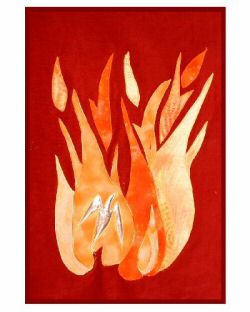 A Holy Mess: The Day of Pentecost
Acts 2:1-21
I know I use this quote from Annie Dillard in a sermon at least once a year (just had to say that, since I know John Taylor keeps track), but I just can’t apologize. The truth is, I should probably quote her more often than I do. Annie Dillard is the Pulitzer prize-winning author of many books, including Pilgrim at Tinker Creek and Teaching a Stone to Talk. I confess that I don’t know if I believe her claims that she’s not a person of faith, because when she writes about God she writes true and profound things. Here’s one of my favorites, from the essay “An Expedition to the Pole”:
“On the whole, I do not find Christians, outside of the catacombs, sufficiently sensible of conditions. Does anyone have the foggiest idea what sort of power we so blithely invoke? Or, as I suspect, does no one believe a word of it? The churches are children playing on the floor with their chemistry sets, mixing up a batch of TNT to kill a Sunday morning. It is madness to wear ladies’ straw hats and velvet hats to church; we should all be wearing crash helmets. Ushers should issue life preservers and signal flares; they should lash us to our pews. For the sleeping god may wake someday and take offense, or the waking god may draw us out to where we can never return.” (Annie Dillard, Teaching a Stone to Talk. Harper and Row, 1982)
Boy did Annie Dillard have it right. And I would bet that part of the reason she’d say she isn’t religious is that a message like this one might not be too popular in the institutional church.
You think?
The story of Pentecost is not really a story about the birth of a nice, staid institution built to define tradition and maintain it at all costs, as the church has come to be seen by many. Nope. Pentecost is very often a big, huge disruption.
A holy mess, you could say.
God, shaking things up, as God always seems to do somehow, and those of us along for the ride holding on for dear life, not completely sure exactly where we’ll end up.
Sound like something you’d like to sign up for?
Most church folk don’t. In fact, if you’re human, chances are that change and disruption are not your most favorite personal experiences, and most of us do not seek these experiences out. Having too many of them, in fact, can be really bad for your well-being. Even the first disciples couldn’t have liked it very much, though they had just lived through quite a few of what some professionals like to call “life transitions.”
Just to be able to gauge the disciples’ mental and physical well-being during the period when our story from Acts occurs, I went online and completed the Social Readjustment Rating Scale, which rates stressors and resulting personal vulnerability. You have to choose whether some of the following has happened in your life in the course of the last 12 months: death of a close friend, trouble with the law, change in your family situation, vocational upheaval, among others. I chose everything on the scale that had happened to them just in the 6 weeks since Jesus’s arrest, crucifixion, and resurrection. (The test didn’t have the option, “One of your closest friends is resurrected,” though I would guess that might count as a stressor as well.)
The ratings were as follows: a score of 0-149 indicates a low susceptibility to stress-related illness. 150-299 would indicate a medium susceptibility to stress-related illness, and 300 and over indicates high susceptibility to stress-related illness. Taking the quiz as the disciples might have, the score was, uh, 644. 644.
In other words, after what they’d been through, it’s shocking that the disciples were not…dead.
(You may be interested to know that I declined the opportunity to retake the test as myself. Sometimes it’s better just not to know.)
It had been 50 days. About six weeks. A month and a half. Not that much time. Just 50 days since Jesus’ resurrection. You’ll recall that last week we explored the story of the disciples’ last physical interaction with Jesus at the ascension. We read the story from the book of Luke, but you’ll note that Luke gives us even more details in the first chapter of his sequel to the Gospel, the book of Acts. Jesus ascended into heaven, gone, and before he left, he told the disciples to go back to Jerusalem and wait.
Okay, let’s review.
Jesus is gone; they have no leader.
Their group, which was not that stellar to begin with, has been decimated by death, betrayal, doubt, fatigue.
While they had little job security before, now they really don’t have many options at all.
And, what they’d been thinking all along was a good vocational and political gamble had pretty much run out of gas and stalled.
But something happened when Jesus ascended, remember. Something clicked when the disciples were commissioned; they finally got on board, all the way. Jesus instructed them to go back to Jerusalem and wait. He told them power from on high was on the way. Their job was to hang on, to try to avoid those stress-related illnesses as carefully as they could (okay, he didn’t explicitly say that; I’m just guessing here), and just wait for what was coming next.
And, to their credit they did. They did just that. Remember what they did? Luke tells us that they went back to Jerusalem, a city that was as familiar to them as the back of their hands. And they returned to the Temple, the place they’d learned from their first memories that they would be most likely to encounter God. And they even went back to the upper room, the place they’d often hung out together, or, one might say, the movement’s headquarters.
They went back to all the familiar places; they resumed the rhythm of life in all the familiar ways; they kept on going the same way they had been taught, waiting for whatever was next—which, let’s admit, many of them thought was going to be Jesus himself, floating back down from the sky or coming back somehow. So, they believed. They really did. They trusted what he said to them when he ascended. And they buckled down to keep the home fires burning; they wanted things to be just the way he’d expect to find them when he got back from wherever he’d gone for the moment.
How do we know this? We know it because Luke’s Gospel reports at the very end of the book that that’s what they did—they went back to Jerusalem, as Jesus instructed. They returned to the Temple, the place they knew to find God. They gathered in that upper room, as they always had done. And they kept things going just the best they knew how.
In Acts chapter 2, in fact, you’ll notice the passage begins with this verse: “When the day of Pentecost had come, they were all together in one place.”
That means, of course, that they were back in their meeting room.
But the phrase also meant, given the different shades of the Greek words here, that they were all together…all of one opinion…all thinking the same thing…all on the same page…all in agreement that their job was to keep working hard so things go on just like Jesus taught them.
And what better way to do that then to return to the same town, worship in the same Temple, keep up the lease on the same meeting space, begin deliberations about replacing their lost member Judas so there would be the same exact number in the group, and making absolutely, positively sure that Jesus will find everything in excellent order, just the way he left it, when he gets back?
Makes sense to me, especially in light of all the “life transitions” they’d just endured.
But the thing is that the Day of Pentecost arrived. It dawned while they were happily going about their business, getting things back on track, reconstructing a “new normal” without Jesus, making sure things stayed as status quo as they could.
Jerusalem was filled with people from all over the place that day—the text says “Jews from every nation under heaven.” Many of them were visiting Jerusalem because it was Shavuot, the Jewish Festival of Weeks, and devout Jews were required by Jewish law to come to Jerusalem to celebrate. Shavuot was the marking of seven weeks from Passover, and the remembrance of Yahweh giving the Torah, the law, to Moses on Mt. Sinai.
But not all of them were Jews, because it was also a holiday in the way that holidays bring families and celebrations, travel and obligation into our lives, and lots of worshippers, merchants, and travelers joined the regular population of Jerusalem to celebrate the holiday. And right along with them were the disciples, waiting like Jesus said, for power from on high.
And then it came.
The overpowering sound of a rushing wind filled the house, slamming doors, flapping shutters, blowing around so hard that they had to cover their ears it was so loud. And fire…fire came down and rested on each one of them, a flame the text says. And something else happened. They were filled with the Spirit, and everybody started talking in other languages…it seems like each disciple got a different one just like we heard at the beginning of worship. All of the sudden, what they’d been waiting for had arrived, and everybody there, all of the people visiting the city, all of the foreigners providing services, all of them suddenly understood the disciples, they heard their story in their very own languages. And it happened, right then. The Spirit arrived and the Gospel message was proclaimed, and a whole crowd of people heard it, and it radiated out from that moment, and from right then…everything changed.
The whole world changed.
What a mess. What a holy, crazy mess!
The disciples certainly had no idea, no idea whatsoever, about what was in store for them. They were intent on preserving things the way Jesus had taught them, but then the Spirit of God arrived and turned everything on its head, articulated the Gospel message in languages they’d never heard before, caught the attention of all kinds of people (even weird, strange people, people on the very edge of things), and insured right then and there that nothing would ever be the same again.
The nice, comfortable, familiar city of Jerusalem was not their destination; it was just their starting point.
Their understanding of God through the tradition and structure they had always known was not what their futures held; they might encounter God somewhere outside the Temple they had always known.
That upper room filled with familiar faces, even, suddenly became a thing of the past. It couldn’t possible hold all the people who wanted to hear, who had opinions to offer, who had voices to add to the conversation. It couldn’t hold them all numerically, and it certainly couldn’t hold them all ideologically.
A wind had blown in; fire had alighted; the Spirit of God had arrived. And what a holy, unmanageable, exciting mess it was.
What a mess.
Welcome to the Church of Jesus Christ.
I spent a lot of time this week thinking about how to end this sermon. Not surprisingly, I thought of several potential stories about things that make a mess. I researched some illustrations that I thought might make all of you laugh, even some that might stick with you this week, you know, really make you think.
But as I thought and thought and thought about this holy mess that is the church, the body of Jesus Christ, the community in which we try in the best way we can summon to follow the leading of the Spirit of God, I kept thinking about last Monday night.
This past Monday night a group of eight Calvary members gathered in the library at my request. I had asked them to show up for a conversation with a researcher and consultant on church transformation who wants to tell the story of Calvary in this next book, the story of life in THIS faith community as it has been lived the last eight or ten years or so.
It seems, he told me when we first spoke about it, that something is up at Calvary. There seems to be life in this place. Energy. New things on the horizon. It appears, he said, that the Spirit of God is up to something at Calvary Baptist Church. And he wanted to hear the story. The meeting lasted a couple of hours; several of you who are here participated. I tell you, it was very interesting to hear a story you’ve lived from several different perspectives.
At the end of the interview, the interviewer asked this question: if you were writing a postcard to a church facing transition—an evaluation of its current situation and a need to change for the future—what are the main points of advice you would offer?
I confess I listened in awe and amazement as I heard things like: “Bring everybody to the table—encourage diversity.” “Listen to every crazy idea that is suggested, then try it.” “Trust each other.” “Don’t be afraid to fail!” “Try something new!” “Take a risk!”
I mean, I know all of you, so this shouldn’t have surprised me. But without exception, this is the theme that came from the group as a whole: mix it up. Be open to whatever comes next. View the future with curiosity and hope. Be excited about whatever crazy direction God will lead you next. Consider everything that comes your way. Believe in each other; believe in God.
I wondered, as I sometimes do, if you are all crazy. Because, uh, people, we are talking here about the institutional church. An institution. Don’t forget that collectively we are more than 2000 years old, begun when Jesus floated off into the sky and left us to manage things on our own. And right here on this corner of Washington, D.C., we’re 149 going on 150. We’re a little younger than the first church, it’s true, but I don’t think one person would argue we’re an institution nonetheless.
And institutions, as you might imagine, don’t bend much or well. Flexibility is not our strong suit; we prefer brick buildings designed in 1860 and boards and committees run the way they were always run, thank you very much. Because it’s easier when we know what to expect; when things feel familiar; when things aren’t always changing.
But the thing is…when the Spirit of God is in the house, everything changes. A mighty wind blows in and turns pages, upends carefully organized policies, even ruffles a few feathers! We feel very uncomfortable—who wouldn’t, really, with a bunch of open flames in a 150 year old building?
And when we look around there are people here we never saw at church when we were growing up, people who think differently and even speak differently. We don’t understand each other, not at all sometimes.
And we’re scared.
We’re scared that we won’t be able to control the situation, to predict the future, to assure that things are put into place appropriately, to make sure that everyone feels happy.
That’s what happens on Pentecost, when the Spirit of God shows up. And because we have been given the Spirit, we should never live as if everything remains the same.
Calvary Baptist Church, I heard you talking on Monday night. You know what the work of the Spirit looks like…you have faithfully lived it in this place for years.
And on this, The Day of Pentecost, it continues.
Our task as Christ-followers who live with the Spirit is to listen for the wind…watch for flames…look for the possibilities.
Then join right in to help challenge what we always knew and reinvent what seemed to work perfectly fine…to turn things around so we can see them from a completely upside down perspective, to think outside the box, to dream the most audacious dreams we can dream.
In other words: it’s Pentecost. The wind is blowing; the fire is burning; everything is changing. So, get out there…and make a holy mess.
Amen.
Previous Post

June 6, 2011
Becoming Disciples: Live As Witnesses
Next Post
June 20, 2011 All God's Creatures
Browse Our Archives
Select a Category Answering the Call Being the Church Curating Wisdom Laughing Out Loud Living in Relationship Practicing Discipleship Reclaiming Baptist Speaking from the Pulpit Uncategorized
Select a Month July 2018 June 2018 May 2018 April 2018 March 2018 January 2018 December 2017 November 2017 October 2017 September 2017 June 2017 May 2017 April 2017 March 2017 February 2017 January 2017 December 2016 November 2016 October 2016 September 2016 August 2016 July 2016 June 2016 May 2016 April 2016 March 2016 February 2016 January 2016 December 2015 November 2015 October 2015 September 2015 August 2015 July 2015 June 2015 May 2015 April 2015 March 2015 February 2015 January 2015 December 2014 November 2014 October 2014 September 2014 August 2014 July 2014 June 2014 May 2014 April 2014 March 2014 February 2014 January 2014 December 2013 November 2013 October 2013 September 2013 August 2013 July 2013 June 2013 May 2013 April 2013 March 2013 February 2013 January 2013 December 2012 November 2012 October 2012 September 2012 August 2012 July 2012 June 2012 May 2012 April 2012 March 2012 February 2012 January 2012 December 2011 October 2011 September 2011 August 2011 July 2011 June 2011 May 2011 April 2011 March 2011 February 2011 January 2011 December 2010 November 2010 October 2010 September 2010 August 2010 July 2010 June 2010 May 2010 April 2010 March 2010 February 2010 January 2010 December 2009 November 2009 October 2009 September 2009 August 2009 July 2009 June 2009 May 2009 April 2009 March 2009 February 2009 January 2009 December 2008 November 2008 October 2008 September 2008 August 2008 July 2008 June 2008 May 2008 April 2008 March 2008 February 2008 January 2008 December 2007 November 2007 October 2007 September 2007 August 2007 July 2007 June 2007 May 2007 April 2007 March 2007 February 2007 January 2007 December 2006 November 2006 October 2006 September 2006 August 2006 July 2006 June 2006 May 2006 April 2006 March 2006 February 2006 January 2006 December 2005
Search for:
Recent Posts
- Sabbath as Radical Witness
- Learning Leadership: A Pilgrimage to Hawaii
- A Prayer for the Living of These Days
- Sabbath as Relationship
- Dressing Up Faith
Recent Comments
Archives
- July 2018
- June 2018
- May 2018
- April 2018
- March 2018
- January 2018
- December 2017
- November 2017
- October 2017
- September 2017
- June 2017
- May 2017
- April 2017
- March 2017
- February 2017
- January 2017
- December 2016
- November 2016
- October 2016
- September 2016
- August 2016
- July 2016
- June 2016
- May 2016
- April 2016
- March 2016
- February 2016
- January 2016
- December 2015
- November 2015
- October 2015
- September 2015
- August 2015
- July 2015
- June 2015
- May 2015
- April 2015
- March 2015
- February 2015
- January 2015
- December 2014
- November 2014
- October 2014
- September 2014
- August 2014
- July 2014
- June 2014
- May 2014
- April 2014
- March 2014
- February 2014
- January 2014
- December 2013
- November 2013
- October 2013
- September 2013
- August 2013
- July 2013
- June 2013
- May 2013
- April 2013
- March 2013
- February 2013
- January 2013
- December 2012
- November 2012
- October 2012
- September 2012
- August 2012
- July 2012
- June 2012
- May 2012
- April 2012
- March 2012
- February 2012
- January 2012
- December 2011
- October 2011
- September 2011
- August 2011
- July 2011
- June 2011
- May 2011
- April 2011
- March 2011
- February 2011
- January 2011
- December 2010
- November 2010
- October 2010
- September 2010
- August 2010
- July 2010
- June 2010
- May 2010
- April 2010
- March 2010
- February 2010
- January 2010
- December 2009
- November 2009
- October 2009
- September 2009
- August 2009
- July 2009
- June 2009
- May 2009
- April 2009
- March 2009
- February 2009
- January 2009
- December 2008
- November 2008
- October 2008
- September 2008
- August 2008
- July 2008
- June 2008
- May 2008
- April 2008
- March 2008
- February 2008
- January 2008
- December 2007
- November 2007
- October 2007
- September 2007
- August 2007
- July 2007
- June 2007
- May 2007
- April 2007
- March 2007
- February 2007
- January 2007
- December 2006
- November 2006
- October 2006
- September 2006
- August 2006
- July 2006
- June 2006
- May 2006
- April 2006
- March 2006
- February 2006
- January 2006
- December 2005
Categories
- Answering the Call
- Being the Church
- Curating Wisdom
- Laughing Out Loud
- Living in Relationship
- Practicing Discipleship
- Reclaiming Baptist
- Speaking from the Pulpit
- Uncategorized
Meta
Follow Us!
TAKE THE
Religious Wisdom Quiz
Who wrote many of the Psalms?
Select your answer to see how you score.
Peter Solomon Paul David
Related posts from Talk with the Preacher


Learning Leadership: A Pilgrimage to Hawaii

A Prayer for the Living of These Days

TRENDING AT PATHEOS Progressive Christian

Why Christians Have a Sacred Duty to Vote:...
The Bible offers strong support for the sacred duty to vote. Here...

What Being a Modern-Day Apostle Means to Me
In my last column, I discussed the ins and outs of modern-day...

Did Ancient China Once Worship the God of...
Across human history, a common thread weaves through the origins of the...

Love Your Neighbor – Including Earth-Kin: Lev. 19,...
God’s command to love your neighbor means acting in an ethical and...

Lead a Church Study of “Jesus and Lao...
Guest writer Jack Thomas (The Irreverent Reverend) reflects on leading his church...

Principles for Understanding the Apostolic Ministry Today
Whenever people discover that my formal ministry title is "apostle," as in...
view all Progressive Christian blogs
Ad-Free & Subscriber Log-In Subscription Support
- About Us
- 2026 Calendar
- Videos
- Podcasts
- Library of World Religions
- Faith In Media Tracker
- Advertise With Us
- Write for Us
- Privacy Policy
- Terms of Service
- Do Not Sell My Data
- Contact Us
- Radiant Digital
- Manage Newsletter Subscriptions
- Unsubscribe From Notifications
- Sitemap
Copyright 2008-2026, Patheos. All rights reserved.
Subscription Support Ad-Free & Subscriber Log-In
Follow Patheos