
BuddhistCatholicContemplativeEvangelicalGeneral ChristianHinduJewishLatter-day SaintMuslimNew VisionsProgressive Christian
Beliefs
- Buddhist
- Catholic
- Contemplative
- Evangelical
- General Christian
- Hindu
- Jewish
- Latter-day Saint
- More Voices
- Muslim
- New Visions
- Pagan
- Progressive Christian
Topics
- Religion News
- Food and Religion
- Sports and Religion
- Religious Art
- Religious Music and Entertainment
- Religious Events
- History and Religion
- Style and Religion
- Politics and Religion
- Women in Religion
- Recreation Outdoors and Religion
- Business Finance and Religion
- Careers Workplace and Religion
- Education and Religion
- Family Parenting and Religion
- Health Fitness and Religion
- Home and Religion
- Relationships and Religion
- Technology and Religion
- Travel and Religion
Columnists
- Buddhist Columnists
- Business Finance and Religion Columnists
- Careers Workplace and Religion Columnists
- Catholic Columnists
- Contemplative Columnists
- Education and Religion Columnists
- Evangelists Columnists
- Family Parenting and Religion Columnists
- General Christian Columnists
- Health Fitness and Religion Columnists
- Hindu Columnists
- History and Religion Columnists
- Home and Religion Columnists
- Jewish Columnists
- More Voices Columnists
- Latter Day Columnists
- Muslim Columnists
- New Visions Columnists
- Nonreligious Columnists
- Pagan Columnists
- Politics and Religion Columnists
- Progressive Columnists
- Recreation Outdoors and Religion Columnists
- Relationships and Religion Columnists
- Religion News Columnists
- Religious Art Columnists
- Religious Events Columnists
- Religious Music and Entertainment Columnists
- Sports and Religion Columnists
- Style and Religion Columnists
- Technology and Religion Columnists
- Travel and Religion Columnists
- Women in Religion Columnists
Resource Library
- 2026 Calendar
- Library of World Religions
- The 100 Most Holy Places on Earth
- Patheos Answers
- Podcasts
- Videos
- Faith Leaders Database
- Anglican Episcopalian
- Bahai
- Baptist
- Buddhism
- Christianity
- Confucianism
- Eastern Orthodoxy
- Hinduism
- Holiness and Pentecostal
- ISKCON
- Islam
- Judaism
- Lutheran
- Methodist
- The Church of Jesus Christ of Latter-day Saints
- New Age
- Paganism
- Presbytarian and Reformed
- Protestantism
- Religion Behind the Scenes
- Roman Catholic
- Scientology
- Shia Islam
- Sikhism
- Sufism
- Sunni Islam
- Taoism
- Zen
- See all religions
Research Tools
 Ad-Free & Subscriber Log-In Subscription Support
Ad-Free & Subscriber Log-In Subscription Support
Follow Patheos 

- Trending:
- Forgiveness
- |
- Marriage
- |
- Consciousness
- |
- Death Penalty
- |
- Election
- |
- Halloween
 Talk with the Preacher
- Home
- Progressive Christian
- Labyrinths: A Confession
Labyrinths: A Confession
Last updated on: October 14, 2015 at 8:43 pm by Amy Butler
Labyrinths: A Confession 2015-10-14T20:43:20-04:00 Amy Butler
Patheos Explore the world's faith through different perspectives on religion and spirituality! Patheos has the views of the prevalent religions and spiritualities of the world.
I find that it’s a constant personal struggle to feel holy.
This can be somewhat problematic, as I have a job that usually causes people (who don’t know me) to assume that I am more holy than the general public—thus upping the ante and imposing even more pressure on this poor, unholy pastor.
I want to feel holy—I want to be holy, in fact, but I confess that sometimes it just doesn’t come too naturally to me.
Take for example, walking the labyrinth. I think labyrinths are really beautiful. I love the idea of walking the labyrinth, and how that activity connects us to thousands of years of Christians who have struggled to know God. I also get that walking the labyrinth is, for some, a very quiet, prayerful, meditative experience that allows them to feel close to God. Further, I understand that walking the labyrinth is currently a very trendy thing to do at spiritual-type events.
However:
Along with not being too holy, it seems I am also not such a great labyrinth walker. In fact, my heart usually sinks when I hear we’ll be walking a labyrinth as part of a spiritual retreat or exercise.
The reasons for this are varied, including but not limited to my own constant need to complete things neatly and correctly at all times, preferably first.
(You mean SAT tests are not competitions to see who puts their pencil down first? What??!?)
I can walk the labyrinth—and look relatively prayerful and holy while walking—but inside my head I am thinking things like: Am I staying in the lines? Did I go the right way? How close am I to the finish line? Did I do it right? Damn! I thought I was almost finished—what am I doing here out on the edge again??
Turns out the goal of labyrinth walking is not so much neat completion, or doing it right, or even getting to the end before everyone else.
Sigh.
I had, until recently, just resigned myself to the fact that I just don’t do labyrinths well, and that I will just have to find and claim whatever holiness I can in other ways. But a friend explained to me just the other day why labyrinth walking means so much to her, and now I am anxious to give it another shot. It seems that I may, shockingly, have been missing the point all this time.
First, she explained, there’s no right way to walk the labyrinth. In fact, it’s laid out so very simply and straightforwardly so that there is no need for “figuring out.” You just follow the path where it leads you, not thinking too far ahead because, really—what’s the use? You can’t really figure out the whole thing—it’s too curvy and hard to see. One foot in front of the other, just move in the space laid out before you and don’t worry about the rest.
Then, she told me that the path of a labyrinth, while always heading toward the middle, leads the labyrinth-walker in a path that sometimes seems like it’s approaching the middle—almost there, so close!…and then, all of the sudden, takes the walker out to the very edge of the labyrinth, skating on the rim, as far away from the center as possible. Just when you think you are there—the path winds around to the outer edges where, sometimes, you can’t even see the middle.
And last, she explained that a labyrinth is a self-contained circle. That is, while the path of the labyrinth winds around in sometimes frustrating ways that make the future path hard to see, the entire labyrinth is contained in a circle. That is, no matter how close to the middle you get or how far out on the edge you wobble, the path set out for you is always held in the grace and safety of that circle. You can never, ever get lost, fall off, or fail. Never.
What my friend said about labyrinths has got me thinking in a whole new way about what it might mean to walk the labyrinth.
Now that I know, for example, that there is no “right” way to walk a labyrinth, that my job is to put one foot in front of the other on the path that emerges in front of me, I think the whole labyrinth-walking experience may not be as anxiety-provoking. After all, if I am being honest, that’s what life feels like quite a lot. One of the hardest lessons to learn in my life so far, in fact, is the very truth that life is not a game to be won but a journey to be traveled. There is great freedom to be had in laying aside the constant, desperate need to know the future, to plan for what’s next, and just…put one foot in front of the other, look at the beauty of the stones lining the ground, pray fleeting prayers of gratitude and grace, and not worry…not worry one single bit about what’s up ahead just around the corner.
And, I was so glad to hear about the strange places the pathway of the labyrinth takes the walker, because one of my continued frustrations with labyrinth-walking has been this sensation of being so close of the middle—so close you almost feel right there—and then, in the next moment—almost without you even realizing it, finding yourself out on the very edge of the labyrinth, as far away from the middle as you could possibly get. That experience finally, finally made sense to me as I heard my friend talk. I don’t know about everybody else, but I certainly understand those feelings—of knowing in your deepest self that God is very close, that your life is in tune with God’s greatest hopes for you and for the world, that all shall be well—and then, in the very next little while, suddenly feeling the desolation of God’s distance, that God is so far away you definitely can’t feel God and, in fact, you hardly remember at all what it was like when you were close (Were you ever, really, you wonder?).
And most of all, I loved the part about the labyrinth being contained. It’s a confusing journey, for sure, but no matter where you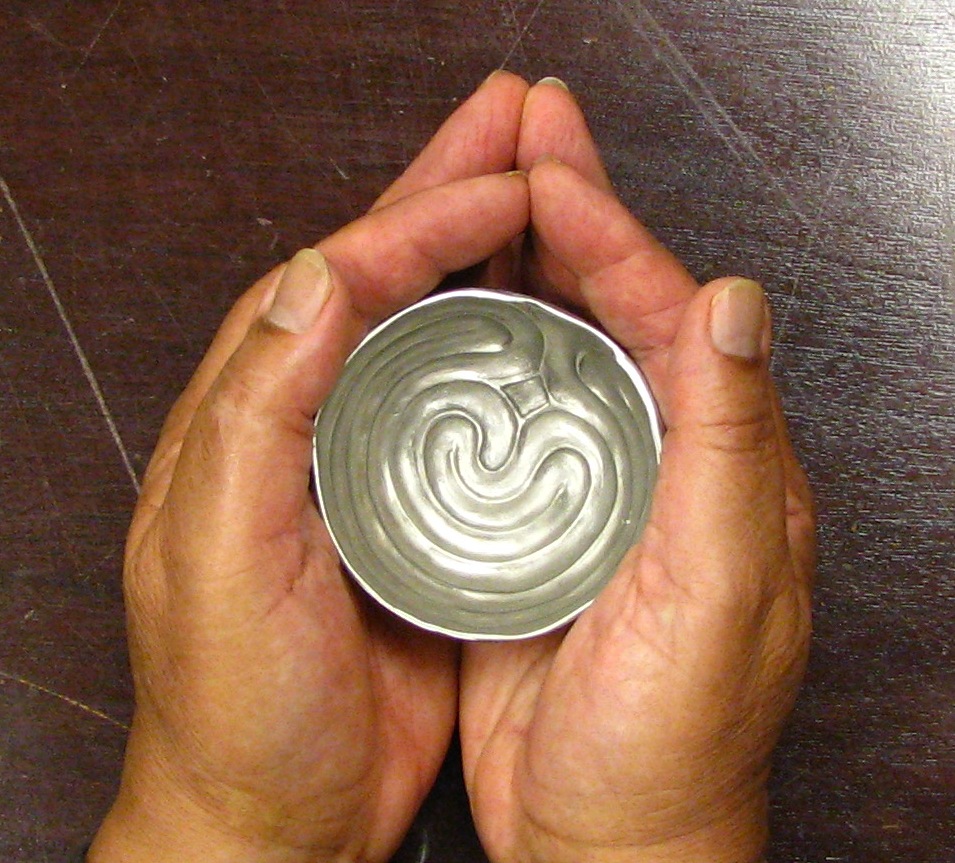 go in the circle, you can’t fall off—the whole thing is held within an outer edge. Maybe the spiritual discipline of the labyrinth is a good reminder that no matter where our wandering might take us, our whole lives are held in the very hands of God. We will never fall off. We will never wander out of God’s loving care and embrace—no matter how lost we feel sometimes.
I need to know and remember these things. Very much. So next time I walk a labyrinth I’ll try to remember.
Previous Post

March 26, 2011
A Walk in the Woods
Next Post
April 5, 2011 A Time to Weep: I'm Sinful
Browse Our Archives
Select a Category Answering the Call Being the Church Curating Wisdom Laughing Out Loud Living in Relationship Practicing Discipleship Reclaiming Baptist Speaking from the Pulpit Uncategorized
Select a Month July 2018 June 2018 May 2018 April 2018 March 2018 January 2018 December 2017 November 2017 October 2017 September 2017 June 2017 May 2017 April 2017 March 2017 February 2017 January 2017 December 2016 November 2016 October 2016 September 2016 August 2016 July 2016 June 2016 May 2016 April 2016 March 2016 February 2016 January 2016 December 2015 November 2015 October 2015 September 2015 August 2015 July 2015 June 2015 May 2015 April 2015 March 2015 February 2015 January 2015 December 2014 November 2014 October 2014 September 2014 August 2014 July 2014 June 2014 May 2014 April 2014 March 2014 February 2014 January 2014 December 2013 November 2013 October 2013 September 2013 August 2013 July 2013 June 2013 May 2013 April 2013 March 2013 February 2013 January 2013 December 2012 November 2012 October 2012 September 2012 August 2012 July 2012 June 2012 May 2012 April 2012 March 2012 February 2012 January 2012 December 2011 October 2011 September 2011 August 2011 July 2011 June 2011 May 2011 April 2011 March 2011 February 2011 January 2011 December 2010 November 2010 October 2010 September 2010 August 2010 July 2010 June 2010 May 2010 April 2010 March 2010 February 2010 January 2010 December 2009 November 2009 October 2009 September 2009 August 2009 July 2009 June 2009 May 2009 April 2009 March 2009 February 2009 January 2009 December 2008 November 2008 October 2008 September 2008 August 2008 July 2008 June 2008 May 2008 April 2008 March 2008 February 2008 January 2008 December 2007 November 2007 October 2007 September 2007 August 2007 July 2007 June 2007 May 2007 April 2007 March 2007 February 2007 January 2007 December 2006 November 2006 October 2006 September 2006 August 2006 July 2006 June 2006 May 2006 April 2006 March 2006 February 2006 January 2006 December 2005
Search for:
Recent Posts
- Sabbath as Radical Witness
- Learning Leadership: A Pilgrimage to Hawaii
- A Prayer for the Living of These Days
- Sabbath as Relationship
- Dressing Up Faith
Recent Comments
Archives
- July 2018
- June 2018
- May 2018
- April 2018
- March 2018
- January 2018
- December 2017
- November 2017
- October 2017
- September 2017
- June 2017
- May 2017
- April 2017
- March 2017
- February 2017
- January 2017
- December 2016
- November 2016
- October 2016
- September 2016
- August 2016
- July 2016
- June 2016
- May 2016
- April 2016
- March 2016
- February 2016
- January 2016
- December 2015
- November 2015
- October 2015
- September 2015
- August 2015
- July 2015
- June 2015
- May 2015
- April 2015
- March 2015
- February 2015
- January 2015
- December 2014
- November 2014
- October 2014
- September 2014
- August 2014
- July 2014
- June 2014
- May 2014
- April 2014
- March 2014
- February 2014
- January 2014
- December 2013
- November 2013
- October 2013
- September 2013
- August 2013
- July 2013
- June 2013
- May 2013
- April 2013
- March 2013
- February 2013
- January 2013
- December 2012
- November 2012
- October 2012
- September 2012
- August 2012
- July 2012
- June 2012
- May 2012
- April 2012
- March 2012
- February 2012
- January 2012
- December 2011
- October 2011
- September 2011
- August 2011
- July 2011
- June 2011
- May 2011
- April 2011
- March 2011
- February 2011
- January 2011
- December 2010
- November 2010
- October 2010
- September 2010
- August 2010
- July 2010
- June 2010
- May 2010
- April 2010
- March 2010
- February 2010
- January 2010
- December 2009
- November 2009
- October 2009
- September 2009
- August 2009
- July 2009
- June 2009
- May 2009
- April 2009
- March 2009
- February 2009
- January 2009
- December 2008
- November 2008
- October 2008
- September 2008
- August 2008
- July 2008
- June 2008
- May 2008
- April 2008
- March 2008
- February 2008
- January 2008
- December 2007
- November 2007
- October 2007
- September 2007
- August 2007
- July 2007
- June 2007
- May 2007
- April 2007
- March 2007
- February 2007
- January 2007
- December 2006
- November 2006
- October 2006
- September 2006
- August 2006
- July 2006
- June 2006
- May 2006
- April 2006
- March 2006
- February 2006
- January 2006
- December 2005
Categories
- Answering the Call
- Being the Church
- Curating Wisdom
- Laughing Out Loud
- Living in Relationship
- Practicing Discipleship
- Reclaiming Baptist
- Speaking from the Pulpit
- Uncategorized
Meta
Follow Us!
TAKE THE
Religious Wisdom Quiz
Who was the patriarch whose faith led to the near-sacrifice of his son?
Select your answer to see how you score.
Joseph Isaac Jacob Abraham
Related posts from Talk with the Preacher


Learning Leadership: A Pilgrimage to Hawaii

A Prayer for the Living of These Days

TRENDING AT PATHEOS Progressive Christian

Why Christians Have a Sacred Duty to Vote:...
The Bible offers strong support for the sacred duty to vote. Here...

What Being a Modern-Day Apostle Means to Me
In my last column, I discussed the ins and outs of modern-day...

Did Ancient China Once Worship the God of...
Across human history, a common thread weaves through the origins of the...

Love Your Neighbor – Including Earth-Kin: Lev. 19,...
God’s command to love your neighbor means acting in an ethical and...

Lead a Church Study of “Jesus and Lao...
Guest writer Jack Thomas (The Irreverent Reverend) reflects on leading his church...

Principles for Understanding the Apostolic Ministry Today
Whenever people discover that my formal ministry title is "apostle," as in...
view all Progressive Christian blogs
Ad-Free & Subscriber Log-In Subscription Support
- About Us
- 2026 Calendar
- Videos
- Podcasts
- Library of World Religions
- Faith In Media Tracker
- Advertise With Us
- Write for Us
- Privacy Policy
- Terms of Service
- Do Not Sell My Data
- Contact Us
- Radiant Digital
- Manage Newsletter Subscriptions
- Unsubscribe From Notifications
- Sitemap
Copyright 2008-2026, Patheos. All rights reserved.
Subscription Support Ad-Free & Subscriber Log-In
Follow Patheos