
BuddhistCatholicContemplativeEvangelicalGeneral ChristianHinduJewishLatter-day SaintMuslimNew VisionsProgressive Christian
Beliefs
- Buddhist
- Catholic
- Contemplative
- Evangelical
- General Christian
- Hindu
- Jewish
- Latter-day Saint
- More Voices
- Muslim
- New Visions
- Pagan
- Progressive Christian
Topics
- Religion News
- Food and Religion
- Sports and Religion
- Religious Art
- Religious Music and Entertainment
- Religious Events
- History and Religion
- Style and Religion
- Politics and Religion
- Women in Religion
- Recreation Outdoors and Religion
- Business Finance and Religion
- Careers Workplace and Religion
- Education and Religion
- Family Parenting and Religion
- Health Fitness and Religion
- Home and Religion
- Relationships and Religion
- Technology and Religion
- Travel and Religion
Columnists
- Buddhist Columnists
- Business Finance and Religion Columnists
- Careers Workplace and Religion Columnists
- Catholic Columnists
- Contemplative Columnists
- Education and Religion Columnists
- Evangelists Columnists
- Family Parenting and Religion Columnists
- General Christian Columnists
- Health Fitness and Religion Columnists
- Hindu Columnists
- History and Religion Columnists
- Home and Religion Columnists
- Jewish Columnists
- More Voices Columnists
- Latter Day Columnists
- Muslim Columnists
- New Visions Columnists
- Nonreligious Columnists
- Pagan Columnists
- Politics and Religion Columnists
- Progressive Columnists
- Recreation Outdoors and Religion Columnists
- Relationships and Religion Columnists
- Religion News Columnists
- Religious Art Columnists
- Religious Events Columnists
- Religious Music and Entertainment Columnists
- Sports and Religion Columnists
- Style and Religion Columnists
- Technology and Religion Columnists
- Travel and Religion Columnists
- Women in Religion Columnists
Resource Library
- 2026 Calendar
- Library of World Religions
- The 100 Most Holy Places on Earth
- Patheos Answers
- Podcasts
- Videos
- Faith Leaders Database
- Anglican Episcopalian
- Bahai
- Baptist
- Buddhism
- Christianity
- Confucianism
- Eastern Orthodoxy
- Hinduism
- Holiness and Pentecostal
- ISKCON
- Islam
- Judaism
- Lutheran
- Methodist
- The Church of Jesus Christ of Latter-day Saints
- New Age
- Paganism
- Presbytarian and Reformed
- Protestantism
- Religion Behind the Scenes
- Roman Catholic
- Scientology
- Shia Islam
- Sikhism
- Sufism
- Sunni Islam
- Taoism
- Zen
- See all religions
Research Tools
 Ad-Free & Subscriber Log-In Subscription Support
Ad-Free & Subscriber Log-In Subscription Support
Follow Patheos 

- Trending:
- Forgiveness
- |
- Marriage
- |
- Consciousness
- |
- Death Penalty
- |
- Election
- |
- Halloween

- Home
- Religious Music & Entertainment
- Becoming a Recovery-Friendly Church: A Q&A with Jonathan Benz
Becoming a Recovery-Friendly Church: A Q&A with Jonathan Benz
Last updated on: January 19, 2016 at 2:20 pm by Deborah Arca
Becoming a Recovery-Friendly Church: A Q&A with Jonathan Benz 2016-01-19T14:20:51-07:00 Deborah Arca
Patheos Explore the world's faith through different perspectives on religion and spirituality! Patheos has the views of the prevalent religions and spiritualities of the world.
“The truth is people are already suffering from addiction in our pews. The issue is whether we will move out of our denial and respond with grace, healing, and unconditional love.” — Jonathan Benz, author, ordained minister, and certified addictions professional
This month in the Patheos Book Club, we’re featuring The Recovery-Minded Church, a timely and practical book for the Church on loving and ministering to people with addiction. Author Jonathan Benz (MS, Palm Beach Atlantic University) is a clinician, public speaker, ordained minister and certified addictions professional who serves as the program director of the Three Strands Christian addiction treatment program at The Recovery Place in Fort Lauderdale, Florida. As a leadership consultant to various agencies in the United States and United Kingdom he specializes in teaching team leadership, task efficiency, crisis management and conflict resolution to people in the midst of life transitions.
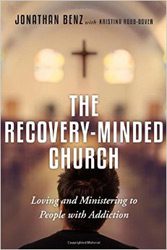 Patheos caught up with Jonathan this week to find out more about the problem of addiction in the church, and how to become a more “recovery-friendly” church.
In Chapter 1, you say: “The question is not whether you will encounter addicted people (in your congregation), but how you will respond when you encounter them.” What is the reality, statistically-speaking, of the number of people struggling with addictions in churches?
Most experts agree that roughly 1 in 3 Americans suffer from some form of addiction—from substance use disorders to “process” addictions such as sex, food, or shopping. Many believe this statistic to be much higher as the shame and stigma associated with addiction keep people from being as honest when self-disclosing. I believe this to be especially true in the Church where still many Christians believe addiction to be a sin forgiven rather than a disease state to treat, heal, and recover from.
You maintain that addiction recovery is more than just helping get someone into an AA program. What is a church’s opportunity in regards to loving and walking alongside the addict?
I believe it to be an opportunity for us to love the “least of these” and by doing so minister to Jesus. The truth is people are already suffering from addiction in our pews. The issue is whether we will move out of our denial and respond with grace, healing, and unconditional love.
Addictions are of many forms today, from substance abuse, to pornography, to shopping. When you talk about addiction in a community, how broad does that definition extend?
Addiction looks different depending on the object the person feels controlled by. So while we know that there is a genetic marker for alcoholism, science hasn’t quite pinpointed (yet) one, for say, compulsive exercise. It’s important to remember whatever the obsession or compulsion—whether shopping, sex, pain pills, or chardonnay—these things are but a symptom of a deeper longing. So we don’t address symptoms as much as we address the hole in the heart that causes one to self-medicate and numb out with these other things.
I imagine the way we “love” an addict versus a recovering addict is different. I’m thinking specifically of the importance of boundaries with addicts.
I believe unconditional love is necessary for both a person in active addiction or in recovery. But yes, boundaries are important. Addiction generally responds best to consequences. So when we have healthy boundaries with the addicts in our midst, we actually love them into recovery and into a space where they can heal. Our denial or enabling actually keeps the disease in the shadows. I think bringing the disease state into the “light of Christ” is a helpful metaphor when helping another heal. What is done in the dark actually destroys. Sharing with a trusted confidant fosters deeper healing and recovery.
What are some of the first steps in creating a recovery-friendly church?
Start having the conversation. Create awareness. Remove the shame and bring things into the light— of course where it would do no harm to those involved.
What are some of the biggest hurdles in becoming — and sustaining — a recovery-minded church?
Addiction is a chronic and pernicious state. It can also be exacerbating or as AA says, “cunning, baffling, and powerful.” So understanding that this is a long-term pursuit and not a quick fix is important.
In the situation where a pastor or church leader struggles with their own addictions, what would be your advice for that community? What is the role of the congregation in that instance?
It depends on the level of addiction and the current impact on the leader’s life and/or congregation. It might be necessary for the pastor to go for private therapy or perhaps even go away to treatment. I’ve been involved in such cases. We work with the pastor’s family and his or her board or vestry to protect the integrity of the leader, family, and congregation. This information should be shared only on a “need-to-know” basis.
What is your own experience with ministering to those with addictions? How were you called to this work? What keeps you engaged with the work?
I was raised in a minister’s home that was very recovery-friendly. We had parishioners in our congregation who exposed us to AA and other recovery fellowships in the early 80s. My father preached it wasn’t a sin to be an addict. Sinful consequences, perhaps yes. But for our congregation addiction was a disease to be treated through clinical professionals along with spiritual community.
For me, addicts and alcoholics were not bad people—they were my friends at church, extended family members, even mentors. I was blessed that we were given good information about addiction early on. That shaped me and to this day still inspires me for this most wonderful work of healing and recovery. By the way, that’s all in Chapter 1. 🙂
Read an excerpt from The Recovery-Minded Church at the Patheos Book Club here.
Previous Post

November 16, 2015
Fractured Not Broken: A Q&A with Kelly Schaefer
Next Post
February 2, 2016 Five Reasons There’s No Getting Past Religion
Browse Our Archives
Select a Category Author Q&A Book Review Christian Living Church Leadership Stump a Scholar Theology Uncategorized
Select a Month June 2022 March 2021 October 2020 August 2020 February 2019 November 2017 July 2017 June 2017 May 2017 March 2017 February 2017 January 2017 November 2016 October 2016 August 2016 July 2016 June 2016 May 2016 April 2016 March 2016 February 2016 January 2016 November 2015 October 2015 September 2015 August 2015 July 2015 June 2015 May 2015 April 2015 March 2015 February 2015 January 2015 December 2014 November 2014 October 2014 September 2014 August 2014 July 2014 June 2014 May 2014 April 2014 March 2014 February 2014 January 2014 December 2013 November 2013 October 2013 September 2013 August 2013 July 2013 June 2013 May 2013 April 2013 March 2013 February 2013 January 2013 December 2012 November 2012 October 2012 September 2012 August 2012 July 2012 June 2012 May 2012 April 2012 March 2012 February 2012 January 2012 December 2011 November 2011 October 2011 September 2011 August 2011 July 2011 June 2011 May 2011 April 2011 March 2011 February 2011 January 2011 December 2010 November 2010 October 2010 September 2010 August 2010 July 2010 June 2010
Follow Us!
TAKE THE
Religious Wisdom Quiz
How many books are in the Bible (Protestant version)?
Select your answer to see how you score.
40 73 66 12
Related posts from Take and Read

Life is an Endless Invitation: Q&A With Rob...
Rethinking Ritual for a Secular Age: An Interview...

Even the Faith Giants Didn’t Always Get it...

Author Lily Burana on Experiencing God's Grace and...
TRENDING AT PATHEOS Religious Music & Entertainment

"Les Diabolique" and Transgression
Alongside something like Arrival, Vertigo, or Charade, Les Diaboliques is a...

"The Plague Dogs" and Mortality
So, flashback to the late 70s, early 80s. Walt Disney Studios is...

With the recent and highly successful release of Christopher Nolan’s epic film,...

"L'avventura" and Human Weakness
Today's piece is going to be a little different for a few...

I first want to apologize for not posting or writing anything. I'm...

I've engaged in the multi-year project of reading through the Church Fathers,...
view all Religious Music & Entertainment blogs
Ad-Free & Subscriber Log-In Subscription Support
- About Us
- 2026 Calendar
- Videos
- Podcasts
- Library of World Religions
- Faith In Media Tracker
- Advertise With Us
- Write for Us
- Privacy Policy
- Terms of Service
- Do Not Sell My Data
- Contact Us
- Radiant Digital
- Manage Newsletter Subscriptions
- Unsubscribe From Notifications
- Sitemap
Copyright 2008-2026, Patheos. All rights reserved.
Subscription Support Ad-Free & Subscriber Log-In
Follow Patheos