
BuddhistCatholicContemplativeEvangelicalGeneral ChristianHinduJewishLatter-day SaintMuslimNew VisionsProgressive Christian
Beliefs
- Buddhist
- Catholic
- Contemplative
- Evangelical
- General Christian
- Hindu
- Jewish
- Latter-day Saint
- More Voices
- Muslim
- New Visions
- Pagan
- Progressive Christian
Topics
- Religion News
- Food and Religion
- Sports and Religion
- Religious Art
- Religious Music and Entertainment
- Religious Events
- History and Religion
- Style and Religion
- Politics and Religion
- Women in Religion
- Recreation Outdoors and Religion
- Business Finance and Religion
- Careers Workplace and Religion
- Education and Religion
- Family Parenting and Religion
- Health Fitness and Religion
- Home and Religion
- Relationships and Religion
- Technology and Religion
- Travel and Religion
Columnists
- Buddhist Columnists
- Business Finance and Religion Columnists
- Careers Workplace and Religion Columnists
- Catholic Columnists
- Contemplative Columnists
- Education and Religion Columnists
- Evangelists Columnists
- Family Parenting and Religion Columnists
- General Christian Columnists
- Health Fitness and Religion Columnists
- Hindu Columnists
- History and Religion Columnists
- Home and Religion Columnists
- Jewish Columnists
- More Voices Columnists
- Latter Day Columnists
- Muslim Columnists
- New Visions Columnists
- Nonreligious Columnists
- Pagan Columnists
- Politics and Religion Columnists
- Progressive Columnists
- Recreation Outdoors and Religion Columnists
- Relationships and Religion Columnists
- Religion News Columnists
- Religious Art Columnists
- Religious Events Columnists
- Religious Music and Entertainment Columnists
- Sports and Religion Columnists
- Style and Religion Columnists
- Technology and Religion Columnists
- Travel and Religion Columnists
- Women in Religion Columnists
Resource Library
- 2026 Calendar
- Library of World Religions
- The 100 Most Holy Places on Earth
- Patheos Answers
- Podcasts
- Videos
- Faith Leaders Database
- Anglican Episcopalian
- Bahai
- Baptist
- Buddhism
- Christianity
- Confucianism
- Eastern Orthodoxy
- Hinduism
- Holiness and Pentecostal
- ISKCON
- Islam
- Judaism
- Lutheran
- Methodist
- The Church of Jesus Christ of Latter-day Saints
- New Age
- Paganism
- Presbytarian and Reformed
- Protestantism
- Religion Behind the Scenes
- Roman Catholic
- Scientology
- Shia Islam
- Sikhism
- Sufism
- Sunni Islam
- Taoism
- Zen
- See all religions
Research Tools
 Ad-Free & Subscriber Log-In Subscription Support
Ad-Free & Subscriber Log-In Subscription Support
Follow Patheos 

- Trending:
- Forgiveness
- |
- Marriage
- |
- Consciousness
- |
- Death Penalty
- |
- Election
- |
- Halloween

- Home
- Religious Music & Entertainment
- At the Intersection of Cancer, Culture and Christ: 15 Years Later
At the Intersection of Cancer, Culture and Christ: 15 Years Later
Last updated on: September 17, 2015 at 2:59 pm by Guest Contributor
At the Intersection of Cancer, Culture and Christ: 15 Years Later 2015-09-17T14:59:14-06:00 Guest Contributor
Patheos Explore the world's faith through different perspectives on religion and spirituality! Patheos has the views of the prevalent religions and spiritualities of the world.
[Editor’s Note: As part of this month’s Book Club on the memoir Stripped: At the Intersection of Cancer, Culture and Christ, author Heather King offers a new reflection, 15 years after her diagnosis.]
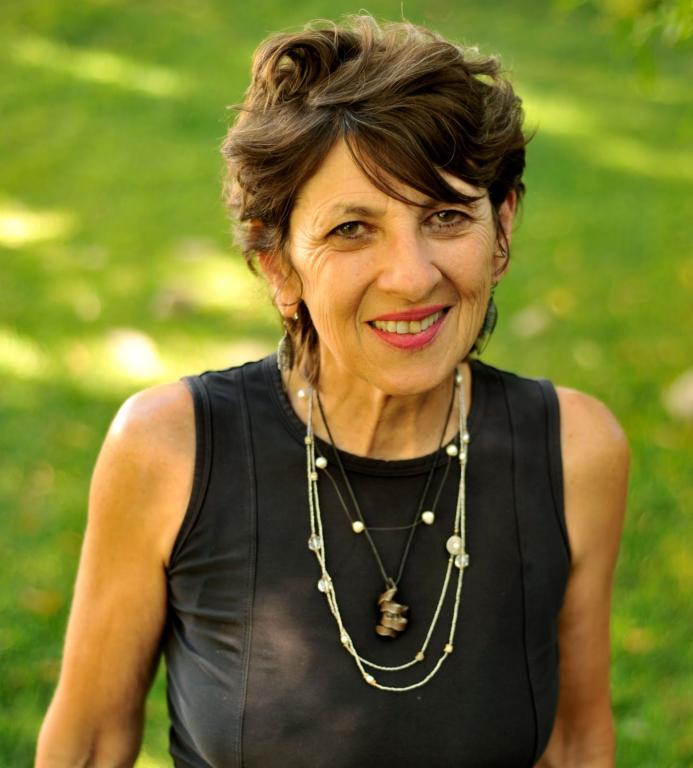 Fifteen years after the events described in my book Stripped, I’m fifteen years closer—I could be a lot closer than that!—to my own death. And I ponder the questions I raised there more deeply than ever.
Recently I heard from my old friend Ron. Ron is an editor, a writer, and a teacher who had struggled for years—though he’d managed to live an otherwise full life—with Hep-C.
Ron and I are both converts. Every so often over the years we’d run into each other outside the confessional on a Saturday afternoon at St. Francis of Assisi in the Silver Lake neighborhood of L.A..
We both had checkered pasts. We both continued to struggle. We both knew those things are true of every human being.
Ron had undergone a painful round of Interferon—and a couple of rounds of other drugs—to treat his Hep-C. I hadn’t heard from him in over a year. And when he e-mailed recently, he reported that just when he’d finally tested clear, he’d gotten a call from his doctor. The doctor said, “We saw a little something on an X-ray. We want you to have some tests.
A few weeks later, Ron was diagnosed with liver cancer.
He wasn’t looking for sympathy. Instead, he said he’d love to take me out to dinner and talk because he knew I’d once been diagnosed with cancer and because I’m Catholic and because he knew my being Catholic had figured heavily into my treatment decisions.
His e-mail displayed no drama, no hand-wringing. In fact, when we met for a vigil Mass and dinner at an Indian restaurant afterward, I’d never seen him so cheerful. He wanted to know how I was doing.
We caught up on some mutual acquaintances.
And then we got down to the dilemma at hand; namely, that the only “cure” for liver cancer is a transplant. That’s what the medical community was offering him, urging him toward.
A transplant is expensive, messy, and painful, it turns out, with an iffy survival rate.
But way worse than any of that was, as Ron put it, “They”—meaning the medical community—“would own me.”
He could never have a pet again (which would mean letting go of his beloved Talulah). He could never go out in the sun again. His immune system would be shot, permanently.
Most frightening of all, he’d lose all right to have any power of choice over his treatment. The way he understood it, the doctors could keep him alive, indefinitely, as long as they possibly could: no matter how invasive and aggressive the measures, no matter if he was clearly terminal.
“Right away,” Ron continued, “they start running these psychological tests to see if you’re a good candidate for blind obeisance. They want to make sure you’re not the type who asks a lot of questions or deviates from the plan.”
One “Informed Consent for Liver Transplant Evaluation Form I read later described the members of the team as including the Hepatologist, the Transplant Coordinator, the Transplant Surgeon, the Financial Coordinator, the Psychiatrist, the Transplant Dietician, the Transplant Pharmacist, and the Transplant Social Worker.
Ron described the Social Worker who’d been assigned to his case. Her bone-white face bore the scars from several plastic surgeries. She came out to the waiting room in what looked like a wig, glanced at a chart, and started screeching, “William? William?” When no-one answered, she looked at the chart again and started screeching Ronald? Ronald?
Ron doubled over laughing as he told the story. “The poor woman had obviously had major work on her face and looked like she hadn’t been outdoors in years. This is the person they’re sending to convince me to take every possible measure to cling to life: in any shape, at any cost.”
The question Ron was facing evinced the central tenet of Stripped: that Catholicism, above all, is an existential choice. What Master are we going to serve: the god of power, property, security and prestige—or Christ? As the great Catholic novelist and short story writer Flannery O’Connor said, “I am a Catholic not like someone else would be a Baptist or a Methodist, but like someone else would be an atheist.”
In other words, the follower of Christ hasn’t shopped around for a religion the way people shop for a country club or a neighborhood or a school. The follower of Christ has staked his or her life. Either you believe that Christ is who he said he was or you don’t. And if you do, you go all the way, or at least you’ve pledged to go all the way and you are very aware of the ways you’re waffling, self-justifying, playing it safe.
That doesn’t mean the choice is between medicine and Christ, which is the central tenet of Christian Science.
No, no, no. What it does mean is the freedom to think and act outside the sometimes crushing “systems”—medical, economic, legal—under which we live. What it does mean is that as followers of Christ we don’t have to grasp at life because we’ve been fully living all along. It means we can choose to give our life and we can choose to give our death.
It means that, wonderful though their learning and wisdom may be, doctors are not God. The medical system is not God. A liver transplant that may give you a few more years, mostly filled with pain, is not God.
St. Paul boasted of his weakness not because weakness, in and of itself, is a virtue. He boasted of his weakness because to acknowledge our powerlessness, to bow before the mystery of life, to accept that we can’t control every outcome, is to be in contact with reality. It’s to be in right relationship with God.
Here’s what I mean. At an airport recently I saw a poster of a cute kid, maybe 10 years old. He was in a Little League uniform and he had an artificial leg. The caption read, “Ryan threw cancer a curve ball.”
He looked like a great kid: plucky, courageous. But if cancer took out the poor kid’s leg, I’d say cancer threw Ryan a curve ball, not the other way around.
That Mayweather didn’t kill Pacquiao in the latest “Fight of the Century” doesn’t mean Pacquiao threw Mayweather “a curve ball.” No, Pacquiao lost. Big time. And big deal! We lose sometimes. We lose a lot, and often, in this world.
We don’t want to lose. We don’t set out to lose. But life, as St. Therese of Lisieux realized at about the age of ten, more or less consists in suffering and loss.
And we will go to insane lengths, which almost inevitably include way more suffering than God would otherwise impose, to avoid facing that fact.
When we do face the fact, paradoxically, we become stronger, not weaker: more willing to sacrifice, more open to beauty, more able to embrace paradox.
The night Ron and I had dinner happened to be the Memorial of St. Maximilian Kolbe, the Polish priest who offered himself up in place of a husband and father of six to starve to death in a bunker at Auschwitz.
We talked about him for a bit and then Ron said, a bit shyly, “I suppose I’m thinking a little along those lines, too.”
“What do you mean?”
“Well, I’m 68. I’m not married. I don’t have kids. What if a younger person, a mother or a husband or a little kid, needed the liver more than me?”
For a minute I couldn’t speak. Like St Paul, Ron had stayed the course; he had—almost—finished the race.
In all his broken humanity, he intuitively understood that the battle wasn’t between him and cancer. The battle is between this world and the Kingdom of God—and the question, for all of us—is which realm we are going to serve.
Here was a man with a heart, a conscience, and a soul that could never have been formed by science alone. That I had the honor of breaking bread with him is why I know that, fifteen years ago, I made the right choice, too.
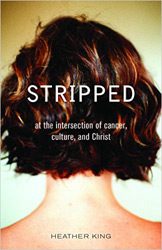 Read an excerpt from Heather King’s book, Stripped, at the Patheos Book Club here.
Previous Post

September 1, 2015
What's The Cause Church? A Q&A with jKonrad Hölé
Next Post
September 18, 2015 Stripped: A Q&A with Heather King on Cancer and her Catholic Faith
Browse Our Archives
Select a Category Author Q&A Book Review Christian Living Church Leadership Stump a Scholar Theology Uncategorized
Select a Month June 2022 March 2021 October 2020 August 2020 February 2019 November 2017 July 2017 June 2017 May 2017 March 2017 February 2017 January 2017 November 2016 October 2016 August 2016 July 2016 June 2016 May 2016 April 2016 March 2016 February 2016 January 2016 November 2015 October 2015 September 2015 August 2015 July 2015 June 2015 May 2015 April 2015 March 2015 February 2015 January 2015 December 2014 November 2014 October 2014 September 2014 August 2014 July 2014 June 2014 May 2014 April 2014 March 2014 February 2014 January 2014 December 2013 November 2013 October 2013 September 2013 August 2013 July 2013 June 2013 May 2013 April 2013 March 2013 February 2013 January 2013 December 2012 November 2012 October 2012 September 2012 August 2012 July 2012 June 2012 May 2012 April 2012 March 2012 February 2012 January 2012 December 2011 November 2011 October 2011 September 2011 August 2011 July 2011 June 2011 May 2011 April 2011 March 2011 February 2011 January 2011 December 2010 November 2010 October 2010 September 2010 August 2010 July 2010 June 2010
Follow Us!
TAKE THE
Religious Wisdom Quiz
What did God create on the first day according to Genesis?
Select your answer to see how you score.
Animals Man Plants Light
Related posts from Take and Read

How the Church Can Heal the Race Divide

Finding Inspiration in "Where Angels Walk"

Happiness Is Found Outside of Our Comfort Zones

Symbols of Faith in "Take the Flag"
TRENDING AT PATHEOS Religious Music & Entertainment

"Les Diabolique" and Transgression
Alongside something like Arrival, Vertigo, or Charade, Les Diaboliques is a...

"The Plague Dogs" and Mortality
So, flashback to the late 70s, early 80s. Walt Disney Studios is...

With the recent and highly successful release of Christopher Nolan’s epic film,...

"L'avventura" and Human Weakness
Today's piece is going to be a little different for a few...

I first want to apologize for not posting or writing anything. I'm...

I've engaged in the multi-year project of reading through the Church Fathers,...
view all Religious Music & Entertainment blogs
Ad-Free & Subscriber Log-In Subscription Support
- About Us
- 2026 Calendar
- Videos
- Podcasts
- Library of World Religions
- Faith In Media Tracker
- Advertise With Us
- Write for Us
- Privacy Policy
- Terms of Service
- Do Not Sell My Data
- Contact Us
- Radiant Digital
- Manage Newsletter Subscriptions
- Unsubscribe From Notifications
- Sitemap
Copyright 2008-2026, Patheos. All rights reserved.
Subscription Support Ad-Free & Subscriber Log-In
Follow Patheos