
BuddhistCatholicContemplativeEvangelicalGeneral ChristianHinduJewishLatter-day SaintMuslimNew VisionsProgressive Christian
Beliefs
- Buddhist
- Catholic
- Contemplative
- Evangelical
- General Christian
- Hindu
- Jewish
- Latter-day Saint
- More Voices
- Muslim
- New Visions
- Pagan
- Progressive Christian
Topics
- Religion News
- Food and Religion
- Sports and Religion
- Religious Art
- Religious Music and Entertainment
- Religious Events
- History and Religion
- Style and Religion
- Politics and Religion
- Women in Religion
- Recreation Outdoors and Religion
- Business Finance and Religion
- Careers Workplace and Religion
- Education and Religion
- Family Parenting and Religion
- Health Fitness and Religion
- Home and Religion
- Relationships and Religion
- Technology and Religion
- Travel and Religion
Columnists
- Buddhist Columnists
- Business Finance and Religion Columnists
- Careers Workplace and Religion Columnists
- Catholic Columnists
- Contemplative Columnists
- Education and Religion Columnists
- Evangelists Columnists
- Family Parenting and Religion Columnists
- General Christian Columnists
- Health Fitness and Religion Columnists
- Hindu Columnists
- History and Religion Columnists
- Home and Religion Columnists
- Jewish Columnists
- More Voices Columnists
- Latter Day Columnists
- Muslim Columnists
- New Visions Columnists
- Nonreligious Columnists
- Pagan Columnists
- Politics and Religion Columnists
- Progressive Columnists
- Recreation Outdoors and Religion Columnists
- Relationships and Religion Columnists
- Religion News Columnists
- Religious Art Columnists
- Religious Events Columnists
- Religious Music and Entertainment Columnists
- Sports and Religion Columnists
- Style and Religion Columnists
- Technology and Religion Columnists
- Travel and Religion Columnists
- Women in Religion Columnists
Resource Library
- 2026 Calendar
- Library of World Religions
- The 100 Most Holy Places on Earth
- Patheos Answers
- Podcasts
- Videos
- Faith Leaders Database
- Anglican Episcopalian
- Bahai
- Baptist
- Buddhism
- Christianity
- Confucianism
- Eastern Orthodoxy
- Hinduism
- Holiness and Pentecostal
- ISKCON
- Islam
- Judaism
- Lutheran
- Methodist
- The Church of Jesus Christ of Latter-day Saints
- New Age
- Paganism
- Presbytarian and Reformed
- Protestantism
- Religion Behind the Scenes
- Roman Catholic
- Scientology
- Shia Islam
- Sikhism
- Sufism
- Sunni Islam
- Taoism
- Zen
- See all religions
Research Tools
 Ad-Free & Subscriber Log-In Subscription Support
Ad-Free & Subscriber Log-In Subscription Support
Follow Patheos 

- Trending:
- Forgiveness
- |
- Marriage
- |
- Consciousness
- |
- Death Penalty
- |
- Election
- |
- Halloween

- Home
- Religious Music & Entertainment
- Jane Eyre’s Sisters: A Q&A with author Jody Bower
Jane Eyre’s Sisters: A Q&A with author Jody Bower
Last updated on: June 17, 2015 at 5:38 pm by Deborah Arca
Jane Eyre’s Sisters: A Q&A with author Jody Bower 2015-06-17T17:38:55-06:00 Deborah Arca
Patheos Explore the world's faith through different perspectives on religion and spirituality! Patheos has the views of the prevalent religions and spiritualities of the world.
“We’re still living in a male-oriented world, although it’s changing, and one thing that’s helping to change that orientation is exposure to women’s voices. Just as exposure to the voices of other cultures, other races, other religions, other forms of art, and other gender orientations is helping to broaden all our minds and enrich our cultures. We have to get past the resistance to reading works by people who aren’t exactly like us—either because we don’t relate to them, or because we’re suspicious of them—and become curious instead. As soon as we become curious, we open our minds.” — Jody Gentian Bower, author, Jane Eyre’s Sisters
In the new book Jane Eyre’s Sisters: How Women Live and Write the Heroine’s Journey, cultural mythologist Jody Gentian Bower looks at the heroine’s journey, and how it’s been told throughout the years in novels by women — and some men — as well as biographies of women. What she finds is a different narrative than the traditional masculine heroic quest model; but rather one more accurately captured by the character of Aletis, the wandering heroine.
We invited Bower to share some of her discoveries about the heroine’s journey …
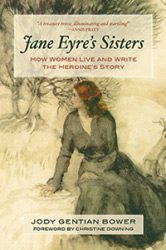 What compelled you to write Jane Eyre’s Sisters? And what inspired the title?
After I started noticing this same plot & cast of characters in novels by women, I got curious and went looking for books on the topic. I didn’t find any—that is, I found books about “The Heroine’s Journey” but they were almost all based on Joseph Campbell’s Hero Quest story, and that was not the story I was seeing in the novels. The story I saw was very different! Finally I decided that if I wanted to read a book about this, I would have to write it myself.
My first title was She’s Leaving Home, referencing the Beatles song, but while I was attending a writer’s conference the phrase “Jane Eyre’s Sisters” came to me, because it seems to me that so many famous heroines of women’s literature are in fact “sisters” to Jane Eyre, they want the same things, they have similar experiences. I spent the weekend running the two titles by people at the conference. I found that whenever I said “Jane Eyre” people perked up and got interested. So I went with that (my book editor also liked it better).
You avoid the term “heroine” when describing a woman’s journey, preferring instead the Greek work “aletis’. Tell us about that choice.
I talk about this in book. The word “heroine” strikes me as a diminutive form of “hero,” as if a female hero is somehow less than a male one. Like saying “woman doctor” instead of just “doctor,” as if a woman doctor is not the same as a doctor. Also, the kind of courage that the aletis shows is not the typical kind of heroism, which is usually a one-shot thing where the hero does the single thing that saves the day or makes everything okay. The female protagonist of these stories has to be brave for a much longer time and against many different challenges. I found a lot of possible alternatives used by others, like “she-ro” or “hera,” but again, they were based on “hero.” When I ran across the word “aletis” and found that it means “wandering heroine,” that seemed to fit the story much better.
What do you think makes the Aletis, or wandering woman, so compelling in literature?
The fact that not just women, but men too, keep writing her story—and that those stories stay in print 200 years or more after publication—says to me that this story is meaningful and has been meaningful for centuries. We don’t keep reading stories about characters that people don’t relate to; the stories that stay alive speak to people. In short, they are true stories. People instinctively feel that the story of a woman who has to go on a journey to find out how to live as her real self in a society that wants to deny her individuality is a true story, a story they can relate to. In fact, not just women but men tell me it is their story.
You express frustration at the conventional archetypes for women such as the Maiden, the Mother, and the Crone. What is it about these archetypes that is limiting to women characters?
It’s not that they are limiting in themselves, but that there are more options out there than just three! I think this idea of three stages of life is an outdated one, a holdover from the days when almost all women became mothers and then, when their mothering days were over, were “old.” That’s not true today. Many women choose to be childless, and many who have children also have careers. Plus, medical breakthroughs have meant that most of us are still “youthful” at 40 or 50 when the children are grown & gone and can look forward to many more years of active engagement in life before we start to think of ourselves as crones. So instead of three acts in life, I see four—and the third act between Mother and Crone may be the best of all!
The stories of women you consider in your book include those from sci–fi and fantasy genres. Why were those stories important for you to include?
I like to call these genres “speculative fiction,” because the authors working in these fields aren’t just writing about robots or rocket ships or elves, they’re thinking hard about what people might be like in the future or under different circumstances. What would our societies be like if magic was real? What would they be like if in the future we could live 300 years? What if we were hermaphrodites, both male and female—how would that change our culture? In short, these books take bold steps of imagination and ask us to stretch our own ideas about not just who we are, but who we can be.
How can women-focused narratives transform the world?
We’re still living in a male-oriented world, although it’s changing, and one thing that’s helping to change that orientation is exposure to women’s voices. Just as exposure to the voices of other cultures, other races, other religions, other forms of art, and other gender orientations is helping to broaden all our minds and enrich our cultures. We have to get past the resistance to reading works by people who aren’t exactly like us—either because we don’t relate to them, or because we’re suspicious of them—and become curious instead. As soon as we become curious, we open our minds. You don’t have to agree, you don’t have to believe what they say, to be curious. Be curious about that person who has a different religion. Be curious about that person who holds different political views. If we could learn to do this with books, we could learn to do it in all aspects of our life.
Is your book just for women? Who is the target audience for Jane Eyre’s Sisters?
The target audience is anyone who is interested in the whole field of heroic quest/heroine journey stories. That includes anyone who loves or writes novels or movies and television shows, anyone interested in literary theory, anyone interested in psychology—no, it’s not just for women! Women may of course be more likely to see themselves in the book, but I’ve had several men tell me that they never related to the Hero Quest story and that the Aletis story fits them too. The reviews on the book by the men who’ve read it, especially those who are writers or film-makers themselves, have been positive.
What do you most hope readers take away from this book?
That there is amazing wisdom in the stories women write, a wisdom that hasn’t yet been explored fully and needs to be, because it can be of great help to both women and men.
Read an excerpt from Jane Eyre’s Sisters at the Patheos Book Club here.
Next Post

July 9, 2015 Dissecting Patriachy and Biblical Manhood: A Review of 'Maelstrom'
Browse Our Archives
Select a Category Author Q&A Book Review Christian Living Church Leadership Stump a Scholar Theology Uncategorized
Select a Month June 2022 March 2021 October 2020 August 2020 February 2019 November 2017 July 2017 June 2017 May 2017 March 2017 February 2017 January 2017 November 2016 October 2016 August 2016 July 2016 June 2016 May 2016 April 2016 March 2016 February 2016 January 2016 November 2015 October 2015 September 2015 August 2015 July 2015 June 2015 May 2015 April 2015 March 2015 February 2015 January 2015 December 2014 November 2014 October 2014 September 2014 August 2014 July 2014 June 2014 May 2014 April 2014 March 2014 February 2014 January 2014 December 2013 November 2013 October 2013 September 2013 August 2013 July 2013 June 2013 May 2013 April 2013 March 2013 February 2013 January 2013 December 2012 November 2012 October 2012 September 2012 August 2012 July 2012 June 2012 May 2012 April 2012 March 2012 February 2012 January 2012 December 2011 November 2011 October 2011 September 2011 August 2011 July 2011 June 2011 May 2011 April 2011 March 2011 February 2011 January 2011 December 2010 November 2010 October 2010 September 2010 August 2010 July 2010 June 2010
Follow Us!
TAKE THE
Religious Wisdom Quiz
Who miraculously made an iron axe head float?
Select your answer to see how you score.
Elijah Hosea Elisha Jonah
Related posts from Take and Read

Life is an Endless Invitation: Q&A With Rob...
Rethinking Ritual for a Secular Age: An Interview...

Even the Faith Giants Didn’t Always Get it...

Author Lily Burana on Experiencing God's Grace and...
TRENDING AT PATHEOS Religious Music & Entertainment

"Les Diabolique" and Transgression
Alongside something like Arrival, Vertigo, or Charade, Les Diaboliques is a...

"The Plague Dogs" and Mortality
So, flashback to the late 70s, early 80s. Walt Disney Studios is...

With the recent and highly successful release of Christopher Nolan’s epic film,...

"L'avventura" and Human Weakness
Today's piece is going to be a little different for a few...

I first want to apologize for not posting or writing anything. I'm...

I've engaged in the multi-year project of reading through the Church Fathers,...
view all Religious Music & Entertainment blogs
Ad-Free & Subscriber Log-In Subscription Support
- About Us
- 2026 Calendar
- Videos
- Podcasts
- Library of World Religions
- Faith In Media Tracker
- Advertise With Us
- Write for Us
- Privacy Policy
- Terms of Service
- Do Not Sell My Data
- Contact Us
- Radiant Digital
- Manage Newsletter Subscriptions
- Unsubscribe From Notifications
- Sitemap
Copyright 2008-2026, Patheos. All rights reserved.
Subscription Support Ad-Free & Subscriber Log-In
Follow Patheos