
BuddhistCatholicContemplativeEvangelicalGeneral ChristianHinduJewishLatter-day SaintMuslimNew VisionsProgressive Christian
Beliefs
- Buddhist
- Catholic
- Contemplative
- Evangelical
- General Christian
- Hindu
- Jewish
- Latter-day Saint
- More Voices
- Muslim
- New Visions
- Pagan
- Progressive Christian
Topics
- Religion News
- Food and Religion
- Sports and Religion
- Religious Art
- Religious Music and Entertainment
- Religious Events
- History and Religion
- Style and Religion
- Politics and Religion
- Women in Religion
- Recreation Outdoors and Religion
- Business Finance and Religion
- Careers Workplace and Religion
- Education and Religion
- Family Parenting and Religion
- Health Fitness and Religion
- Home and Religion
- Relationships and Religion
- Technology and Religion
- Travel and Religion
Columnists
- Buddhist Columnists
- Business Finance and Religion Columnists
- Careers Workplace and Religion Columnists
- Catholic Columnists
- Contemplative Columnists
- Education and Religion Columnists
- Evangelists Columnists
- Family Parenting and Religion Columnists
- General Christian Columnists
- Health Fitness and Religion Columnists
- Hindu Columnists
- History and Religion Columnists
- Home and Religion Columnists
- Jewish Columnists
- More Voices Columnists
- Latter Day Columnists
- Muslim Columnists
- New Visions Columnists
- Nonreligious Columnists
- Pagan Columnists
- Politics and Religion Columnists
- Progressive Columnists
- Recreation Outdoors and Religion Columnists
- Relationships and Religion Columnists
- Religion News Columnists
- Religious Art Columnists
- Religious Events Columnists
- Religious Music and Entertainment Columnists
- Sports and Religion Columnists
- Style and Religion Columnists
- Technology and Religion Columnists
- Travel and Religion Columnists
- Women in Religion Columnists
Resource Library
- 2026 Calendar
- Library of World Religions
- The 100 Most Holy Places on Earth
- Patheos Answers
- Podcasts
- Videos
- Faith Leaders Database
- Anglican Episcopalian
- Bahai
- Baptist
- Buddhism
- Christianity
- Confucianism
- Eastern Orthodoxy
- Hinduism
- Holiness and Pentecostal
- ISKCON
- Islam
- Judaism
- Lutheran
- Methodist
- The Church of Jesus Christ of Latter-day Saints
- New Age
- Paganism
- Presbytarian and Reformed
- Protestantism
- Religion Behind the Scenes
- Roman Catholic
- Scientology
- Shia Islam
- Sikhism
- Sufism
- Sunni Islam
- Taoism
- Zen
- See all religions
Research Tools
 Ad-Free & Subscriber Log-In Subscription Support
Ad-Free & Subscriber Log-In Subscription Support
Follow Patheos 

- Trending:
- Forgiveness
- |
- Marriage
- |
- Consciousness
- |
- Death Penalty
- |
- Election
- |
- Halloween

- Home
- Religious Music & Entertainment
- Are Adam and Eve For Real? A Q&A with Author John Walton
Are Adam and Eve For Real? A Q&A with Author John Walton
Last updated on: March 3, 2015 at 4:19 pm by Guest Contributor
Are Adam and Eve For Real? A Q&A with Author John Walton 2015-03-03T16:19:20-07:00 Guest Contributor
Patheos Explore the world's faith through different perspectives on religion and spirituality! Patheos has the views of the prevalent religions and spiritualities of the world.
“We too easily believe that the world of biblical interpretation is a black and white world—that whatever view we have adopted is right and everyone else is wrong. Such a view is too facile. In many cases we do our best to be faithful interpreters, but the Bible just doesn’t offer enough information to give irreproachable confidence.” — John H. Walton, author, The Lost World of Adam and Eve
Following his groundbreaking The Lost World of Genesis One, which examined propositions supporting a literary and theological understanding of that book, John H. Walton has done the same with the story of Genesis 2-3, that most elemental tale of Adam and Eve. Sure to stir the debate in biblical and theological studies, we sat down with Walton to gain some insight into the backstory of the new book, The Lost World of Adam and Eve. (Read an excerpt from the book here.)
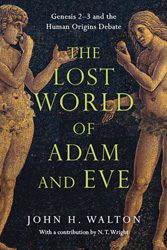 What made you dive into the discussions (and controversies) surrounding Adam and Eve and Genesis 2-3?
I have always been interested in Genesis, in ancient Near Eastern backgrounds, and in issues of science and the Bible, so there is no better text to work on.
What surprised you most as you were researching for this book?
I think what surprised me most was how varied and controversial the issue was even far back in church history. The interpretation is far from monolithic.
How did the responses you received to The Lost World of Genesis One and The Lost World of Scripture shape the arguments and questions you tackled in this book?
The more I deal with controversial issues, the more I learn of ways to try to avoid potential controversy. It is always important to measure the rhetoric level carefully and not to overstate a case. I have learned that through experience.
You write that “Christianity has been forced to be content with a number of alternatives on the table for interpreting the early chapters of Genesis. It is sadly true that some have adopted a view that only their particular parochial reading is legitimate for a ‘real’ Christian. We must confess to our corporate shame that blood has even been shed.” Can you unpack that?
We too easily believe that the world of biblical interpretation is a black and white world—that whatever view we have adopted is right and everyone else is wrong. Such a view is too facile. In many cases we do our best to be faithful interpreters, but the Bible just doesn’t offer enough information to give irreproachable confidence. Even as evangelicals with a common core of theological affirmations, we work with varieties of hermeneutical presuppositions and we weigh the evidence differently. Consequently we develop different preferences based on which view has the preponderance of the evidence supporting it. Though ultimately one position undoubtedly is right and others wrong, we are not always positioned to see that well.
That being the case, it is uncharitable to simply label those who disagree with you as wrong, and even as less than Christian, when they have done their best to engage in faithful interpretation based on orthodox theological presuppositions and a defensible hermeneutic. Theoretically, people will know we are Christians by our love, and I am not sure that we always do a good job of that if we are constantly engaged in denouncing others who are simply trying to be faithful to the text.
One of your major points throughout the book is that the threat posed by the current ideas surrounding human origins is magnified. Why do you think it’s important to address this issue now?
We should always be ready to address new information coming to the table so that our interpretation is taking account of every piece of evidence. Genomics has brought important new information to our attention that needs to be taken into consideration. While it is appropriate to let Scripture speak for itself rather than being driven by the modern world (e.g., scientific discovery) or the ancient world (ancient Near Eastern texts), we should always be open to being prompted to reconsider the validity of our interpretations and willing to scrutinize them from a different vantage point.
How has your work as a professor both at Wheaton College and previously at Moody Bible Institute impacted the way you structure your books?
Walton: I suspect it is more my personality than my experiences at Wheaton or Moody. I was a business-economics major trained to be an accountant (and actually worked as an accountant when I was in graduate school). My brain therefore categorizes information in certain ways and follows a particular kind of logic that is represented in the logical flow of the propositions that characterizes the Lost World books.
For more conversation – and to read excerpts from the book, including one by N. T. Wright – visit the Patheos Book Club.
Previous Post

March 2, 2015
St. Patrick, AA, and Vulnerable Faith: A Q&A with Jamie Arpin-Ricci

Browse Our Archives
Select a Category Author Q&A Book Review Christian Living Church Leadership Stump a Scholar Theology Uncategorized
Select a Month June 2022 March 2021 October 2020 August 2020 February 2019 November 2017 July 2017 June 2017 May 2017 March 2017 February 2017 January 2017 November 2016 October 2016 August 2016 July 2016 June 2016 May 2016 April 2016 March 2016 February 2016 January 2016 November 2015 October 2015 September 2015 August 2015 July 2015 June 2015 May 2015 April 2015 March 2015 February 2015 January 2015 December 2014 November 2014 October 2014 September 2014 August 2014 July 2014 June 2014 May 2014 April 2014 March 2014 February 2014 January 2014 December 2013 November 2013 October 2013 September 2013 August 2013 July 2013 June 2013 May 2013 April 2013 March 2013 February 2013 January 2013 December 2012 November 2012 October 2012 September 2012 August 2012 July 2012 June 2012 May 2012 April 2012 March 2012 February 2012 January 2012 December 2011 November 2011 October 2011 September 2011 August 2011 July 2011 June 2011 May 2011 April 2011 March 2011 February 2011 January 2011 December 2010 November 2010 October 2010 September 2010 August 2010 July 2010 June 2010
Follow Us!
TAKE THE
Religious Wisdom Quiz
Which tribe first accepted David as king after Saul's death?
Select your answer to see how you score.
Ephraim Dan Benjamin Judah
Related posts from Take and Read

Life is an Endless Invitation: Q&A With Rob...
Rethinking Ritual for a Secular Age: An Interview...

Even the Faith Giants Didn’t Always Get it...

Author Lily Burana on Experiencing God's Grace and...
TRENDING AT PATHEOS Religious Music & Entertainment

"Les Diabolique" and Transgression
Alongside something like Arrival, Vertigo, or Charade, Les Diaboliques is a...

"The Plague Dogs" and Mortality
So, flashback to the late 70s, early 80s. Walt Disney Studios is...

With the recent and highly successful release of Christopher Nolan’s epic film,...

"L'avventura" and Human Weakness
Today's piece is going to be a little different for a few...

I first want to apologize for not posting or writing anything. I'm...

I've engaged in the multi-year project of reading through the Church Fathers,...
view all Religious Music & Entertainment blogs
Ad-Free & Subscriber Log-In Subscription Support
- About Us
- 2026 Calendar
- Videos
- Podcasts
- Library of World Religions
- Faith In Media Tracker
- Advertise With Us
- Write for Us
- Privacy Policy
- Terms of Service
- Do Not Sell My Data
- Contact Us
- Radiant Digital
- Manage Newsletter Subscriptions
- Unsubscribe From Notifications
- Sitemap
Copyright 2008-2026, Patheos. All rights reserved.
Subscription Support Ad-Free & Subscriber Log-In
Follow Patheos