
BuddhistCatholicContemplativeEvangelicalGeneral ChristianHinduJewishLatter-day SaintMuslimNew VisionsProgressive Christian
Beliefs
- Buddhist
- Catholic
- Contemplative
- Evangelical
- General Christian
- Hindu
- Jewish
- Latter-day Saint
- More Voices
- Muslim
- New Visions
- Pagan
- Progressive Christian
Topics
- Religion News
- Food and Religion
- Sports and Religion
- Religious Art
- Religious Music and Entertainment
- Religious Events
- History and Religion
- Style and Religion
- Politics and Religion
- Women in Religion
- Recreation Outdoors and Religion
- Business Finance and Religion
- Careers Workplace and Religion
- Education and Religion
- Family Parenting and Religion
- Health Fitness and Religion
- Home and Religion
- Relationships and Religion
- Technology and Religion
- Travel and Religion
Columnists
- Buddhist Columnists
- Business Finance and Religion Columnists
- Careers Workplace and Religion Columnists
- Catholic Columnists
- Contemplative Columnists
- Education and Religion Columnists
- Evangelists Columnists
- Family Parenting and Religion Columnists
- General Christian Columnists
- Health Fitness and Religion Columnists
- Hindu Columnists
- History and Religion Columnists
- Home and Religion Columnists
- Jewish Columnists
- More Voices Columnists
- Latter Day Columnists
- Muslim Columnists
- New Visions Columnists
- Nonreligious Columnists
- Pagan Columnists
- Politics and Religion Columnists
- Progressive Columnists
- Recreation Outdoors and Religion Columnists
- Relationships and Religion Columnists
- Religion News Columnists
- Religious Art Columnists
- Religious Events Columnists
- Religious Music and Entertainment Columnists
- Sports and Religion Columnists
- Style and Religion Columnists
- Technology and Religion Columnists
- Travel and Religion Columnists
- Women in Religion Columnists
Resource Library
- 2026 Calendar
- Library of World Religions
- The 100 Most Holy Places on Earth
- Patheos Answers
- Podcasts
- Videos
- Faith Leaders Database
- Anglican Episcopalian
- Bahai
- Baptist
- Buddhism
- Christianity
- Confucianism
- Eastern Orthodoxy
- Hinduism
- Holiness and Pentecostal
- ISKCON
- Islam
- Judaism
- Lutheran
- Methodist
- The Church of Jesus Christ of Latter-day Saints
- New Age
- Paganism
- Presbytarian and Reformed
- Protestantism
- Religion Behind the Scenes
- Roman Catholic
- Scientology
- Shia Islam
- Sikhism
- Sufism
- Sunni Islam
- Taoism
- Zen
- See all religions
Research Tools
 Ad-Free & Subscriber Log-In Subscription Support
Ad-Free & Subscriber Log-In Subscription Support
Follow Patheos 

- Trending:
- Forgiveness
- |
- Marriage
- |
- Consciousness
- |
- Death Penalty
- |
- Election
- |
- Halloween

- Home
- Religious Music & Entertainment
- Frank Rogers’ Practicing Compassion: A Book Review
Frank Rogers’ Practicing Compassion: A Book Review
Last updated on: February 27, 2015 at 1:04 pm by Amber Stamper
Frank Rogers’ Practicing Compassion: A Book Review 2015-02-27T13:04:35-07:00 Amber Stamper
Patheos Explore the world's faith through different perspectives on religion and spirituality! Patheos has the views of the prevalent religions and spiritualities of the world.
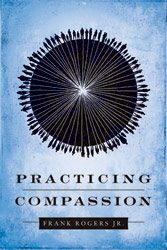 The central premise of Frank Rogers, Jr.’s new book Practicing Compassion is that we are most human when we are most compassionate. And yet, Rogers argues, because compassion is not always an emotion that comes easily, it must become a subject of conscientious practice and study in our lives if we are to experience its full benefits, both personally and culturally.
As co-director for the Center for Engaged Compassion at the Claremont School of Theology, Rogers certainly has made a significant professional commitment to his subject matter. His purpose in writing Practicing Compassion is that “While spiritual teachers and advocates of the common good increasingly call for compassion, seldom does anyone explain precisely how to cultivate it!” This is an interesting claim, and—though there are certainly several significant works by respected thinkers like Henri Nouwen, Karen Armstrong, and the Dalai Lama on precisely this subject—a quick perusal of the Self-Help section of any bookstore will validate that by and large it seems the largest market is for books esteeming self rather than care for others.
But while I would never make the case that too many books can be written on the topic of compassion, I will note that to appreciate Rogers’ work, you must be prepared to (1) accept the premise that humanity is inherently good and (2) be prepared for a lot of work.
On the former point, I, as a Christian, had to suspend my disbelief as I worked through Rogers’ work. My understanding that humanity is tainted by sin made it frightening for me to imagine what a radical failure I would be in attempting to cultivate compassion without the strength of Jesus, no matter how well-laid-out my plan of attack. I know that if there is any good I do towards others it is by God’s grace and not in the least of my own strength. Rogers lays claim to no particular religious tradition, instead drawing on elements from a diversity of religious sources to make his arguments. This leads him to suggest, for example, that if we are ever feeling unloved or out of touch with the compassionate “pulse of humanity,” that we should remember those in our pasts who were kind of us, that we should uphold these people as saints by writing stories about them, putting their pictures in sacred places, and accepting that “people who extend compassion to us are guardians of our souls.” The point is that if we can become aware of the purported link of compassion and love between all of us, it will be easier to show compassion. This will be a challenging starting point for those of us who have concern over placing their self-worth and strength in human love, which is universally limited and flawed, far short of the divine love found in the Christian God.
On the latter point, if you are someone who likes step-by-step approaches and/or acronyms, you will perhaps thrive off Rogers’ method of practicing compassion. He offers four steps to “The Compassion Practice” (Get grounded; Catch your breath; Take your PULSE; Take the Other’s PULSE); there are six dimensions of every spiritual experience of compassion; there are five steps to connecting with your breath; and there are the acronyms PULSE, ACT, and FLAG to remember. You will be taking a lot of notes with this book! I could not help but wonder though at times: if compassion truly is our true natural leaning, why is it so difficult and complicated to draw out of ourselves?
Though I struggled against the fundamental understanding of the nature of humanity that grounded this text, Rogers does offer some transcendent advice. I was convicted, for example, by his point that “The people who repel us are our mirrors,” and I was motivated by his assertion that “[C]ompassion for another can…be cultivated. The essential precondition, however, is that we are open to a compassionate encounter.” His advice on how to avoid being “hijacked by our emotions” was helpful as well, especially his encouragement to pause in the wake of an extreme emotion, acknowledging that “What we need when we are activated like this is to wedge some space between our emotions and our behaviors, between our impulses and our actions.” This is a text that is, at the very least, a reminder of the value of love towards others and a source of encouragement for expressing this love with more intention and focus. And certainly there is room for one more text promoting such a noble ideal on our shelves.
Read an excerpt from Practicing Compassion at the Patheos Book Club here.
 Amber M. Stamper holds a Ph.D. in English (Rhetoric and Composition) and is an Assistant Professor of Language, Literature, and Communication at Elizabeth City State University in North Carolina. Her research and publications center on religious rhetoric and communication, especially issues of Christian evangelism and the digital church.
Previous Post

February 23, 2015
What is the Holy Spirit? A 40 Day Journey with Jack Levison
Next Post
March 2, 2015 Tongue Pierced: A Review
Browse Our Archives
Select a Category Author Q&A Book Review Christian Living Church Leadership Stump a Scholar Theology Uncategorized
Select a Month June 2022 March 2021 October 2020 August 2020 February 2019 November 2017 July 2017 June 2017 May 2017 March 2017 February 2017 January 2017 November 2016 October 2016 August 2016 July 2016 June 2016 May 2016 April 2016 March 2016 February 2016 January 2016 November 2015 October 2015 September 2015 August 2015 July 2015 June 2015 May 2015 April 2015 March 2015 February 2015 January 2015 December 2014 November 2014 October 2014 September 2014 August 2014 July 2014 June 2014 May 2014 April 2014 March 2014 February 2014 January 2014 December 2013 November 2013 October 2013 September 2013 August 2013 July 2013 June 2013 May 2013 April 2013 March 2013 February 2013 January 2013 December 2012 November 2012 October 2012 September 2012 August 2012 July 2012 June 2012 May 2012 April 2012 March 2012 February 2012 January 2012 December 2011 November 2011 October 2011 September 2011 August 2011 July 2011 June 2011 May 2011 April 2011 March 2011 February 2011 January 2011 December 2010 November 2010 October 2010 September 2010 August 2010 July 2010 June 2010
Follow Us!
TAKE THE
Religious Wisdom Quiz
What does Romans say about those who are led by the Spirit of God?
Select your answer to see how you score.
They are saved They will not sin They will have eternal life They are the children of God (or sons of God)
Related posts from Take and Read

"The Slow March of Light" Highlights The Human...

"A Brilliant Night of Stars and Ice" Recounts...

"Movies Are Prayers": A New Way of Discussing...

How the Church Can Heal the Race Divide
TRENDING AT PATHEOS Religious Music & Entertainment

"Les Diabolique" and Transgression
Alongside something like Arrival, Vertigo, or Charade, Les Diaboliques is a...

"The Plague Dogs" and Mortality
So, flashback to the late 70s, early 80s. Walt Disney Studios is...

With the recent and highly successful release of Christopher Nolan’s epic film,...

"L'avventura" and Human Weakness
Today's piece is going to be a little different for a few...

I first want to apologize for not posting or writing anything. I'm...

I've engaged in the multi-year project of reading through the Church Fathers,...
view all Religious Music & Entertainment blogs
Ad-Free & Subscriber Log-In Subscription Support
- About Us
- 2026 Calendar
- Videos
- Podcasts
- Library of World Religions
- Faith In Media Tracker
- Advertise With Us
- Write for Us
- Privacy Policy
- Terms of Service
- Do Not Sell My Data
- Contact Us
- Radiant Digital
- Manage Newsletter Subscriptions
- Unsubscribe From Notifications
- Sitemap
Copyright 2008-2026, Patheos. All rights reserved.
Subscription Support Ad-Free & Subscriber Log-In
Follow Patheos