
BuddhistCatholicContemplativeEvangelicalGeneral ChristianHinduJewishLatter-day SaintMuslimNew VisionsProgressive Christian
Beliefs
- Buddhist
- Catholic
- Contemplative
- Evangelical
- General Christian
- Hindu
- Jewish
- Latter-day Saint
- More Voices
- Muslim
- New Visions
- Pagan
- Progressive Christian
Topics
- Religion News
- Food and Religion
- Sports and Religion
- Religious Art
- Religious Music and Entertainment
- Religious Events
- History and Religion
- Style and Religion
- Politics and Religion
- Women in Religion
- Recreation Outdoors and Religion
- Business Finance and Religion
- Careers Workplace and Religion
- Education and Religion
- Family Parenting and Religion
- Health Fitness and Religion
- Home and Religion
- Relationships and Religion
- Technology and Religion
- Travel and Religion
Columnists
- Buddhist Columnists
- Business Finance and Religion Columnists
- Careers Workplace and Religion Columnists
- Catholic Columnists
- Contemplative Columnists
- Education and Religion Columnists
- Evangelists Columnists
- Family Parenting and Religion Columnists
- General Christian Columnists
- Health Fitness and Religion Columnists
- Hindu Columnists
- History and Religion Columnists
- Home and Religion Columnists
- Jewish Columnists
- More Voices Columnists
- Latter Day Columnists
- Muslim Columnists
- New Visions Columnists
- Nonreligious Columnists
- Pagan Columnists
- Politics and Religion Columnists
- Progressive Columnists
- Recreation Outdoors and Religion Columnists
- Relationships and Religion Columnists
- Religion News Columnists
- Religious Art Columnists
- Religious Events Columnists
- Religious Music and Entertainment Columnists
- Sports and Religion Columnists
- Style and Religion Columnists
- Technology and Religion Columnists
- Travel and Religion Columnists
- Women in Religion Columnists
Resource Library
- 2026 Calendar
- Library of World Religions
- The 100 Most Holy Places on Earth
- Patheos Answers
- Podcasts
- Videos
- Faith Leaders Database
- Anglican Episcopalian
- Bahai
- Baptist
- Buddhism
- Christianity
- Confucianism
- Eastern Orthodoxy
- Hinduism
- Holiness and Pentecostal
- ISKCON
- Islam
- Judaism
- Lutheran
- Methodist
- The Church of Jesus Christ of Latter-day Saints
- New Age
- Paganism
- Presbytarian and Reformed
- Protestantism
- Religion Behind the Scenes
- Roman Catholic
- Scientology
- Shia Islam
- Sikhism
- Sufism
- Sunni Islam
- Taoism
- Zen
- See all religions
Research Tools
 Ad-Free & Subscriber Log-In Subscription Support
Ad-Free & Subscriber Log-In Subscription Support
Follow Patheos 

- Trending:
- Forgiveness
- |
- Marriage
- |
- Consciousness
- |
- Death Penalty
- |
- Election
- |
- Halloween

- Home
- Religious Music & Entertainment
- The Atheist Awakening and the Internet
The Atheist Awakening and the Internet
Last updated on: November 14, 2014 at 4:15 pm by Guest Contributor
The Atheist Awakening and the Internet 2014-11-14T16:15:24-07:00 Guest Contributor
Patheos Explore the world's faith through different perspectives on religion and spirituality! Patheos has the views of the prevalent religions and spiritualities of the world.
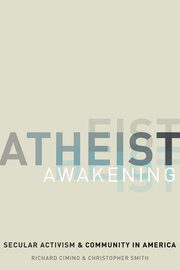 By Richard Cimino and Christopher Smith
Authors, Atheist Awakening
Does atheism have a special affinity with the Internet? It can seem so when considering the large number of web sites, blogs and online forums devoted to secularism (our term for atheism, secular humanism, and other kinds of non-theism). But it is more than just the number of web sites; secularists have used the Internet as an important means of activism in a way that both encourages consciousness-raising and creates a community for a diverse group non-believers—ranging from “hard-core” atheists to agnostics.
The personal is increasingly public. From posting one’s feelings on Facebook to tweeting gossip on Twitter, the Internet is not only a space for interpreting the world but actively producing it. As we discuss in our book Atheist Awakening, the Internet serves as a way for secularists to “come out” and find a measure of support by fellow non-believers. They create cultural messages, symbols, and codes relevant to their particular interests and needs. An example of this can be found on YouTube and blogs, both of which have become key nodes of secularist culture and activism. Many of these posts and sites promote a highly personalized mode of presentation. A no-holds-barred style, often associated with the “new atheists,” and personified by P.Z. Myer’s popular site “Pharyngula” and Jerry Coyne’s blog “Why Evolution is True,” present the authors’ uncompromising opinions, often launching attacks against those who are seen as too soft on the issues or compromising with religious believers. These blogs and videos—which function as educational as well as confrontational venues—derive part of their significance by dealing with both “political issues” concerned with inclusion and the separation of church and state, as well as “cultural issues” concerned with promoting secularist norms and values, often against the norms and values of religion. Part of the novelty of such media, then, is that they are stretching the boundaries of the traditionally political, making the personal more political.
On the Internet, limited conflicts with antagonists and solidarity with allies once rooted in local settings are generalized and broadened on the basis of the expansion of communicative networks. In terms of activism, political opportunities, resources, and the support of powerful allies are not the only issues a movement has to consider. Without a constituency willing to support issues and causes, no institutional change will suffice. It is in terms of developing a group consciousness and a virtual community based around similar agendas and ideas where the positive attributes of secularist cyber activity are having influence. An awareness of being with like-minded others as well as being an outsider in a still largely religious society coincides with the rise of secularist group organizations as well as the rise of publicity with the new atheism. The greater visibility online has thus opened up an opportunistic space for secularists to speak up and protest on their own behalf. With online activity leading to offline activism, we see how secularists have used the Internet to engage in coordinated collective action in the form of legal cases, rallies, and advertising campaigns. As we see when looking at YouTube and blogs, secularists online are advocating for change outside the avenues created for this purpose by the dominant secularist organizations, even as they build and draw on the work of such organizations.
Richard Cimino is founding editor of Religion Watch, a monthly publication reporting on trends and research in contemporary religion. He currently teaches sociology at the University of Richmond in Virginia and is the author of several books on religion, including The Most Scientific Religion, Trusting the Spirit, and co-author of Shopping for Faith and Atheist Awakening: Secular Activism and Community in America.
Christopher Smith is an independent researcher. His areas of interest include secularism and social theory. He holds an M.A. in Sociology from the New School for Social Research. He is co-author of Atheist Awakening: Secular Activism and Community in America.
Previous Post

November 13, 2014
Raising Abel: A Q&A with author Ronald Ragotzy
Next Post

November 14, 2014 The Unbreakable Boy: A Q&A with Author Scott LeRette
Browse Our Archives
Select a Category Author Q&A Book Review Christian Living Church Leadership Stump a Scholar Theology Uncategorized
Select a Month June 2022 March 2021 October 2020 August 2020 February 2019 November 2017 July 2017 June 2017 May 2017 March 2017 February 2017 January 2017 November 2016 October 2016 August 2016 July 2016 June 2016 May 2016 April 2016 March 2016 February 2016 January 2016 November 2015 October 2015 September 2015 August 2015 July 2015 June 2015 May 2015 April 2015 March 2015 February 2015 January 2015 December 2014 November 2014 October 2014 September 2014 August 2014 July 2014 June 2014 May 2014 April 2014 March 2014 February 2014 January 2014 December 2013 November 2013 October 2013 September 2013 August 2013 July 2013 June 2013 May 2013 April 2013 March 2013 February 2013 January 2013 December 2012 November 2012 October 2012 September 2012 August 2012 July 2012 June 2012 May 2012 April 2012 March 2012 February 2012 January 2012 December 2011 November 2011 October 2011 September 2011 August 2011 July 2011 June 2011 May 2011 April 2011 March 2011 February 2011 January 2011 December 2010 November 2010 October 2010 September 2010 August 2010 July 2010 June 2010
Follow Us!
TAKE THE
Religious Wisdom Quiz
What is the main theme of the Parable of the Two Sons?
Select your answer to see how you score.
Honesty is best Obedience is proved by actions Firstborns are favored Repentance is easy
Related posts from Take and Read


Escaping Christianity: A Patheos Q&A with Tom Muzzio
Atheist Awakening: A Q&A with Researchers Richard Cimino...

Is Mormonism Congruent with Christianity?
TRENDING AT PATHEOS Religious Music & Entertainment

"Les Diabolique" and Transgression
Alongside something like Arrival, Vertigo, or Charade, Les Diaboliques is a...

"The Plague Dogs" and Mortality
So, flashback to the late 70s, early 80s. Walt Disney Studios is...

With the recent and highly successful release of Christopher Nolan’s epic film,...

"L'avventura" and Human Weakness
Today's piece is going to be a little different for a few...

I first want to apologize for not posting or writing anything. I'm...

I've engaged in the multi-year project of reading through the Church Fathers,...
view all Religious Music & Entertainment blogs
Ad-Free & Subscriber Log-In Subscription Support
- About Us
- 2026 Calendar
- Videos
- Podcasts
- Library of World Religions
- Faith In Media Tracker
- Advertise With Us
- Write for Us
- Privacy Policy
- Terms of Service
- Do Not Sell My Data
- Contact Us
- Radiant Digital
- Manage Newsletter Subscriptions
- Unsubscribe From Notifications
- Sitemap
Copyright 2008-2026, Patheos. All rights reserved.
Subscription Support Ad-Free & Subscriber Log-In
Follow Patheos