
BuddhistCatholicContemplativeEvangelicalGeneral ChristianHinduJewishLatter-day SaintMuslimNew VisionsProgressive Christian
Beliefs
- Buddhist
- Catholic
- Contemplative
- Evangelical
- General Christian
- Hindu
- Jewish
- Latter-day Saint
- More Voices
- Muslim
- New Visions
- Pagan
- Progressive Christian
Topics
- Religion News
- Food and Religion
- Sports and Religion
- Religious Art
- Religious Music and Entertainment
- Religious Events
- History and Religion
- Style and Religion
- Politics and Religion
- Women in Religion
- Recreation Outdoors and Religion
- Business Finance and Religion
- Careers Workplace and Religion
- Education and Religion
- Family Parenting and Religion
- Health Fitness and Religion
- Home and Religion
- Relationships and Religion
- Technology and Religion
- Travel and Religion
Columnists
- Buddhist Columnists
- Business Finance and Religion Columnists
- Careers Workplace and Religion Columnists
- Catholic Columnists
- Contemplative Columnists
- Education and Religion Columnists
- Evangelists Columnists
- Family Parenting and Religion Columnists
- General Christian Columnists
- Health Fitness and Religion Columnists
- Hindu Columnists
- History and Religion Columnists
- Home and Religion Columnists
- Jewish Columnists
- More Voices Columnists
- Latter Day Columnists
- Muslim Columnists
- New Visions Columnists
- Nonreligious Columnists
- Pagan Columnists
- Politics and Religion Columnists
- Progressive Columnists
- Recreation Outdoors and Religion Columnists
- Relationships and Religion Columnists
- Religion News Columnists
- Religious Art Columnists
- Religious Events Columnists
- Religious Music and Entertainment Columnists
- Sports and Religion Columnists
- Style and Religion Columnists
- Technology and Religion Columnists
- Travel and Religion Columnists
- Women in Religion Columnists
Resource Library
- 2026 Calendar
- Library of World Religions
- The 100 Most Holy Places on Earth
- Patheos Answers
- Podcasts
- Videos
- Faith Leaders Database
- Anglican Episcopalian
- Bahai
- Baptist
- Buddhism
- Christianity
- Confucianism
- Eastern Orthodoxy
- Hinduism
- Holiness and Pentecostal
- ISKCON
- Islam
- Judaism
- Lutheran
- Methodist
- The Church of Jesus Christ of Latter-day Saints
- New Age
- Paganism
- Presbytarian and Reformed
- Protestantism
- Religion Behind the Scenes
- Roman Catholic
- Scientology
- Shia Islam
- Sikhism
- Sufism
- Sunni Islam
- Taoism
- Zen
- See all religions
Research Tools
 Ad-Free & Subscriber Log-In Subscription Support
Ad-Free & Subscriber Log-In Subscription Support
Follow Patheos 

- Trending:
- Forgiveness
- |
- Marriage
- |
- Consciousness
- |
- Death Penalty
- |
- Election
- |
- Halloween

- Home
- Religious Music & Entertainment
- Called: A Book Review
Called: A Book Review
Last updated on: October 8, 2014 at 4:05 pm by Amber Stamper
Called: A Book Review 2014-10-08T16:05:18-06:00 Amber Stamper
Patheos Explore the world's faith through different perspectives on religion and spirituality! Patheos has the views of the prevalent religions and spiritualities of the world.
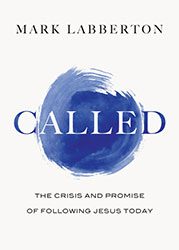 I began reading Mark Labberton’s Called: The Crisis and Promise of Following Jesus Today the same morning that I met a new mom friend from my twins’ Gymboree class for coffee. Their family had recently moved back to America from Asia, where her husband had been involved in an anti-trafficking ministry, and she had taught at a mission school. She was explaining to me how she’d grappled with culture shock when she’d returned to America, especially in terms of the church. Her experience of Christian fellowship abroad had been one rooted in community, where Christians served on the frontlines of each other’s and their neighbors’ lives. One brother or sister’s problem or need was everyone’s problem or need. They “did life”—as she put it—as a unit of friends and caregivers, as family. And she had found a greater interest in justice there too, a stronger focus on training converts in how to serve, and in loving others radically and without concern for one’s own comfort or convenience. Though she grew up in America, her time outside its borders gave her a new perspective on the American church and culture. Aggressive, competitive, and disjointed were all words that came up. She was worried that too many of us here have heard a “diluted Gospel.” When I pressed her to further explain, she said the focus on conversion sometimes seemed to overshadow the making of disciples. In other words, she had observed many people calling themselves Christians but not living like they are called.
Mark Labberton, president of Fuller Theological Seminary has made the same observation, and he tackles it head on in Called. He takes the Christian church’s diminishing cultural influence as proof of our inattention to our calling, noting that “It doesn’t take research to know that many people, especially in the millennial generation, feel that the Christian church bears little resemblance to the One it claims to follow.” As my friend had observed, we are a nation of many Christians and many churches and yet so many of us still fail to thrive, still aren’t secure in our purpose, still unsure how to answer those fundamental questions of existence that have nagged at the hearts of human’s for millennia: “What are our lives in this world about? What are we to make of being human? Why are we here? Is there a reason we are alive, and, if so, how do we know what that is?”
Labberton attributes part of the American church’s problem to our commitment to what he calls the “Promised Land” narrative, the notion that, being American, we are due or can—if we just work hard enough—earn worldly success. We are uncomfortable with discomfort (our own or that of others), and we are fierce individualists, believing that self-reliance will culminate in self-fulfillment (and, by turn, that if others aren’t thriving, it must be their own fault). Our allegiance to this narrative leads us to live “self-interested, consumer” lives, to be out of touch with the needs of our neighbors, and to be perceived by the world as judgmental, hypocritical, and divisive. By not attending to God’s call, we are misrepresenting and stifling the true Gospel.
The other part of the American church’s problem is a lack of clarity on exactly what our call is. The sheer number of sermons preached and books written on how to discern and live out God’s call for our lives is proof alone of our confusion over our identities and purpose in Christ. Labberton cuts right to the chase though: our primary call is to follow Jesus. This call doesn’t, as Labberton writes, “require special illumination by the Holy Spirit”; it isn’t “a secret God hides and has to be coaxed into divulging.” This also isn’t a call we need to wait to begin on. It is a call to love God and love our neighbors right now, right where we are, in the lives of the people around us, in whatever location and in the midst of whatever circumstances we find ourselves. It is a simple call, but this does not necessarily mean it will be easy or comfortable. In fact, Labberton suggests that a good way to know how to begin is for the church to “listen to its critics and, in light of following Jesus, ask again, ’How are we meant to live?’” The answer Labberton offers is:
“With grace and hope, the church is to inherently and commonly seek and love the forgotten, the unseen, the undesirable, the uncool. We need to do so with unexpected, tangible love, displaying counterintuitive compassion (including enemy-love) and demonstrating a capacity for magnanimous forgiveness, mercy and justice.”
Re-read that one more time. I love that.
Now consider how different our world might be if each of the hundreds of millions of Americans who identify themselves as Christian took this call seriously.
Called is an especially exciting book because—being written by a university president—one of its primary audiences will undoubtedly be college students. In fact, according to Dr. Labberton’s Twitter feed, every single student, staff, and faculty member has already received a free copy. For this book to be in the hands of young Christians and those responsible for their education and inspiration is exactly where it should be. I am excited to see the difference it will make.
Read an excerpt from Called at the Patheos Book Club here.
 Amber M. Stamper holds a Ph.D. in English (Rhetoric and Composition) and is an Assistant Professor of Language, Literature, and Communication at Elizabeth City State University in North Carolina. Her research and publications center on religious rhetoric and communication, especially issues of Christian evangelism and the digital church.
Previous Post

September 30, 2014
Jon Sweeney on When Saint Francis Saved the Church
Next Post
October 14, 2014 Abraham as Archetype, Abraham as Man
Browse Our Archives
Select a Category Author Q&A Book Review Christian Living Church Leadership Stump a Scholar Theology Uncategorized
Select a Month June 2022 March 2021 October 2020 August 2020 February 2019 November 2017 July 2017 June 2017 May 2017 March 2017 February 2017 January 2017 November 2016 October 2016 August 2016 July 2016 June 2016 May 2016 April 2016 March 2016 February 2016 January 2016 November 2015 October 2015 September 2015 August 2015 July 2015 June 2015 May 2015 April 2015 March 2015 February 2015 January 2015 December 2014 November 2014 October 2014 September 2014 August 2014 July 2014 June 2014 May 2014 April 2014 March 2014 February 2014 January 2014 December 2013 November 2013 October 2013 September 2013 August 2013 July 2013 June 2013 May 2013 April 2013 March 2013 February 2013 January 2013 December 2012 November 2012 October 2012 September 2012 August 2012 July 2012 June 2012 May 2012 April 2012 March 2012 February 2012 January 2012 December 2011 November 2011 October 2011 September 2011 August 2011 July 2011 June 2011 May 2011 April 2011 March 2011 February 2011 January 2011 December 2010 November 2010 October 2010 September 2010 August 2010 July 2010 June 2010
Follow Us!
TAKE THE
Religious Wisdom Quiz
Who gave birth to Moses?
Select your answer to see how you score.
Keturah Merab Jochebed Orpah
Related posts from Take and Read

Author Lily Burana on Experiencing God's Grace and...

How the Church Can Heal the Race Divide

Finding Inspiration in "Where Angels Walk"

Happiness Is Found Outside of Our Comfort Zones
TRENDING AT PATHEOS Religious Music & Entertainment

"Les Diabolique" and Transgression
Alongside something like Arrival, Vertigo, or Charade, Les Diaboliques is a...

"The Plague Dogs" and Mortality
So, flashback to the late 70s, early 80s. Walt Disney Studios is...

With the recent and highly successful release of Christopher Nolan’s epic film,...

"L'avventura" and Human Weakness
Today's piece is going to be a little different for a few...

I first want to apologize for not posting or writing anything. I'm...

I've engaged in the multi-year project of reading through the Church Fathers,...
view all Religious Music & Entertainment blogs
Ad-Free & Subscriber Log-In Subscription Support
- About Us
- 2026 Calendar
- Videos
- Podcasts
- Library of World Religions
- Faith In Media Tracker
- Advertise With Us
- Write for Us
- Privacy Policy
- Terms of Service
- Do Not Sell My Data
- Contact Us
- Radiant Digital
- Manage Newsletter Subscriptions
- Unsubscribe From Notifications
- Sitemap
Copyright 2008-2026, Patheos. All rights reserved.
Subscription Support Ad-Free & Subscriber Log-In
Follow Patheos