
BuddhistCatholicContemplativeEvangelicalGeneral ChristianHinduJewishLatter-day SaintMuslimNew VisionsProgressive Christian
Beliefs
- Buddhist
- Catholic
- Contemplative
- Evangelical
- General Christian
- Hindu
- Jewish
- Latter-day Saint
- More Voices
- Muslim
- New Visions
- Pagan
- Progressive Christian
Topics
- Religion News
- Food and Religion
- Sports and Religion
- Religious Art
- Religious Music and Entertainment
- Religious Events
- History and Religion
- Style and Religion
- Politics and Religion
- Women in Religion
- Recreation Outdoors and Religion
- Business Finance and Religion
- Careers Workplace and Religion
- Education and Religion
- Family Parenting and Religion
- Health Fitness and Religion
- Home and Religion
- Relationships and Religion
- Technology and Religion
- Travel and Religion
Columnists
- Buddhist Columnists
- Business Finance and Religion Columnists
- Careers Workplace and Religion Columnists
- Catholic Columnists
- Contemplative Columnists
- Education and Religion Columnists
- Evangelists Columnists
- Family Parenting and Religion Columnists
- General Christian Columnists
- Health Fitness and Religion Columnists
- Hindu Columnists
- History and Religion Columnists
- Home and Religion Columnists
- Jewish Columnists
- More Voices Columnists
- Latter Day Columnists
- Muslim Columnists
- New Visions Columnists
- Nonreligious Columnists
- Pagan Columnists
- Politics and Religion Columnists
- Progressive Columnists
- Recreation Outdoors and Religion Columnists
- Relationships and Religion Columnists
- Religion News Columnists
- Religious Art Columnists
- Religious Events Columnists
- Religious Music and Entertainment Columnists
- Sports and Religion Columnists
- Style and Religion Columnists
- Technology and Religion Columnists
- Travel and Religion Columnists
- Women in Religion Columnists
Resource Library
- 2026 Calendar
- Library of World Religions
- The 100 Most Holy Places on Earth
- Patheos Answers
- Podcasts
- Videos
- Faith Leaders Database
- Anglican Episcopalian
- Bahai
- Baptist
- Buddhism
- Christianity
- Confucianism
- Eastern Orthodoxy
- Hinduism
- Holiness and Pentecostal
- ISKCON
- Islam
- Judaism
- Lutheran
- Methodist
- The Church of Jesus Christ of Latter-day Saints
- New Age
- Paganism
- Presbytarian and Reformed
- Protestantism
- Religion Behind the Scenes
- Roman Catholic
- Scientology
- Shia Islam
- Sikhism
- Sufism
- Sunni Islam
- Taoism
- Zen
- See all religions
Research Tools
 Ad-Free & Subscriber Log-In Subscription Support
Ad-Free & Subscriber Log-In Subscription Support
Follow Patheos 

- Trending:
- Forgiveness
- |
- Marriage
- |
- Consciousness
- |
- Death Penalty
- |
- Election
- |
- Halloween

- Home
- Religious Music & Entertainment
- Christian Piatt’s Blood Doctrine: A Review
Christian Piatt’s Blood Doctrine: A Review
Last updated on: May 6, 2014 at 11:19 am by Amber Stamper
Christian Piatt’s Blood Doctrine: A Review 2014-05-06T11:19:59-06:00 Amber Stamper
Patheos Explore the world's faith through different perspectives on religion and spirituality! Patheos has the views of the prevalent religions and spiritualities of the world.
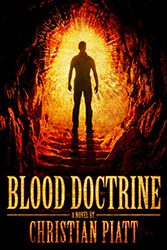 It’s worth stating up front that author and progressive Christian blogger Christian Piatt’s first novel Blood Doctrine will undoubtedly ruffle some church-going feathers. Here is the basic premise: Jesus has come back to earth as a genetically-revived clone named Jacob who—while bearing the stigmata and wielding miraculous powers to heal wounds and raise the dead—is also a slightly foul-mouthed, orphaned young man who spends his days in various states of undress with his latest love interest Elena, hanging out with his usually-stoned friend Allen, playing his beloved saxophone, or working at a record store.
Marketed as a suspense/thriller for young adults, Blood Doctrine has the feel of a Dan Brown novel, and with its nonchalance towards rough language, extramarital sex (between the Jesus clone and his lock-picking lover nonetheless!), and violence assuredly strays outside the norms of a typical Christian novel in this genre. The narrative follows three different interwoven story lines: the post-crucifixion tale of Jesus’s disciples and their martyrdoms; the investigative reporting adventure of New Yorker religion beat writer Nica who has gotten wind of Jacob’s existence and wants to make a story of it; and Jacob’s story itself, which comes about as a result of the elaborate scheming by a group called The Project who—by using DNA from Jesus found on an ancient relic—have created His clone in hopes of bringing about the Second Coming on their own terms.
The fast pace and brief episodic organization of Blood Doctrine make it a quick read, and the sheer unexpectedness of the plot twists will keep readers rapidly turning the pages. The story should not be written off as all speed though: several pause-worthy moments where Piatt’s historical research is evoked really shine. In the description of the burial wrappings placed on Jesus’ crucified body and in the depiction of the landscape and culture of the Essenes in Qumram, Piatt’s attention to detail make the biblical age come vividly alive, a welcome counterpoint to a narrative that otherwise thrills at high speed.
 When interviewed, Piatt asserted that his hope for Blood Doctrine was to create a tale just grounded in reality enough to have potential believability, and indeed, as Piatt forces his readers to consider what humanity might actually do with Jesus’s DNA if we were to recover it, we have to wonder if a fringe religious group attempting to bring about the Second Coming by cloning Jesus is so far outside the realm of possibility. However, even as I am sure that Piatt’s personal speculation about what Jesus’s 21st century clone might look like will appear radical, shocking, and heretical to some, I couldn’t help but wonder if it wasn’t even nearly radical enough! As a follower of Jesus myself, when I speculate on what God’s DNA might look like if used in a human clone, I imagine something perhaps much more strange, unexpected, and extraordinary than a boy whose only apparent divine traits are the traditional stigmata and the ability to perform miracles. This seems undoubtedly the most likely turnout, but when has God’s work ever been likely?
I was consequently intrigued to find out that in the editing process, Piatt’s work was cut in half length-wise and that there are additional plans for a trilogy. I can’t help but wonder if what was cut might have shed light on Piatt’s vision for why exactly Jacob became the way he did, why the combination of human and divine DNA created this particular creature. And even more so perhaps than a desire to be given more reasons to care about, understand, and love the Jacob character, the two last minute plot twists will certainly sit much more easy if readers might be provided more insight into what—beyond their clear and effective shock value—Piatt takes these twists to mean. Not to mention that we are left to wonder what we as readers are to do with the attachments we have developed with the other characters. And how—after all the climactic drama of the Jacob story—are we to find closure or meaning in the narrative thread centered on Jesus’s disciples, which ends abruptly with a violent turn of events. Will that tale ever more than indirectly intersect with Jacob’s? The promise of a trilogy leaves hope that such loose ends might not go permanently untied.
While Piatt justifies his controversial subject matter by asserting that his hope is simply that “people walk away feeling provoked, entertained and wanting more”—an ambition some readers will undoubtedly find too low a bar for Christian fiction—Piatt will assuredly meet his goal. Though, in an age where fictional representations of Jesus; provocative and extra-biblical speculations about his life; and constant attempts to disprove, challenge, or reject the validity of scripture remain popular, I have to wonder whether a Christian writer does well to add fuel to the fire. I will, out of sheer curiosity and a desire to discover answers to lingering questions, be reading any subsequent books that come out in the Blood Doctrine series.
Read an excerpt, and listen to an author reading, from Blood Doctrine at the Patheos Book Club here.
 Amber M. Stamper holds a Ph.D. in English (Rhetoric and Composition) and is an Assistant Professor of Language, Literature, and Communication at Elizabeth City State University in North Carolina. Her research and publications center on religious rhetoric and communication, especially issues of Christian evangelism and the digital church.
Previous Post

April 30, 2014
God and the Gay Christian: A Q&A with Matthew Vines
Next Post

May 15, 2014 Where the Wind Leads: A Q&A with Vinh Chung
Recent Comments
Browse Our Archives
Select a Category Author Q&A Book Review Christian Living Church Leadership Stump a Scholar Theology Uncategorized
Select a Month June 2022 March 2021 October 2020 August 2020 February 2019 November 2017 July 2017 June 2017 May 2017 March 2017 February 2017 January 2017 November 2016 October 2016 August 2016 July 2016 June 2016 May 2016 April 2016 March 2016 February 2016 January 2016 November 2015 October 2015 September 2015 August 2015 July 2015 June 2015 May 2015 April 2015 March 2015 February 2015 January 2015 December 2014 November 2014 October 2014 September 2014 August 2014 July 2014 June 2014 May 2014 April 2014 March 2014 February 2014 January 2014 December 2013 November 2013 October 2013 September 2013 August 2013 July 2013 June 2013 May 2013 April 2013 March 2013 February 2013 January 2013 December 2012 November 2012 October 2012 September 2012 August 2012 July 2012 June 2012 May 2012 April 2012 March 2012 February 2012 January 2012 December 2011 November 2011 October 2011 September 2011 August 2011 July 2011 June 2011 May 2011 April 2011 March 2011 February 2011 January 2011 December 2010 November 2010 October 2010 September 2010 August 2010 July 2010 June 2010
Follow Us!
TAKE THE
Religious Wisdom Quiz
What did God rest from on the seventh day?
Select your answer to see how you score.
Creating the world Creating the animals Creating the sea Creating light
Related posts from Take and Read

Even the Faith Giants Didn’t Always Get it...

Learning About the Christian Faith: The Bible Is...
God's People in the House: A Patheos Q&A...

Surface Tensions: A Q&A with Millennial Author Nathan...
TRENDING AT PATHEOS Religious Music & Entertainment

"Les Diabolique" and Transgression
Alongside something like Arrival, Vertigo, or Charade, Les Diaboliques is a...

"The Plague Dogs" and Mortality
So, flashback to the late 70s, early 80s. Walt Disney Studios is...

With the recent and highly successful release of Christopher Nolan’s epic film,...

"L'avventura" and Human Weakness
Today's piece is going to be a little different for a few...

I first want to apologize for not posting or writing anything. I'm...

I've engaged in the multi-year project of reading through the Church Fathers,...
view all Religious Music & Entertainment blogs
Ad-Free & Subscriber Log-In Subscription Support
- About Us
- 2026 Calendar
- Videos
- Podcasts
- Library of World Religions
- Faith In Media Tracker
- Advertise With Us
- Write for Us
- Privacy Policy
- Terms of Service
- Do Not Sell My Data
- Contact Us
- Radiant Digital
- Manage Newsletter Subscriptions
- Unsubscribe From Notifications
- Sitemap
Copyright 2008-2026, Patheos. All rights reserved.
Subscription Support Ad-Free & Subscriber Log-In
Follow Patheos