
BuddhistCatholicContemplativeEvangelicalGeneral ChristianHinduJewishLatter-day SaintMuslimNew VisionsProgressive Christian
Beliefs
- Buddhist
- Catholic
- Contemplative
- Evangelical
- General Christian
- Hindu
- Jewish
- Latter-day Saint
- More Voices
- Muslim
- New Visions
- Pagan
- Progressive Christian
Topics
- Religion News
- Food and Religion
- Sports and Religion
- Religious Art
- Religious Music and Entertainment
- Religious Events
- History and Religion
- Style and Religion
- Politics and Religion
- Women in Religion
- Recreation Outdoors and Religion
- Business Finance and Religion
- Careers Workplace and Religion
- Education and Religion
- Family Parenting and Religion
- Health Fitness and Religion
- Home and Religion
- Relationships and Religion
- Technology and Religion
- Travel and Religion
Columnists
- Buddhist Columnists
- Business Finance and Religion Columnists
- Careers Workplace and Religion Columnists
- Catholic Columnists
- Contemplative Columnists
- Education and Religion Columnists
- Evangelists Columnists
- Family Parenting and Religion Columnists
- General Christian Columnists
- Health Fitness and Religion Columnists
- Hindu Columnists
- History and Religion Columnists
- Home and Religion Columnists
- Jewish Columnists
- More Voices Columnists
- Latter Day Columnists
- Muslim Columnists
- New Visions Columnists
- Nonreligious Columnists
- Pagan Columnists
- Politics and Religion Columnists
- Progressive Columnists
- Recreation Outdoors and Religion Columnists
- Relationships and Religion Columnists
- Religion News Columnists
- Religious Art Columnists
- Religious Events Columnists
- Religious Music and Entertainment Columnists
- Sports and Religion Columnists
- Style and Religion Columnists
- Technology and Religion Columnists
- Travel and Religion Columnists
- Women in Religion Columnists
Resource Library
- 2026 Calendar
- Library of World Religions
- The 100 Most Holy Places on Earth
- Patheos Answers
- Podcasts
- Videos
- Faith Leaders Database
- Anglican Episcopalian
- Bahai
- Baptist
- Buddhism
- Christianity
- Confucianism
- Eastern Orthodoxy
- Hinduism
- Holiness and Pentecostal
- ISKCON
- Islam
- Judaism
- Lutheran
- Methodist
- The Church of Jesus Christ of Latter-day Saints
- New Age
- Paganism
- Presbytarian and Reformed
- Protestantism
- Religion Behind the Scenes
- Roman Catholic
- Scientology
- Shia Islam
- Sikhism
- Sufism
- Sunni Islam
- Taoism
- Zen
- See all religions
Research Tools
 Ad-Free & Subscriber Log-In Subscription Support
Ad-Free & Subscriber Log-In Subscription Support
Follow Patheos 

- Trending:
- Forgiveness
- |
- Marriage
- |
- Consciousness
- |
- Death Penalty
- |
- Election
- |
- Halloween

- Home
- Religious Music & Entertainment
- What Really Happened on Good Friday?
What Really Happened on Good Friday?
Last updated on: April 17, 2014 at 4:56 pm by Guest Contributor
What Really Happened on Good Friday? 2014-04-17T16:56:38-06:00 Guest Contributor
Patheos Explore the world's faith through different perspectives on religion and spirituality! Patheos has the views of the prevalent religions and spiritualities of the world.
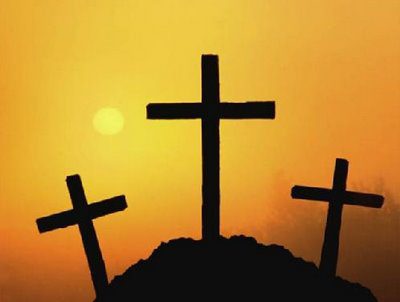 Garrett Glass, author of Jehoshua: Signs & Wonders, takes a historical look at the Crucifixion, here. Read more about Glass at the Patheos Book Club.
One of the more striking scenes in the I, Claudius television series, first broadcast on the BBC in the 1970s, was the request Livia made to her grandson Claudius. She wanted to be made a goddess and have all the proper funerary rights after her death, in exchange for which she confessed to him her many crimes, including the poisoning of her husband Augustus, so that her son Tiberius could ascend to the throne. Given her sins, Livia was convinced she would suffer eternally in the underworld unless Claudius, destined to be emperor, made her a diva, or divinity.
Only the most patrician of Romans could achieve divine status, but for all others, even leading a blameless life did not guarantee a peaceful outcome after death. Without receiving the proper burial rights, an individual’s soul could be condemned to wander the world restlessly, for eternity. Nor was this just a Roman obsession. As far back as Homer’s Iliad, we read of the deliberate disgrace Achilles’ perpetrated on the body and memory of Hector, by dragging his corpse for twelve days around the walls of Troy. No greater shame could befall a man than to have his mortal remains mistreated, and many a dying soldier begged his compatriots to do everything to give him a proper funeral.
This is why what few references we have from the Roman historical record regarding crucifixion emphasized not just the agony of the death, but the shame associated with the lack of a decent burial or cremation for the victim. In the Roman mind, a criminal suffered two penalties: death by the cross, and eternal damnation thereafter, since the Romans typically required the corpse to decay on the cross. When Crassus defeated Spartacus in the slave revolt ending in 71 BCE, he had 6,000 captured slaves crucified all along the Appian Way. The stench of decay was so noisome that Roman patricians complained it was impossible for them to travel to their country estates.
In Jerusalem, there were Jewish prohibitions against the display of dead bodies, and the Romans allowed the bodies of criminals to be taken down. However, no cremation or burial would have been allowed, and most likely the bodies would have been thrown into a pit, to be devoured by wild animals. This provides at least one explanation for the word “Golgotha”, which translates as “place of the skull.” The hill, or quarry as some think, that served as the execution grounds for Jerusalem would have been littered with the bones of numerous victims.
Given the high likelihood that the body of Jesus of Nazareth was given the same treatment after death as so many other victims before him, it is easy to understand why there is such emphasis in the passion narratives of the Gospels on the mission of Joseph of Arimathea to Pilate. According to all four Gospels, Joseph requested and received the body of Jesus and placed it in a tomb. This story conveniently addresses the criticisms early followers of Jesus must have received from Romans and Jews alike when Christ’s followers declared that Jesus had risen from the dead.
Suppose, however, that there really was a Joseph of Arimathea. Why would he have a tomb in Jerusalem if he didn’t live there? More to the point, Jewish burial practices of the first century didn’t involve tombs. Bodies were placed in a cool space for three days (a telling fact which may explain the resurrection stories), and if decay set in, the bodies were placed in lime and reduced to bleached bones. The bones a year or so later were set into a stone box called an ossuary and placed in a columbarium. Whenever you read stories of some forger who claims to have found the burial remains of Jesus’ family, or of his brother James, it is always an ossuary box that is the item being forged. No forger would have any credibility if they claimed to have found the enormous stone tomb that is often pictured as Jesus’ burial place.
How much of any of this should matter to a devout Christian? The noted Biblical scholar Marcus J. Borg suggests that the resurrection of Jesus was not in physical form, but in visionary form. There is certainly evidence for this in the Gospels and in Acts of the Apostles. While St. Paul preached the bodily resurrection of Christ, his fundamental claim was that Christ’s suffering and death on the cross served as a redemption for the sins of all mankind. This claim is not in any way invalidated if a Christian chooses to believe that the resurrection was in a spiritual or visionary form, as some of his followers clearly thought was the case.
The debate on the nature of the resurrection may never be settled. But isn’t it more important for a Christian to focus on how one gets to Heaven, rather than on the form one obtains on arrival?
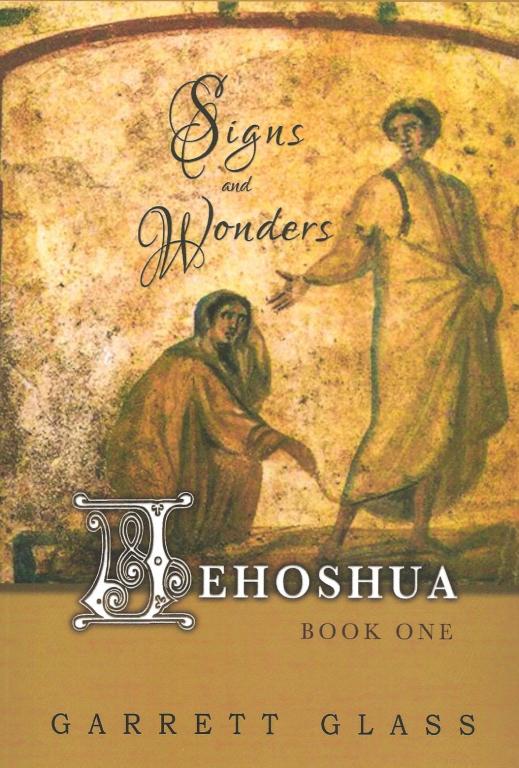 Garrett Glass is the author of the Jehoshua series of historical fiction books, covering the development of early Christianity, beginning with the death of Jehoshua (Jesus Christ) and incorporating both historical and fictional characters and circumstances. Visit his website here.
Previous Post

April 15, 2014
Easter Down Under
Next Post
April 15, 2014 Signs and Wonders: On Writing a Book for My Wedding Anniversary
Browse Our Archives
Select a Category Author Q&A Book Review Christian Living Church Leadership Stump a Scholar Theology Uncategorized
Select a Month June 2022 March 2021 October 2020 August 2020 February 2019 November 2017 July 2017 June 2017 May 2017 March 2017 February 2017 January 2017 November 2016 October 2016 August 2016 July 2016 June 2016 May 2016 April 2016 March 2016 February 2016 January 2016 November 2015 October 2015 September 2015 August 2015 July 2015 June 2015 May 2015 April 2015 March 2015 February 2015 January 2015 December 2014 November 2014 October 2014 September 2014 August 2014 July 2014 June 2014 May 2014 April 2014 March 2014 February 2014 January 2014 December 2013 November 2013 October 2013 September 2013 August 2013 July 2013 June 2013 May 2013 April 2013 March 2013 February 2013 January 2013 December 2012 November 2012 October 2012 September 2012 August 2012 July 2012 June 2012 May 2012 April 2012 March 2012 February 2012 January 2012 December 2011 November 2011 October 2011 September 2011 August 2011 July 2011 June 2011 May 2011 April 2011 March 2011 February 2011 January 2011 December 2010 November 2010 October 2010 September 2010 August 2010 July 2010 June 2010
Follow Us!
TAKE THE
Religious Wisdom Quiz
Who is the apostle to deny Jesus?
Select your answer to see how you score.
Judas Peter Phillip Andrew
Related posts from Take and Read

How the Church Can Heal the Race Divide

Finding Inspiration in "Where Angels Walk"

Happiness Is Found Outside of Our Comfort Zones

Symbols of Faith in "Take the Flag"
TRENDING AT PATHEOS Religious Music & Entertainment

"Les Diabolique" and Transgression
Alongside something like Arrival, Vertigo, or Charade, Les Diaboliques is a...

"The Plague Dogs" and Mortality
So, flashback to the late 70s, early 80s. Walt Disney Studios is...

With the recent and highly successful release of Christopher Nolan’s epic film,...

"L'avventura" and Human Weakness
Today's piece is going to be a little different for a few...

I first want to apologize for not posting or writing anything. I'm...

I've engaged in the multi-year project of reading through the Church Fathers,...
view all Religious Music & Entertainment blogs
Ad-Free & Subscriber Log-In Subscription Support
- About Us
- 2026 Calendar
- Videos
- Podcasts
- Library of World Religions
- Faith In Media Tracker
- Advertise With Us
- Write for Us
- Privacy Policy
- Terms of Service
- Do Not Sell My Data
- Contact Us
- Radiant Digital
- Manage Newsletter Subscriptions
- Unsubscribe From Notifications
- Sitemap
Copyright 2008-2026, Patheos. All rights reserved.
Subscription Support Ad-Free & Subscriber Log-In
Follow Patheos