
BuddhistCatholicContemplativeEvangelicalGeneral ChristianHinduJewishLatter-day SaintMuslimNew VisionsProgressive Christian
Beliefs
- Buddhist
- Catholic
- Contemplative
- Evangelical
- General Christian
- Hindu
- Jewish
- Latter-day Saint
- More Voices
- Muslim
- New Visions
- Pagan
- Progressive Christian
Topics
- Religion News
- Food and Religion
- Sports and Religion
- Religious Art
- Religious Music and Entertainment
- Religious Events
- History and Religion
- Style and Religion
- Politics and Religion
- Women in Religion
- Recreation Outdoors and Religion
- Business Finance and Religion
- Careers Workplace and Religion
- Education and Religion
- Family Parenting and Religion
- Health Fitness and Religion
- Home and Religion
- Relationships and Religion
- Technology and Religion
- Travel and Religion
Columnists
- Buddhist Columnists
- Business Finance and Religion Columnists
- Careers Workplace and Religion Columnists
- Catholic Columnists
- Contemplative Columnists
- Education and Religion Columnists
- Evangelists Columnists
- Family Parenting and Religion Columnists
- General Christian Columnists
- Health Fitness and Religion Columnists
- Hindu Columnists
- History and Religion Columnists
- Home and Religion Columnists
- Jewish Columnists
- More Voices Columnists
- Latter Day Columnists
- Muslim Columnists
- New Visions Columnists
- Nonreligious Columnists
- Pagan Columnists
- Politics and Religion Columnists
- Progressive Columnists
- Recreation Outdoors and Religion Columnists
- Relationships and Religion Columnists
- Religion News Columnists
- Religious Art Columnists
- Religious Events Columnists
- Religious Music and Entertainment Columnists
- Sports and Religion Columnists
- Style and Religion Columnists
- Technology and Religion Columnists
- Travel and Religion Columnists
- Women in Religion Columnists
Resource Library
- 2026 Calendar
- Library of World Religions
- The 100 Most Holy Places on Earth
- Patheos Answers
- Podcasts
- Videos
- Faith Leaders Database
- Anglican Episcopalian
- Bahai
- Baptist
- Buddhism
- Christianity
- Confucianism
- Eastern Orthodoxy
- Hinduism
- Holiness and Pentecostal
- ISKCON
- Islam
- Judaism
- Lutheran
- Methodist
- The Church of Jesus Christ of Latter-day Saints
- New Age
- Paganism
- Presbytarian and Reformed
- Protestantism
- Religion Behind the Scenes
- Roman Catholic
- Scientology
- Shia Islam
- Sikhism
- Sufism
- Sunni Islam
- Taoism
- Zen
- See all religions
Research Tools
 Ad-Free & Subscriber Log-In Subscription Support
Ad-Free & Subscriber Log-In Subscription Support
Follow Patheos 

- Trending:
- Forgiveness
- |
- Marriage
- |
- Consciousness
- |
- Death Penalty
- |
- Election
- |
- Halloween

- Home
- Religious Music & Entertainment
- Richard Cole on Becoming Catholic, Finally
Richard Cole on Becoming Catholic, Finally
Last updated on: April 17, 2014 at 11:00 am by Deborah Arca
Richard Cole on Becoming Catholic, Finally 2014-04-17T11:00:14-06:00 Deborah Arca
Patheos Explore the world's faith through different perspectives on religion and spirituality! Patheos has the views of the prevalent religions and spiritualities of the world.
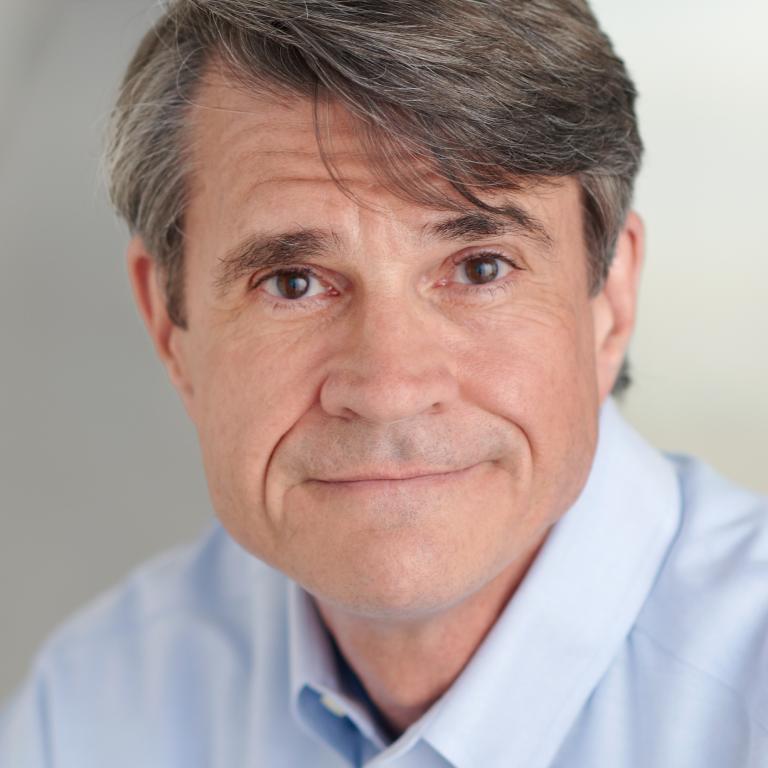 After a lifetime of spiritual searching, Richard Cole found what he was looking for in the most surprising of places — a small, unassuming monastery in southern Texas. Cole’s wife had given him a three-day retreat at the Benedictine monastery for his 49th-birthday, and Cole went, thinking it would be a nice few days of relaxation and reading. What he didn’t expect, was to come home with a heart strangely on fire for Catholicism.
Here, Richard talks with us about his midlife conversion to Catholicism, the subject of his lovely new memoir from Loyola Press, Catholic by Choice: Why I Embraced the Faith, Joined the Church, and Embarked on the Adventure of a Lifetime.
What was it about those three days in an unassuming monastery in Sandia, Texas, that transformed your life, and set you off on a path toward joining the Catholic Church?
Maybe I connected with that monastic community because it was so unassuming. Evangelism is a curious thing. Like making friends or courtship, the initial contact and reaching out sometimes needs to be simply a quiet welcoming and nothing more. That’s what I received from the Sandia community. Two years later, I went to another monastery where the mood was very different. It was also Benedictine but the brothers were intense, almost militant. They were the marines of God. In fact, they scared me a bit. If I had visited them at the beginning, I might have backed away from Catholicism. As it was, the Sandia community turned out to be just the right experience for me at the time.
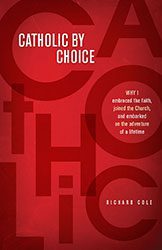 Of your new and all-consuming love for Catholicism, you write: “A psychologist might argue that my Catholicism was simply a coping mechanism, a way to deal with a normal midlife crisis. Some men buy a red sports car; I was going to Mass.” How did you know this was true love, and not just an affair?
For one thing, I was going to mass, not driving a car. Even then, I knew that this was something having to do with the divine, with something that was much more than myself. The experience was too intense, too all-encompassing and my whole life was changing from the ground up.
What was it that so compelled you about Catholicism in particular?
There was no trade-off with Catholicism. For the first time in my life, I didn’t feel that I had to choose mind over heart, heart over mind or the physical over the spiritual. In the Catholic incarnational understanding, the “mind/body” problem in Western culture wasn’t a problem – mind and body were in relationship, not opposed.
Learning about Catholicism changed my heart and transformed my life, but it also became the greatest intellectual adventure I had ever experienced. I started looking at old assumptions with new eyes, stepping back and asking questions about a secular worldview that I’d absorbed almost by osmosis. In this sense, Catholic teaching wasn’t a cage that kept me from growing. Instead, it was more like a trellis by which I could send my roots down deeper and reach higher than I ever had before. I felt like a spiritual trust-fund baby. I had inherited this incredibly rich tradition and set of teachings that could keep me reading and learning for the rest of my life.
You talk about how your renewed zeal for your faith, and specifically the Catholic faith, was not so easy on your family, especially your wife who was born and raised Catholic! Ironically, as you were moving toward the Church, she was moving away from it. How did you navigate that aspect of your conversion process? And what suggestions do you have for couples who are traveling down different spiritual paths?
I believe that God gives us different channels of grace, and that this difference can itself be a grace. We can learn from those on other paths, lessons about compassion, detachment, diligence and tolerance that we can use in our own faith.
This applies especially to couples. As they say, all politics is local, and I think all religion and spirituality is local as well, beginning with the people with whom we live. In talking with my wife, I keep in mind the quote by St. Augustine: “There are those of God who are not of the church and those of the church who are not of God.” She’s definitely of God. I also remember an anecdote about a rabbi who worked with Christians on ecumenical ministries. One of his colleagues asked him whether he ever encountered conflict or disputes with those of another faith. Quoting Psalm 42, he said “Deep talks to deep. If I try to have a deep faith and I’m with others who try the same way, we have no problems.” I try to recognize and respect the depth of my wife’s faith and support her just as she supports me.
What was the most difficult part of converting to Catholicism for you?
Opening up my heart. It hurt. A lot. I understood better than ever why the words for love in the Romance languages – amour, amorte – mean “to the point of death.” Love is wonderful but painful. Being reborn means having to die in some way.
What surprised you most about the process of conversion?
I was surprised that the experience just kept on going. I’m a serial enthusiast, and I’ve noticed that many of my enthusiasms don’t last more than six or seven years. But after 13 years, I still need the mass as much as ever. Conversion is a honeymoon followed by marriage, and that marriage depends on an ongoing conversion, a reconverting that never ends.
Lent is nearly over, and Easter is coming. What was your first Lent and Easter like as a new Catholic? What’s your experience of the Crucifixion and Resurrection?
My first Easter was a homecoming. Like many converts, I was always Catholic, I just didn’t know it. I also appreciated, and still do, the passage of the Triduum, how the passion and darkness of Good Friday leads to the light of Easter. It reminds me of something I read recently by a painter. “The eye naturally gravitates toward the light in a painting,” he said. “That’s why shading and shadows are so important. The dark is necessary because it guides us to the light.” Exactly.
To read an excerpt from Richard Cole’s memoir, Catholic by Faith, visit the Patheos Book Club here.
Watch our extended interview via Skype below:
https://www.youtube.com/watch?v=fIS6JyYuA5Y
Previous Post
April 15, 2014
Signs and Wonders: On Writing a Book for My Wedding Anniversary
Next Post
April 30, 2014 My Friends, the Saints: A Q&A with Elizabeth Ficocelli
Browse Our Archives
Select a Category Author Q&A Book Review Christian Living Church Leadership Stump a Scholar Theology Uncategorized
Select a Month June 2022 March 2021 October 2020 August 2020 February 2019 November 2017 July 2017 June 2017 May 2017 March 2017 February 2017 January 2017 November 2016 October 2016 August 2016 July 2016 June 2016 May 2016 April 2016 March 2016 February 2016 January 2016 November 2015 October 2015 September 2015 August 2015 July 2015 June 2015 May 2015 April 2015 March 2015 February 2015 January 2015 December 2014 November 2014 October 2014 September 2014 August 2014 July 2014 June 2014 May 2014 April 2014 March 2014 February 2014 January 2014 December 2013 November 2013 October 2013 September 2013 August 2013 July 2013 June 2013 May 2013 April 2013 March 2013 February 2013 January 2013 December 2012 November 2012 October 2012 September 2012 August 2012 July 2012 June 2012 May 2012 April 2012 March 2012 February 2012 January 2012 December 2011 November 2011 October 2011 September 2011 August 2011 July 2011 June 2011 May 2011 April 2011 March 2011 February 2011 January 2011 December 2010 November 2010 October 2010 September 2010 August 2010 July 2010 June 2010
Follow Us!
TAKE THE
Religious Wisdom Quiz
Who predicted Babylon's fall?
Select your answer to see how you score.
Daniel Jeremiah Isaiah Ezekiel
Related posts from Take and Read

How the Church Can Heal the Race Divide


Finding Inspiration in "Where Angels Walk"

Happiness Is Found Outside of Our Comfort Zones
TRENDING AT PATHEOS Religious Music & Entertainment

"Les Diabolique" and Transgression
Alongside something like Arrival, Vertigo, or Charade, Les Diaboliques is a...

"The Plague Dogs" and Mortality
So, flashback to the late 70s, early 80s. Walt Disney Studios is...

With the recent and highly successful release of Christopher Nolan’s epic film,...

"L'avventura" and Human Weakness
Today's piece is going to be a little different for a few...

I first want to apologize for not posting or writing anything. I'm...

I've engaged in the multi-year project of reading through the Church Fathers,...
view all Religious Music & Entertainment blogs
Ad-Free & Subscriber Log-In Subscription Support
- About Us
- 2026 Calendar
- Videos
- Podcasts
- Library of World Religions
- Faith In Media Tracker
- Advertise With Us
- Write for Us
- Privacy Policy
- Terms of Service
- Do Not Sell My Data
- Contact Us
- Radiant Digital
- Manage Newsletter Subscriptions
- Unsubscribe From Notifications
- Sitemap
Copyright 2008-2026, Patheos. All rights reserved.
Subscription Support Ad-Free & Subscriber Log-In
Follow Patheos