
BuddhistCatholicContemplativeEvangelicalGeneral ChristianHinduJewishLatter-day SaintMuslimNew VisionsProgressive Christian
Beliefs
- Buddhist
- Catholic
- Contemplative
- Evangelical
- General Christian
- Hindu
- Jewish
- Latter-day Saint
- More Voices
- Muslim
- New Visions
- Pagan
- Progressive Christian
Topics
- Religion News
- Food and Religion
- Sports and Religion
- Religious Art
- Religious Music and Entertainment
- Religious Events
- History and Religion
- Style and Religion
- Politics and Religion
- Women in Religion
- Recreation Outdoors and Religion
- Business Finance and Religion
- Careers Workplace and Religion
- Education and Religion
- Family Parenting and Religion
- Health Fitness and Religion
- Home and Religion
- Relationships and Religion
- Technology and Religion
- Travel and Religion
Columnists
- Buddhist Columnists
- Business Finance and Religion Columnists
- Careers Workplace and Religion Columnists
- Catholic Columnists
- Contemplative Columnists
- Education and Religion Columnists
- Evangelists Columnists
- Family Parenting and Religion Columnists
- General Christian Columnists
- Health Fitness and Religion Columnists
- Hindu Columnists
- History and Religion Columnists
- Home and Religion Columnists
- Jewish Columnists
- More Voices Columnists
- Latter Day Columnists
- Muslim Columnists
- New Visions Columnists
- Nonreligious Columnists
- Pagan Columnists
- Politics and Religion Columnists
- Progressive Columnists
- Recreation Outdoors and Religion Columnists
- Relationships and Religion Columnists
- Religion News Columnists
- Religious Art Columnists
- Religious Events Columnists
- Religious Music and Entertainment Columnists
- Sports and Religion Columnists
- Style and Religion Columnists
- Technology and Religion Columnists
- Travel and Religion Columnists
- Women in Religion Columnists
Resource Library
- 2026 Calendar
- Library of World Religions
- The 100 Most Holy Places on Earth
- Patheos Answers
- Podcasts
- Videos
- Faith Leaders Database
- Anglican Episcopalian
- Bahai
- Baptist
- Buddhism
- Christianity
- Confucianism
- Eastern Orthodoxy
- Hinduism
- Holiness and Pentecostal
- ISKCON
- Islam
- Judaism
- Lutheran
- Methodist
- The Church of Jesus Christ of Latter-day Saints
- New Age
- Paganism
- Presbytarian and Reformed
- Protestantism
- Religion Behind the Scenes
- Roman Catholic
- Scientology
- Shia Islam
- Sikhism
- Sufism
- Sunni Islam
- Taoism
- Zen
- See all religions
Research Tools
 Ad-Free & Subscriber Log-In Subscription Support
Ad-Free & Subscriber Log-In Subscription Support
Follow Patheos 

- Trending:
- Forgiveness
- |
- Marriage
- |
- Consciousness
- |
- Death Penalty
- |
- Election
- |
- Halloween

- Home
- Religious Music & Entertainment
- In Search of the Real Jesus: A Q&A with Garrett Glass
In Search of the Real Jesus: A Q&A with Garrett Glass
Last updated on: April 14, 2014 at 1:19 pm by Guest Contributor
In Search of the Real Jesus: A Q&A with Garrett Glass 2014-04-14T13:19:00-06:00 Guest Contributor
Patheos Explore the world's faith through different perspectives on religion and spirituality! Patheos has the views of the prevalent religions and spiritualities of the world.
 By Tom Holmes
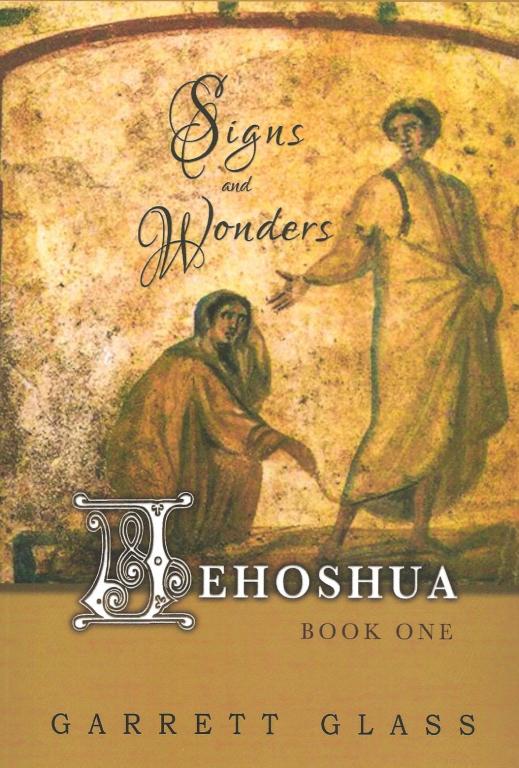
Most likely, the story of Jesus and his followers that Oak Park resident Garrett Glass tells in his newly published novel Jehoshua, Signs and Wonders, is not the one you heard in Sunday school.
Start with the name. Jehoshua, writes Glass, was the name we now know as Jesus, pronounced Yo-SHEW-ah in Hebrew in his First-Century hometown of Nazareth (JOSH-yew-ah in English). In fact, Glass’ book can be seen as a deconstruction, i.e. an attempt to get at who Jesus really was as a historical figure by scraping away what he considers the legendary, mythological accretions and layers in the biblical text, comparing the New Testament writings with other non-Christian documents from the First Century, and then reconstructing a more plausible Jesus than the one passed down to us over the last 20 centuries by Christianity.
Jehoshua begins with graphic descriptions of Jesus’ crucifixion, reminiscent of Mel Gibson’s movie The Passion of the Christ. It portrays Jesus as a very human being, complete with sexual drives, much like Nikos Kazantzakis described him in The Last Temptation of Christ. Glass includes intrigue and deception in his novel in the tradition of Hugh Schonfield’s Passover Plot, and he reconstructs the life of Jesus in the same creative way that Dan Brown treats the possibility of Jesus being married in the Da Vinci Code.
 The motivation to deconstruct came while Glass was living in New York after graduating from Northwestern University. There he read in the New York Times reports coming out of the Jesus Seminar during the 1960s and ’70s, in which biblical scholars used the analytic tools of what is known as the “historical critical method” to analyze the Bible like any other piece of literature. This kind of analysis, for example, concludes that both Matthew and Luke quoted Mark in their gospels as well as a non-extant source scholars refer to as “Q.”
“All these books on the historical Jesus caused a real conflict in me,” he recalled, “because I grew up thinking there was the Virgin Mary, believing she had a virgin birth and then as a young adult reading all these books saying it never happened. I got very disillusioned and felt almost deceived by what the Catholic Church had taught, or not taught, me.”
Glass recalls that when he was growing up, the Church portrayed the Gospel writers as kind of like secretaries who transcribed God’s dictation to them.
“Christianity had lost track of the human reality behind the New Testament scriptures,” Glass argues in the foreword to Jehoshua, “that not all passages in the New Testament were original to the writer; not all words were translated correctly … and Jehoshua did not perform or say all the things ascribed to him in the scriptures.
“When a secular and rational approach is taken to the New Testament,” he adds, “contradictions cannot be ignored. They need to be explored and explained, and when you attempt to do that, a very rich world of possibilities opens up.”
“While writing the novel,” Glass explained, “I felt like I was an opera director. I could put the words I wanted into the characters I was creating. I could give them emotions. By the time I got to the second chapter, I found that the characters were taking on a life of their own.”
He created a character, for example, named Lemech, a trader who bought Jehoshua’s cloak from a Roman soldier, cut it up in pieces and sold it as having magical qualities to people who believed in the crucified messiah’s healing powers. He then discovers that he actually looks a lot like Jehoshua and carries out a plan to pretend that he is the risen savior.
Besides trying to provide a good read for those who buy his book, Glass acknowledged that the act of writing has itself become part of his own spiritual pilgrimage. In an as yet unpublished book titled, Who Cut God’s Hair, he writes, “This little book came about because a number of my readers wanted to know my opinions about God. In my book Jehoshua: Signs and Wonders, I wrote about the first 25 years of Christianity from the assumption that no miracles took place. This naturally led quite a few readers to wonder if I was an atheist.”
Here’s his answer: “The philosophy of this book is very simple to state: I believe in God; I simply believe that he is an illusion we have created in our minds. It may seem that I am temporizing in this statement, and not really taking a stand on whether God exists. But the truth is, to a certain degree God does exist, and does not exist, at the same time. He seems to exist in our mind, which is capable of creating powerful illusions of reality, and we can go our whole lives believing in his existence.”
For more conversation on the Jehoshua book series – and to read an excerpt – visit the Patheos Book Club here.
Tom Holmes is a Contributing Reporter / Religion Blogger at OakPark.com. This interview is reprinted with permission from The Wednesday Journal.
Previous Post
April 4, 2014
If I Had Lunch with C. S. Lewis: Asking the Big Questions
Next Post

April 14, 2014 C. S. Lewis on Education
Browse Our Archives
Select a Category Author Q&A Book Review Christian Living Church Leadership Stump a Scholar Theology Uncategorized
Select a Month June 2022 March 2021 October 2020 August 2020 February 2019 November 2017 July 2017 June 2017 May 2017 March 2017 February 2017 January 2017 November 2016 October 2016 August 2016 July 2016 June 2016 May 2016 April 2016 March 2016 February 2016 January 2016 November 2015 October 2015 September 2015 August 2015 July 2015 June 2015 May 2015 April 2015 March 2015 February 2015 January 2015 December 2014 November 2014 October 2014 September 2014 August 2014 July 2014 June 2014 May 2014 April 2014 March 2014 February 2014 January 2014 December 2013 November 2013 October 2013 September 2013 August 2013 July 2013 June 2013 May 2013 April 2013 March 2013 February 2013 January 2013 December 2012 November 2012 October 2012 September 2012 August 2012 July 2012 June 2012 May 2012 April 2012 March 2012 February 2012 January 2012 December 2011 November 2011 October 2011 September 2011 August 2011 July 2011 June 2011 May 2011 April 2011 March 2011 February 2011 January 2011 December 2010 November 2010 October 2010 September 2010 August 2010 July 2010 June 2010
Follow Us!
TAKE THE
Religious Wisdom Quiz
Which Persian king allowed the Jews to return and rebuild Jerusalem?
Select your answer to see how you score.
Artaxerxes Xerxes Darius Cyrus
Related posts from Take and Read

Even the Faith Giants Didn’t Always Get it...

How the Church Can Heal the Race Divide


Finding Inspiration in "Where Angels Walk"
TRENDING AT PATHEOS Religious Music & Entertainment

"Les Diabolique" and Transgression
Alongside something like Arrival, Vertigo, or Charade, Les Diaboliques is a...

"The Plague Dogs" and Mortality
So, flashback to the late 70s, early 80s. Walt Disney Studios is...

With the recent and highly successful release of Christopher Nolan’s epic film,...

"L'avventura" and Human Weakness
Today's piece is going to be a little different for a few...

I first want to apologize for not posting or writing anything. I'm...

I've engaged in the multi-year project of reading through the Church Fathers,...
view all Religious Music & Entertainment blogs
Ad-Free & Subscriber Log-In Subscription Support
- About Us
- 2026 Calendar
- Videos
- Podcasts
- Library of World Religions
- Faith In Media Tracker
- Advertise With Us
- Write for Us
- Privacy Policy
- Terms of Service
- Do Not Sell My Data
- Contact Us
- Radiant Digital
- Manage Newsletter Subscriptions
- Unsubscribe From Notifications
- Sitemap
Copyright 2008-2026, Patheos. All rights reserved.
Subscription Support Ad-Free & Subscriber Log-In
Follow Patheos