
BuddhistCatholicContemplativeEvangelicalGeneral ChristianHinduJewishLatter-day SaintMuslimNew VisionsProgressive Christian
Beliefs
- Buddhist
- Catholic
- Contemplative
- Evangelical
- General Christian
- Hindu
- Jewish
- Latter-day Saint
- More Voices
- Muslim
- New Visions
- Pagan
- Progressive Christian
Topics
- Religion News
- Food and Religion
- Sports and Religion
- Religious Art
- Religious Music and Entertainment
- Religious Events
- History and Religion
- Style and Religion
- Politics and Religion
- Women in Religion
- Recreation Outdoors and Religion
- Business Finance and Religion
- Careers Workplace and Religion
- Education and Religion
- Family Parenting and Religion
- Health Fitness and Religion
- Home and Religion
- Relationships and Religion
- Technology and Religion
- Travel and Religion
Columnists
- Buddhist Columnists
- Business Finance and Religion Columnists
- Careers Workplace and Religion Columnists
- Catholic Columnists
- Contemplative Columnists
- Education and Religion Columnists
- Evangelists Columnists
- Family Parenting and Religion Columnists
- General Christian Columnists
- Health Fitness and Religion Columnists
- Hindu Columnists
- History and Religion Columnists
- Home and Religion Columnists
- Jewish Columnists
- More Voices Columnists
- Latter Day Columnists
- Muslim Columnists
- New Visions Columnists
- Nonreligious Columnists
- Pagan Columnists
- Politics and Religion Columnists
- Progressive Columnists
- Recreation Outdoors and Religion Columnists
- Relationships and Religion Columnists
- Religion News Columnists
- Religious Art Columnists
- Religious Events Columnists
- Religious Music and Entertainment Columnists
- Sports and Religion Columnists
- Style and Religion Columnists
- Technology and Religion Columnists
- Travel and Religion Columnists
- Women in Religion Columnists
Resource Library
- 2026 Calendar
- Library of World Religions
- The 100 Most Holy Places on Earth
- Patheos Answers
- Podcasts
- Videos
- Faith Leaders Database
- Anglican Episcopalian
- Bahai
- Baptist
- Buddhism
- Christianity
- Confucianism
- Eastern Orthodoxy
- Hinduism
- Holiness and Pentecostal
- ISKCON
- Islam
- Judaism
- Lutheran
- Methodist
- The Church of Jesus Christ of Latter-day Saints
- New Age
- Paganism
- Presbytarian and Reformed
- Protestantism
- Religion Behind the Scenes
- Roman Catholic
- Scientology
- Shia Islam
- Sikhism
- Sufism
- Sunni Islam
- Taoism
- Zen
- See all religions
Research Tools
 Ad-Free & Subscriber Log-In Subscription Support
Follow Patheos 

- Trending:
- Advent
- |
- Forgiveness
- |
- Thanksgiving
- |
- Election
- |
- Seasonal Holidays
- |
- Marriage

- Home
- Religious Music & Entertainment
- Mediating Faith: A Q&A with Clint Schnekloth
Mediating Faith: A Q&A with Clint Schnekloth
Last updated on: March 20, 2014 at 4:47 pm by Deborah Arca
Mediating Faith: A Q&A with Clint Schnekloth 2014-03-20T16:47:12-06:00 Deborah Arca
Patheos Explore the world's faith through different perspectives on religion and spirituality! Patheos has the views of the prevalent religions and spiritualities of the world.
“I feel like it is time for those of us with a passion for mediating realities like bookishness and gaming to engage what that means for the life of faith. I wanted to write a book that brought together science fiction and faith formation, role-playing and the catechumenate.” — Clint Schnekloth, author, Mediating Faith
Popular Lutheran blogger and pastor Clint Schnekloth has a timely new book out this month called Mediating Faith: Faith Formation in a Trans-Media Era. The book is a theological response to the challenges and opportunities for faith formation in our trans-media world and includes chapters titled “Listening to the Quasi-Luddites’ Legitimate Concerns,” “The Effects of MMORPG’s Procedural Rhetoric,” and “Beauty, Eschatology, Sociality: The Way Forward,” along with a foreword by former UMC Bishop Will Willimon.
As part of the Book Club this month, we invited Clint to answer a few questions about his book. I also had a fascinating conversation with him via Skype, where we talked at depth about MMORPGs (massively multiplayer online role playing games) and what they have to do with God. Watch that interview below as well.
What was your inspiration for writing a book on faith formation in a trans-media era? And what is your personal connection to the subject?
I think I am a geek. In an era where the geek has now taken center stage (witness The Lego Movie and the rise of Lord of the Rings), I feel like it is time for those of us with a passion for mediating realities like bookishness and gaming to engage what that means for the life of faith. So on one level, my personal connection was simply wanting to write a book that brought together science fiction and faith formation, role-playing and the catechumenate.
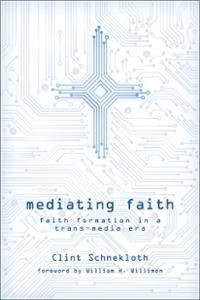 A quick search on Amazon will show that books on social media usage for congregations are plentiful. How does this book differ from other works on social media and the church?
There are a lot of great books on the topic you mention, and I recommend them often, including Meredith Gould’s The Social Media Gospel and Keith Anderson and Elizabeth Drescher’s Click 2 Save and Craig Detweiler’s iGods and Pete Ward’s stuff on liquid church, to name just a few. I consider the authors of those books friends and partners in ministry. My book differs in that it isn’t a “how-to” work per se, but instead looks phenomenologically at media effects. You could say it’s the philosophical cousin to more practical books on social media usage in the church. I analyze a lot of examples of ministry in mediated contexts (like MMORPGs, the catechumenate, Facebook, and more), but the focus is on trans-media effects. I am especially intrigued by how media form our brains neurologically, and how to think about the work of the Spirit in relationship new media.
Your description of scripture as a technology may be confusing to some. What really changed in the imagination of readers after the Gutenberg Press?
Well, the point might be that the real change happened when somebody (maybe Paul?) invented the codex. The codex is a durable and advanced technology. You can take a written text and pile leaf upon leaf of it and bind it together. It’s less expensive than a scroll, and more sturdy. So, the imaginations of readers changed already with the advent of the codex. Go back even further, and we had the rise of reading itself, which is a technology. In episode three of Game of Thrones, when Gilly learns that Samwell Tarly knows a lot of history, and even how to cross the wall, because of what he has read, she says, “You’re a magician!” Reading itself is a technology, even though we often forget it because it has been around so long and we are used to it. With the printing press, what we saw was an expansion of who could read, how quickly printed matter could be distributed. It widened and flattened the reading public.
Have you seen the new Spritz Speed Reading App? How do you feel about these kinds of technologies that focus on digesting massive amounts of content instead of deep development?
I haven’t seen this reading app, to be honest. I think I have mixed feelings about these kinds of tools. On the one hand, if you need to get through a lot of material, and the app can help, more power to you. On the other hand, there are aspects of slow reading that bring benefits (and joys) that I believe can’t be had through speed reading. But I could be wrong. I’d love to interview someone who has used the app, and now reads more quickly, and ask them how their brain has changed, and how their reading experience is different. Something I discuss at length in my book is the relationship between faith formation practices and neuroplasticity. We can through habits and practice get our brains to do all sorts of things. Many of these are quite beneficial, and pleasant. Perhaps speed reading is like that. I myself read very fast, but I think I read fast just because I read a lot.
In what ways might online virtual communities like those offered in Second Life replace actual localized communities? Do you think this might enhance the effects of globalization in good ways?
I don’t believe new media replaces. Rather, it layers. That’s what is meant by trans-media, at least in part, that in an era of proliferating media, they layer on top of each other. What I see happening is people all over the place making use of so-called virtual community to enhance and adapt local so-called real communities, and vice versa. So at a family reunion, teenagers can enjoy time with the grandparents, but if there is down-time and they are bored, they can also network via texting with their friends. They have the wonderful opportunity of inhabiting two different kinds of communities simultaneously. Similarly, although I love worship with my local congregation, my congregation does not have regular evening prayer as one of its worship habits. But I can attend Second Life vespers most nights of the week. So the two compliment rather than detract from each other. In terms of globalization, I’m not sure yet what this will mean at that level, but I do know that when I worship in Second Life, I worship with people from all over the globe, and sometimes the practices I engage in in SL find their way back to the type of worship we do in RL.
How might the traditional models of discipleship and spiritual formation — long-term goals of the catechumenate — benefit from online experiences?
They already do. Our catechumenate networks via Facebook. It’s our primary way to be in contact with each other midweek between gatherings. We use it to organize, plan the next worship, coordinate the potluck. I use it to network sponsors with catechumens, and then they use it to strengthen their relationships. I share prayers in our catechumenate group, or links to online resources for bible study. After Easter, our group will feed a meal with our ecumenical Sunday suppers program, and already members of the catechumenate are networking with a wider ecumenical community in service of a social program.
How do even more common forms of media use in congregations — like satellite churches or PowerPoints in sermons or even just church websites — change our spiritual development?
I think it really depends on which media we are talking about. It’s a great phenomenological question. A lot has been written about how Powerpoint affects talks, and learning. You can Google it. I’d love to read more about how people are affected by the preaching they hear if they hear it through a satellite church video venue rather than face-to-face. I imagine there are differences, but you’d have to conduct some kind of qualitative study to examine precisely how they are different. I think at the very least, the average worshipper attending a video venue is going to stop thinking of the preaching pastor as their relational resource. The preaching pastor instead is going to offer insights for the viewers to explore, but then like any other televised medium, will not be available for direct relationship. So worshippers in those contexts will look to the “campus” pastor or worship leaders for direction on how peer-to-peer or community formation is going to happen.
Do you think a virtual sacrament could have the same spiritual value as a localized one?
I don’t know if we can so easily distinguish between virtual and local sacraments. It may be a false distinction.
What are the greatest risks or dangers to an increasing dependence on media-mediated spirituality?
There is not unmediated spirituality. All spirituality is mediated. The greatest danger is to lose sight of this.
What do you most hope readers take away from Mediating Faith?
I hope it turns them into missionaries and explorers. I hope it inspires them to go and experience formation in new places–like Second Life, World of Warcraft, local catechumenal communities. I hope it inspires them to think creatively and critically about the relationship between old and new media, and gives them the tools they need to compare, contrast, adapt, and grow.
To read an excerpt from Mediating Faith, visit the Patheos Book Club here.
Watch our extended Skype conversation with Clint Schnekloth here:
http://www.youtube.com/watch?v=SEgHOcmeVnw
Previous Post
March 10, 2014
Jesus Feminist: Redefining Biblical Womanhood
Next Post

March 14, 2014 Between Heaven and Earth: A Q&A with Steve Berger
Browse Our Archives
Select a Category Author Q&A Book Review Christian Living Church Leadership Stump a Scholar Theology Uncategorized
Select a Month June 2022 March 2021 October 2020 August 2020 February 2019 November 2017 July 2017 June 2017 May 2017 March 2017 February 2017 January 2017 November 2016 October 2016 August 2016 July 2016 June 2016 May 2016 April 2016 March 2016 February 2016 January 2016 November 2015 October 2015 September 2015 August 2015 July 2015 June 2015 May 2015 April 2015 March 2015 February 2015 January 2015 December 2014 November 2014 October 2014 September 2014 August 2014 July 2014 June 2014 May 2014 April 2014 March 2014 February 2014 January 2014 December 2013 November 2013 October 2013 September 2013 August 2013 July 2013 June 2013 May 2013 April 2013 March 2013 February 2013 January 2013 December 2012 November 2012 October 2012 September 2012 August 2012 July 2012 June 2012 May 2012 April 2012 March 2012 February 2012 January 2012 December 2011 November 2011 October 2011 September 2011 August 2011 July 2011 June 2011 May 2011 April 2011 March 2011 February 2011 January 2011 December 2010 November 2010 October 2010 September 2010 August 2010 July 2010 June 2010
Follow Us!
TAKE THE
Religious Wisdom Quiz
What does Paul tell Timothy to flee from in 2 Timothy?
Select your answer to see how you score.
Evil desires of youth The love of money False teaching Persecution
Related posts from Take and Read
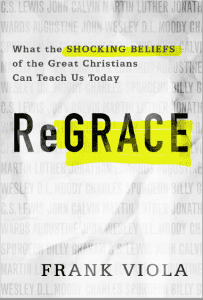
Even the Faith Giants Didn’t Always Get it...
How the Church Can Heal the Race Divide

Finding Inspiration in "Where Angels Walk"

Happiness Is Found Outside of Our Comfort Zones
TRENDING AT PATHEOS Religious Music & Entertainment

A Christian, a Narnia Fan, and a Filmmaker...
Watching The Narnia Trailer As A Fan And A Filmmaker Ever since...

Great Spiritual Horror Films of the 20th Century...
For the Christian, horror movies are often troubling—and many would say that...

"Les Diabolique" and Transgression
Alongside something like Arrival, Vertigo, or Charade, Les Diaboliques is a...

"The Plague Dogs" and Mortality
So, flashback to the late 70s, early 80s. Walt Disney Studios is...

With the recent and highly successful release of Christopher Nolan’s epic film,...

"L'avventura" and Human Weakness
Today's piece is going to be a little different for a few...
view all Religious Music & Entertainment blogs
Ad-Free & Subscriber Log-In Subscription Support
- About Us
- 2026 Calendar
- Videos
- Podcasts
- Library of World Religions
- Faith In Media Tracker
- Advertise With Us
- Write for Us
- Privacy Policy
- Terms of Service
- Do Not Sell My Data
- Contact Us
- Radiant Digital
- Manage Newsletter Subscriptions
- Unsubscribe From Notifications
- Sitemap
Copyright 2008-2026, Patheos, part of the Radiant Digital network of media brands. All rights reserved.
Subscription Support Ad-Free & Subscriber Log-In
Follow Patheos