
BuddhistCatholicContemplativeEvangelicalGeneral ChristianHinduJewishLatter-day SaintMuslimNew VisionsProgressive Christian
Beliefs
- Buddhist
- Catholic
- Contemplative
- Evangelical
- General Christian
- Hindu
- Jewish
- Latter-day Saint
- More Voices
- Muslim
- New Visions
- Pagan
- Progressive Christian
Topics
- Religion News
- Food and Religion
- Sports and Religion
- Religious Art
- Religious Music and Entertainment
- Religious Events
- History and Religion
- Style and Religion
- Politics and Religion
- Women in Religion
- Recreation Outdoors and Religion
- Business Finance and Religion
- Careers Workplace and Religion
- Education and Religion
- Family Parenting and Religion
- Health Fitness and Religion
- Home and Religion
- Relationships and Religion
- Technology and Religion
- Travel and Religion
Columnists
- Buddhist Columnists
- Business Finance and Religion Columnists
- Careers Workplace and Religion Columnists
- Catholic Columnists
- Contemplative Columnists
- Education and Religion Columnists
- Evangelists Columnists
- Family Parenting and Religion Columnists
- General Christian Columnists
- Health Fitness and Religion Columnists
- Hindu Columnists
- History and Religion Columnists
- Home and Religion Columnists
- Jewish Columnists
- More Voices Columnists
- Latter Day Columnists
- Muslim Columnists
- New Visions Columnists
- Nonreligious Columnists
- Pagan Columnists
- Politics and Religion Columnists
- Progressive Columnists
- Recreation Outdoors and Religion Columnists
- Relationships and Religion Columnists
- Religion News Columnists
- Religious Art Columnists
- Religious Events Columnists
- Religious Music and Entertainment Columnists
- Sports and Religion Columnists
- Style and Religion Columnists
- Technology and Religion Columnists
- Travel and Religion Columnists
- Women in Religion Columnists
Resource Library
- 2026 Calendar
- Library of World Religions
- The 100 Most Holy Places on Earth
- Patheos Answers
- Podcasts
- Videos
- Faith Leaders Database
- Anglican Episcopalian
- Bahai
- Baptist
- Buddhism
- Christianity
- Confucianism
- Eastern Orthodoxy
- Hinduism
- Holiness and Pentecostal
- ISKCON
- Islam
- Judaism
- Lutheran
- Methodist
- The Church of Jesus Christ of Latter-day Saints
- New Age
- Paganism
- Presbytarian and Reformed
- Protestantism
- Religion Behind the Scenes
- Roman Catholic
- Scientology
- Shia Islam
- Sikhism
- Sufism
- Sunni Islam
- Taoism
- Zen
- See all religions
Research Tools
 Ad-Free & Subscriber Log-In Subscription Support
Follow Patheos 

- Trending:
- Advent
- |
- Forgiveness
- |
- Thanksgiving
- |
- Election
- |
- Seasonal Holidays
- |
- Marriage

- Home
- Religious Music & Entertainment
- How to Survive Life (and Death): A Q&A with Robert Kopecky
How to Survive Life (and Death): A Q&A with Robert Kopecky
Last updated on: March 31, 2014 at 4:08 pm by Guest Contributor
How to Survive Life (and Death): A Q&A with Robert Kopecky 2014-03-31T16:08:13-06:00 Guest Contributor
Patheos Explore the world's faith through different perspectives on religion and spirituality! Patheos has the views of the prevalent religions and spiritualities of the world.
 Now featured in the Patheos Book Club: How to Survive Life (And Death): A Guide for Happiness in This World and Beyond by Robert Kopecky.
You claimed to have had three Near Death Experiences; were they different from each other?
Kopecky: Yes, each was entirely different from the other, but all similar to other peoples’ NDE stories that I’ve read or heard since. The first was an entirely engrossing experience that went on for what seemed like a long time. The second was like being a witness to something rather critical – scenes from my life. The last one was kind of tough, because there was almost a struggle to it that came from not wanting to leave where I was. I learned three completely different, powerful lessons from each.
Some people have very fantastic near death experiences, why doesn’t your book have anything like that?
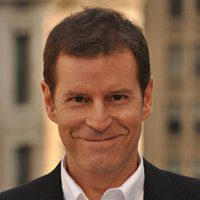 I believe that in the same way as this life can be experienced in entirely different ways by different people, the quality of consciousness we carry into the “afterlife” can define our experience there, too – at least while we settle in there. Without casting any doubt at all on the testimony of other survivors, I avoid the details of the circumstances I was in (that may have to do with our state of being and imaginations) in favor of focusing on the lessons I learned in each episode.
A lot of your book doesn’t seem to be about near death experiences or dying as much as it’s about how to live. Why is that?
Primarily, because I didn’t experience any real cessation of life, of consciousness. The transition from here to “there” was entirely seamless, so I can only conclude that dying is part of the larger experience of living. Also because the experiences I had, and the lessons that came from each, were germane to the way I had been living life. So all of it is about how we live.
What did nearly dying teach you about living?
I didn’t know that I was close to death immediately before any of my experiences. There were no terminal conditions, no long illnesses involved. This life, as we experience it in these bodies, is in itself a terminal condition, a kind of “class” in being that can end at practically any moment. Real success beyond this has more to do with how you are living, than with what you have or have done.
If death is so natural, why is it so scary?
Our egos – our interface with this life that’s available to us through the “hardware” of this physical form we’re in – are defense, survival, and procreation oriented. Formed by the basic instinct to live. So to our intellects (our egos), death seems like obliteration, loss and failure, when of course, it isn’t. It’s also our natural fear of the unknown. A big part of my message is that there’s nothing to fear.
What did your experiences teach you are the most important things in life?
Recognizing the eternal aspects of this life – and the principles and practices that can help us recognize, cultivate, and celebrate those aspects. For example, I’ve come to realize Love itself as an energetic field, of sorts, that runs beneath, and through, and arches over every moment of life; and whose absence is the cause of all needless suffering.
You have “Three Tips for Happiness” throughout your book; can you describe them?
Yes, briefly. Radical Kindness is pretty self-explanatory, and is the single most effective, transformational practice for your life. Radical Forgiveness is the absolute best means of releasing self-destructive regrets and resentments. And Radical Surrender is the completely counterintuitive key to living in the flow of life, and realizing the magic and wonder of having dreams come true. That’s it – in a nutshell.
You seem to think animals are more conscious than we usually give them credit for, what about animals and the role they play in our lives?
Animals are our channels to the Divine, and are fully participating partners in our lives’ karma lessons. They are often completely understanding of our language, motivations, and problems, but in a format we usually don’t allow ourselves to share because of obstacles created by our human ego and intellect. They often directly mirror us, personally and collectively. We could consider them to be “smarter” than us in many ways, particularly in the context of their own forms, and their wisdom of living in harmony with all of Life.
Do you believe in reincarnation?
Having inadvertently discovered the seamless nature of life, from life to life, naturally, yes. Besides, there’s too much predetermined when we enter these lives, and usually not enough resolved when we leave them to think that one life can contain the entire evolution of a spirit, back into the source of spirit.
You talk a lot about meditation in a pretty direct way. Why is that, and what tips do you have for people who have a hard time with it?
I didn’t really realize the meaning of my three NDEs until I’d had a meditation practice in my life for about six or seven years. I find that I can actually experience a glimmer of the state of being that I experienced, “peeking behind the curtain,” so to speak, when I meditate. My biggest tips are to become a witness to your thinking mind, in order to move away from it; and to keep pursuing that thought-free state until you begin to experience the unity of everything. If you keep practicing, you’ll get there.
What led you from being an illustrator/designer with a lifetime of major publication and network TV credits, to wanting to write about what would usually be considered “fringe” spiritual subject matter?
Pretty much dying three times did that for me. It became clear that I wasn’t really any of those outer lives that “ended,” or kept changing and deconstructing themselves. Plus, it gave me a purpose that commercial art couldn’t match – one that you may appreciate – and that is that you don’t have to repeat the difficulties I went through if you’re willing to take my experiences to heart. I want to help people with the hard parts of their lives.
You seem to refer to a lot of well-known spiritual teachers and leaders, swamis, physicists, even to the scriptures of different religions in your writing – where did all of that come from?
I’m almost completely self-taught in those areas, really. I don’t know exactly why, but at a certain point in my life reading or listening to anything but this kind of transformational wisdom just stopped making sense to me. So while I still draw lots of pictures, I draw more of them with words – in an effort to translate all this spiritual truth through the prism of my experiences, and relate it in a simpler, easier way, if possible.
Robert Kopecky is an Emmy-nominated art director. He designed the credits for Showtime’s Weeds and he art directs the PBS children’s show Word World. He contributes to Evolver.net, NewBuddhist.com, TheMindfulWord, and elsewhere. He lives in Brooklyn with his wife, Sue Pike, the Animal Talker (SuePikeEnergy.com). Visit him at http://RobertKopecky.blogspot.com.
Previous Post

March 27, 2014
On Discipleship and Christian Maturity: A Q&A with Ronald Rolheiser
Next Post

March 31, 2014 Lunching with C. S. Lewis: A Q&A with Alister McGrath
Recent Comments
2,215 Comments | Leave a Comment
Browse Our Archives
Select a Category Author Q&A Book Review Christian Living Church Leadership Stump a Scholar Theology Uncategorized
Select a Month June 2022 March 2021 October 2020 August 2020 February 2019 November 2017 July 2017 June 2017 May 2017 March 2017 February 2017 January 2017 November 2016 October 2016 August 2016 July 2016 June 2016 May 2016 April 2016 March 2016 February 2016 January 2016 November 2015 October 2015 September 2015 August 2015 July 2015 June 2015 May 2015 April 2015 March 2015 February 2015 January 2015 December 2014 November 2014 October 2014 September 2014 August 2014 July 2014 June 2014 May 2014 April 2014 March 2014 February 2014 January 2014 December 2013 November 2013 October 2013 September 2013 August 2013 July 2013 June 2013 May 2013 April 2013 March 2013 February 2013 January 2013 December 2012 November 2012 October 2012 September 2012 August 2012 July 2012 June 2012 May 2012 April 2012 March 2012 February 2012 January 2012 December 2011 November 2011 October 2011 September 2011 August 2011 July 2011 June 2011 May 2011 April 2011 March 2011 February 2011 January 2011 December 2010 November 2010 October 2010 September 2010 August 2010 July 2010 June 2010
Follow Us!
TAKE THE
Religious Wisdom Quiz
How many New Testament books were written by John?
Select your answer to see how you score.
3 4 6 5
Related posts from Take and Read

Us Versus Us: A Q&A with Author Andrew...

Tasting God: A Q&A with Ginny Kubitz Moyer
40 Days of Decrease: A Different Kind of...

Five Reasons There’s No Getting Past Religion
TRENDING AT PATHEOS Religious Music & Entertainment

A Christian, a Narnia Fan, and a Filmmaker...
Watching The Narnia Trailer As A Fan And A Filmmaker Ever since...

Great Spiritual Horror Films of the 20th Century...
For the Christian, horror movies are often troubling—and many would say that...

"Les Diabolique" and Transgression
Alongside something like Arrival, Vertigo, or Charade, Les Diaboliques is a...

"The Plague Dogs" and Mortality
So, flashback to the late 70s, early 80s. Walt Disney Studios is...

With the recent and highly successful release of Christopher Nolan’s epic film,...

"L'avventura" and Human Weakness
Today's piece is going to be a little different for a few...
view all Religious Music & Entertainment blogs
Ad-Free & Subscriber Log-In Subscription Support
- About Us
- 2026 Calendar
- Videos
- Podcasts
- Library of World Religions
- Faith In Media Tracker
- Advertise With Us
- Write for Us
- Privacy Policy
- Terms of Service
- Do Not Sell My Data
- Contact Us
- Radiant Digital
- Manage Newsletter Subscriptions
- Unsubscribe From Notifications
- Sitemap
Copyright 2008-2026, Patheos, part of the Radiant Digital network of media brands. All rights reserved.
Subscription Support Ad-Free & Subscriber Log-In
Follow Patheos