
BuddhistCatholicContemplativeEvangelicalGeneral ChristianHinduJewishLatter-day SaintMuslimNew VisionsProgressive Christian
Beliefs
- Buddhist
- Catholic
- Contemplative
- Evangelical
- General Christian
- Hindu
- Jewish
- Latter-day Saint
- More Voices
- Muslim
- New Visions
- Pagan
- Progressive Christian
Topics
- Religion News
- Food and Religion
- Sports and Religion
- Religious Art
- Religious Music and Entertainment
- Religious Events
- History and Religion
- Style and Religion
- Politics and Religion
- Women in Religion
- Recreation Outdoors and Religion
- Business Finance and Religion
- Careers Workplace and Religion
- Education and Religion
- Family Parenting and Religion
- Health Fitness and Religion
- Home and Religion
- Relationships and Religion
- Technology and Religion
- Travel and Religion
Columnists
- Buddhist Columnists
- Business Finance and Religion Columnists
- Careers Workplace and Religion Columnists
- Catholic Columnists
- Contemplative Columnists
- Education and Religion Columnists
- Evangelists Columnists
- Family Parenting and Religion Columnists
- General Christian Columnists
- Health Fitness and Religion Columnists
- Hindu Columnists
- History and Religion Columnists
- Home and Religion Columnists
- Jewish Columnists
- More Voices Columnists
- Latter Day Columnists
- Muslim Columnists
- New Visions Columnists
- Nonreligious Columnists
- Pagan Columnists
- Politics and Religion Columnists
- Progressive Columnists
- Recreation Outdoors and Religion Columnists
- Relationships and Religion Columnists
- Religion News Columnists
- Religious Art Columnists
- Religious Events Columnists
- Religious Music and Entertainment Columnists
- Sports and Religion Columnists
- Style and Religion Columnists
- Technology and Religion Columnists
- Travel and Religion Columnists
- Women in Religion Columnists
Resource Library
- 2026 Calendar
- Library of World Religions
- The 100 Most Holy Places on Earth
- Patheos Answers
- Podcasts
- Videos
- Faith Leaders Database
- Anglican Episcopalian
- Bahai
- Baptist
- Buddhism
- Christianity
- Confucianism
- Eastern Orthodoxy
- Hinduism
- Holiness and Pentecostal
- ISKCON
- Islam
- Judaism
- Lutheran
- Methodist
- The Church of Jesus Christ of Latter-day Saints
- New Age
- Paganism
- Presbytarian and Reformed
- Protestantism
- Religion Behind the Scenes
- Roman Catholic
- Scientology
- Shia Islam
- Sikhism
- Sufism
- Sunni Islam
- Taoism
- Zen
- See all religions
Research Tools
 Ad-Free & Subscriber Log-In Subscription Support
Ad-Free & Subscriber Log-In Subscription Support
Follow Patheos 

- Trending:
- Forgiveness
- |
- Marriage
- |
- Consciousness
- |
- Death Penalty
- |
- Election
- |
- Halloween

- Home
- Religious Music & Entertainment
- Learning to Appreciate Hip-Hop: A Review of “Freestyle”
Learning to Appreciate Hip-Hop: A Review of “Freestyle”
Last updated on: February 18, 2014 at 1:14 pm by David Swartz
Learning to Appreciate Hip-Hop: A Review of “Freestyle” 2014-02-18T13:14:16-07:00 David Swartz
Patheos Explore the world's faith through different perspectives on religion and spirituality! Patheos has the views of the prevalent religions and spiritualities of the world.
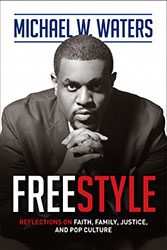 Question of the day: how does a 63-year-old white guy in Detroit who doesn’t care for hip-hop (although when hip-hop and “disco” appeared about the same time, I was glad hip-hop won out) review a book by an inner-city pastor from Dallas describing himself as a voice to the hip-hop generation? Answer: we major on commonalities. We’re both pastors and writers. His father and my surrogate father were both black pastors. We both live in metropolitan areas bristling with problems that have choked urban areas for years as well as new ones rooted in global trends we never thought about. We both have dedicated books to our wives paying honest tribute to the sources of both all our good ideas and repeated rescues from public embarrassment.
In his new book Freestyle, Michael W. Waters gives readers a wide spread of common ground to step into his racial/cultural world. He fires off short, concentrated bursts speaking out in four major areas: faith, family, justice and pop culture. Waters also blogs at Huffington Post. His pithy, concentrated writing shaped by blogging combined with shades of his preaching style give the reader easy handles to engage his world. He serves each short reading up hot and grieves deeply for the pain in the stories he shares. Waters shows something not evident with all pastors or writers for that matter: he likes the people whose stories he knows.
Waters is not a man who rants about his present from an ignorance of his own history. He’s led history tours allowing people to see the sites from slavery, the Jim Crow era and the struggle for civil rights of the mid-twentieth century. He references these very poignantly to show that these places breathe history that still lives. One would think these stories might be in the “Justice” section but they’re scattered all through the book. Our history and culture stand as two components of the DNA of our souls; they’re part of us and intertwined with our faith whether we’re black, white, paisley or plaid. We ignore exploring, unraveling and unpacking them at our peril. His account of meeting the older sister of one of the four girls killed in the church bombing in Birmingham in 1963 is a good example. Barely escaping death herself, Junie Williams grappled with her own anguish, survivor guilt and many other things. She now speaks to college students and anyone who will listen not just about her experiences but her sense of being part of an important legacy that must not be lost.
Waters also grieves the absence of men — of fathers — in inner city homes. And he has a lot of big guns backing him up. The Fatherhood Initiative cites the U.S. Census which claims that over 24 million children live without fathers in their daily lives. Father absence plays a key role in poverty issues, children and maternal health, incarceration, crime, teen pregnancy, child abuse, drug and alcohol abuse, education and childhood obesity. He shares this as a man who knew the blessing of a father present in his home, as someone keenly aware of the challenges and struggles of being a father to his own children, and one who steps in to do damage control in lives of people in south Dallas. He often speaks as a warrior, his speech often percussive, like a boxer throwing jabs.
As a descendant of pastors, Waters is also concerned for the church in general, and the black church in particular. Young black adults of his age group (23-40) are leaving the black church in protest, disappointment, and even anger over the church of their past experience. Waters recognizes this; he is part of the answer to this quandary. He recognizes the strength of the Gospel and can relate across generations. He is good cross-culturally, able to create doors (letting outside people in) instead of windows (allowing people to observe as spectators without participating in human solutions). This book is an example. He trumpets boldly the mandate of the hip-hop generation to be what it ought and to correct the mistakes of the previous generation. Every generation has that task so it’s not new to hip-hoppers. My generation (the Sixties) was going to change the world but many of us grew up to become everything we protested against. So I applaud his boldness with two gentle cautions. The generation before the hip-hoppers wasn’t just a bunch of losers who did nothing right. Mistakes aren’t just ignorant self-interest. Sometimes mistakes are something we make while attempting something significant. Only people who attempt nothing never make mistakes. Second, in correcting the previous generation’s mistakes, Michaels’ generation will make mistakes of their own and may live to hear from more than a few of their children and grandchildren, “Your church sucks!!”
I would like to see Waters stretch out a little more; I’m sure he’s not done writing and that’s good. People in publishing invariably ask each other, “Where are all the new good writers?” Well, one is inside the covers of Freestyle. Once he matures as a writer who mines some of the deeper aspects of the history he’s seen in his travels, who strengthens his heritage in the black pulpit and continues to live and breathe alongside the good people of south Dallas, the greater voice and richer substance will come. And when it does, maybe my tastes, which include Duke Ellington, Billie Holliday and John Coltrane, will have stretched enough for a little hip-hop, and the Rev. Waters and I can talk about it. Maybe here.
David Swartz pastors Bethel Baptist Church in Roseville, Michigan. He thinks that jazz is sacred music, that books are better company than most people, and that university towns rock. He blogs at geezeronthequad.com.
For more on Freestyle – and to read an excerpt – visit the Patheos Book Club here.
Previous Post

February 18, 2014
Mercy in the City: A Q&A with Kerry Weber
Next Post
February 25, 2014 Do Something More: A Review of "Mercy in the City"
Recent Comments
Browse Our Archives
Select a Category Author Q&A Book Review Christian Living Church Leadership Stump a Scholar Theology Uncategorized
Select a Month June 2022 March 2021 October 2020 August 2020 February 2019 November 2017 July 2017 June 2017 May 2017 March 2017 February 2017 January 2017 November 2016 October 2016 August 2016 July 2016 June 2016 May 2016 April 2016 March 2016 February 2016 January 2016 November 2015 October 2015 September 2015 August 2015 July 2015 June 2015 May 2015 April 2015 March 2015 February 2015 January 2015 December 2014 November 2014 October 2014 September 2014 August 2014 July 2014 June 2014 May 2014 April 2014 March 2014 February 2014 January 2014 December 2013 November 2013 October 2013 September 2013 August 2013 July 2013 June 2013 May 2013 April 2013 March 2013 February 2013 January 2013 December 2012 November 2012 October 2012 September 2012 August 2012 July 2012 June 2012 May 2012 April 2012 March 2012 February 2012 January 2012 December 2011 November 2011 October 2011 September 2011 August 2011 July 2011 June 2011 May 2011 April 2011 March 2011 February 2011 January 2011 December 2010 November 2010 October 2010 September 2010 August 2010 July 2010 June 2010
Follow Us!
TAKE THE
Religious Wisdom Quiz
How many total plagues did God send on Egypt?
Select your answer to see how you score.
Seven Twelve Five Ten
Related posts from Take and Read

How the Church Can Heal the Race Divide

Finding Inspiration in "Where Angels Walk"

Happiness Is Found Outside of Our Comfort Zones

Symbols of Faith in "Take the Flag"
TRENDING AT PATHEOS Religious Music & Entertainment

"Les Diabolique" and Transgression
Alongside something like Arrival, Vertigo, or Charade, Les Diaboliques is a...

"The Plague Dogs" and Mortality
So, flashback to the late 70s, early 80s. Walt Disney Studios is...

With the recent and highly successful release of Christopher Nolan’s epic film,...

"L'avventura" and Human Weakness
Today's piece is going to be a little different for a few...

I first want to apologize for not posting or writing anything. I'm...

I've engaged in the multi-year project of reading through the Church Fathers,...
view all Religious Music & Entertainment blogs
Ad-Free & Subscriber Log-In Subscription Support
- About Us
- 2026 Calendar
- Videos
- Podcasts
- Library of World Religions
- Faith In Media Tracker
- Advertise With Us
- Write for Us
- Privacy Policy
- Terms of Service
- Do Not Sell My Data
- Contact Us
- Radiant Digital
- Manage Newsletter Subscriptions
- Unsubscribe From Notifications
- Sitemap
Copyright 2008-2026, Patheos. All rights reserved.
Subscription Support Ad-Free & Subscriber Log-In
Follow Patheos