
BuddhistCatholicContemplativeEvangelicalGeneral ChristianHinduJewishLatter-day SaintMuslimNew VisionsProgressive Christian
Beliefs
- Buddhist
- Catholic
- Contemplative
- Evangelical
- General Christian
- Hindu
- Jewish
- Latter-day Saint
- More Voices
- Muslim
- New Visions
- Pagan
- Progressive Christian
Topics
- Religion News
- Food and Religion
- Sports and Religion
- Religious Art
- Religious Music and Entertainment
- Religious Events
- History and Religion
- Style and Religion
- Politics and Religion
- Women in Religion
- Recreation Outdoors and Religion
- Business Finance and Religion
- Careers Workplace and Religion
- Education and Religion
- Family Parenting and Religion
- Health Fitness and Religion
- Home and Religion
- Relationships and Religion
- Technology and Religion
- Travel and Religion
Columnists
- Buddhist Columnists
- Business Finance and Religion Columnists
- Careers Workplace and Religion Columnists
- Catholic Columnists
- Contemplative Columnists
- Education and Religion Columnists
- Evangelists Columnists
- Family Parenting and Religion Columnists
- General Christian Columnists
- Health Fitness and Religion Columnists
- Hindu Columnists
- History and Religion Columnists
- Home and Religion Columnists
- Jewish Columnists
- More Voices Columnists
- Latter Day Columnists
- Muslim Columnists
- New Visions Columnists
- Nonreligious Columnists
- Pagan Columnists
- Politics and Religion Columnists
- Progressive Columnists
- Recreation Outdoors and Religion Columnists
- Relationships and Religion Columnists
- Religion News Columnists
- Religious Art Columnists
- Religious Events Columnists
- Religious Music and Entertainment Columnists
- Sports and Religion Columnists
- Style and Religion Columnists
- Technology and Religion Columnists
- Travel and Religion Columnists
- Women in Religion Columnists
Resource Library
- 2026 Calendar
- Library of World Religions
- The 100 Most Holy Places on Earth
- Patheos Answers
- Podcasts
- Videos
- Faith Leaders Database
- Anglican Episcopalian
- Bahai
- Baptist
- Buddhism
- Christianity
- Confucianism
- Eastern Orthodoxy
- Hinduism
- Holiness and Pentecostal
- ISKCON
- Islam
- Judaism
- Lutheran
- Methodist
- The Church of Jesus Christ of Latter-day Saints
- New Age
- Paganism
- Presbytarian and Reformed
- Protestantism
- Religion Behind the Scenes
- Roman Catholic
- Scientology
- Shia Islam
- Sikhism
- Sufism
- Sunni Islam
- Taoism
- Zen
- See all religions
Research Tools
 Ad-Free & Subscriber Log-In Subscription Support
Follow Patheos 

- Trending:
- Advent
- |
- Forgiveness
- |
- Thanksgiving
- |
- Election
- |
- Seasonal Holidays
- |
- Marriage

- Home
- Religious Music & Entertainment
- Muhammad’s Words to Christians of the World: A Q&A with John Andrew Morrow
Muhammad’s Words to Christians of the World: A Q&A with John Andrew Morrow
Last updated on: December 2, 2013 at 11:09 am by Guest Contributor
Muhammad’s Words to Christians of the World: A Q&A with John Andrew Morrow 2013-12-02T11:09:04-07:00 Guest Contributor
Patheos Explore the world's faith through different perspectives on religion and spirituality! Patheos has the views of the prevalent religions and spiritualities of the world.
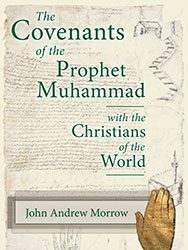 Ever since the 9/11 attacks and the Boston Marathon bombing, informed and conscientious Muslims have been shouting out “we are not all terrorists!” and searching for a way to effectively counter the extremists in the name of the traditional shari’ah (the religious and moral code of Islam). In a compelling new book, The Covenants of the Prophet Muhammad with the Christians of the World, author John Andrew Morrow brings to light newly-rediscovered documents that record Muhammad’s actual words confirming the rulings of the true shari’ah on the treatment of non-Muslims.
Morrow answered a few questions about the significance of his book at this time, what both Muslims and Christians can glean from these documents, and The Covenants Initiative, a document Muslims can sign supporting these treaties of Muhammad as legally binding on them today.
What is the significance of the Covenants of the Prophet Muhammad with the Christians of the World to the global interfaith conversation?
The significance of the Covenants of the Prophet Muhammad with the Christians of the World is profound, not only to Muslims and Christians, but to Jewish people as well. While interfaith dialogue is as ancient as religion itself, it was only in the twentieth century that such a movement really gathered interest. In the Islamic context, partisans are fond of pointing out examples such as Akbar the Great in India and the period of co-existence among Muslims, Christians, and Jews as well that coincided with much of Muslim rule in Spain. However, in the case of Islam, as my book shows, interfaith efforts can be traced back to its founder, the Prophet Muhammad.
One Muslim religious authority has claimed that “the prophets did not believe in religious pluralism,” as if they came to impose a new divine mission to the detriment of others. As the covenants show us, however, this was simply not the case with the Prophet Muhammad. While he did preach that Islam had come to perfect and complete the monotheistic message, he did not impose it by force on those who wished to maintain their Jewish or Christian faith. Since God had sent 124,000 prophets and messengers to tribes and nations throughout the world, he respected the remnants of previous divine revelations.
The Prophet, of course, believing that the previous revelations had been lost or altered, differed on matters of doctrine and practice. However, he saw beyond these outward differences and recognized spiritual similarity in inner matters. So as far as the Prophet and his followers are concerned, interfaith efforts are not aimed at syncretism, diluting, and weakening individual religions, or ignoring minor and major differences. The goal is to focus on common creedal elements: the existence of one God, the belief in his prophets and messengers, the need to promote the good and forbid the wrong, the reality of Judgment, and the life hereafter.
Tell us a bit about the scope of this project. What has the process been like researching and obtaining these documents?
Although the seed of this project was planted in the first essay I wrote as an undergraduate student, it lay dormant for over two decades. The seedling only broke the surface when I decided to update that article for scholarly publication in 2012. Not content with merely citing an English translation of the Prophet’s “Treaty with St. Catherine,” I was determined to obtain the Arabic original. This was to lead me down paths previously unimagined. Academic research is very much like detective work: a scholar finds a clue and his intellectual curiosity then pushes him to explore further. This project was very much one of fuentismo, or the study of sources—much of it consisting in tracking down the origins and history of ancient documents. Like a Chinese box, every time I opened the one before me, I discovered another inside, which in turn contained another, and that yet another….
Who do you think will be more surprised by this book—Christians or Muslims? Why?
I believe that both Christians and Muslims will be surprised, but for different reasons. Christians will be stunned at how far some Muslims have moved away from the actual teachings of the Prophet they profess to follow. Some Muslims may support the claim that the covenants were a Christian ploy to dupe Muslims, but others may embrace and accept them and develop renewed admiration for the Messenger of Allah. Among Muslims, the reactions will of course range from dismissal, indifference, anger, and outrage, to acceptance, relief, and inspiration. For many, this will be a true test of faith. Will they abide by the Covenant of Allah and His Messenger in opposition to their previously held prejudices? Or will they be defiant and reject them—not because they are false, but merely because they are not in accord with their deeply held beliefs? When God and His Messenger give a command, the true, believing Muslim says: “We hear and we obey.” Only unbelievers and hypocrites would do otherwise.
Why have these documents, and the messages of the Prophet Muhammad therein, been neglected by both traditional Muslim and modern Western scholarship? What is at stake for both traditions in acknowledging these Covenants as valid?
This is an issue that requires extensive investigation. The fact is that these documents were well known to Muslims well into the 19th century. The period of blindness commenced only in the 20th century. These covenants were also known to early Christian writers. They were known to early Muslim historians. Their terms were respected by most Muslim rulers from the time of the first Caliph to the time of the last Ottoman Sultan. With regard to the Sinai Covenant, there are nearly two thousand fatwas (or edicts) from Muslims jurists, both Sunni and Shi‘ite, from every major school of law, recognizing and confirming its validity.
It appears at first glance that ignorance of these covenants coincides with the disappearance of Islam as a political force in the world. Within years of the passing of the Prophet, and up to the early twentieth century, Muslims belonged, directly or indirectly, to what is now called a superpower. At times, several Muslim empires even existed concurrently. Eventually, most Muslims were conquered and colonized, and the Muslim Ummah became fragmented into artificial nation-states carved out by Europeans. The Muslim world has never recovered. The consequences of colonialism and neo-imperialism have been catastrophic. The first thing to suffer was the traditional education system. Mosques were the centers of literacy and education. Madrasahs were closed in virtually every colonized Muslim country. At the peak of Muslim power, the literacy rate in the Muslim world was almost 100%. In Muslim Spain, you would have been hard pressed to find even a young girl who could not read.
Flash forward to the present and you get a real idea of the cultural devastation that has hit the Muslim world. Currently, 80% of Muslim women are illiterate, and in many countries nearly half of Muslim men as well. And this is an improvement, considering the fact that only a small minority of Muslims could read and write by the time they attained their independence barely half a century ago. While light is slowly starting to return, Muslims long since entered a Dark Age: a period of prolonged ignorance. While this may outrage many—even to the point of violence—I must in all honesty say that most nominal Muslims long ago lost Islam. Only with a revival of true Islamic knowledge can the Muslim world be saved. Western civilization is not the solution. Secularism, Modernity, capitalism, and pseudo-democracy have been a scourge to Muslims.
So, the stakes are high both for Christians and Muslims. For Christians, recognition of the Covenants means acknowledging that Islam is not the horror it is made out to be. It means distinguishing between true, traditional Islam, and the monstrosity that some Muslims have made of it. For Muslims, it means a wake-up call, an awareness that they have deviated from the Islamic tradition, which requires that Muslims, not only tolerate Christians, but love them as their brothers and sisters. Now, if Muslims and Christians can love one another, regardless of their creedal differences, there might still be hope for this troubled world.
The message of the Covenants for Muslims seems fairly clear; what message might Christians glean from the Covenants?
In my opinion, the most striking feature of the Covenants is the manner in which Muhammad, the Messenger of Allah, views Christians. He does not address them as conquered subjects. He does not address them as enemies and infidels. He addresses them as “my flock.” He viewed his role as their shepherd. He insisted that “they are a part of my own people and an honor to me.” This is perfectly consistent with the Constitution of Medina, which all Muslim scholars accept as authentic. When he was acclaimed leader of Medina, the Prophet Muhammad ruled over a population composed primarily of Jews and polytheists, with only several hundred Muslims. He never created an “Islamic” State, at least not an Islamic State aimed only at Muslims. The State he created in Medina was a pluralistic one under the rule of the Messenger of Allah. Anyone who supported the Messenger of Allah—regardless whether a Muslim, Christian, or Jew—was considered a full member of the community. What counted was loyalty. So, the Prophet distinguished between the People of the Book who were friends, and the People of the Book who were foes.
How did the writing and research for this book affect/change/stretch your own faith?
For me, researching and writing this book was a test and a trial. I never actually “set out” to write it. I never planned to conduct research on this topic. It simply happened. It was willed. I never had an agenda. I harbored no specific intention to prove that Islam opposes oppression or terrorism. To me, that would be self-serving, as if I were apologizing for something neither I nor the Islamic religion is responsible for.
I came across the Covenant from 1630 entirely by accident when updating a study on Jihad. There are, of course, no true “accidents.” Things happen for a reason. I struggled with the text and the problems it poses for a long time. On a few occasions I came close to abandoning the project, and dismissing the document as a forgery. However, each time I came across what appeared to be an insurmountable obstacle—for example, a convincing argument that the covenant was a fraud—I would, quite miraculously, come across a counter-argument and evidence to the contrary. This happened over and over again. I name these obstacles in the book itself. Many of them would have stopped another scholar dead in his tracks.
When I approached all these covenants, it was from a purely scholarly perspective. I never assumed any of them were authentic. In fact, I had serious doubts about them. However, as a scholar, I maintained objectivity as well as I could, and my research resolved the issues that were a concern. So I never set out to prove that Islam is a religion of peace and that Muslims are not all terrorists. I was surprised, as are most Muslims, at the powerful defense of Christians found in these covenants. Again, if I came to the conclusion that these documents are genuine, it was only after much research and soul-searching. It was never my intent to dig up evidence in order to “defend Christians.” I am not working on behalf of Christians. As a Muslim scholar, I am working on behalf of God and the Prophet Muhammad. I defend Islam. So, if I say “defend the Christians,” it is because this is at the same time a form of defending Islam.
Again, in none of my writings do I convey anything of myself: I convey the teachings of Islam. I merely expound upon the Qur’an and the teachings of the Prophet. So, there is no “me” or “I” in any of this. It was a question of obeying or disobeying the Messenger of Allah. This was a true test of faith for me. Some Muslims, when they encounter these Covenants, will reject them—not on the basis of scholarship but simply because they personally do not want to agree with them. This distinguishes the true believer from the hypocrite. The true believers say “We hear and we obey.” I had no choice but to obey.
Your book includes something called “The Covenants Initiative”—what is this and who is behind it?
The Covenants Initiative was conceived by one of my editors. The objective of this initiative is beautiful in its simplicity: it simply asks Muslims to abide by the teachings contained in the Covenants of the Prophet. Now if only we could get Western leaders to act in accordance with the teachings of God, and not Gog and Magog, and follow Christ, as opposed to Anti-Christ, we might get somewhere in terms of Christian-Muslims relations!
How do you hope this book is engaged by Muslims and Christians? Who else, beyond those two obvious communities, would you like to read this book? What is your ultimate hope for this book?
It is my hope that The Covenants of the Prophet Muhammad with the Christians of the World will be read by both Christians and Muslims and that it will contribute to a culture-shift. The book may also have resonance with Jewish communities both inside and outside the Muslim world. It may also appeal to socially-committed individuals who may not necessarily be religious per se. If the publication of The Covenants can hasten the coming together of Christians and Muslims—as in the symbolic prayers of Jesus Christ with Imam Muhammad al-Mahdi in Muslim eschatology—I would be humbled indeed.
Read an excerpt from the book at the Patheos Book Club here!
Previous Post

December 2, 2013
Rich in Years: A Q&A with Author Johann Christoph Arnold
Next Post

December 2, 2013 Jesus, First-Century Rabbi: A Q&A with Rabbi David Zaslow
Recent Comments
2,522 Comments | Leave a Comment
Browse Our Archives
Select a Category Author Q&A Book Review Christian Living Church Leadership Stump a Scholar Theology Uncategorized
Select a Month June 2022 March 2021 October 2020 August 2020 February 2019 November 2017 July 2017 June 2017 May 2017 March 2017 February 2017 January 2017 November 2016 October 2016 August 2016 July 2016 June 2016 May 2016 April 2016 March 2016 February 2016 January 2016 November 2015 October 2015 September 2015 August 2015 July 2015 June 2015 May 2015 April 2015 March 2015 February 2015 January 2015 December 2014 November 2014 October 2014 September 2014 August 2014 July 2014 June 2014 May 2014 April 2014 March 2014 February 2014 January 2014 December 2013 November 2013 October 2013 September 2013 August 2013 July 2013 June 2013 May 2013 April 2013 March 2013 February 2013 January 2013 December 2012 November 2012 October 2012 September 2012 August 2012 July 2012 June 2012 May 2012 April 2012 March 2012 February 2012 January 2012 December 2011 November 2011 October 2011 September 2011 August 2011 July 2011 June 2011 May 2011 April 2011 March 2011 February 2011 January 2011 December 2010 November 2010 October 2010 September 2010 August 2010 July 2010 June 2010
Follow Us!
TAKE THE
Religious Wisdom Quiz
What does Paul tell the Thessalonians to do without ceasing?
Select your answer to see how you score.
Study the word Give thanks Rejoice Pray
Related posts from Take and Read
How the Church Can Heal the Race Divide

Finding Inspiration in "Where Angels Walk"

Happiness Is Found Outside of Our Comfort Zones

Symbols of Faith in "Take the Flag"
TRENDING AT PATHEOS Religious Music & Entertainment

A Christian, a Narnia Fan, and a Filmmaker...
Watching The Narnia Trailer As A Fan And A Filmmaker Ever since...

Great Spiritual Horror Films of the 20th Century...
For the Christian, horror movies are often troubling—and many would say that...

"Les Diabolique" and Transgression
Alongside something like Arrival, Vertigo, or Charade, Les Diaboliques is a...

"The Plague Dogs" and Mortality
So, flashback to the late 70s, early 80s. Walt Disney Studios is...

With the recent and highly successful release of Christopher Nolan’s epic film,...

"L'avventura" and Human Weakness
Today's piece is going to be a little different for a few...
view all Religious Music & Entertainment blogs
Ad-Free & Subscriber Log-In Subscription Support
- About Us
- 2026 Calendar
- Videos
- Podcasts
- Library of World Religions
- Faith In Media Tracker
- Advertise With Us
- Write for Us
- Privacy Policy
- Terms of Service
- Do Not Sell My Data
- Contact Us
- Radiant Digital
- Manage Newsletter Subscriptions
- Unsubscribe From Notifications
- Sitemap
Copyright 2008-2026, Patheos, part of the Radiant Digital network of media brands. All rights reserved.
Subscription Support Ad-Free & Subscriber Log-In
Follow Patheos