
BuddhistCatholicContemplativeEvangelicalGeneral ChristianHinduJewishLatter-day SaintMuslimNew VisionsProgressive Christian
Beliefs
- Buddhist
- Catholic
- Contemplative
- Evangelical
- General Christian
- Hindu
- Jewish
- Latter-day Saint
- More Voices
- Muslim
- New Visions
- Pagan
- Progressive Christian
Topics
- Religion News
- Food and Religion
- Sports and Religion
- Religious Art
- Religious Music and Entertainment
- Religious Events
- History and Religion
- Style and Religion
- Politics and Religion
- Women in Religion
- Recreation Outdoors and Religion
- Business Finance and Religion
- Careers Workplace and Religion
- Education and Religion
- Family Parenting and Religion
- Health Fitness and Religion
- Home and Religion
- Relationships and Religion
- Technology and Religion
- Travel and Religion
Columnists
- Buddhist Columnists
- Business Finance and Religion Columnists
- Careers Workplace and Religion Columnists
- Catholic Columnists
- Contemplative Columnists
- Education and Religion Columnists
- Evangelists Columnists
- Family Parenting and Religion Columnists
- General Christian Columnists
- Health Fitness and Religion Columnists
- Hindu Columnists
- History and Religion Columnists
- Home and Religion Columnists
- Jewish Columnists
- More Voices Columnists
- Latter Day Columnists
- Muslim Columnists
- New Visions Columnists
- Nonreligious Columnists
- Pagan Columnists
- Politics and Religion Columnists
- Progressive Columnists
- Recreation Outdoors and Religion Columnists
- Relationships and Religion Columnists
- Religion News Columnists
- Religious Art Columnists
- Religious Events Columnists
- Religious Music and Entertainment Columnists
- Sports and Religion Columnists
- Style and Religion Columnists
- Technology and Religion Columnists
- Travel and Religion Columnists
- Women in Religion Columnists
Resource Library
- 2026 Calendar
- Library of World Religions
- The 100 Most Holy Places on Earth
- Patheos Answers
- Podcasts
- Videos
- Faith Leaders Database
- Anglican Episcopalian
- Bahai
- Baptist
- Buddhism
- Christianity
- Confucianism
- Eastern Orthodoxy
- Hinduism
- Holiness and Pentecostal
- ISKCON
- Islam
- Judaism
- Lutheran
- Methodist
- The Church of Jesus Christ of Latter-day Saints
- New Age
- Paganism
- Presbytarian and Reformed
- Protestantism
- Religion Behind the Scenes
- Roman Catholic
- Scientology
- Shia Islam
- Sikhism
- Sufism
- Sunni Islam
- Taoism
- Zen
- See all religions
Research Tools
 Ad-Free & Subscriber Log-In Subscription Support
Ad-Free & Subscriber Log-In Subscription Support
Follow Patheos 

- Trending:
- Forgiveness
- |
- Marriage
- |
- Consciousness
- |
- Death Penalty
- |
- Election
- |
- Halloween

- Home
- Religious Music & Entertainment
- Jesus, First-Century Rabbi: A Tale of Love and Caution
Jesus, First-Century Rabbi: A Tale of Love and Caution
Last updated on: December 16, 2013 at 3:57 pm by Brad Hirschfield
Jesus, First-Century Rabbi: A Tale of Love and Caution 2013-12-16T15:57:52-07:00 Brad Hirschfield
Patheos Explore the world's faith through different perspectives on religion and spirituality! Patheos has the views of the prevalent religions and spiritualities of the world.
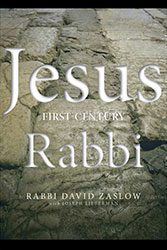 The first century is a time whose stories evoke controversy as perhaps no other period in the history of religion. Who was “the real” Jesus? The answer to that question has altered loves for better and for worse until our very day. So a book like Jesus: First Century Rabbi, by Rabbi David Zaslow, which tries to answer the question, demands serious attention.
His work actually continues a recent trend of books trying to better understand who Jesus was, by placing him in the context of 1st century Judaism. Rabbi Zaslow’s effort is a particularly accessible and loving work, which will bridge a gap felt by both some Christians and Jews.
Whether one agrees with his analysis or not, the spirit in which the book is written is a beautiful lesson for much interfaith encounter. His animating premise is that contemporary Christianity and Judaism share a common narrative far richer than many in either camp often appreciate, and that each can better understand both their own story and the other’s, when they more fully appreciate that shared narrative.
About this last conclusion, the author is certainly correct, but his use of “root/branch” or “elder sibling/younger sibling” metaphors to describe Judaism and Christianity are more problematic, and actually lead to some potential problems in building the most fruitful and durable inter-religious encounters.
While both most Jews, and many Christians, appreciate the apparent advantage of treating Judaism as the elder tradition, as the author does, it is not exactly true. In fact, rabbinic Judaism and Christianity co-arise at roughly the same time i.e. the first century.
The challenges with applying the “root/branch” metaphor are most apparent in the book when we read citations from texts in the so-called root tradition, Judaism, which are younger than those found in the so-called branch tradition, Christianity. Not to worry too much though, as those are not the only available metaphors in thinking about how these two traditions are related to each other.
Perhaps more productive, would be thinking of both Rabbinic Judaism and Christianity as twin children of a common mother — the Hebrew Bible. While that metaphor may offer some unique challenges to both communities, it better represents the actual history of each tradition, and may also help explain some of the enormous pain that has arisen between the two over the centuries. That however, is for another time.
I would offer two additional cautionary notes, also based on the book, in the hope of maximizing the encounters which this book helps to facilitate:
1. The Jesus of this book is so much the one with whom the author can identify, that it reminds us to be careful that our bridge-building efforts actually bridge us to more that who we already are, and who we want those we find on the other side to be. The richest bridge-building efforts invite us to connect even when those across the bridge are genuinely different from us.
2. The same book which so lovingly “saves” Jesus as a good rabbinic Jew, may do so by crucifying Paul, his best known evangelist. It’s a common enough challenge, which most of us face at some time or another — making peace with an old challenger by locating a new person on who to park all of the old enmity. While Rabbi Zaslow’s book may not go that far, at times it comes close, and in doing so reminds us how easy it is for even those of us with the very best of intentions to find ourselves making new friends by identifying new foes.
Ultimately though, this is a beautiful book, and when read as an example of how to see what we love most in ourselves as being deeply present even with others, it deserves the attention of all people whose love of God and humanity is as deep as their love of the particular faith they follow.
To read an excerpt from Jesus: First-Century, visit the Patheos Book Club here.

Next Post

January 5, 2014 All Shook Up: A Q&A with Elvis Spiritual Biographer Gary Tillery
Browse Our Archives
Select a Category Author Q&A Book Review Christian Living Church Leadership Stump a Scholar Theology Uncategorized
Select a Month June 2022 March 2021 October 2020 August 2020 February 2019 November 2017 July 2017 June 2017 May 2017 March 2017 February 2017 January 2017 November 2016 October 2016 August 2016 July 2016 June 2016 May 2016 April 2016 March 2016 February 2016 January 2016 November 2015 October 2015 September 2015 August 2015 July 2015 June 2015 May 2015 April 2015 March 2015 February 2015 January 2015 December 2014 November 2014 October 2014 September 2014 August 2014 July 2014 June 2014 May 2014 April 2014 March 2014 February 2014 January 2014 December 2013 November 2013 October 2013 September 2013 August 2013 July 2013 June 2013 May 2013 April 2013 March 2013 February 2013 January 2013 December 2012 November 2012 October 2012 September 2012 August 2012 July 2012 June 2012 May 2012 April 2012 March 2012 February 2012 January 2012 December 2011 November 2011 October 2011 September 2011 August 2011 July 2011 June 2011 May 2011 April 2011 March 2011 February 2011 January 2011 December 2010 November 2010 October 2010 September 2010 August 2010 July 2010 June 2010
Follow Us!
TAKE THE
Religious Wisdom Quiz
Who were Isaac and Rebekah's twin sons?
Select your answer to see how you score.
Cain and Abel Esau and Jacob Joseph and Benjamin Simeon and Levi
Related posts from Take and Read

"The Slow March of Light" Highlights The Human...

"A Brilliant Night of Stars and Ice" Recounts...

How To Judge The Bible By Its Cover

Life is an Endless Invitation: Q&A With Rob...
TRENDING AT PATHEOS Religious Music & Entertainment

"Les Diabolique" and Transgression
Alongside something like Arrival, Vertigo, or Charade, Les Diaboliques is a...

"The Plague Dogs" and Mortality
So, flashback to the late 70s, early 80s. Walt Disney Studios is...

With the recent and highly successful release of Christopher Nolan’s epic film,...

"L'avventura" and Human Weakness
Today's piece is going to be a little different for a few...

I first want to apologize for not posting or writing anything. I'm...

I've engaged in the multi-year project of reading through the Church Fathers,...
view all Religious Music & Entertainment blogs
Ad-Free & Subscriber Log-In Subscription Support
- About Us
- 2026 Calendar
- Videos
- Podcasts
- Library of World Religions
- Faith In Media Tracker
- Advertise With Us
- Write for Us
- Privacy Policy
- Terms of Service
- Do Not Sell My Data
- Contact Us
- Radiant Digital
- Manage Newsletter Subscriptions
- Unsubscribe From Notifications
- Sitemap
Copyright 2008-2026, Patheos. All rights reserved.
Subscription Support Ad-Free & Subscriber Log-In
Follow Patheos