
BuddhistCatholicContemplativeEvangelicalGeneral ChristianHinduJewishLatter-day SaintMuslimNew VisionsProgressive Christian
Beliefs
- Buddhist
- Catholic
- Contemplative
- Evangelical
- General Christian
- Hindu
- Jewish
- Latter-day Saint
- More Voices
- Muslim
- New Visions
- Pagan
- Progressive Christian
Topics
- Religion News
- Food and Religion
- Sports and Religion
- Religious Art
- Religious Music and Entertainment
- Religious Events
- History and Religion
- Style and Religion
- Politics and Religion
- Women in Religion
- Recreation Outdoors and Religion
- Business Finance and Religion
- Careers Workplace and Religion
- Education and Religion
- Family Parenting and Religion
- Health Fitness and Religion
- Home and Religion
- Relationships and Religion
- Technology and Religion
- Travel and Religion
Columnists
- Buddhist Columnists
- Business Finance and Religion Columnists
- Careers Workplace and Religion Columnists
- Catholic Columnists
- Contemplative Columnists
- Education and Religion Columnists
- Evangelists Columnists
- Family Parenting and Religion Columnists
- General Christian Columnists
- Health Fitness and Religion Columnists
- Hindu Columnists
- History and Religion Columnists
- Home and Religion Columnists
- Jewish Columnists
- More Voices Columnists
- Latter Day Columnists
- Muslim Columnists
- New Visions Columnists
- Nonreligious Columnists
- Pagan Columnists
- Politics and Religion Columnists
- Progressive Columnists
- Recreation Outdoors and Religion Columnists
- Relationships and Religion Columnists
- Religion News Columnists
- Religious Art Columnists
- Religious Events Columnists
- Religious Music and Entertainment Columnists
- Sports and Religion Columnists
- Style and Religion Columnists
- Technology and Religion Columnists
- Travel and Religion Columnists
- Women in Religion Columnists
Resource Library
- 2026 Calendar
- Library of World Religions
- The 100 Most Holy Places on Earth
- Patheos Answers
- Podcasts
- Videos
- Faith Leaders Database
- Anglican Episcopalian
- Bahai
- Baptist
- Buddhism
- Christianity
- Confucianism
- Eastern Orthodoxy
- Hinduism
- Holiness and Pentecostal
- ISKCON
- Islam
- Judaism
- Lutheran
- Methodist
- The Church of Jesus Christ of Latter-day Saints
- New Age
- Paganism
- Presbytarian and Reformed
- Protestantism
- Religion Behind the Scenes
- Roman Catholic
- Scientology
- Shia Islam
- Sikhism
- Sufism
- Sunni Islam
- Taoism
- Zen
- See all religions
Research Tools
 Ad-Free & Subscriber Log-In Subscription Support
Ad-Free & Subscriber Log-In Subscription Support
Follow Patheos 

- Trending:
- Forgiveness
- |
- Marriage
- |
- Consciousness
- |
- Death Penalty
- |
- Election
- |
- Halloween

- Home
- Religious Music & Entertainment
- Catholic Imagination and Hebraic Thinking
Catholic Imagination and Hebraic Thinking
Last updated on: December 11, 2013 at 1:41 pm by Guest Contributor
Catholic Imagination and Hebraic Thinking 2013-12-11T13:41:04-07:00 Guest Contributor
Patheos Explore the world's faith through different perspectives on religion and spirituality! Patheos has the views of the prevalent religions and spiritualities of the world.
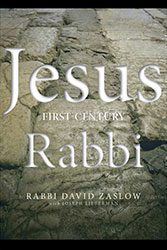 By Bethanie Ryan
My favorite part of Rabbi David Zaslow’s new book, Jesus: First-Century Rabbi, is Chapter Eight: Hebraic Thinking. Not because his characterization of Jewish thought was new to me, because it wasn’t. Not because it was the easiest part for me to understand, the whole book is very readable. It’s because, as a Catholic, I got it. I understood “Hebraic thinking.”
I had a hint that a light-bulb moment like this was going to happen when he set forth his understanding of the Temple sacrifices.
…the prophets, priests, and rabbis had always taught that Temple sacrifices are outward signs of inward changes; the offerings themselves were physical representations of feelings, thoughts, and words. (pg. 51)
This reminded me of the old Baltimore Catechism definition of Sacrament:
A Sacrament is an outward sign instituted by Christ to give grace.
This definition will often be paraphrased by Catholics as:
A Sacrament is an outward sign of an inward grace.
I wonder if Zaslow has ever heard of the “Catholic imagination.” Admittedly, it’s a bit of jargon in Catholic artistic circles. No one really has a set definition for it and the phrase has very little meaning outside of Catholicism. The omniscient Wikipedia suggests this definition:
Catholic imagination refers to the Catholic viewpoint that God is present in the whole creation and in human beings, as seen in its sacramental system whereby material things and human beings are channels and sources of God’s grace.
The Catholic imagination cannot help but see the entirety of creation as an interconnected web infused with the Divine. The Catholic Sacraments make holy that which is ordinary, like water, bread and wine. Catholics can easily expand that idea into their everyday lives.
Dualism is the antithesis of both Hebraic thinking and the Catholic imagination. Except when it comes to morality, there is no either/or. Everything (but morality) is a both/and. Body and soul. Birth and death. Animate and inanimate. Humanity and nature. It is all holy and in some sense participates in the Divine. Zaslow defines Hebraic thinking as:
Imagine perceiving the world in such a way that past and the present, time and space, nature and spirituality are seen as integrated and not separated into disconnected spheres of experience—this is the essence of Hebraic thinking. (pg. 97)
He very briefly, but very correctly, connects this to the Catholic understanding of the Eucharist. When we “do this in remembrance of Him,” we are not remembering a past event. We are making that past event present. Time, in this way, is not exclusively linear. We can participate in Jesus’ last supper and His sacrifice on the cross right now nearly two thousand years later.
I would argue that Catholic artists are among the heirs of the Hebraic worldview. In the Catholic imagination, some of that ancient thinking lives on. Zaslow wants to see more interfaith dialogue. Maybe art is a starting point, because as a Catholic, I get it.
For more conversation on Jesus: First-Century Rabbi, visit the Patheos Book Club here.
 Bethanie Ryan is a housewife, mother and writer. She recently graduated with a MA in Pastoral Studies from Aquinas Institute of Theology. Originally from Missouri, she currently calls upstate New York home. She writes for several websites including her own, Syrophoenician Woman.
Previous Post

December 9, 2013
Rich in Years: A Book Review
Next Post

December 13, 2013 Angels, Today: A Q&A with "The Angel Effect's" John Geiger
Recent Comments
2,101 Comments | Leave a Comment
Browse Our Archives
Select a Category Author Q&A Book Review Christian Living Church Leadership Stump a Scholar Theology Uncategorized
Select a Month June 2022 March 2021 October 2020 August 2020 February 2019 November 2017 July 2017 June 2017 May 2017 March 2017 February 2017 January 2017 November 2016 October 2016 August 2016 July 2016 June 2016 May 2016 April 2016 March 2016 February 2016 January 2016 November 2015 October 2015 September 2015 August 2015 July 2015 June 2015 May 2015 April 2015 March 2015 February 2015 January 2015 December 2014 November 2014 October 2014 September 2014 August 2014 July 2014 June 2014 May 2014 April 2014 March 2014 February 2014 January 2014 December 2013 November 2013 October 2013 September 2013 August 2013 July 2013 June 2013 May 2013 April 2013 March 2013 February 2013 January 2013 December 2012 November 2012 October 2012 September 2012 August 2012 July 2012 June 2012 May 2012 April 2012 March 2012 February 2012 January 2012 December 2011 November 2011 October 2011 September 2011 August 2011 July 2011 June 2011 May 2011 April 2011 March 2011 February 2011 January 2011 December 2010 November 2010 October 2010 September 2010 August 2010 July 2010 June 2010
Follow Us!
TAKE THE
Religious Wisdom Quiz
True or False: In Matthew, Jesus sent out the twelve apostles with instructions to take a staff and sandals for their journey.
Select your answer to see how you score.
FALSE TRUE
Related posts from Take and Read

Finding Inspiration in "Where Angels Walk"
What Makes Someone Jewish? A Book Review
Jewish-Christian Difference and Modern Jewish Identity
TRENDING AT PATHEOS Religious Music & Entertainment

"Les Diabolique" and Transgression
Alongside something like Arrival, Vertigo, or Charade, Les Diaboliques is a...

"The Plague Dogs" and Mortality
So, flashback to the late 70s, early 80s. Walt Disney Studios is...

With the recent and highly successful release of Christopher Nolan’s epic film,...

"L'avventura" and Human Weakness
Today's piece is going to be a little different for a few...

I first want to apologize for not posting or writing anything. I'm...

I've engaged in the multi-year project of reading through the Church Fathers,...
view all Religious Music & Entertainment blogs
Ad-Free & Subscriber Log-In Subscription Support
- About Us
- 2026 Calendar
- Videos
- Podcasts
- Library of World Religions
- Faith In Media Tracker
- Advertise With Us
- Write for Us
- Privacy Policy
- Terms of Service
- Do Not Sell My Data
- Contact Us
- Radiant Digital
- Manage Newsletter Subscriptions
- Unsubscribe From Notifications
- Sitemap
Copyright 2008-2026, Patheos. All rights reserved.
Subscription Support Ad-Free & Subscriber Log-In
Follow Patheos