
BuddhistCatholicContemplativeEvangelicalGeneral ChristianHinduJewishLatter-day SaintMuslimNew VisionsProgressive Christian
Beliefs
- Buddhist
- Catholic
- Contemplative
- Evangelical
- General Christian
- Hindu
- Jewish
- Latter-day Saint
- More Voices
- Muslim
- New Visions
- Pagan
- Progressive Christian
Topics
- Religion News
- Food and Religion
- Sports and Religion
- Religious Art
- Religious Music and Entertainment
- Religious Events
- History and Religion
- Style and Religion
- Politics and Religion
- Women in Religion
- Recreation Outdoors and Religion
- Business Finance and Religion
- Careers Workplace and Religion
- Education and Religion
- Family Parenting and Religion
- Health Fitness and Religion
- Home and Religion
- Relationships and Religion
- Technology and Religion
- Travel and Religion
Columnists
- Buddhist Columnists
- Business Finance and Religion Columnists
- Careers Workplace and Religion Columnists
- Catholic Columnists
- Contemplative Columnists
- Education and Religion Columnists
- Evangelists Columnists
- Family Parenting and Religion Columnists
- General Christian Columnists
- Health Fitness and Religion Columnists
- Hindu Columnists
- History and Religion Columnists
- Home and Religion Columnists
- Jewish Columnists
- More Voices Columnists
- Latter Day Columnists
- Muslim Columnists
- New Visions Columnists
- Nonreligious Columnists
- Pagan Columnists
- Politics and Religion Columnists
- Progressive Columnists
- Recreation Outdoors and Religion Columnists
- Relationships and Religion Columnists
- Religion News Columnists
- Religious Art Columnists
- Religious Events Columnists
- Religious Music and Entertainment Columnists
- Sports and Religion Columnists
- Style and Religion Columnists
- Technology and Religion Columnists
- Travel and Religion Columnists
- Women in Religion Columnists
Resource Library
- 2026 Calendar
- Library of World Religions
- The 100 Most Holy Places on Earth
- Patheos Answers
- Podcasts
- Videos
- Faith Leaders Database
- Anglican Episcopalian
- Bahai
- Baptist
- Buddhism
- Christianity
- Confucianism
- Eastern Orthodoxy
- Hinduism
- Holiness and Pentecostal
- ISKCON
- Islam
- Judaism
- Lutheran
- Methodist
- The Church of Jesus Christ of Latter-day Saints
- New Age
- Paganism
- Presbytarian and Reformed
- Protestantism
- Religion Behind the Scenes
- Roman Catholic
- Scientology
- Shia Islam
- Sikhism
- Sufism
- Sunni Islam
- Taoism
- Zen
- See all religions
Research Tools
 Ad-Free & Subscriber Log-In Subscription Support
Ad-Free & Subscriber Log-In Subscription Support
Follow Patheos 

- Trending:
- Forgiveness
- |
- Marriage
- |
- Consciousness
- |
- Death Penalty
- |
- Election
- |
- Halloween

- Home
- Religious Music & Entertainment
- Better Than We Believed: A Q&A with Fr. Robert Cormier
Better Than We Believed: A Q&A with Fr. Robert Cormier
Last updated on: January 7, 2014 at 12:01 pm by Deborah Arca
Better Than We Believed: A Q&A with Fr. Robert Cormier 2014-01-07T12:01:05-07:00 Deborah Arca
Patheos Explore the world's faith through different perspectives on religion and spirituality! Patheos has the views of the prevalent religions and spiritualities of the world.
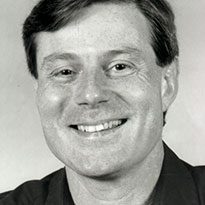 This month at the Patheos Book Club, we’re featuring a new book by author and priest Father Robert Cormier aimed straight at the hard questions of faith. Better That We Believed is a book of questions and responses, told through the stories of ordinary people like you and me. People that struggle with anger, with depression, with anxiety, with lack of faith. Fr. Cormier seeks to show each one, that a belief in God is the antidote to their ills, and is even “better than they believed.”
Fr. Cormier answered a few questions for us about his new book.
What inspired you to write Better Than We Believed, and what do mean by the title?
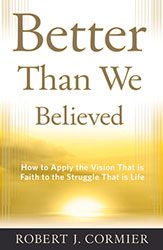 Actually, two things. On a more obvious level, all the people who come to faith in order to deal with their problem find that things were much better than they believed. But, the book also presents a concept of faith which is better than wishful thinking, and instead allows the reader to see plainly for him or herself the truth that changes how he or she sees everything else. I wrote this particular book because I believed that I would have a better chance communicating with people by dealing with the issues already on their minds, and using a conversational style would help them to follow the explanations.
One of your central chapters is titled: “Faith: We Have it Backwards!” How do we have our faith “backwards”?
Here is it from the summary of Father Mike’s talk (from the book):
“First, I hope I was clear: Faith is not about believing in what we cannot see; faith is about seeing!
“Life is not about staying out of hell; life is about gaining the richest life that can God give us.
“Life is not about me getting to heaven; it is about us getting ready for heaven.
“God loves you for who He made you. God does not love you despite you. And He loves you no less than He loves anyone else.
“One more. One more way we get faith backwards. It is the idea we started with, the idea that faith means that if I really believe something will happen, it will happen. This is not faith. Faith is really believing in God, that God is God, and He knows better than I do what I need so I will be ready for the life that lasts forever.”
This book is clearly written for those with questions about faith. What are some of the most common faith-questions people struggle with today? What is most holding people back from trusting God in their life?
Here are the five questions that people need to have answered from my upcoming book on this subject:
1. If we were made for life with God, why don’t we have this life? (Isn’t the most important thing that we believe contradicted by the very fact that we are here?)
2. If we were made by such a grand being as “God,” why do we need to “know” Him through such a nebulous manner as “faith”?
3. How, really, are people responsible for what they do? Isn’t it obvious that what people do is the product of the circumstances of their lives? And if God is behind all things—isn’t that what we mean when we say “there is a reason for everything?”—how is He not responsible for all of our actions including all of our bad ones?
4. What could possibly be the holy purpose of suffering? (And here we are looking for an answer that does more than speak about the holy effects of suffering without facing the question of why suffering is possible.)
5. If what we do here is so important, how do we make sense of the lives of the many, many people who never had a realistic chance to live the life that people of faith consider so important? (Beyond this: How do we explain the very unfair way that advantages and disadvantages are given to people in this world?)
You tackle one of the more common questions from “unbelievers” about faith and science by claiming that “faith is very scientific.” Can you summarize your explanation of that?
Being “scientific” is being guiding by the evidence, and most basically by what we experience. In Better Than We Believed I point out to people how they can see God standing behind/sustaining creation and I also help the reader, through more of his or her experience of what is it is to “know” something, see that this experience of God is entirely credible and exactly as we should expect to know God while here on earth.
If someone is struggling in their life in some way right now, what would be your first suggestion? What’s a first step they can take to begin coping with their personal struggle?
Short of talk with me, or write to me, I would suggest spiritual reading: either that they visit my website thefaithkit.org and read about “how to use this site” or go right to Better Than We Believed.
Did anything surprise you in writing this book? Did you learn anything new about yourself and your own faith in the process?
Only that it is very easy to write when one is drawing on much experience and the plainest of truth.
Who do you hope most reads this book? Is this book just for a Christian audience?
Absolutely not. Please note that the book presumes NOTHING in terms of a person pre-existing faith, and it cites no authorities. Instead I tried to keep the promise I always make—to explain things so that a person can see if for him or herself, and I believe that I have done so so that the explanations will make sense to both simple soul and a highly educated and skeptical reader. Note also that the short piece “where Jesus and the Church fit in” is there to make sure that people do not think I am trying to trick them in Christianity, or think that Christianity is somehow “secondary.” In fact, however, I am convinced that if we lead with Jesus/bible stuff we are not going to reach the vast majority in the world of today. Instead we have to start with the true basics and show (in good time) where they lead.
What message do you most hope people will take away from you book?
That—as in the title of the first book of my Explorer Program at thefaithkit.org—Faith Is Easy, and it transforms how we can see anything, and leave with a peace, purpose, and joy which better than we might have believed possible.
For more from Fr. Cormier – and to read an excerpt from his new book – visit the Patheos Book Club here.
Previous Post

December 13, 2013
Angels, Today: A Q&A with "The Angel Effect's" John Geiger
Recent Comments
2,111 Comments | Leave a Comment
Browse Our Archives
Select a Category Author Q&A Book Review Christian Living Church Leadership Stump a Scholar Theology Uncategorized
Select a Month June 2022 March 2021 October 2020 August 2020 February 2019 November 2017 July 2017 June 2017 May 2017 March 2017 February 2017 January 2017 November 2016 October 2016 August 2016 July 2016 June 2016 May 2016 April 2016 March 2016 February 2016 January 2016 November 2015 October 2015 September 2015 August 2015 July 2015 June 2015 May 2015 April 2015 March 2015 February 2015 January 2015 December 2014 November 2014 October 2014 September 2014 August 2014 July 2014 June 2014 May 2014 April 2014 March 2014 February 2014 January 2014 December 2013 November 2013 October 2013 September 2013 August 2013 July 2013 June 2013 May 2013 April 2013 March 2013 February 2013 January 2013 December 2012 November 2012 October 2012 September 2012 August 2012 July 2012 June 2012 May 2012 April 2012 March 2012 February 2012 January 2012 December 2011 November 2011 October 2011 September 2011 August 2011 July 2011 June 2011 May 2011 April 2011 March 2011 February 2011 January 2011 December 2010 November 2010 October 2010 September 2010 August 2010 July 2010 June 2010
Follow Us!
TAKE THE
Religious Wisdom Quiz
Who visited baby Jesus in the manger?
Select your answer to see how you score.
Shepherds Scribes Fishermen Roman guards
Related posts from Take and Read

Author Lily Burana on Experiencing God's Grace and...

How the Church Can Heal the Race Divide

Finding Inspiration in "Where Angels Walk"

Happiness Is Found Outside of Our Comfort Zones
TRENDING AT PATHEOS Religious Music & Entertainment

"Les Diabolique" and Transgression
Alongside something like Arrival, Vertigo, or Charade, Les Diaboliques is a...

"The Plague Dogs" and Mortality
So, flashback to the late 70s, early 80s. Walt Disney Studios is...

With the recent and highly successful release of Christopher Nolan’s epic film,...

"L'avventura" and Human Weakness
Today's piece is going to be a little different for a few...

I first want to apologize for not posting or writing anything. I'm...

I've engaged in the multi-year project of reading through the Church Fathers,...
view all Religious Music & Entertainment blogs
Ad-Free & Subscriber Log-In Subscription Support
- About Us
- 2026 Calendar
- Videos
- Podcasts
- Library of World Religions
- Faith In Media Tracker
- Advertise With Us
- Write for Us
- Privacy Policy
- Terms of Service
- Do Not Sell My Data
- Contact Us
- Radiant Digital
- Manage Newsletter Subscriptions
- Unsubscribe From Notifications
- Sitemap
Copyright 2008-2026, Patheos. All rights reserved.
Subscription Support Ad-Free & Subscriber Log-In
Follow Patheos