
BuddhistCatholicContemplativeEvangelicalGeneral ChristianHinduJewishLatter-day SaintMuslimNew VisionsProgressive Christian
Beliefs
- Buddhist
- Catholic
- Contemplative
- Evangelical
- General Christian
- Hindu
- Jewish
- Latter-day Saint
- More Voices
- Muslim
- New Visions
- Pagan
- Progressive Christian
Topics
- Religion News
- Food and Religion
- Sports and Religion
- Religious Art
- Religious Music and Entertainment
- Religious Events
- History and Religion
- Style and Religion
- Politics and Religion
- Women in Religion
- Recreation Outdoors and Religion
- Business Finance and Religion
- Careers Workplace and Religion
- Education and Religion
- Family Parenting and Religion
- Health Fitness and Religion
- Home and Religion
- Relationships and Religion
- Technology and Religion
- Travel and Religion
Columnists
- Buddhist Columnists
- Business Finance and Religion Columnists
- Careers Workplace and Religion Columnists
- Catholic Columnists
- Contemplative Columnists
- Education and Religion Columnists
- Evangelists Columnists
- Family Parenting and Religion Columnists
- General Christian Columnists
- Health Fitness and Religion Columnists
- Hindu Columnists
- History and Religion Columnists
- Home and Religion Columnists
- Jewish Columnists
- More Voices Columnists
- Latter Day Columnists
- Muslim Columnists
- New Visions Columnists
- Nonreligious Columnists
- Pagan Columnists
- Politics and Religion Columnists
- Progressive Columnists
- Recreation Outdoors and Religion Columnists
- Relationships and Religion Columnists
- Religion News Columnists
- Religious Art Columnists
- Religious Events Columnists
- Religious Music and Entertainment Columnists
- Sports and Religion Columnists
- Style and Religion Columnists
- Technology and Religion Columnists
- Travel and Religion Columnists
- Women in Religion Columnists
Resource Library
- 2026 Calendar
- Library of World Religions
- The 100 Most Holy Places on Earth
- Patheos Answers
- Podcasts
- Videos
- Faith Leaders Database
- Anglican Episcopalian
- Bahai
- Baptist
- Buddhism
- Christianity
- Confucianism
- Eastern Orthodoxy
- Hinduism
- Holiness and Pentecostal
- ISKCON
- Islam
- Judaism
- Lutheran
- Methodist
- The Church of Jesus Christ of Latter-day Saints
- New Age
- Paganism
- Presbytarian and Reformed
- Protestantism
- Religion Behind the Scenes
- Roman Catholic
- Scientology
- Shia Islam
- Sikhism
- Sufism
- Sunni Islam
- Taoism
- Zen
- See all religions
Research Tools
 Ad-Free & Subscriber Log-In Subscription Support
Ad-Free & Subscriber Log-In Subscription Support
Follow Patheos 

- Trending:
- Forgiveness
- |
- Marriage
- |
- Consciousness
- |
- Death Penalty
- |
- Election
- |
- Halloween

- Home
- Religious Music & Entertainment
- Facing Fear with Faith: A Q&A with Dr. David Jeremiah
Facing Fear with Faith: A Q&A with Dr. David Jeremiah
Last updated on: October 4, 2013 at 9:40 am by Deborah Arca
Facing Fear with Faith: A Q&A with Dr. David Jeremiah 2013-10-04T09:40:08-06:00 Deborah Arca
Patheos Explore the world's faith through different perspectives on religion and spirituality! Patheos has the views of the prevalent religions and spiritualities of the world.
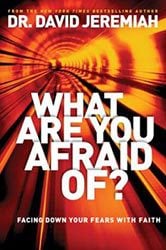 Best-selling author and founder of the popular Turning Point television/radio ministry David Jeremiah has just released a new book aimed straight at the heart: What Are You Afraid Of? Facing Down Your Fears With Faith. In the book, Dr. Jeremiah explores the top ten fears that are holding so many of us back from the life God has called us to live and shares his wisdom gleaned from the Bible for facing down these fears with faith.
We had the opportunity to ask Dr. Jeremiah some questions about his new book, the fears we all face, and his own personal experience with fear.
What compelled you to write a book about fear?
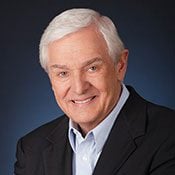 I wrote this book because I heard people say things I had never heard before—like, ‘I wonder if it’s safe even to go to church. I wonder if it’s safe to put my children in school. I wonder if it’s safe to eat in a public place. I wonder if it’s safe to shop in a mall.’ It’s a present problem, and obviously the Bible has a lot to say about it. I wanted to try to answer some of those questions from the Scripture.
You name ten of the most common fears we struggle with in your book. Is there one fear that stands out to you as the “worst” fear today? Or the most damaging?
There are an awful lot of things we can be afraid of, and I think fear is a very individual thing. What terrifies one person may be of no concern to someone else. And when I began to think about writing this book, I did some research. There is a lot out there about the phobias people have and it’s amazing how many important people are afraid of some very basic things. I took the things people are most afraid of, and then married together with the information I knew the Bible had to offer us.
Is it OK to be afraid — or as Christians, should we be fearless?
Christians are not immune to fear. It isn’t sinful to fear; Christians experience fear. Fear isn’t necessarily an evil thing; it’s what fear does to us, when we allow it to take over in our lives. God has given fear to us as a protective mechanism. We should fear the things that can hurt us. God gives us fear as a protective mechanism in our lives. Children need to be afraid of things that can do them harm. That’s a good kind of fear and all of us should cultivate that. But allowing fear to overcome you, overwhelm you, control you, that can become sinful. But fear in itself is not sinful.
You invite us to look to the scripture for each one of these fears. What does the Bible have to say about fear overall?
After researching all of these I came up with 10 fears that I thought the Bible could help us address. Many people don’t realize that the number-one exhortation in the Bible isn’t “love one another” – it’s “fear not!” Fear not or don’t be afraid are mentioned hundreds of times in the Bible, and more than 200 people in the Scriptures are described as being fearful—and it’s not just the bad guys in the Bible! Moses, Joshua, David, the apostles, they all experienced periods of fear. But the Bible also tells us, in 2 Timothy 1:7, “For God has not given us a spirit of fear, but of power and of love and of a sound mind.” Those are very encouraging and comforting words!
You’ve experienced at least one of the fears in your book quite personally … the fear of illness. What was your own journey through fear like? Where did it begin, and end?
When I wrote the chapter on the fear of disease, it was somewhat like reliving some days of my own life because I recalled driving home from my checkup at the Scripps Clinic in San Diego and realizing that it’s been 20 years since I was first diagnosed cancer. How have I learned about disease through my experience and what have I learned from the Word of God?
As I studied what the Bible had to say about disease, I was shocked at how many sick people there are in the Bible. Sickness is not avoided in the Scriptures! The key person in the chapter on illness is a man by the name of Hezekiah, whose story is told in the Old Testament and who was very, very ill. The Bible tells us that he turned his face toward the wall and he wept and he cried and he begged God for his life. And God gave him fifteen additional years to live. It’s amazing. God healed him, even using medicinal figs! And in the story of Hezekiah’s life, there are some wonderful principles about disease and how God can even use that to mold us into the person He wants us to be.
There’s one fear you claim is warranted – the fear of God. Can you say a bit more about that? Why should we be afraid of our Creator?
The last chapter in What Are You Afraid Of? addresses the fear of God and I put it last intentionally because I truly believe that if we get that one right, it will take away almost all the other fears.
The fear of God is not something we should try to escape; the fear of God is something we should cultivate. The fear of God is basically wrapped up in two things. First of all, it is really truly awesome dread. We should have a healthy fear of God. The Bible uses the word ‘fear’ for the first time in Genesis 3:10 where it describes Adam walking in the garden and God’s coming down to meet with Adam after Adam and Eve had sinned. And the Bible said that Adam was afraid. Adam wasn’t just in awe of God; he was stone-cold afraid because he had done something God had told him not to do—in fact, the only thing God told him not to do. He had violated that, and he did not want to see his God.
In our nation today, we don’t have any fear of God, and the loss of our fear of God may be at the core of why we’re in such a steeply descending moral trajectory today. Not only do we not fear God, we don’t even respect God in our language.
But we also need to have an awe of who God is. That comes from knowing who God is, knowing what He has done, and knowing what He’s doing today. Our God is an awesome God and if we understand who He is, if we catch on to His majesty and the mighty works that He does, we will be in awe of Him. We will have this sense of reverence for Him. He won’t be ‘the man upstairs.’ We won’t be flippant about who He is; surely we won’t take His name in vain. God is awesome and He is to be feared.
Interestingly enough, the Bible is packed full of promises for people who will fear the Lord. The Bible says that when we fear the God, He provides for us. He protects us. He brings purity into our lives. He gives us prolonged days. He even provides promises that extend from generation to generation.
When we fear the Lord, He honors us. And the Bible says the fear of the Lord is the beginning of wisdom. When Solomon finished writing the book of Ecclesiastes, after he’d examined all of the different ways to live life, he said, “Let me give the conclusion of my thoughts: Fear God and keep His commandments for this is man’s everything.” When you fear God, when you really hold Him in reverence, God promises some wonderful things that will happen in your life.
What was the hardest thing about writing this book?
You know, I tell people all the time that writing books is not fun; having written a book is fun, but the process is really a lot of work. I put a great deal of time into researching my books, and I pray a lot throughout the process. I want to make sure that I’m in God’s will and following His plan for what I’m working on.
What do you most hope people take away from this book?
I know people who have fears that are represented by every chapter in this book. When you love people and you have compassion for them, they tell you what their issues are and you want to say, “Let me pray with you. Let me love you. Let me help you, and let me give you something that I think might be an encouragement to you.”
I picture people using this book as a way to express their love to their family or friends who are experiencing the fears that are listed in this book. That’s my great hope—that God will use this book to bring healing and help and hope to the people who read it. And, ultimately, if a person doesn’t know the God about whom I brag all throughout this book, they’ll be led to know Him, who is the only One we really should ever fear.
For more conversation on What Are You Afraid Of? visit the Patheos Book Club here.
Previous Post

September 30, 2013
Surviving and Thriving in Marriage: A Q&A with Greg and Lisa Popcak
Next Post

October 4, 2013 Something Better: A Q&A with Tim Chaddick
Recent Comments
1,921 Comments | Leave a Comment
Browse Our Archives
Select a Category Author Q&A Book Review Christian Living Church Leadership Stump a Scholar Theology Uncategorized
Select a Month June 2022 March 2021 October 2020 August 2020 February 2019 November 2017 July 2017 June 2017 May 2017 March 2017 February 2017 January 2017 November 2016 October 2016 August 2016 July 2016 June 2016 May 2016 April 2016 March 2016 February 2016 January 2016 November 2015 October 2015 September 2015 August 2015 July 2015 June 2015 May 2015 April 2015 March 2015 February 2015 January 2015 December 2014 November 2014 October 2014 September 2014 August 2014 July 2014 June 2014 May 2014 April 2014 March 2014 February 2014 January 2014 December 2013 November 2013 October 2013 September 2013 August 2013 July 2013 June 2013 May 2013 April 2013 March 2013 February 2013 January 2013 December 2012 November 2012 October 2012 September 2012 August 2012 July 2012 June 2012 May 2012 April 2012 March 2012 February 2012 January 2012 December 2011 November 2011 October 2011 September 2011 August 2011 July 2011 June 2011 May 2011 April 2011 March 2011 February 2011 January 2011 December 2010 November 2010 October 2010 September 2010 August 2010 July 2010 June 2010
Follow Us!
TAKE THE
Religious Wisdom Quiz
What is the "denarius" Jesus used in teaching about taxes?
Select your answer to see how you score.
A loaf of bread A temple offering A robe A Roman coin
Related posts from Take and Read

Life is an Endless Invitation: Q&A With Rob...

Even the Faith Giants Didn’t Always Get it...

How the Church Can Heal the Race Divide

Finding Inspiration in "Where Angels Walk"
TRENDING AT PATHEOS Religious Music & Entertainment

"Les Diabolique" and Transgression
Alongside something like Arrival, Vertigo, or Charade, Les Diaboliques is a...

"The Plague Dogs" and Mortality
So, flashback to the late 70s, early 80s. Walt Disney Studios is...

With the recent and highly successful release of Christopher Nolan’s epic film,...

"L'avventura" and Human Weakness
Today's piece is going to be a little different for a few...

I first want to apologize for not posting or writing anything. I'm...

I've engaged in the multi-year project of reading through the Church Fathers,...
view all Religious Music & Entertainment blogs
Ad-Free & Subscriber Log-In Subscription Support
- About Us
- 2026 Calendar
- Videos
- Podcasts
- Library of World Religions
- Faith In Media Tracker
- Advertise With Us
- Write for Us
- Privacy Policy
- Terms of Service
- Do Not Sell My Data
- Contact Us
- Radiant Digital
- Manage Newsletter Subscriptions
- Unsubscribe From Notifications
- Sitemap
Copyright 2008-2026, Patheos. All rights reserved.
Subscription Support Ad-Free & Subscriber Log-In
Follow Patheos