
BuddhistCatholicContemplativeEvangelicalGeneral ChristianHinduJewishLatter-day SaintMuslimNew VisionsProgressive Christian
Beliefs
- Buddhist
- Catholic
- Contemplative
- Evangelical
- General Christian
- Hindu
- Jewish
- Latter-day Saint
- More Voices
- Muslim
- New Visions
- Pagan
- Progressive Christian
Topics
- Religion News
- Food and Religion
- Sports and Religion
- Religious Art
- Religious Music and Entertainment
- Religious Events
- History and Religion
- Style and Religion
- Politics and Religion
- Women in Religion
- Recreation Outdoors and Religion
- Business Finance and Religion
- Careers Workplace and Religion
- Education and Religion
- Family Parenting and Religion
- Health Fitness and Religion
- Home and Religion
- Relationships and Religion
- Technology and Religion
- Travel and Religion
Columnists
- Buddhist Columnists
- Business Finance and Religion Columnists
- Careers Workplace and Religion Columnists
- Catholic Columnists
- Contemplative Columnists
- Education and Religion Columnists
- Evangelists Columnists
- Family Parenting and Religion Columnists
- General Christian Columnists
- Health Fitness and Religion Columnists
- Hindu Columnists
- History and Religion Columnists
- Home and Religion Columnists
- Jewish Columnists
- More Voices Columnists
- Latter Day Columnists
- Muslim Columnists
- New Visions Columnists
- Nonreligious Columnists
- Pagan Columnists
- Politics and Religion Columnists
- Progressive Columnists
- Recreation Outdoors and Religion Columnists
- Relationships and Religion Columnists
- Religion News Columnists
- Religious Art Columnists
- Religious Events Columnists
- Religious Music and Entertainment Columnists
- Sports and Religion Columnists
- Style and Religion Columnists
- Technology and Religion Columnists
- Travel and Religion Columnists
- Women in Religion Columnists
Resource Library
- 2026 Calendar
- Library of World Religions
- The 100 Most Holy Places on Earth
- Patheos Answers
- Podcasts
- Videos
- Faith Leaders Database
- Anglican Episcopalian
- Bahai
- Baptist
- Buddhism
- Christianity
- Confucianism
- Eastern Orthodoxy
- Hinduism
- Holiness and Pentecostal
- ISKCON
- Islam
- Judaism
- Lutheran
- Methodist
- The Church of Jesus Christ of Latter-day Saints
- New Age
- Paganism
- Presbytarian and Reformed
- Protestantism
- Religion Behind the Scenes
- Roman Catholic
- Scientology
- Shia Islam
- Sikhism
- Sufism
- Sunni Islam
- Taoism
- Zen
- See all religions
Research Tools
 Ad-Free & Subscriber Log-In Subscription Support
Ad-Free & Subscriber Log-In Subscription Support
Follow Patheos 

- Trending:
- Forgiveness
- |
- Marriage
- |
- Consciousness
- |
- Death Penalty
- |
- Election
- |
- Halloween

- Home
- Religious Music & Entertainment
- On a Mature Christian Life: A Q&A with Matt Chandler
On a Mature Christian Life: A Q&A with Matt Chandler
Last updated on: August 30, 2013 at 10:32 pm by Guest Contributor
On a Mature Christian Life: A Q&A with Matt Chandler 2013-08-30T22:32:55-06:00 Guest Contributor
Patheos Explore the world's faith through different perspectives on religion and spirituality! Patheos has the views of the prevalent religions and spiritualities of the world.
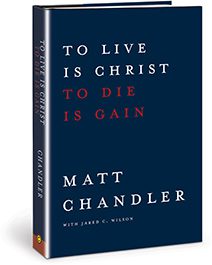 This month at the Patheos Book Club, we’re featuring the new book by popular author and pastor Matt Chandler To Live Is Christ, To Die Is Gain. Chandler explores the pages of the apostle Paul’s radical letter to the Philippians as a road map of sorts for achieving authentic Christian maturity.
Here, Chandler answers some questions about the themes in his book.
 You talk about becoming a “mature believer” as an important part of growing as a Christian; can you briefly describe what you define as a mature believer?
What does it look like to have a mature Christian life? “Only let your manner of life be worthy of the gospel of Christ, so that whether I come and see you or am absent, I may hear of you that you are standing firm in one spirit, with one mind striving side by side for the faith of the gospel, and not frightened in anything by your opponents” (Phil. 1:27-28)
The Christian living a life worthy of the gospel of Jesus Christ is fearless, regardless of the situation. I believe that this concept is difficult for us even though most of us are not going to find our lives in danger because of our faith. At this point and time, even as Christians become more and more marginalized in the wider culture, it’s still highly unlikely that someone’s going to plot to murder you or even become aggressively violent toward you simply because of your faith. But there are still plenty of ways that fear and courage apply to our context. (p. 42-43)
You follow closely with the book of Philippians and Paul, what do you see in his experiences that will help a reader relate to what you are trying to express through your novel?
Most of us go to church with people similar to us. This is the natural tendency of all people. But the gospel is not natural. As we see here in the odd beginnings of the Philippian church, the gospel blows the doors off our tidy little hegemonic communes and creates a whole new community that never would have formed without it. Apart from the supernaturally reconciling ministry of grace, rich fashionistas are not doing life with poor demoniacs. It just isn’t happening. But because Paul is willing to put skin in the game, risking his own life to bring the message of life in Christ, what was once divided is now unified in love.
This is the kind of thing that emboldens Paul. This supernatural community makes him bolder in ministry because it gives him a clearer picture of the gospel’s effects among people. He really sees the gospel going forth into the world, bearing fruit, and growing (Col. 1:6). And it bears fruit within people too, just not among them.
The gospel creates a new reality that deepens our understanding of the world and our place in it. This is where Paul is going in the book of Philippians. As he remembers the powerful conversations he’s had with these people, he wants to bring to their minds the soul-strengthening assurance of life in Christ day-to-day, wherever they may find themselves—rich or poor, healthy or sick, alive or dead. (p. 28-29)
You talk about the fulfillment that Christ brings in “seeking the cross” versus the unhappiness that “chasing wind” will bring a believer, can you discuss this theory and how it relates to readers?
The reason the rich so often go away empty is because many of them constantly want more of that which will never fill them. As they’re set free to run in the imagination of their prideful hearts, their only option is to keep running. And running. And running and running. Because it’s like chasing the wind… When we do get what we desire, we find that the goalpost moved. We envision arriving at a particular place of contentment only to find that it’s constantly out of reach. It’s a mirage, like an oasis in the desert. We’re chasing the wind. (p. 72-73)
If there were one main theme that was your goal to get across to readers and believers, what would you want to be the main thing they leave your book thinking about?
Paul teaches that mature Christians are serious about the things of God and pursue God seriously, because when Christ is revealed in all His glory, we want to be raised with Him. We want all the riches. We want Him with us always. We don’t want a life-sized salvation; rather we want an eternity-sized salvation. So we don’t stop at conversion; we press on. Because we want to make it evident that we believe someone is going to step in at that final moment and say, “I paid for that. I absorbed that. What was due for that, I paid for it all, not according to their riches but according to Mine.” And on that day He will usher us into the glory that He deserved on our behalf. (p. 219)
How do you see the parallelism between a child growing into an adult in comparison to a Christian believer maturing in faith?
Like most parents with children my kids’ age, I am almost daily freaked out by how big they are getting. Gone are the days of changing diapers and burping babies after they eat. Compared to what they once were, all three of my kids look like Olympic athletes. There is no comparison between newborn Audrey and ten-year-old Audrey. She’s almost a completely different person. She runs, rides her bike, roughhouses with her brother, and loves to have her girlfriends come over to play. I sometimes feel sad about how big she’s grown, but the alternatives would be something much more serious and scary.
What if she didn’t grow up at all?
What if, instead of maturing and growing, she just stopped or reverted? What if as she turned two she still couldn’t walk or talk? What if by age eight she couldn’t read or dress herself? What if at ten she still needed me to carry her around and wipe the milk off her mouth?
Now don’t get me wrong—if those things were necessary, I would gladly serve her and God in this way. But isn’t this immeasurably more heartbreaking a thought than me not being able to hold her like an infant or enjoy her saying “hostible” instead of “hospital”? God created her to physically, emotionally, and mentally mature, and by His grace she has done just that! Our other two children are doing the same: growing. There are some parallels here to what we read about ourselves in Scripture. The Bible calls us to pursue maturity in Christ. (p. 9-10)
Previous Post

August 30, 2013
A Land Without Sin: A Q&A with Author Paula Huston
Next Post

August 31, 2013 Talking 'Bout Sex ... and Faith: A Q&A with Kate Ott
Recent Comments
2,158 Comments | Leave a Comment
Browse Our Archives
Select a Category Author Q&A Book Review Christian Living Church Leadership Stump a Scholar Theology Uncategorized
Select a Month June 2022 March 2021 October 2020 August 2020 February 2019 November 2017 July 2017 June 2017 May 2017 March 2017 February 2017 January 2017 November 2016 October 2016 August 2016 July 2016 June 2016 May 2016 April 2016 March 2016 February 2016 January 2016 November 2015 October 2015 September 2015 August 2015 July 2015 June 2015 May 2015 April 2015 March 2015 February 2015 January 2015 December 2014 November 2014 October 2014 September 2014 August 2014 July 2014 June 2014 May 2014 April 2014 March 2014 February 2014 January 2014 December 2013 November 2013 October 2013 September 2013 August 2013 July 2013 June 2013 May 2013 April 2013 March 2013 February 2013 January 2013 December 2012 November 2012 October 2012 September 2012 August 2012 July 2012 June 2012 May 2012 April 2012 March 2012 February 2012 January 2012 December 2011 November 2011 October 2011 September 2011 August 2011 July 2011 June 2011 May 2011 April 2011 March 2011 February 2011 January 2011 December 2010 November 2010 October 2010 September 2010 August 2010 July 2010 June 2010
Follow Us!
TAKE THE
Religious Wisdom Quiz
Which region did the Israelites wander in for 40 years after leaving Egypt?
Select your answer to see how you score.
Moab Galilee The Wilderness Judea
Related posts from Take and Read

Even the Faith Giants Didn’t Always Get it...

How the Church Can Heal the Race Divide

Finding Inspiration in "Where Angels Walk"

Happiness Is Found Outside of Our Comfort Zones
TRENDING AT PATHEOS Religious Music & Entertainment

"Les Diabolique" and Transgression
Alongside something like Arrival, Vertigo, or Charade, Les Diaboliques is a...

"The Plague Dogs" and Mortality
So, flashback to the late 70s, early 80s. Walt Disney Studios is...

With the recent and highly successful release of Christopher Nolan’s epic film,...

"L'avventura" and Human Weakness
Today's piece is going to be a little different for a few...

I first want to apologize for not posting or writing anything. I'm...

I've engaged in the multi-year project of reading through the Church Fathers,...
view all Religious Music & Entertainment blogs
Ad-Free & Subscriber Log-In Subscription Support
- About Us
- 2026 Calendar
- Videos
- Podcasts
- Library of World Religions
- Faith In Media Tracker
- Advertise With Us
- Write for Us
- Privacy Policy
- Terms of Service
- Do Not Sell My Data
- Contact Us
- Radiant Digital
- Manage Newsletter Subscriptions
- Unsubscribe From Notifications
- Sitemap
Copyright 2008-2026, Patheos. All rights reserved.
Subscription Support Ad-Free & Subscriber Log-In
Follow Patheos