
BuddhistCatholicContemplativeEvangelicalGeneral ChristianHinduJewishLatter-day SaintMuslimNew VisionsProgressive Christian
Beliefs
- Buddhist
- Catholic
- Contemplative
- Evangelical
- General Christian
- Hindu
- Jewish
- Latter-day Saint
- More Voices
- Muslim
- New Visions
- Pagan
- Progressive Christian
Topics
- Religion News
- Food and Religion
- Sports and Religion
- Religious Art
- Religious Music and Entertainment
- Religious Events
- History and Religion
- Style and Religion
- Politics and Religion
- Women in Religion
- Recreation Outdoors and Religion
- Business Finance and Religion
- Careers Workplace and Religion
- Education and Religion
- Family Parenting and Religion
- Health Fitness and Religion
- Home and Religion
- Relationships and Religion
- Technology and Religion
- Travel and Religion
Columnists
- Buddhist Columnists
- Business Finance and Religion Columnists
- Careers Workplace and Religion Columnists
- Catholic Columnists
- Contemplative Columnists
- Education and Religion Columnists
- Evangelists Columnists
- Family Parenting and Religion Columnists
- General Christian Columnists
- Health Fitness and Religion Columnists
- Hindu Columnists
- History and Religion Columnists
- Home and Religion Columnists
- Jewish Columnists
- More Voices Columnists
- Latter Day Columnists
- Muslim Columnists
- New Visions Columnists
- Nonreligious Columnists
- Pagan Columnists
- Politics and Religion Columnists
- Progressive Columnists
- Recreation Outdoors and Religion Columnists
- Relationships and Religion Columnists
- Religion News Columnists
- Religious Art Columnists
- Religious Events Columnists
- Religious Music and Entertainment Columnists
- Sports and Religion Columnists
- Style and Religion Columnists
- Technology and Religion Columnists
- Travel and Religion Columnists
- Women in Religion Columnists
Resource Library
- 2026 Calendar
- Library of World Religions
- The 100 Most Holy Places on Earth
- Patheos Answers
- Podcasts
- Videos
- Faith Leaders Database
- Anglican Episcopalian
- Bahai
- Baptist
- Buddhism
- Christianity
- Confucianism
- Eastern Orthodoxy
- Hinduism
- Holiness and Pentecostal
- ISKCON
- Islam
- Judaism
- Lutheran
- Methodist
- The Church of Jesus Christ of Latter-day Saints
- New Age
- Paganism
- Presbytarian and Reformed
- Protestantism
- Religion Behind the Scenes
- Roman Catholic
- Scientology
- Shia Islam
- Sikhism
- Sufism
- Sunni Islam
- Taoism
- Zen
- See all religions
Research Tools
 Ad-Free & Subscriber Log-In Subscription Support
Ad-Free & Subscriber Log-In Subscription Support
Follow Patheos 

- Trending:
- Forgiveness
- |
- Marriage
- |
- Consciousness
- |
- Death Penalty
- |
- Election
- |
- Halloween

- Home
- Religious Music & Entertainment
- A Christian Case for Nonviolence: A Q&A with Author Preston Sprinkle
A Christian Case for Nonviolence: A Q&A with Author Preston Sprinkle
Last updated on: August 5, 2013 at 11:01 am by Deborah Arca
A Christian Case for Nonviolence: A Q&A with Author Preston Sprinkle 2013-08-05T11:01:35-06:00 Deborah Arca
Patheos Explore the world's faith through different perspectives on religion and spirituality! Patheos has the views of the prevalent religions and spiritualities of the world.
 In a world seething with violence, how does the Church live out Jesus’ command to love our enemies? What does the Bible – and specifically Jesus – really say about how we’re to consider warfare and violence as people of faith?
In a bold new book called Fight, Evangelical pastor and best-selling author Preston Sprinkle sets out to answer these important questions as he makes a compelling case for nonviolence. Drawing from his expansive theological background, research and countless interviews, Preston addresses questions such as how to reconcile what seems like a vengeful God of the Old Testament with the forgiving, nonviolent Christ of the New Testament; how America should defend herself against aggression; what Scripture teaches about Capital Punishment; and whether Christians should kill in self-defense.
We had the opportunity to ask Preston some questions about his book and his own reluctant journey toward nonviolence — as well as his potentially unpopular position within his faith community. [For more conversation on Fight*, visit the Patheos Book Club here.]*
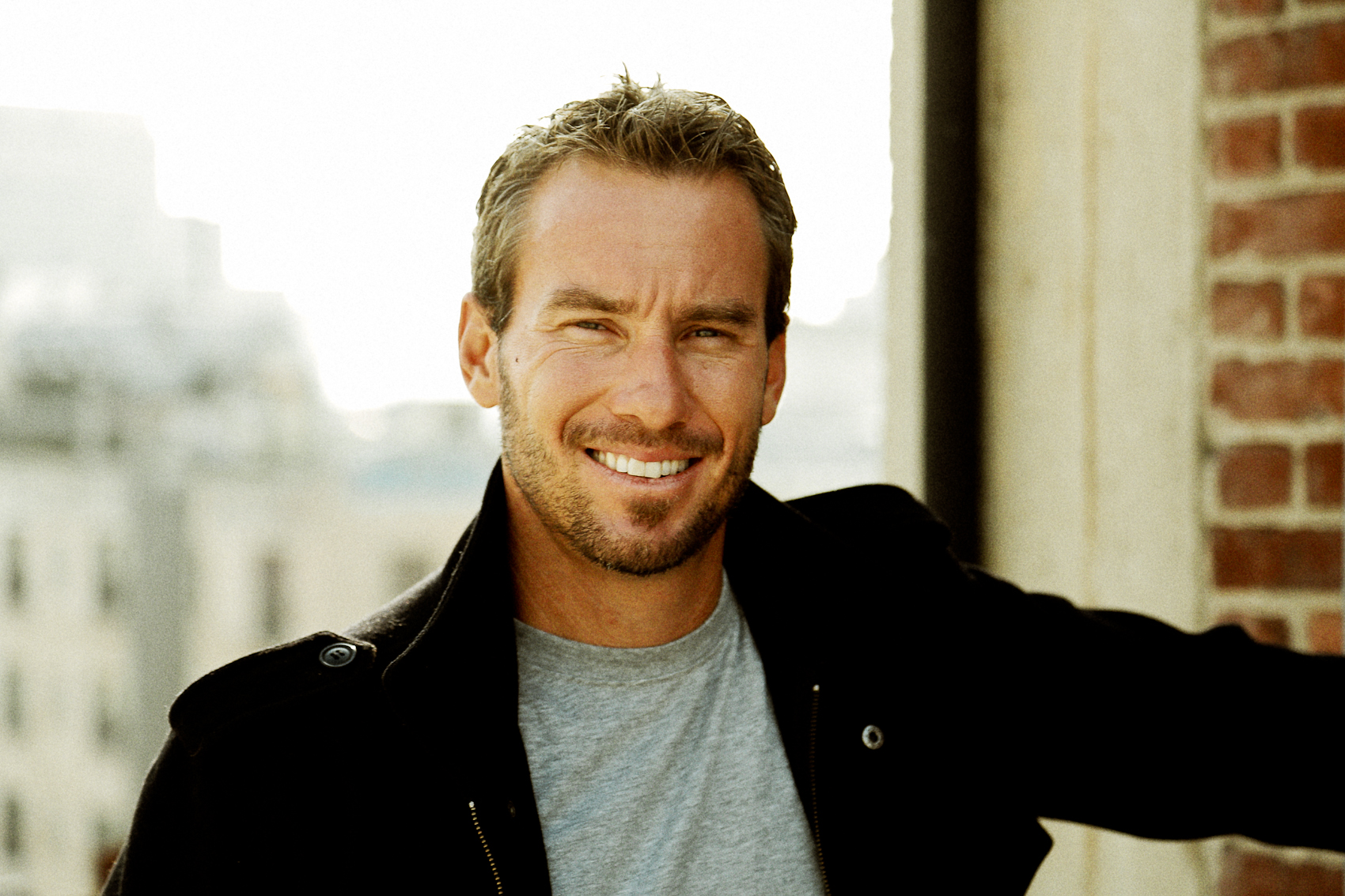 In your new book, Fight, you engage one of the most hotly-debated questions of our time: What is the Christian response to warfare and violence? What, in brief, is your response?
I believe that Christians should not respond to evil with violence. Now, this does not mean that Christians shouldn’t do anything to confront evil. Quite the opposite. Christians should aggressively respond to evil but with the means that Christ has demonstrated and taught. And Christ neither demonstrated nor taught believers to confront evil with violence.
As an Evangelical Christian, you’re taking an unpopular point of view on warfare and violence in this book. Yet you make clear that you own guns, vote Republican and love sports and even violent movies. So, what inspired you to write a book on non-violence, and whom did you write it for?
It’s a strange world we live in where being Evangelical and advocating for nonviolence seems to be at odds! But yes, for some reason my view is not very popular among my fellow Evangelicals. Why is this? If I can be so bold, I think that many (not all) who advocate for a violent response to evil, or who believe that America’s military can solve the world’s problems or keep evil at bay, have been more shaped by our American militaristic culture than the Bible.
The inspiration to write this book stems from a passion to be biblical in all areas of life—even if it offends our inherited presuppositions and beliefs. I want to shoot my enemy just as much as the next guy. But loving him will do more for the kingdom of Christ than blowing his head off. So I wrote this book for people like me: Confessing Christians who are on a quest to understand what the Bible says about warfare and violence, even if it offends our intuition.
You grew up, you say, “like many Evangelicals,” enamored with war and convinced that war and military might were the best way to fight evil. In fact, you wondered how someone could actually read the Bible and still endorse non-violence? And yet, several years out of college, as a Seminary student, you became a pacifist. What happened in those intervening years?
It was actually not until after I completed my Ph.D. when I became a “pacifist,” or, as I prefer, an advocate for nonviolence. (The term “pacifist” is too loaded and misleading, so I don’t prefer to use it.)
For most of my years as a Christian, I never really studied what the Bible says about violence, and yet I had strong opinions that Christians should use violence to confront evil. I didn’t feel the need to consult the Scriptures. I just followed what my Christian subculture and Ronald Reagan told me. If someone bombs you, you bomb them back harder. If using violence can save innocent lives, then it’s perfectly okay. But I never stopped to wonder whether Jesus might have a different way to confront evil. So I started reading the Bible with the question of violence in view and was shocked at how little Jesus agreed with my presuppositions.
You say that evangelicals have a “strange affection for military power and an odd history of being pro-war.” How have militarism and religion become so inter-twined in the American church and why is it problematic? What would it take to unravel this relationship? And what’s at stake?
Evangelicalism and militarism became kissing cousins during the 1970’s and 1980’s, when being Republican meant being pro-family, anti-abortion, anti-gay, pro-militarism, and—if another nation deserved it—pro-war. Any protest against militarism and war meant that you were a liberal and a communist. Thus the courtship began.
This relationship still continues today. However, Gen Xers and Millennials, who have lived their formative years in a post 9/11 context, are questioning such hyper-militarism. This will be an important turn for the Evangelical church. The new generation of Christians aren’t so easily convinced that America is the hope of the world (since Jesus said He was), or that Jesus didn’t really mean that we should love all our enemies.
We recently featured a powerful book by a young Iraqi vet, Logan Mehl-Laituri, called Reborn on the Fourth of July, in which he recounts his faith journey from a patriotic American to a conscientious objector after serving several years in the war. You also have several war veterans endorsing your book. What is the role of veterans in this discussion? What can we learn from those who have been on the frontlines about the relationship of warfare and faith?
That’s a great question! I intentionally sought out several friends who were military vets to see what they thought about warfare and violence. I was pleasantly shocked at how against it they were! I was shocked because it’s easy for us civilians to think that being nonviolent means that we are dishonoring our veterans. Maybe some would feel offended, but the ones I’ve talked to are nonviolent because they’ve seen hell. They’ve seen war. And they’ve seen that even if America wins, everyone loses.
So I think it’s important to listen to the stories and pain of our military veterans. I think they have an important voice in the discussion.
Many Christians associate the Old Testament with violence, and are troubled and by a God who seemingly advocates violence. You have a different perspective on the violence in the Old Testament…
Yes I do. And I take four chapters to unravel this perspective! In short: Yes, there’s a lot of violence in the OT, and yes, violence is sometimes sanctioned by God. However, not all of Israel’s violence was commanded by God. A lot of their wars were deemed sinful.
Even in the wars sanctioned by God, Israel was not allowed to be militaristic. This is something that I think many interpreters have missed in reading the Old Testament. Even when violence was sanctioned, militarism was not. Never. Everywhere it’s prohibited; everywhere it’s critiqued. But you’ll have to read the book to see why!
Also, we have to read the OT as an unfolding narrative that’s headed toward a goal. And throughout the OT, we see God moving Israel further and further away from violence and toward peace. When the OT ends, the reader anticipates a kingdom of peace, a Messiah who suffers instead of kills. Thus, the OT flows naturally into the NT.
Ironically, in the end, your book challenges Christians to “fight” evil, fight the schemes of the Devil, fight injustice, fight sin … “fight the good fight.” What then do you mean by “fight?”
Being nonviolent doesn’t mean you don’t fight. It just says you fight nonviolently. Again, this is why I don’t like the term pacifist. It’s often confused with passive-ness (even though the word doesn’t mean this). You know, letting people break into your house and kill your family.
But the term nonviolence doesn’t refer to one’s posture toward evil but the means by which we confront it. We fight against our enemy with weapons more powerful than tanks or drones. We fight with love, suffering, and, most of all, the gospel.
How successful do you think you will be at helping Christians change their view on warfare and violence? What ultimately do you hope people take away from your book?
Honestly, if someone is so cemented in their presuppositions, I’m not sure I’ll convince them otherwise. But if I can cause people to think, to scratch their head and re-open their Bibles and make an attempt to examine their presuppositions and worldview in light of Scripture, then that alone would be a success in my mind.
But yeah. I’d love to make some converts! But only because I believe that nonviolence honors Christ and cherishes the cross. Ultimately I want more and more Christians to be numbed by the stunning power of a crucified King, a resurrected Lord, who conquered Satan not by using violence—but by absorbing it.
For more conversation on Fight (and to read an excerpt), visit the Patheos Book Club here.
Preston Sprinkle is a professor, speaker, and author. He teaches Bible at Eternity Bible College in Simi Valley, CA, and formerly taught at Cedarville University (OH) and Nottingham University (U.K.). He is the author of several academic books and articles, along with the New York Times bestselling book Erasing Hell, co-authored by Francis Chan. Preston is married to Christine and they together have four children.
Previous Post

July 30, 2013
Finding God in the Bible: A Q&A with Author Darren Wilson
Next Post

August 5, 2013 Living Free: A Q&A with Author Mark Scandrette
Browse Our Archives
Select a Category Author Q&A Book Review Christian Living Church Leadership Stump a Scholar Theology Uncategorized
Select a Month June 2022 March 2021 October 2020 August 2020 February 2019 November 2017 July 2017 June 2017 May 2017 March 2017 February 2017 January 2017 November 2016 October 2016 August 2016 July 2016 June 2016 May 2016 April 2016 March 2016 February 2016 January 2016 November 2015 October 2015 September 2015 August 2015 July 2015 June 2015 May 2015 April 2015 March 2015 February 2015 January 2015 December 2014 November 2014 October 2014 September 2014 August 2014 July 2014 June 2014 May 2014 April 2014 March 2014 February 2014 January 2014 December 2013 November 2013 October 2013 September 2013 August 2013 July 2013 June 2013 May 2013 April 2013 March 2013 February 2013 January 2013 December 2012 November 2012 October 2012 September 2012 August 2012 July 2012 June 2012 May 2012 April 2012 March 2012 February 2012 January 2012 December 2011 November 2011 October 2011 September 2011 August 2011 July 2011 June 2011 May 2011 April 2011 March 2011 February 2011 January 2011 December 2010 November 2010 October 2010 September 2010 August 2010 July 2010 June 2010
Follow Us!
TAKE THE
Religious Wisdom Quiz
According to James, what should elders do for someone who is sick?
Select your answer to see how you score.
Lay hands on them Pray over them and anoint them with oil Fast for them Give them holy water
Related posts from Take and Read

"The Slow March of Light" Highlights The Human...

"A Brilliant Night of Stars and Ice" Recounts...

How To Judge The Bible By Its Cover

Life is an Endless Invitation: Q&A With Rob...
TRENDING AT PATHEOS Religious Music & Entertainment

"Les Diabolique" and Transgression
Alongside something like Arrival, Vertigo, or Charade, Les Diaboliques is a...

"The Plague Dogs" and Mortality
So, flashback to the late 70s, early 80s. Walt Disney Studios is...

With the recent and highly successful release of Christopher Nolan’s epic film,...

"L'avventura" and Human Weakness
Today's piece is going to be a little different for a few...

I first want to apologize for not posting or writing anything. I'm...

I've engaged in the multi-year project of reading through the Church Fathers,...
view all Religious Music & Entertainment blogs
Ad-Free & Subscriber Log-In Subscription Support
- About Us
- 2026 Calendar
- Videos
- Podcasts
- Library of World Religions
- Faith In Media Tracker
- Advertise With Us
- Write for Us
- Privacy Policy
- Terms of Service
- Do Not Sell My Data
- Contact Us
- Radiant Digital
- Manage Newsletter Subscriptions
- Unsubscribe From Notifications
- Sitemap
Copyright 2008-2026, Patheos. All rights reserved.
Subscription Support Ad-Free & Subscriber Log-In
Follow Patheos