
BuddhistCatholicContemplativeEvangelicalGeneral ChristianHinduJewishLatter-day SaintMuslimNew VisionsProgressive Christian
Beliefs
- Buddhist
- Catholic
- Contemplative
- Evangelical
- General Christian
- Hindu
- Jewish
- Latter-day Saint
- More Voices
- Muslim
- New Visions
- Pagan
- Progressive Christian
Topics
- Religion News
- Food and Religion
- Sports and Religion
- Religious Art
- Religious Music and Entertainment
- Religious Events
- History and Religion
- Style and Religion
- Politics and Religion
- Women in Religion
- Recreation Outdoors and Religion
- Business Finance and Religion
- Careers Workplace and Religion
- Education and Religion
- Family Parenting and Religion
- Health Fitness and Religion
- Home and Religion
- Relationships and Religion
- Technology and Religion
- Travel and Religion
Columnists
- Buddhist Columnists
- Business Finance and Religion Columnists
- Careers Workplace and Religion Columnists
- Catholic Columnists
- Contemplative Columnists
- Education and Religion Columnists
- Evangelists Columnists
- Family Parenting and Religion Columnists
- General Christian Columnists
- Health Fitness and Religion Columnists
- Hindu Columnists
- History and Religion Columnists
- Home and Religion Columnists
- Jewish Columnists
- More Voices Columnists
- Latter Day Columnists
- Muslim Columnists
- New Visions Columnists
- Nonreligious Columnists
- Pagan Columnists
- Politics and Religion Columnists
- Progressive Columnists
- Recreation Outdoors and Religion Columnists
- Relationships and Religion Columnists
- Religion News Columnists
- Religious Art Columnists
- Religious Events Columnists
- Religious Music and Entertainment Columnists
- Sports and Religion Columnists
- Style and Religion Columnists
- Technology and Religion Columnists
- Travel and Religion Columnists
- Women in Religion Columnists
Resource Library
- 2026 Calendar
- Library of World Religions
- The 100 Most Holy Places on Earth
- Patheos Answers
- Podcasts
- Videos
- Faith Leaders Database
- Anglican Episcopalian
- Bahai
- Baptist
- Buddhism
- Christianity
- Confucianism
- Eastern Orthodoxy
- Hinduism
- Holiness and Pentecostal
- ISKCON
- Islam
- Judaism
- Lutheran
- Methodist
- The Church of Jesus Christ of Latter-day Saints
- New Age
- Paganism
- Presbytarian and Reformed
- Protestantism
- Religion Behind the Scenes
- Roman Catholic
- Scientology
- Shia Islam
- Sikhism
- Sufism
- Sunni Islam
- Taoism
- Zen
- See all religions
Research Tools
 Ad-Free & Subscriber Log-In Subscription Support
Ad-Free & Subscriber Log-In Subscription Support
Follow Patheos 

- Trending:
- Forgiveness
- |
- Marriage
- |
- Consciousness
- |
- Death Penalty
- |
- Election
- |
- Halloween

- Home
- Religious Music & Entertainment
- A Recipe for Joy: A Q&A with Robin Davis
A Recipe for Joy: A Q&A with Robin Davis
Last updated on: April 16, 2013 at 10:01 am by Deborah Arca
A Recipe for Joy: A Q&A with Robin Davis 2013-04-16T10:01:11-06:00 Deborah Arca
Patheos Explore the world's faith through different perspectives on religion and spirituality! Patheos has the views of the prevalent religions and spiritualities of the world.
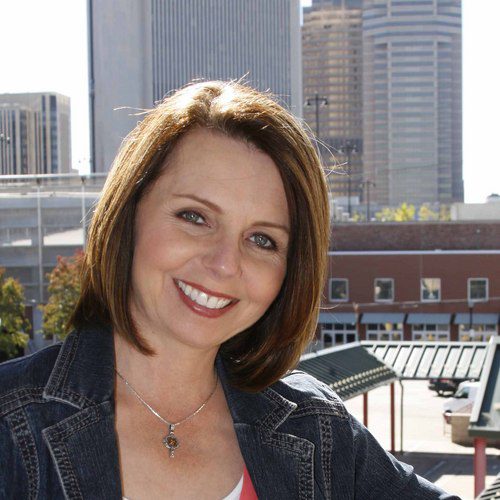 This month at the Patheos Book Club, we’re featuring the new book Recipe for Joy: A Stepmom’s Story of Finding Faith, Falling in Love, and Feeding a Family by Robin Davis. It’s a lovely, honest and inspiring memoir of one woman’s faith journey toward love and trust in God’s beckonings … and it has recipes too!
Robin took some time out from her full-time job as a food writer for the Columbus Dispatch newspaper to answer a few questions for us about her book and her spiritual journey. We also shared some conversation via Skype last week, and that video interview appears at the end of this post.
From a single, independent food critic living in San Francisco, to a new wife, stepmother and family cook in Ohio … what surprises you most about the journey you share with us in your new book?
Two things surprised me about the journey I share in Recipe For Joy.
First, I was baffled about how long it took me to adjust to and eventually thrive in this blended family. I wish I had known that experts say a blended family can take 3 to 5 years to click. It would have taken off some of the pressure I felt about being a perfect parent.
The other thing that surprised me about this journey was how important my faith would become. When I moved back to Ohio in 2002, I wouldn’t have said I was on a faith journey. I might have called it a personal journey, but I wouldn’t have mentioned faith or God.
The biggest change in my life – bigger even than getting married and becoming a stepmother – was letting God back in. It was like opening the shades of a darkened room and letting in the light. It changed everything.
 You say you began to feel “a deep calling” within you, after you met your husband-to-be Ken, to be a wife and a mother … but it wasn’t a call you were familiar with and it certainly wasn’t aligned with what you thought you wanted for your life. What was different about the nature of this “call,” and how did you sort out its meaning for your life?
The calling to marry Ken was different from other changes I made in my life because it didn’t come with a plan. In fact, it was kind of the opposite of a plan.
With every other change I had made in my life from moving to California to going to cooking school, I set up a detailed plan on how I was going to make it succeed. Marrying Ken and becoming a stepmother came with none of that. The cynical voice, the scared voice inside me kept saying, “How are you going to be a good mother to these three kids? You can’t do it!” But this other voice, this calm, sure voice that I believe was God in my heart kept saying, “I believe in you.”
I think that was God’s ultimate lesson for me: Trust him.
Your adult relationship with God started off as whispered prayers for help (“Please, please, please” being one of the more common ones). How did your whispers gradually turned into the “real, focused prayers” you ultimately came to practice?
My prayers, even the painful, pleading prayers after my father died, started as a list of my needs and wants from God. The prayers changed over time and continue to change. I try to do prayers of gratitude, especially when I’m feeling down, to thank God for all the blessings in my life. When I start looking at my life from that point of view, I find so much joy. And I also try to listen. Praying shouldn’t be a one way conversation. I’ve started trying to have moments of silence to open myself to what God wants to say to me.
What was it about the Catholic Church that drew you back into the faith, even as you struggled with some of the Church’s positions on certain issues, such as womens’ roles and sexuality?
Like many people, when I thought about the Catholic church, I focused on the negatives, such as the sex abuse scandal. But that wasn’t the whole picture. It is an awful part of the picture for sure, but not the only thing that could be considered.
I loved the sense of community that came with the church, the idea that when I participated in Mass, millions of others would be taking part in the same celebration, the same way all over the world.
I also loved the sacramental life. I’m fed, body and soul, from the table of Jesus during the Eucharist. It’s a real, tangible thing. Saying my sins to another person during reconciliation releases me from them and gives me in their place forgiveness and peace.
You say the kitchen had always been your sanctuary, a place you went when you were sad, or happy, or didn’t know what else to do. What happened in that kitchen for you on those occasions? Is cooking a spiritual practice for you?
Cooking is both creative and routine. Sometimes when I go in the kitchen, I’m free and happy. I experiment with something new, try something different.
Other times, I go to the kitchen for consolation or to find peace. I know that all the things I’ve learned about cooking will always work. No matter if I’m stressed or grieving, if I heat a pan, drizzle in some olive oil, then throw in chicken breasts or pork chops, I know they’re going to brown. If I add a little wine or broth, I know I’m going to stir up all those browned bits in the bottom of the skillet. And if I throw a knob of butter in the pan at the end, the sauce will turn luxuriously silky every time.
Cooking is a spiritual, meditative experience for me, much like prayer. And when the cooking is done, sharing the food with others becomes another aspect of the tasks’ holy properties.
Having never been a mother, let alone a stepmother, your passion for food proved to be your “way in” with your family. How so?
Everybody eats.
I didn’t know anything about being a 10-year-old boy and remembered very little about being an 8-year-old girl like my stepchildren were when I first met them. But I knew they ate so I used food as the common ground. It became almost like a game: What were their favorite dishes? What other foods are similar to their favorites that might expand their palates?
There are so many stories of food and feasting in the Bible … from Jesus grilling fish for his disciples on the beach, to a wedding feast with much wine, to the very intimate Last Supper. What do you think God teaches us through the preparing and sharing of a meal?
Jesus fed people right up until his death – and he continues to feed us at the Eucharist.
I think part of the reason for so much food in the Bible goes back to my answer on the previous question: Everybody eats. Everybody gets the real physical meaning of being fed. Of course, Jesus was also teaching us about the deeper hunger of our souls and about feeding that hunger with his love. And finally, Jesus’ lesson went back to his command to us to take care of one another, to love one another. One of the most basic ways to care for another is to feed them.
You say, for your new family, dinner was always about more than food. Can you say more about that?
The dinner table became this great place for our family to gather, and it really didn’t matter if we were having grilled cheese sandwiches or roasted tomato risotto. We would share the best parts and worst parts of our day in a game called “high/low.” It gave Ken and I insight into what the children were experiencing when they weren’t with us. We were also often very silly at the dinner table; there was often a lot of laughter.
What’s your favorite meal to cook? And what is your favorite meal to eat?
I don’t have one favorite meal to cook or eat. It depends on the season, my mood and how much time I have. My family likes a grilled marinated flatiron steak I make – but the marinade changes every time I make it. They’re also fans of a salad of greens, goat cheese and apples (similar to the recipe in Recipe For Joy), but again, the dressing and even the salad ingredients change every time.
What was the hardest part about writing this book? What came easiest?
The hardest part was the actual writing. Writing long form is the complete opposite of what I do on a daily basis at the newspaper where space is a premium and a 1,000 word story better have a good reason for being that long. Recipe For Joy is almost 50,000 words.
Once Loyola Press contracted me to write the book, I had about six months to complete it. And I was still working full-time, so it took discipline. I forced myself to write for at least two hours almost every single night after dinner and to spend at least one of the weekend days writing, too.
The easiest part was adding my faith. In the initial proposal, before I had a publisher, I touched on my faith, but kept it on the sidelines. My agent suggested I write a second version of the proposal where I gave faith a prominent role. The way the faith flowed into the story made me know that was how the book had to be written. And it also gave me the wake-up call about my faith: It is the main course to my life, and I need to live accordingly.
Who do you hope reads this book, and what is your biggest hope for Recipe for Joy?
I wrote the book for anyone going through life’s struggles, especially those particular challenges that come in family life. I want the book to be a sign of hope for whoever reads it that, no matter what you’re going through, your faith – whatever it is – can sustain you through God’s love and the love of the people around you.
For more conversation on Recipe for Joy, check out the Patheos Book Club here.
And here is my Skype interview with Robin Davis:
Previous Post

March 29, 2013
Ancient Feminine Wisdom for Today's Spiritual Communities
Next Post
April 16, 2013 More or Less: A Fresh Approach to a Familiar Topic
Browse Our Archives
Select a Category Author Q&A Book Review Christian Living Church Leadership Stump a Scholar Theology Uncategorized
Select a Month June 2022 March 2021 October 2020 August 2020 February 2019 November 2017 July 2017 June 2017 May 2017 March 2017 February 2017 January 2017 November 2016 October 2016 August 2016 July 2016 June 2016 May 2016 April 2016 March 2016 February 2016 January 2016 November 2015 October 2015 September 2015 August 2015 July 2015 June 2015 May 2015 April 2015 March 2015 February 2015 January 2015 December 2014 November 2014 October 2014 September 2014 August 2014 July 2014 June 2014 May 2014 April 2014 March 2014 February 2014 January 2014 December 2013 November 2013 October 2013 September 2013 August 2013 July 2013 June 2013 May 2013 April 2013 March 2013 February 2013 January 2013 December 2012 November 2012 October 2012 September 2012 August 2012 July 2012 June 2012 May 2012 April 2012 March 2012 February 2012 January 2012 December 2011 November 2011 October 2011 September 2011 August 2011 July 2011 June 2011 May 2011 April 2011 March 2011 February 2011 January 2011 December 2010 November 2010 October 2010 September 2010 August 2010 July 2010 June 2010
Follow Us!
TAKE THE
Religious Wisdom Quiz
Which country has the most Protestant Christians by number?
Select your answer to see how you score.
United Kingdom United States Germany Brazil
Related posts from Take and Read

Even the Faith Giants Didn’t Always Get it...

"Movies Are Prayers": A New Way of Discussing...

Finding Inspiration in "Where Angels Walk"

Learning About the Christian Faith: The Bible Is...
TRENDING AT PATHEOS Religious Music & Entertainment

"Les Diabolique" and Transgression
Alongside something like Arrival, Vertigo, or Charade, Les Diaboliques is a...

"The Plague Dogs" and Mortality
So, flashback to the late 70s, early 80s. Walt Disney Studios is...

With the recent and highly successful release of Christopher Nolan’s epic film,...

"L'avventura" and Human Weakness
Today's piece is going to be a little different for a few...

I first want to apologize for not posting or writing anything. I'm...

I've engaged in the multi-year project of reading through the Church Fathers,...
view all Religious Music & Entertainment blogs
Ad-Free & Subscriber Log-In Subscription Support
- About Us
- 2026 Calendar
- Videos
- Podcasts
- Library of World Religions
- Faith In Media Tracker
- Advertise With Us
- Write for Us
- Privacy Policy
- Terms of Service
- Do Not Sell My Data
- Contact Us
- Radiant Digital
- Manage Newsletter Subscriptions
- Unsubscribe From Notifications
- Sitemap
Copyright 2008-2026, Patheos. All rights reserved.
Subscription Support Ad-Free & Subscriber Log-In
Follow Patheos