
BuddhistCatholicContemplativeEvangelicalGeneral ChristianHinduJewishLatter-day SaintMuslimNew VisionsProgressive Christian
Beliefs
- Buddhist
- Catholic
- Contemplative
- Evangelical
- General Christian
- Hindu
- Jewish
- Latter-day Saint
- More Voices
- Muslim
- New Visions
- Pagan
- Progressive Christian
Topics
- Religion News
- Food and Religion
- Sports and Religion
- Religious Art
- Religious Music and Entertainment
- Religious Events
- History and Religion
- Style and Religion
- Politics and Religion
- Women in Religion
- Recreation Outdoors and Religion
- Business Finance and Religion
- Careers Workplace and Religion
- Education and Religion
- Family Parenting and Religion
- Health Fitness and Religion
- Home and Religion
- Relationships and Religion
- Technology and Religion
- Travel and Religion
Columnists
- Buddhist Columnists
- Business Finance and Religion Columnists
- Careers Workplace and Religion Columnists
- Catholic Columnists
- Contemplative Columnists
- Education and Religion Columnists
- Evangelists Columnists
- Family Parenting and Religion Columnists
- General Christian Columnists
- Health Fitness and Religion Columnists
- Hindu Columnists
- History and Religion Columnists
- Home and Religion Columnists
- Jewish Columnists
- More Voices Columnists
- Latter Day Columnists
- Muslim Columnists
- New Visions Columnists
- Nonreligious Columnists
- Pagan Columnists
- Politics and Religion Columnists
- Progressive Columnists
- Recreation Outdoors and Religion Columnists
- Relationships and Religion Columnists
- Religion News Columnists
- Religious Art Columnists
- Religious Events Columnists
- Religious Music and Entertainment Columnists
- Sports and Religion Columnists
- Style and Religion Columnists
- Technology and Religion Columnists
- Travel and Religion Columnists
- Women in Religion Columnists
Resource Library
- 2026 Calendar
- Library of World Religions
- The 100 Most Holy Places on Earth
- Patheos Answers
- Podcasts
- Videos
- Faith Leaders Database
- Anglican Episcopalian
- Bahai
- Baptist
- Buddhism
- Christianity
- Confucianism
- Eastern Orthodoxy
- Hinduism
- Holiness and Pentecostal
- ISKCON
- Islam
- Judaism
- Lutheran
- Methodist
- The Church of Jesus Christ of Latter-day Saints
- New Age
- Paganism
- Presbytarian and Reformed
- Protestantism
- Religion Behind the Scenes
- Roman Catholic
- Scientology
- Shia Islam
- Sikhism
- Sufism
- Sunni Islam
- Taoism
- Zen
- See all religions
Research Tools
 Ad-Free & Subscriber Log-In Subscription Support
Ad-Free & Subscriber Log-In Subscription Support
Follow Patheos 

- Trending:
- Forgiveness
- |
- Marriage
- |
- Consciousness
- |
- Death Penalty
- |
- Election
- |
- Halloween

- Home
- Religious Music & Entertainment
- The Gift of Boundaries: Reflections on The World is Not Ours To Save
The Gift of Boundaries: Reflections on The World is Not Ours To Save
Last updated on: March 18, 2013 at 3:57 pm by Guest Contributor
The Gift of Boundaries: Reflections on The World is Not Ours To Save 2013-03-18T15:57:19-06:00 Guest Contributor
Patheos Explore the world's faith through different perspectives on religion and spirituality! Patheos has the views of the prevalent religions and spiritualities of the world.
 By Timshel Matheny
“As to my calling, I belong to the world. As to my heart, I belong entirely to the Heart of Jesus.” – Blessed Teresa of Calcutta
It is a mysterious kind of gift to be told that you can not do everything. I have a hard time shaking the idea I was given when I was growing up: that my options for vocational work are endless, that my capabilities (if given the right amount of will-power) are without a ceiling. As a Christian, my knowledge of the cross argues against this. And yet, in my daily walk there is a vein, deep in my identity, that bristles at any talk of my own limitations.
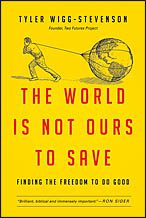
In his new book The World Is Not Ours To Save, author Tyler Wigg-Stevenson reminds us that vocations have, and impart, boundaries. To be called to this means not being called to that. Vocation, by nature, is a specific thing. It demands a narrowed spiritual focus that involves definitive edges and personal details for each individual. If I am pursuing a vocation, then I am necessarily walking down a path that has its own peculiar set of limits.
So often in the gospel Christ says of his own actions “I have not come to do what you are asking of me but instead to do this other thing, this one thing.” To his mother at Cana. To Peter at the Transfiguration. To his disciples as he begins the journey on to Calvary. He must be about his business and his business does not involve the five other things that seem to be so urgently needed or obvious to the bystander (again, his own mother, his disciples,… us). He distinguishes where he is called to act and where he is not in each moment as it comes and passes. And often, where the world perceives his actions as a form of great weakness, in actuality they are the greatest strength. He was publicly humiliated and executed on a cross, after all.
Tyler tells us this, “Christian calling is grounded in the peace that comes with accepting our limitations and finitude—an acceptance that allows us to pour ourselves out in divine service.”
Does it seem a contradiction to say that by embracing our limitations, our shortcomings, we can actually be of more service to God? If it does, it seems to be identical to the inherent contradiction in taking up your cross every day, and then trying to accomplish anything else. This to me, has always been a wonderful mystery. In a literal sense, if you take up your cross every day, then your hands are unavailable to help anyone, even yourself. Does this mean we should take up our cross for half of the day, and spend the other half helping widows and orphans? Obviously not. These two things in the Gospel are mysteriously united as part of the same singular act or calling.
“The world is not ours to save” Tyler tells us. And yet, he says, “the corollary to the truth that we are not everywhere and everything is that we are somewhere and something. We inhabit the portion God gives us.(p. 188)” It is interesting to me that often times, directly through our own passionate striving, God seems to press us right up against our own limitations. So that we have no choice but to acknowledge them. The more we pursue His works, we must, again and again, come to the end of ourselves, the end of our abilities, our resources. And in coming to the end of ourselves we find Him, again.
In all vocations we are continually reminded that there is only one calling: to imitate and work towards becoming more like Christ. All roads lead here. But we don’t always follow those roads by our own nature. We are not asked to look everywhere and to see everything. We are asked only to look one place. Every time our eyes and hearts wander in fatigue, overwhelmed and confused, worn down and disoriented by the burdens we encounter, we have the opportunity to remember that God calls us as his children. We are kids in his eyes.
We did not, all on our own, invent the problems we are trying to solve, or the world in which they live. Necessarily, we must constantly reconcile our own expectations of our vocation with where the Father is leading us. It is our daily vocation to reconcile our will, varied and distorted by our living, to the structure and posture of Christ. I imagine that the walk of the pilgrim, the saint, the disciple, the activist is, among other things, is, in part, a continuous stream of this kind of reconciliation. Over and over again we return to Him. We lay down our efforts and realize we are not our own. We are embraced, we are renewed, and we are sent back out again into the darkness.
Check out the Patheos Book Club on The World Is Not Ours to Save for more conversation on this book!
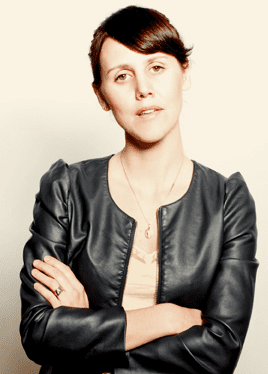 Timshel Matheny is a songwriter and musician in the band Roman Candle and writer for “Drinks With” (Paste.com).
Previous Post
March 18, 2013
Does God Want to Heal Everyone?
Next Post
March 20, 2013 How Jesus Flipped My World Upside Down: A Q&A with Chad Norris
Browse Our Archives
Select a Category Author Q&A Book Review Christian Living Church Leadership Stump a Scholar Theology Uncategorized
Select a Month June 2022 March 2021 October 2020 August 2020 February 2019 November 2017 July 2017 June 2017 May 2017 March 2017 February 2017 January 2017 November 2016 October 2016 August 2016 July 2016 June 2016 May 2016 April 2016 March 2016 February 2016 January 2016 November 2015 October 2015 September 2015 August 2015 July 2015 June 2015 May 2015 April 2015 March 2015 February 2015 January 2015 December 2014 November 2014 October 2014 September 2014 August 2014 July 2014 June 2014 May 2014 April 2014 March 2014 February 2014 January 2014 December 2013 November 2013 October 2013 September 2013 August 2013 July 2013 June 2013 May 2013 April 2013 March 2013 February 2013 January 2013 December 2012 November 2012 October 2012 September 2012 August 2012 July 2012 June 2012 May 2012 April 2012 March 2012 February 2012 January 2012 December 2011 November 2011 October 2011 September 2011 August 2011 July 2011 June 2011 May 2011 April 2011 March 2011 February 2011 January 2011 December 2010 November 2010 October 2010 September 2010 August 2010 July 2010 June 2010
Follow Us!
TAKE THE
Religious Wisdom Quiz
Who interpreted Pharaoh's dreams in Egypt?
Select your answer to see how you score.
Aaron David Joseph Moses
Related posts from Take and Read

"The Slow March of Light" Highlights The Human...

"A Brilliant Night of Stars and Ice" Recounts...

How To Judge The Bible By Its Cover

Life is an Endless Invitation: Q&A With Rob...
TRENDING AT PATHEOS Religious Music & Entertainment

"Les Diabolique" and Transgression
Alongside something like Arrival, Vertigo, or Charade, Les Diaboliques is a...

"The Plague Dogs" and Mortality
So, flashback to the late 70s, early 80s. Walt Disney Studios is...

With the recent and highly successful release of Christopher Nolan’s epic film,...

"L'avventura" and Human Weakness
Today's piece is going to be a little different for a few...

I first want to apologize for not posting or writing anything. I'm...

I've engaged in the multi-year project of reading through the Church Fathers,...
view all Religious Music & Entertainment blogs
Ad-Free & Subscriber Log-In Subscription Support
- About Us
- 2026 Calendar
- Videos
- Podcasts
- Library of World Religions
- Faith In Media Tracker
- Advertise With Us
- Write for Us
- Privacy Policy
- Terms of Service
- Do Not Sell My Data
- Contact Us
- Radiant Digital
- Manage Newsletter Subscriptions
- Unsubscribe From Notifications
- Sitemap
Copyright 2008-2026, Patheos. All rights reserved.
Subscription Support Ad-Free & Subscriber Log-In
Follow Patheos