
BuddhistCatholicContemplativeEvangelicalGeneral ChristianHinduJewishLatter-day SaintMuslimNew VisionsProgressive Christian
Beliefs
- Buddhist
- Catholic
- Contemplative
- Evangelical
- General Christian
- Hindu
- Jewish
- Latter-day Saint
- More Voices
- Muslim
- New Visions
- Pagan
- Progressive Christian
Topics
- Religion News
- Food and Religion
- Sports and Religion
- Religious Art
- Religious Music and Entertainment
- Religious Events
- History and Religion
- Style and Religion
- Politics and Religion
- Women in Religion
- Recreation Outdoors and Religion
- Business Finance and Religion
- Careers Workplace and Religion
- Education and Religion
- Family Parenting and Religion
- Health Fitness and Religion
- Home and Religion
- Relationships and Religion
- Technology and Religion
- Travel and Religion
Columnists
- Buddhist Columnists
- Business Finance and Religion Columnists
- Careers Workplace and Religion Columnists
- Catholic Columnists
- Contemplative Columnists
- Education and Religion Columnists
- Evangelists Columnists
- Family Parenting and Religion Columnists
- General Christian Columnists
- Health Fitness and Religion Columnists
- Hindu Columnists
- History and Religion Columnists
- Home and Religion Columnists
- Jewish Columnists
- More Voices Columnists
- Latter Day Columnists
- Muslim Columnists
- New Visions Columnists
- Nonreligious Columnists
- Pagan Columnists
- Politics and Religion Columnists
- Progressive Columnists
- Recreation Outdoors and Religion Columnists
- Relationships and Religion Columnists
- Religion News Columnists
- Religious Art Columnists
- Religious Events Columnists
- Religious Music and Entertainment Columnists
- Sports and Religion Columnists
- Style and Religion Columnists
- Technology and Religion Columnists
- Travel and Religion Columnists
- Women in Religion Columnists
Resource Library
- 2026 Calendar
- Library of World Religions
- The 100 Most Holy Places on Earth
- Patheos Answers
- Podcasts
- Videos
- Faith Leaders Database
- Anglican Episcopalian
- Bahai
- Baptist
- Buddhism
- Christianity
- Confucianism
- Eastern Orthodoxy
- Hinduism
- Holiness and Pentecostal
- ISKCON
- Islam
- Judaism
- Lutheran
- Methodist
- The Church of Jesus Christ of Latter-day Saints
- New Age
- Paganism
- Presbytarian and Reformed
- Protestantism
- Religion Behind the Scenes
- Roman Catholic
- Scientology
- Shia Islam
- Sikhism
- Sufism
- Sunni Islam
- Taoism
- Zen
- See all religions
Research Tools
 Ad-Free & Subscriber Log-In Subscription Support
Ad-Free & Subscriber Log-In Subscription Support
Follow Patheos 

- Trending:
- Forgiveness
- |
- Marriage
- |
- Consciousness
- |
- Death Penalty
- |
- Election
- |
- Halloween

- Home
- Religious Music & Entertainment
- Dealing with the Devil: A Review of Operation Screwtape
Dealing with the Devil: A Review of Operation Screwtape
Last updated on: January 15, 2013 at 4:21 pm by David Swartz
Dealing with the Devil: A Review of Operation Screwtape 2013-01-15T16:21:37-07:00 David Swartz
Patheos Explore the world's faith through different perspectives on religion and spirituality! Patheos has the views of the prevalent religions and spiritualities of the world.
 I’m a Sherlockian – hardcore. Not only do I love the stories but I set the bar high for books and films portraying him. Nobody does Sherlock on film like Jeremy Brett, nobody. Basil Rathbone was weaker than broth from a one-legged chicken. Christopher Plummer, so great in so many things, should have let Sherlock pass. Christopher Lee, great as Dracula, zilch as Sherlock. That’s why, when I learned of both Robert Downey Jr.’s and Benedict Cumberbatch’s takes on Sherlock, I stood ready with my prejudices unapologetically cocked and loaded. And I loved them both and wait eagerly for sequels (Downey) and new seasons (Cumberbatch).
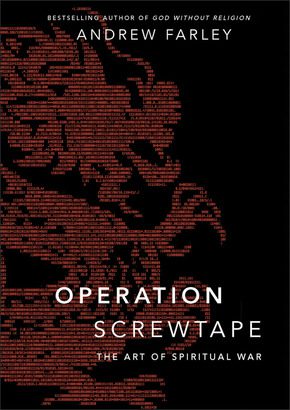
If anyone could be more loyal than Sherlockians like me, it’s those who devour the writing of C.S. Lewis (I’m one of those, too). There have been parodies and imitators of C.S. Lewis’ The Screwtape Letters, many of them forgettable. But that doesn’t mean we shouldn’t give Operation Screwtape, by Andrew Farley, a look and a shot to stand on its own merits. Like its predecessor, the book describes in detail strategies of the evil one as passed down through the ranks of principalities and powers and implemented both to impede embracing Jesus Christ and to hobble the growth and lives of those who follow Him. The premise describes hidden documents found and decoded releasing this information.
Some literary points here. Andrew borrows a literary device from many missionaries working in dangerous corners of the globe. Key words lie masked in the text; insiders will get the meaning but casual outsiders or prying eyes will not. Missionaries do this to avoid recognition in dangerous settings. Demons do this to avoid excruciatingly painful truth. While the code words for Jesus, the Gospel, and the Cross are clear, I found myself double clutching in some contexts keeping them straight. This may simply come with writing in this kind of form or might just be me. If so, I will kneel in the snow, Andrew, outside your castle (It’s a church history thing. Andrew will get it.) New Christians reading this should do so in close touch with an older Christian or in a group (This would be a good title for a reading group; it bristles with discussion points.) because Andrew tangles with a lot of Scripture at some deeper levels that might speed past younger Christians just reading on their own. I would also like to have a conversation with Andrew, which book reviews don’t allow, as to what extent meanings of Scripture can be said to be only directed to cultural conditions of the time.
On to the good stuff. Using John 10:10 as a chapter framework, Operation Screwtape lays out the evil one’s basic strategies to steal (our influence, security, intimacy, clarity, confidence and celebration), to kill (our contentment, focus, resources, life, holiness, righteousness and discernment) and to destroy (our grace, freedom, funding, enthusiasm, unity, leaders and our message). Andrew pastors and preaches at Ecclesia: Church Without Religion in Lubbock, Texas. He’s in the trenches at a place that seems to be especially effective in touching lives of people who’ve suffered a lot of this stealing, killing and destroying inside the church sometime in their lives. I resonate with that as the church I pastor is a M.A.S.H unit (Think TV show). We’re not pretty and a lot the people with us come with gaping spiritual wounds but are risking hope in Christ’s church one more time. I bet Ecclesia is a lot like this too and this flavors Andrew’s writing. This church, being in Texas, lies within the powerful gravitational field of the Bible belt. (Now let’s talk about cultural background and influence.) The dry side of the Bible belt, its shallow beliefs that neither penetrate thought nor change behavior can both mask destructive behavior and grossly distort the gospel of Jesus Christ.
The late Ruth Graham, wife of Billy, told a story of a pet rabbit she had as a little girl in China. The rabbit died and, after a proper funeral, the family buried it out behind their house. She would go out every day and dig it up “to see how it was getting along.” Finally one day it began to turn green and so she decided to leave it alone. One of his better points involves crippling false guilt. Countless Christians grapple daily with guilt over sins that Jesus Christ has already forgiven. We mull over them, anguish over them, confess them hundreds of times and keep doing it long after they’ve turned green; we can’t leave it alone. Certainly personality types, those deprived of love and victims of abuse seem especially vulnerable to this. The difficulty of forgiving ourselves feeds into it too. We become paralyzed and neurotic, muckraking through our own lives looking for one more thing to beat ourselves up with. When the Bible describes Satan as the “accuser of the brethren”, it hits the mark. He’s good and accusation is one of the best clubs in his bag.
One of the good new books in creative circles is The War of Art. It presses home that creativity doesn’t just bubble up; you have to work, to war through many pitfalls and obstacles. The spiritual life known as Christianity is no different. Mark Buchanan writes, “We must train to be and live christianly and nothing could be further from the mindset of the age.” Andrew Farley pens a good mix of reps and stretching with grace. Work through the C.S. Lewis thing and allow him his own voice and listen for God to whisper through it. Forget C.S. Lewis for a minute. Andrew is no Jeremy Brett. But then, who is?
For more conversation on Operation Screwtape, visit the Patheos Book Club here.
 David Swartz pastors Bethel Baptist Church in Roseville, Michigan. He thinks that jazz is sacred music, that books are better company than most people, and that university towns rock. He blogs at geezeronthequad.com.
Previous Post

January 2, 2013
Finding True Love: A Q&A with author Gary Thomas
Next Post

January 16, 2013 Operation Screwtape: A Q&A with Author Andrew Farley
Recent Comments
Browse Our Archives
Select a Category Author Q&A Book Review Christian Living Church Leadership Stump a Scholar Theology Uncategorized
Select a Month June 2022 March 2021 October 2020 August 2020 February 2019 November 2017 July 2017 June 2017 May 2017 March 2017 February 2017 January 2017 November 2016 October 2016 August 2016 July 2016 June 2016 May 2016 April 2016 March 2016 February 2016 January 2016 November 2015 October 2015 September 2015 August 2015 July 2015 June 2015 May 2015 April 2015 March 2015 February 2015 January 2015 December 2014 November 2014 October 2014 September 2014 August 2014 July 2014 June 2014 May 2014 April 2014 March 2014 February 2014 January 2014 December 2013 November 2013 October 2013 September 2013 August 2013 July 2013 June 2013 May 2013 April 2013 March 2013 February 2013 January 2013 December 2012 November 2012 October 2012 September 2012 August 2012 July 2012 June 2012 May 2012 April 2012 March 2012 February 2012 January 2012 December 2011 November 2011 October 2011 September 2011 August 2011 July 2011 June 2011 May 2011 April 2011 March 2011 February 2011 January 2011 December 2010 November 2010 October 2010 September 2010 August 2010 July 2010 June 2010
Follow Us!
TAKE THE
Religious Wisdom Quiz
What language was most of the Old Testament originally written in?
Select your answer to see how you score.
Aramaic Hebrew Greek Latin
Related posts from Take and Read

"The Slow March of Light" Highlights The Human...

"A Brilliant Night of Stars and Ice" Recounts...

How To Judge The Bible By Its Cover

Life is an Endless Invitation: Q&A With Rob...
TRENDING AT PATHEOS Religious Music & Entertainment

"Les Diabolique" and Transgression
Alongside something like Arrival, Vertigo, or Charade, Les Diaboliques is a...

"The Plague Dogs" and Mortality
So, flashback to the late 70s, early 80s. Walt Disney Studios is...

With the recent and highly successful release of Christopher Nolan’s epic film,...

"L'avventura" and Human Weakness
Today's piece is going to be a little different for a few...

I first want to apologize for not posting or writing anything. I'm...

I've engaged in the multi-year project of reading through the Church Fathers,...
view all Religious Music & Entertainment blogs
Ad-Free & Subscriber Log-In Subscription Support
- About Us
- 2026 Calendar
- Videos
- Podcasts
- Library of World Religions
- Faith In Media Tracker
- Advertise With Us
- Write for Us
- Privacy Policy
- Terms of Service
- Do Not Sell My Data
- Contact Us
- Radiant Digital
- Manage Newsletter Subscriptions
- Unsubscribe From Notifications
- Sitemap
Copyright 2008-2026, Patheos. All rights reserved.
Subscription Support Ad-Free & Subscriber Log-In
Follow Patheos