
BuddhistCatholicContemplativeEvangelicalGeneral ChristianHinduJewishLatter-day SaintMuslimNew VisionsProgressive Christian
Beliefs
- Buddhist
- Catholic
- Contemplative
- Evangelical
- General Christian
- Hindu
- Jewish
- Latter-day Saint
- More Voices
- Muslim
- New Visions
- Pagan
- Progressive Christian
Topics
- Religion News
- Food and Religion
- Sports and Religion
- Religious Art
- Religious Music and Entertainment
- Religious Events
- History and Religion
- Style and Religion
- Politics and Religion
- Women in Religion
- Recreation Outdoors and Religion
- Business Finance and Religion
- Careers Workplace and Religion
- Education and Religion
- Family Parenting and Religion
- Health Fitness and Religion
- Home and Religion
- Relationships and Religion
- Technology and Religion
- Travel and Religion
Columnists
- Buddhist Columnists
- Business Finance and Religion Columnists
- Careers Workplace and Religion Columnists
- Catholic Columnists
- Contemplative Columnists
- Education and Religion Columnists
- Evangelists Columnists
- Family Parenting and Religion Columnists
- General Christian Columnists
- Health Fitness and Religion Columnists
- Hindu Columnists
- History and Religion Columnists
- Home and Religion Columnists
- Jewish Columnists
- More Voices Columnists
- Latter Day Columnists
- Muslim Columnists
- New Visions Columnists
- Nonreligious Columnists
- Pagan Columnists
- Politics and Religion Columnists
- Progressive Columnists
- Recreation Outdoors and Religion Columnists
- Relationships and Religion Columnists
- Religion News Columnists
- Religious Art Columnists
- Religious Events Columnists
- Religious Music and Entertainment Columnists
- Sports and Religion Columnists
- Style and Religion Columnists
- Technology and Religion Columnists
- Travel and Religion Columnists
- Women in Religion Columnists
Resource Library
- 2026 Calendar
- Library of World Religions
- The 100 Most Holy Places on Earth
- Patheos Answers
- Podcasts
- Videos
- Faith Leaders Database
- Anglican Episcopalian
- Bahai
- Baptist
- Buddhism
- Christianity
- Confucianism
- Eastern Orthodoxy
- Hinduism
- Holiness and Pentecostal
- ISKCON
- Islam
- Judaism
- Lutheran
- Methodist
- The Church of Jesus Christ of Latter-day Saints
- New Age
- Paganism
- Presbytarian and Reformed
- Protestantism
- Religion Behind the Scenes
- Roman Catholic
- Scientology
- Shia Islam
- Sikhism
- Sufism
- Sunni Islam
- Taoism
- Zen
- See all religions
Research Tools
 Ad-Free & Subscriber Log-In Subscription Support
Follow Patheos 

- Trending:
- Advent
- |
- Forgiveness
- |
- Thanksgiving
- |
- Election
- |
- Seasonal Holidays
- |
- Marriage

- Home
- Religious Music & Entertainment
- Cravings and Christ: A Chat with author Mary DeTurris Poust
Cravings and Christ: A Chat with author Mary DeTurris Poust
Last updated on: January 2, 2013 at 12:48 pm by Elizabeth Scalia
Cravings and Christ: A Chat with author Mary DeTurris Poust 2013-01-02T12:48:56-07:00 Elizabeth Scalia
Patheos Explore the world's faith through different perspectives on religion and spirituality! Patheos has the views of the prevalent religions and spiritualities of the world.
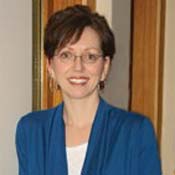 When Catholic author and “foodie” Mary DeTurris Poust announced she would be writing a book on food and spirituality, it seemed to many a hand-to-glove fit. With Cravings: A Catholic Wrestles with Food, Self-Image and God, Ave Maria Press has perfectly matched voice to topic, and in this beautifully-designed book, Poust has written a tremendously consoling, encouraging and lasting resource for Catholics, yes, but for all people of faith who struggle with bad habits, grapple with addiction and try to attain self-control in a world that increasingly encourages a lack of same. Here Poust takes a few questions from Elizabeth Scalia, Managing Editor of the Catholic Channel, here at Patheos:
Anyone following you on social media knows you’re a bit of a foodie, and yet early in the book you suggest that you doubted you should write it. Why was that?
You’re right. I am a foodie, or I like to think I am, but when my publisher first presented the general idea for this book, I felt some resistance go up. In hindsight, I wonder if that had to do with the fact that this book would require me to be so open and honest and vulnerable, to talk about issues I hadn’t even discussed with close family members. As I prayed on the possibility of this book and considered whether I wanted to spend months and months deeply engrossed in the topic of food and faith, I started to notice some of my food habits and began jotting down notes to see where they would take me. Before I knew it, I had chapter one, and I knew without question this was my book to write.
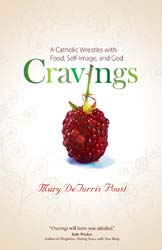 There are any number of books out there grappling with food and spirituality, but yours is particularly Christ-haunted and Eucharistic. Can you talk a little about how, as a Catholic, the Holy Eucharist informs your insights on food, meals, preparation, etc?
One of the real gifts of this book was the way it helped me better understand that connection in my own life. Yes, I’ve always been aware of the powerful link between our Catholic faith and food. After all, the Mass centers on a meal. But Cravings allowed me to explore that – and, I hope, share that – in different and deeper ways. I really started to watch the way the Eucharistic feast is prepared and shared and began to look for ways I could bring some of that reverence into my own meals at home, to allow the sacred to seep into the details of my cooking, serving, sharing, and eating.
What does it mean to eat “mindfully”?
What we’re talking about here is maintaining a single-minded focus while doing something. It’s an awareness that goes beyond simply recognizing or acknowledging what we’re doing to a place of deep attention and intention. In our society “mindfulness” tends to be associated with Eastern traditions, and yet it’s always been very much a part of our own. Think of the way monastics prepare and share their meals. It’s very mindful, with an undercurrent of prayer. The monastics have been eating locally and in season, and with the freshest and most wholesome ingredients, all in moderation, for centuries, long before there ever was a Whole Foods Market or a “slow food” movement. Eating mindfully means bringing your full attention to your meal – from the foods you choose, to the way you prepare them, to the way the meal is served, to the way you eat. Obviously this means no eating in the car or while standing at the kitchen counter or while sitting in front of the television. You want to bring a sense of the sacred into your meal, and you can do that through simple things like turning off the TV or cell phone, lighting a candle, avoiding arguments while eating, chewing more slowly, using nice dishes. It slows everything down and makes you very aware of your food. As a result, you tend to feel more satisfied with what you’ve eaten and are less likely to go scrounging through the cupboards for more an hour later.
Early in the book you quote Merci Miglino, who shares a keen insight on how our habits and patterns are like the worn carpets in our rooms; we keep treading the same paths over and over, without realizing it. This idea, like so many in the book, seems applicable to many issues people wrestle with — eating disorders, alcohol and substance abuse; bad relationships. Can you talk about some of the ways the book helps a reader to break old patterns and begin new ones?
It’s true. This book is focused on food, but it can be applied to so many things that people use to fill a deeper void in their lives, which is often at the heart of our “issues.” It can be hard to break out of the habits that have become our well-worn path. Even after we think we’ve got a handle on something – after we’ve lost 20 pounds or given up alcohol or quit gambling – we can easily slip right back onto the old path that feels so comfortable and comforting. Again, a lot of this comes down to creating awareness – not only of the food we’re putting into our mouths but of the thoughts we’re allowing to run through our mind, of the words we say and the things we do that make us turn back to that destructive or at least not-constructive behavior. I want to help people find ways to fill in the ruts of that well-worn path with new thinking, new behaviors, new relationships that will make the new path so attractive and so peaceful and so satisfying that there’s no longer an urge or need to resort to old behaviors. That has to start with God, with prayer, meditation, and mindfulness. Through those practices we begin to peel back the layers and discover what it is that makes us run for a pint of ice cream in an effort to hide from our true self or, conversely, skip meal after meal in hopes of becoming someone different, someone else. Throughout the book, I share stories – my own and those of others – to give readers a glimpse into the ways they can break their habits. I also provide concrete practices and exercises for making changings right now.
You write, “Starvation and gluttony are opposite on the surface, but closely connected when we dig deeper.” How are they connected?
Starvation and gluttony are really both attempts to control our lives with food. We make food into our enemy or our savior, and then behave accordingly. I think most of us get the starvation side of the equation. Starvation seems so centered on the desire to control. Whereas gluttony may seem like a total lack of control, but the truth is that they really are similar. Whether you are starving yourself or stuffing yourself it comes down to what you think of yourself, where you put your worth, and what you believe about yourself and how others love you – or don’t love you. It’s powerful, and it goes so far beyond diets and weight loss and nutrition. It goes right down to our soul, to places we might not want to look. When we start to acknowledge, not just with lip service but with real true belief that we are not in control and that we are loved unconditionally by God no matter what the scale says, no matter what we ate for dinner last night, food begins to lose its power and the need to starve or stuff starts to subside.
Later in the book, you quote Cardinal Timothy Dolan who has been very upfront with the fact that he enjoys a good meal and is also working on his waistline. I began to think of other “corpulent Catholics” like Blessed Pope John XXIII and G.K. Chesterton (and, some reader will surely point out, me too); someone carrying a bit of weight is immediately giving evidence of appetite (and brokenness) in ways that a bulimic, at least superficially, does not. But as you say, these are, in the end, similar issues. Does holiness elude us, then, until all of our issues are settled? Can holiness be part of the journey or is it an end?
I think holiness has to be part of the journey or we are destined to fail. That doesn’t necessarily mean we’ve got holiness down pat – I sure don’t – but that God and prayer are part of the bigger picture for us. Some people have expressed surprise that I wrote a book about food issues because I am not overweight and have never had a true eating disorder, and yet I have allowed my weight to be an indicator of my worth, which sets food up as the enemy, and so it begins. It doesn’t matter if we are overweight, underweight, or just right, we can still be struggling with issues of appetite and brokenness, and it is precisely through our holiness or our desire to become more holy that we can become whole.
The title of the book is “Cravings: A Catholic Wrestles with Food, Self-Image and God” but it is clearly useful for people struggling with self-sabotaging habits on many levels. You emphasize a practice of being present to a moment, or to the self, or to Christ. Do you have perhaps a quick anecdote on how you fostered that practice in your own life?
For me a lot of my “success” has come down to my willingness to be silent now and then and to listen for God in my life. It was a silent retreat that first made me aware of how mindlessly I often eat my food, even when I’m home alone and have no reason to rush or multi-task. And yet I often do. When I allow myself to be silent and mindful while preparing my food or eating my food – no crossword puzzle, no newspaper, no laptop, no phone – and start my meal with prayer, I can feel the sacred silence transforming something so simple into something more. Meals become moving meditations. I don’t say that to try to sound holy because I’m not. Even after writing Cravings, I still struggle at times with the mistaken belief that five pounds will make me a better person or that eating an extra bowl of pasta will make me happier. I have to continually return to the practices in Cravings and surrender to God. Whenever I weave prayer into my meals, whether it’s a blessing just before or an unspoken but ever-present prayerful awareness throughout, my meals are changed. And little by little, so am I.
For more conversation on Cravings – and to read a book excerpt – visit the Patheos Book Club here.
Previous Post

December 19, 2012
Favorite Christmas Memories from the Givens Family
Next Post

January 2, 2013 Finding True Love: A Q&A with author Gary Thomas
Recent Comments
1,847 Comments | Leave a Comment
Browse Our Archives
Select a Category Author Q&A Book Review Christian Living Church Leadership Stump a Scholar Theology Uncategorized
Select a Month June 2022 March 2021 October 2020 August 2020 February 2019 November 2017 July 2017 June 2017 May 2017 March 2017 February 2017 January 2017 November 2016 October 2016 August 2016 July 2016 June 2016 May 2016 April 2016 March 2016 February 2016 January 2016 November 2015 October 2015 September 2015 August 2015 July 2015 June 2015 May 2015 April 2015 March 2015 February 2015 January 2015 December 2014 November 2014 October 2014 September 2014 August 2014 July 2014 June 2014 May 2014 April 2014 March 2014 February 2014 January 2014 December 2013 November 2013 October 2013 September 2013 August 2013 July 2013 June 2013 May 2013 April 2013 March 2013 February 2013 January 2013 December 2012 November 2012 October 2012 September 2012 August 2012 July 2012 June 2012 May 2012 April 2012 March 2012 February 2012 January 2012 December 2011 November 2011 October 2011 September 2011 August 2011 July 2011 June 2011 May 2011 April 2011 March 2011 February 2011 January 2011 December 2010 November 2010 October 2010 September 2010 August 2010 July 2010 June 2010
Follow Us!
TAKE THE
Religious Wisdom Quiz
What city was Paul imprisoned in before writing to the Philippians?
Select your answer to see how you score.
Antioch Rome Corinth Jerusalem
Related posts from Take and Read

"The Slow March of Light" Highlights The Human...

"A Brilliant Night of Stars and Ice" Recounts...

How To Judge The Bible By Its Cover
Life is an Endless Invitation: Q&A With Rob...
TRENDING AT PATHEOS Religious Music & Entertainment

A Christian, a Narnia Fan, and a Filmmaker...
Watching The Narnia Trailer As A Fan And A Filmmaker Ever since...

Great Spiritual Horror Films of the 20th Century...
For the Christian, horror movies are often troubling—and many would say that...

"Les Diabolique" and Transgression
Alongside something like Arrival, Vertigo, or Charade, Les Diaboliques is a...

"The Plague Dogs" and Mortality
So, flashback to the late 70s, early 80s. Walt Disney Studios is...

With the recent and highly successful release of Christopher Nolan’s epic film,...

"L'avventura" and Human Weakness
Today's piece is going to be a little different for a few...
view all Religious Music & Entertainment blogs
Ad-Free & Subscriber Log-In Subscription Support
- About Us
- 2026 Calendar
- Videos
- Podcasts
- Library of World Religions
- Faith In Media Tracker
- Advertise With Us
- Write for Us
- Privacy Policy
- Terms of Service
- Do Not Sell My Data
- Contact Us
- Radiant Digital
- Manage Newsletter Subscriptions
- Unsubscribe From Notifications
- Sitemap
Copyright 2008-2026, Patheos, part of the Radiant Digital network of media brands. All rights reserved.
Subscription Support Ad-Free & Subscriber Log-In
Follow Patheos