
BuddhistCatholicContemplativeEvangelicalGeneral ChristianHinduJewishLatter-day SaintMuslimNew VisionsProgressive Christian
Beliefs
- Buddhist
- Catholic
- Contemplative
- Evangelical
- General Christian
- Hindu
- Jewish
- Latter-day Saint
- More Voices
- Muslim
- New Visions
- Pagan
- Progressive Christian
Topics
- Religion News
- Food and Religion
- Sports and Religion
- Religious Art
- Religious Music and Entertainment
- Religious Events
- History and Religion
- Style and Religion
- Politics and Religion
- Women in Religion
- Recreation Outdoors and Religion
- Business Finance and Religion
- Careers Workplace and Religion
- Education and Religion
- Family Parenting and Religion
- Health Fitness and Religion
- Home and Religion
- Relationships and Religion
- Technology and Religion
- Travel and Religion
Columnists
- Buddhist Columnists
- Business Finance and Religion Columnists
- Careers Workplace and Religion Columnists
- Catholic Columnists
- Contemplative Columnists
- Education and Religion Columnists
- Evangelists Columnists
- Family Parenting and Religion Columnists
- General Christian Columnists
- Health Fitness and Religion Columnists
- Hindu Columnists
- History and Religion Columnists
- Home and Religion Columnists
- Jewish Columnists
- More Voices Columnists
- Latter Day Columnists
- Muslim Columnists
- New Visions Columnists
- Nonreligious Columnists
- Pagan Columnists
- Politics and Religion Columnists
- Progressive Columnists
- Recreation Outdoors and Religion Columnists
- Relationships and Religion Columnists
- Religion News Columnists
- Religious Art Columnists
- Religious Events Columnists
- Religious Music and Entertainment Columnists
- Sports and Religion Columnists
- Style and Religion Columnists
- Technology and Religion Columnists
- Travel and Religion Columnists
- Women in Religion Columnists
Resource Library
- 2026 Calendar
- Library of World Religions
- The 100 Most Holy Places on Earth
- Patheos Answers
- Podcasts
- Videos
- Faith Leaders Database
- Anglican Episcopalian
- Bahai
- Baptist
- Buddhism
- Christianity
- Confucianism
- Eastern Orthodoxy
- Hinduism
- Holiness and Pentecostal
- ISKCON
- Islam
- Judaism
- Lutheran
- Methodist
- The Church of Jesus Christ of Latter-day Saints
- New Age
- Paganism
- Presbytarian and Reformed
- Protestantism
- Religion Behind the Scenes
- Roman Catholic
- Scientology
- Shia Islam
- Sikhism
- Sufism
- Sunni Islam
- Taoism
- Zen
- See all religions
Research Tools
 Ad-Free & Subscriber Log-In Subscription Support
Ad-Free & Subscriber Log-In Subscription Support
Follow Patheos 

- Trending:
- Forgiveness
- |
- Marriage
- |
- Consciousness
- |
- Death Penalty
- |
- Election
- |
- Halloween

- Home
- Religious Music & Entertainment
- The Seven Deadly Sins: A Q&A with Author Lawrence Cunningham
The Seven Deadly Sins: A Q&A with Author Lawrence Cunningham
Last updated on: December 16, 2012 at 5:51 pm by Deborah Arca
The Seven Deadly Sins: A Q&A with Author Lawrence Cunningham 2012-12-16T17:51:16-07:00 Deborah Arca
Patheos Explore the world's faith through different perspectives on religion and spirituality! Patheos has the views of the prevalent religions and spiritualities of the world.
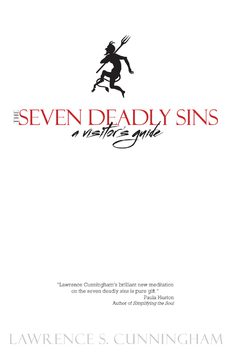 Sloth, envy, gluttony, greed, anger, lust, and pride … or, when taken as a whole, better known as “the seven deadly sins.” But how much do we really know about this list? When were they first identified, and how did they become a part of the Christian tradition? And what makes these particular sins so “deadly,” more so than say, murder, or theft?
A new book out this month — The Seven Deadly Sins: A Visitor’s Guide — by Catholic theologian and Notre Dame Professor Lawrence S. Cunningham seeks to trace the roots of this infamous list of sins, as well as provide a corresponding virtue for each. Popular author and spiritual director Paula Huston calls the book *“*a brilliant new meditation … pure gift.”
We caught up briefly with Dr. Cunningham this week to ask him a few questions about his new book.
 Have you always been intrigued with the idea of the “seven deadly sins?” What inspired you to write this book, now?
I came to the topic of the seven deadly sins in a rather backward sort of fashion. A few years ago I wrote a series of talks on the biblical concept of the heart which led me to think about the beatitude speaking of the pure of heart. That trail, in turn led me to the early monastic writers who argued that there were obstacles to purity of heart and they named eight of them. In the West, Gregory the Great reduced the eight to seven and that is where we got the “seven deadly sins.” The list caught on and shows up in literature, art, theology, and works of devotion – from those sources I draw on a good deal in this work.
You contend that the list of the seven sins not ‘biblical’ in origin. How did the Church Fathers contribute to shaping this list, and how did this list come to inform Christian living?
All of these sins can be found in one place or another in the scriptures but the list of seven derives from the tradition of the church. The medieval, who loved lists, developed seven virtues as offsets of the seven sins – we find such pairings in the Summa and in Dante’s Purgatorio. They were frequently called “capital” sins (from the Latin caput – head) because it is from them that other sins derive.
There is nothing normative about the list – indeed, some contemporary writers have mused over other sins or obstacles that better resonate with contemporary mores. An aside: my subtitle was suggested by my editor because it alludes to Dante “visiting” the seven terraces where the sins were being purged.
You note that Pope Gregory the Great argued that the root of the seven deadly sins was pride. Is that therefore, the worst of the sins?
While pride is often called the worst sin (because of the fall of Satan) it is interesting that the early monks liked to single out anger (not getting angry — Jesus got angry — but being an angry person). Saint Augustine somewhere says that the most typical sin of clerics was not lust but avarice. In passing, we should note that the list is not all that clear cut; at times we can think of sins as symbiotic: avarice is often linked to envy and gluttony can be thought of as a kind of lust.
What do you hope people take away from your book?
I hope my readers will pay attention to the final chapter on purity of heart because it is purity of heart and not merely overcoming these all too human sins that is the goal. If we are pure of heart, we will see God.
This book is rather brief; it is an expansion of seven essays I published a few years ago in a magazine. As I said in the introduction I am not a moral theologian but someone who is interested in the history of Christian spirituality. The book is the result of a lot of reading but my attempt was to write something easily accessible. I make my own, the sentiment once expressed by Belloc who, tongue in cheek, said that on his tomb he wanted this inscription: “his sins were scarlet but his books were read.”
For more conversation on The Seven Deadly Sins – and to read a book excerpt – visit the Patheos Book Club here.
Previous Post
December 14, 2012
Win a Copy of Holy Nomad!
Next Post
December 15, 2012 The God Who Weeps: A Q&A with Authors Terryl and Fiona Givens
Recent Comments
Browse Our Archives
Select a Category Author Q&A Book Review Christian Living Church Leadership Stump a Scholar Theology Uncategorized
Select a Month June 2022 March 2021 October 2020 August 2020 February 2019 November 2017 July 2017 June 2017 May 2017 March 2017 February 2017 January 2017 November 2016 October 2016 August 2016 July 2016 June 2016 May 2016 April 2016 March 2016 February 2016 January 2016 November 2015 October 2015 September 2015 August 2015 July 2015 June 2015 May 2015 April 2015 March 2015 February 2015 January 2015 December 2014 November 2014 October 2014 September 2014 August 2014 July 2014 June 2014 May 2014 April 2014 March 2014 February 2014 January 2014 December 2013 November 2013 October 2013 September 2013 August 2013 July 2013 June 2013 May 2013 April 2013 March 2013 February 2013 January 2013 December 2012 November 2012 October 2012 September 2012 August 2012 July 2012 June 2012 May 2012 April 2012 March 2012 February 2012 January 2012 December 2011 November 2011 October 2011 September 2011 August 2011 July 2011 June 2011 May 2011 April 2011 March 2011 February 2011 January 2011 December 2010 November 2010 October 2010 September 2010 August 2010 July 2010 June 2010
Follow Us!
TAKE THE
Religious Wisdom Quiz
How did Jeremiah's scribe escape death after Jehoiakim sought to arrest them?
Select your answer to see how you score.
They hid A prophet intervened They fled to Babylon They paid a bribe
Related posts from Take and Read

"The Slow March of Light" Highlights The Human...

"A Brilliant Night of Stars and Ice" Recounts...

How To Judge The Bible By Its Cover

Life is an Endless Invitation: Q&A With Rob...
TRENDING AT PATHEOS Religious Music & Entertainment

"Les Diabolique" and Transgression
Alongside something like Arrival, Vertigo, or Charade, Les Diaboliques is a...

"The Plague Dogs" and Mortality
So, flashback to the late 70s, early 80s. Walt Disney Studios is...

With the recent and highly successful release of Christopher Nolan’s epic film,...

"L'avventura" and Human Weakness
Today's piece is going to be a little different for a few...

I first want to apologize for not posting or writing anything. I'm...

I've engaged in the multi-year project of reading through the Church Fathers,...
view all Religious Music & Entertainment blogs
Ad-Free & Subscriber Log-In Subscription Support
- About Us
- 2026 Calendar
- Videos
- Podcasts
- Library of World Religions
- Faith In Media Tracker
- Advertise With Us
- Write for Us
- Privacy Policy
- Terms of Service
- Do Not Sell My Data
- Contact Us
- Radiant Digital
- Manage Newsletter Subscriptions
- Unsubscribe From Notifications
- Sitemap
Copyright 2008-2026, Patheos. All rights reserved.
Subscription Support Ad-Free & Subscriber Log-In
Follow Patheos