
BuddhistCatholicContemplativeEvangelicalGeneral ChristianHinduJewishLatter-day SaintMuslimNew VisionsProgressive Christian
Beliefs
- Buddhist
- Catholic
- Contemplative
- Evangelical
- General Christian
- Hindu
- Jewish
- Latter-day Saint
- More Voices
- Muslim
- New Visions
- Pagan
- Progressive Christian
Topics
- Religion News
- Food and Religion
- Sports and Religion
- Religious Art
- Religious Music and Entertainment
- Religious Events
- History and Religion
- Style and Religion
- Politics and Religion
- Women in Religion
- Recreation Outdoors and Religion
- Business Finance and Religion
- Careers Workplace and Religion
- Education and Religion
- Family Parenting and Religion
- Health Fitness and Religion
- Home and Religion
- Relationships and Religion
- Technology and Religion
- Travel and Religion
Columnists
- Buddhist Columnists
- Business Finance and Religion Columnists
- Careers Workplace and Religion Columnists
- Catholic Columnists
- Contemplative Columnists
- Education and Religion Columnists
- Evangelists Columnists
- Family Parenting and Religion Columnists
- General Christian Columnists
- Health Fitness and Religion Columnists
- Hindu Columnists
- History and Religion Columnists
- Home and Religion Columnists
- Jewish Columnists
- More Voices Columnists
- Latter Day Columnists
- Muslim Columnists
- New Visions Columnists
- Nonreligious Columnists
- Pagan Columnists
- Politics and Religion Columnists
- Progressive Columnists
- Recreation Outdoors and Religion Columnists
- Relationships and Religion Columnists
- Religion News Columnists
- Religious Art Columnists
- Religious Events Columnists
- Religious Music and Entertainment Columnists
- Sports and Religion Columnists
- Style and Religion Columnists
- Technology and Religion Columnists
- Travel and Religion Columnists
- Women in Religion Columnists
Resource Library
- 2026 Calendar
- Library of World Religions
- The 100 Most Holy Places on Earth
- Patheos Answers
- Podcasts
- Videos
- Faith Leaders Database
- Anglican Episcopalian
- Bahai
- Baptist
- Buddhism
- Christianity
- Confucianism
- Eastern Orthodoxy
- Hinduism
- Holiness and Pentecostal
- ISKCON
- Islam
- Judaism
- Lutheran
- Methodist
- The Church of Jesus Christ of Latter-day Saints
- New Age
- Paganism
- Presbytarian and Reformed
- Protestantism
- Religion Behind the Scenes
- Roman Catholic
- Scientology
- Shia Islam
- Sikhism
- Sufism
- Sunni Islam
- Taoism
- Zen
- See all religions
Research Tools
 Ad-Free & Subscriber Log-In Subscription Support
Ad-Free & Subscriber Log-In Subscription Support
Follow Patheos 

- Trending:
- Forgiveness
- |
- Marriage
- |
- Consciousness
- |
- Death Penalty
- |
- Election
- |
- Halloween

- Home
- Religious Music & Entertainment
- The Hindu-ness of Rob Bell
The Hindu-ness of Rob Bell
Last updated on: November 29, 2012 at 1:55 pm by Guest Contributor
The Hindu-ness of Rob Bell 2012-11-29T13:55:35-07:00 Guest Contributor
Patheos Explore the world's faith through different perspectives on religion and spirituality! Patheos has the views of the prevalent religions and spiritualities of the world.
 By Padma Kuppa, columnist at the Patheos Hindu Channel
As a Hindu lay person, I am probably an unlikely candidate to jump at the chance to read about Rob Bell in James Wellman’s book about him and “a New American Christianity.” But I have been exposed to Christian thought and writing for decades, have been an interfaith activist for a number of years, and have a growing interest specifically in Hindu-Christian dialogue. Knowing more about how American Christianity is developing is essential to this path. In particular, I wanted to understand more about Rob Bell: he was a mega-church pastor from Michigan, an evangelical, and doesn’t believe that I or other non-Christians are going to hell. He’s even asked, “Gandhi’s in hell? He is? And someone knows this for sure?” Wellman’s book on Bell is shaped by who or what he is: a mysterious, subversive, charismatic, artistic, radical, heretic. But in the end, as Wellman says that Bell wants to “create a really beautiful Jesus.” This reminded me of Gandhi, who said, “I would suggest that all of you Christians live more like Jesus Christ.”
 I learned that there’s a lot to like about Rob Bell.
The one semester I studied at Ecumenical Theological Seminary, I asked a classmate during group presentations on salvation and grace, “Isn’t God’s grace for everyone?” (In her group’s presentation, grace was only for believers.) Bell answers my question, with his proclamation: “For those who have done all the wrong things and who may not even believe in grace, this grace is here for them.”
Bell’s appeal to social justice is much like mine. I was excited to read that he wrote on the back of his book, Jesus Wants to Save Christians, “Did you know a church just completed a 20 million dollar building improvement at the same time it was reported that 20% of Grand Rapids lives in poverty?”
Bell’s theology affirms science, seeing the “universe as an expression of God’s creative act in Christ.”
His theology is helping people integrate faith into a world where encounters with cultural and religious diversity are the norm.
I also found a profound Hindu-ness in Rob Bell:
Hindus do not see the sacred and profane as separate – neither does Bell. All things are sacred – everyone is a spark of the Divine. While we have paap, or sin, it is not original.
Quoting Wellman, “Bell argues that religion, so-called, distorts the nature of Jesus’ work…” Bell How often have I heard Hindus who say that our tradition “is not a religion, it’s a way of life” – in order to distance themselves from this distortion that Bell speaks of?
Quoting Bell, “Jesus surrendered things on the front end and entrusted the results to God.” My favorite couplet from the Hindu holy text, the Bhagavad Gita is very similar in meaning. A not-poetic version of this beautiful Sanskrit couplet from chapter 2, verse 47: “You have a right to perform your prescribed action, but you are not entitled to the fruits of your action.”
Bell also expounds the Hindu concept of karma: “What we do here, matters. What we make here, matters. How we serve here, matters.” Mission is not a message given but a life lived. The difference of course, is that for Hindus also, “there is no ticket to another world” – it’s just that we are most likely to be reborn into this one
In the concluding chapter, Wellman gives me reason to believe in the importance of understanding more about the New American Christianity that Bell is helping to form. He identifies two major changes in my lifetime that have had a major impact on American religion: how Americans think about religion, and how they structure their churches. Americans are increasingly accepting of other faiths, and less loyal to a specific denomination or affiliation. I revel in this. Bell’s former church, Mars Hill, is one of many famous mega churches. Sadly, the mega-churches I know are the ones that are raising funds to evangelize in India and other parts of the developing world.
Bell glories in the free market of choice. Bell’s mission: to make disciples, making disciples, making disciples. And this is where I find difficulty. The mega-churches around the corner and down the street from me send mission trips to save souls in Africa and Asia – one even “graciously saved souls from Hinduism.” How can Bell and the New American Christians spread the Good News without annihilating cultures as Christians have done in the past, or without demeaning the faiths of those who live amongst them while converting the adherents of the same faiths in poor nations? Granted, these mega-church missions are providing much needed economic relief, but perhaps it is with strings attached.
How can one be pluralistic, recognize the inherent equality of all human beings, and fulfill someone else’s spiritual needs – especially if there is an imbalance of power between two individuals or if there is an imbalance in their faith commitments? Shouldn’t it be as Gandhi proposed? “…our innermost prayer should be a Hindu should be a better Hindu, a Muslim a better Muslim, a Christian a better Christian.”
Visit the Patheos Book Club for more responses to James Wellman’s new book on Rob Bell and a New American Christianity.

Padma Kuppa is a Hindu American and community activist working for social justice and understanding. Born in India, she arrived in the U.S. to start kindergarten in 1970 on Long Island. Returning to India with her family in 1981, she finished high school and college while living in a mainstream Hindu culture. Returning to New York in 1988 as a foreign student, she, husband and their two children have made Troy, Michigan their home since 1998.
She is a founding member of the Troy-area Interfaith Group, as well as the Bharatiya Temple’s Outreach Committee. As a member of the Hindu American Foundation’s Executive Council, she advocates on issues pertinent to Hindus in America. Her work with WISDOM, Women’s Interfaith Solutions for Dialogue and Outreach in Detroit, exemplifies how forming friendships is the way to build peace and promote pluralism. Her faith has been strengthened and deepened through her personal experiences and struggles, while her interest and search for more knowledge and understanding of Hindu philosophy is a family tradition. You can also read her blog, A Balancing Act, at padmakuppa.blogspot.com.
Previous Post

November 29, 2012
Santa Claus Training, Part 2
Next Post

November 30, 2012 Heaven on Earth: A Q&A with Author Josh Graves
Recent Comments
2,356 Comments | Leave a Comment
Browse Our Archives
Select a Category Author Q&A Book Review Christian Living Church Leadership Stump a Scholar Theology Uncategorized
Select a Month June 2022 March 2021 October 2020 August 2020 February 2019 November 2017 July 2017 June 2017 May 2017 March 2017 February 2017 January 2017 November 2016 October 2016 August 2016 July 2016 June 2016 May 2016 April 2016 March 2016 February 2016 January 2016 November 2015 October 2015 September 2015 August 2015 July 2015 June 2015 May 2015 April 2015 March 2015 February 2015 January 2015 December 2014 November 2014 October 2014 September 2014 August 2014 July 2014 June 2014 May 2014 April 2014 March 2014 February 2014 January 2014 December 2013 November 2013 October 2013 September 2013 August 2013 July 2013 June 2013 May 2013 April 2013 March 2013 February 2013 January 2013 December 2012 November 2012 October 2012 September 2012 August 2012 July 2012 June 2012 May 2012 April 2012 March 2012 February 2012 January 2012 December 2011 November 2011 October 2011 September 2011 August 2011 July 2011 June 2011 May 2011 April 2011 March 2011 February 2011 January 2011 December 2010 November 2010 October 2010 September 2010 August 2010 July 2010 June 2010
Follow Us!
TAKE THE
Religious Wisdom Quiz
Which is considered the greatest commandment in Christianity?
Select your answer to see how you score.
Fast often Love God Give money Go to church
Related posts from Take and Read

Escaping Christianity: A Patheos Q&A with Tom Muzzio

God's People in the House: A Patheos Q&A...
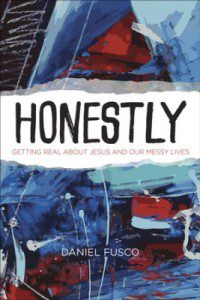
"Honestly": Riffing on Messy Lives, Jesus, and Jazz

What's The Cause Church? A Q&A with jKonrad...
TRENDING AT PATHEOS Religious Music & Entertainment

"Les Diabolique" and Transgression
Alongside something like Arrival, Vertigo, or Charade, Les Diaboliques is a...

"The Plague Dogs" and Mortality
So, flashback to the late 70s, early 80s. Walt Disney Studios is...

With the recent and highly successful release of Christopher Nolan’s epic film,...

"L'avventura" and Human Weakness
Today's piece is going to be a little different for a few...

I first want to apologize for not posting or writing anything. I'm...

I've engaged in the multi-year project of reading through the Church Fathers,...
view all Religious Music & Entertainment blogs
Ad-Free & Subscriber Log-In Subscription Support
- About Us
- 2026 Calendar
- Videos
- Podcasts
- Library of World Religions
- Faith In Media Tracker
- Advertise With Us
- Write for Us
- Privacy Policy
- Terms of Service
- Do Not Sell My Data
- Contact Us
- Radiant Digital
- Manage Newsletter Subscriptions
- Unsubscribe From Notifications
- Sitemap
Copyright 2008-2026, Patheos. All rights reserved.
Subscription Support Ad-Free & Subscriber Log-In
Follow Patheos