
BuddhistCatholicContemplativeEvangelicalGeneral ChristianHinduJewishLatter-day SaintMuslimNew VisionsProgressive Christian
Beliefs
- Buddhist
- Catholic
- Contemplative
- Evangelical
- General Christian
- Hindu
- Jewish
- Latter-day Saint
- More Voices
- Muslim
- New Visions
- Pagan
- Progressive Christian
Topics
- Religion News
- Food and Religion
- Sports and Religion
- Religious Art
- Religious Music and Entertainment
- Religious Events
- History and Religion
- Style and Religion
- Politics and Religion
- Women in Religion
- Recreation Outdoors and Religion
- Business Finance and Religion
- Careers Workplace and Religion
- Education and Religion
- Family Parenting and Religion
- Health Fitness and Religion
- Home and Religion
- Relationships and Religion
- Technology and Religion
- Travel and Religion
Columnists
- Buddhist Columnists
- Business Finance and Religion Columnists
- Careers Workplace and Religion Columnists
- Catholic Columnists
- Contemplative Columnists
- Education and Religion Columnists
- Evangelists Columnists
- Family Parenting and Religion Columnists
- General Christian Columnists
- Health Fitness and Religion Columnists
- Hindu Columnists
- History and Religion Columnists
- Home and Religion Columnists
- Jewish Columnists
- More Voices Columnists
- Latter Day Columnists
- Muslim Columnists
- New Visions Columnists
- Nonreligious Columnists
- Pagan Columnists
- Politics and Religion Columnists
- Progressive Columnists
- Recreation Outdoors and Religion Columnists
- Relationships and Religion Columnists
- Religion News Columnists
- Religious Art Columnists
- Religious Events Columnists
- Religious Music and Entertainment Columnists
- Sports and Religion Columnists
- Style and Religion Columnists
- Technology and Religion Columnists
- Travel and Religion Columnists
- Women in Religion Columnists
Resource Library
- 2026 Calendar
- Library of World Religions
- The 100 Most Holy Places on Earth
- Patheos Answers
- Podcasts
- Videos
- Faith Leaders Database
- Anglican Episcopalian
- Bahai
- Baptist
- Buddhism
- Christianity
- Confucianism
- Eastern Orthodoxy
- Hinduism
- Holiness and Pentecostal
- ISKCON
- Islam
- Judaism
- Lutheran
- Methodist
- The Church of Jesus Christ of Latter-day Saints
- New Age
- Paganism
- Presbytarian and Reformed
- Protestantism
- Religion Behind the Scenes
- Roman Catholic
- Scientology
- Shia Islam
- Sikhism
- Sufism
- Sunni Islam
- Taoism
- Zen
- See all religions
Research Tools
 Ad-Free & Subscriber Log-In Subscription Support
Ad-Free & Subscriber Log-In Subscription Support
Follow Patheos 

- Trending:
- Forgiveness
- |
- Marriage
- |
- Consciousness
- |
- Death Penalty
- |
- Election
- |
- Halloween

- Home
- Religious Music & Entertainment
- Heaven on Earth: A Q&A with Author Josh Graves
Heaven on Earth: A Q&A with Author Josh Graves
Last updated on: November 30, 2012 at 12:04 pm by Deborah Arca
Heaven on Earth: A Q&A with Author Josh Graves 2012-11-30T12:04:19-07:00 Deborah Arca
Patheos Explore the world's faith through different perspectives on religion and spirituality! Patheos has the views of the prevalent religions and spiritualities of the world.
Heaven… I’m in heaven,
And my heart beats so that I can hardly speak.
And I seem to find the happiness I seek,
When we’re out together dancing cheek to cheek.
The first lines of this popular Fred Astaire song playfully capture the desire we all have to experience the sublime joy of Heaven in this world. Wouldn’t that be grand? But what is Heaven, really? What would it look like to live in Heaven, now? A new book by Chris Seidman and Joshua Graves challenges our conventional notions of Heaven as a place far away, and invites to consider that the good life – the most beautiful life, where we’re dancing cheek to cheek – is possible in the here and now.
We caught up with co-author and pastor Josh Graves this week to learn more about his vision of Heaven on Earth, and why he’s so passionate about sharing it with others. His generous responses on what can happen when we embrace the good life Jesus invites to in this world, are below.
In your book, you’re asking us to consider a new understanding of the “kingdom of Heaven” — one that is located and happening here, on this Earth. That’s a pretty radical re-interpretation of Heaven for many Christians. What does “Heaven on Earth” mean to you?
What we are asking our readers to consider is actually old. The current view (Heaven is a harp and cloud, ghosts, and floating church services in the sky) is actually an American Christian invention that is based upon some Greek understandings of the eternal world. We are suggesting a more Jewish (Jesus was a Jew after all) reading of the New Testament (Isa. 65, Matt: 19:28, Romans 8, Rev. 21-22). We don’t pretend to know all the details of heaven as we’ve not visited “there” recently. But, we do believe that the NT affirms resurrection of a body, the melding together of all things physical and spiritual. We believe this starts with the Resurrection. That in raising Jesus from the dead, God was showing humanity her future. God will do for humanity what God did for Jesus. God will do for creation what God did for Jesus. All things new. That’s physical and spiritual. We don’t get to separate them and compartmentalize. Honestly, this is all the foundation of the book. We assume that’s true and then attempt to show why this matters. Heaven’s coming to earth. Are we ready for it?
What can happen when we shift our understanding of Heaven’s location?
I think we instantly care more about this world the more we care about heaven. I’ve found that those who care the most about the world to come care more about the world that is. C.S. Lewis called it living with “one foot in heaven and one foot on earth.” We care about bodies (hunger, sex, and abuse), creation, communities, cities—we see the whole world as the canvas on which God is painting glimpses of the new world that is on its way. Of course, the central character in heaven is God. So this isn’t simply utopia, or socialism, or whatever . . . this is about a wedding of all the things of heaven with all the things in earth. In judgment, purification, and grace, God will finally end all of the death, disease, and decay that haunt us in our human experience. We don’t have to be addicted to the fear of death because we know that God’s going to raise us just as he raised Jesus. Genesis says that creation was made “good” (several times) and it says that humans were made in God’s image and that was “very good”—we think God is going to redeem from sin, death, and corruption that which God made good and very good. And, we think that’s good news.
How did you and co-author Chris Seidman come to write this book?
Chris and I are pastors in local churches (Dallas and Nashville). We were so taken with Jesus’ genius and insight in our study of the beginning of the Sermon on the Mount that we felt compelled to share that with a larger community of people. Recent scholarship from thinkers like N.T. Wright, Glen Stassen, and Amy-Jill Levine et al has opened up Jesus’ teaching ministry in provocative ways. We simply felt a burden to connect all of this with people who are in the thick of everyday life: raising kids, working hard, experiencing pain and joy. I explored some of this in my first book, The Feast (Leafwood), but I wanted to go deeper in Jesus’ teaching. Dallas Willard says that if Jesus is divine that probably means he’s also probably the smartest human who’s ever lived. I think Willard’s right. And this book is part of the reason I believe this to be true.
How did you personally come to this new understanding of Heaven in your own life?
Reading the Bible. Seriously. Investing in Jesus. That’s it. More Christians love the Bible than they know what’s actually in it. Jesus’ central teaching was the kingdom of God. In Matthew, Mark, and Luke, Jesus mentions the kingdom over 125 times. It’s the thing he’s most passionate about. The kingdom was his gospel and his gospel had everything to do with the dimension of heaven intersecting with earth. Westerners think of heaven in terms of geography. Not so in the ancient world. Realm, spaces give to the authority of God/Satan, is the language employed. I think my view of heaven on earth is radical only in the true sense that “radical” (radix) means “back to the root.” I think my position is actually a conservative one. I think American notions of heaven (harps, clouds, and spirits floating) is actually the view that should be questioned. Again, the book builds on this, it’s not a book about what will be “like” but rather a book about what it looks like when Jesus’ way (the coming heaven) collides with this world in real time, with real people, in real spaces.
Your book also invites us to reconsider the meaning of “the good life,” in the context of the Beatitudes (Jesus’ Sermon on the Mount). What do the Beatitudes have to teach us about “the good life?”
Think about it like this. Do you remember the move Back to the Future? One of the reasons we loved this movie is that the plot messed with our understanding of past, present, and future. As Westerners we are constantly consumed with the present, immediate thing. We have to have this iPad now. We have to get the new iPhone right away. We want the relationship to be all it can be and we want it ten minutes ago. Judaism (and Christianity) teach us that the present only makes sense in light of God’s past (what God does) and God’s future (what God will do). It’s the past and future that teach us what God is doing in the world now.
So, back to Jesus . . . When Jesus is incarnated in the first century, he moved into a very specific time, place, and culture. Jesus was a Jew (he wasn’t from Cleveland). He thought, taught, dressed, and ate like a Jew. But, Jesus was from a different dimension, a different order. He literally stepped into the present in order to show us the future of God. He stepped into the present in order to show us our future as humans made in God’s image. He healed because in the future (heaven) there will be no death. He fed some because in the future there will be no hunger. He forgave because in the future there will be no power of sin. He challenged racism, sexism, and elitism because none of those values in this “world” will be values of the “world to come” and that is good news. So, the more we align ourselves with the values of Jesus’ kingdom, the more blessed we’ll be. The more we step into the future reality, the more peaceful, and joyful. There’s a particular world on its way, we can get busy living as if that’s true or we can, like a stubborn child throwing a the tantrum at the mall unwilling to get up off the floor, pretend like Jesus’ future isn’t on its way. This is why Paul said, “Every knee will bow, and every tongue confess that Jesus is Lord.” You can conform now or later. Eventually God’s going to get you. I think the first thing most people will say when the “new heavens and new earth” are revealed will be, “OH . . . this is what God was up to this whole time. I get it now. I see.”
Why do you say context is so important to understanding what Jesus was saying in the Beatitudes?
There’s a debate in American Christianity right now about right belief and right action. Some leaders are having debates about theology (which is important) while some leaders are suggesting that our action betrays our theology. You can guess these two sides don’t get along. In theological terms it’s called orthodoxy (right belief) versus orthopraxy. I think Jesus cared a lot about theology and practice but what’s most interesting to me about Jesus, and this is where Heaven on Earth enters the discussion, there was something more important than either belief or action. For Jesus, it was imagination. Jesus saw the world for what it was (in all its beauty and death) but he mostly saw the world and people for what the world and people could be; what we could become by the power of God’s Spirit. Einstein, a Jew, famously noted, that “imagination is more important than knowledge.” Imagination is about seeing. I think imagination comes first. Theology and practice follow. This is why music literally changes people—music goes for the soul. It’s not just about the heart or the head; it’s about the whole person. Jesus’ teachings in the Sermon on the Mount are really more a great album: like Rattle and Hum or the White Album.
What is the role/function of blessings in our lives? What do they demand of us?
Fundamentally, Judaism and Christianity teach that life is a gift. It’s all gift. Every day, moment, breath, joke, cup of hot chocolate, birth, conversation . . . it’s all gift. Even the tragedy and pain, if you believe in the God of the Exodus and Cross of Calvary, can be part of the beauty of life. Life is such a paradox. I don’t know how you can be a person of faith without embracing paradox (e.g. God is one but three, Jesus is fully God and fully human, the path to life is death). Life is beautiful and ugly. Life is sweet and bitter. Life is short and it’s long. Life is exciting and boring. Life is full of hope and despair. The blessing comes in living in the paradox that mourning brings comfort, that violence brings opportunity for peacemaking, that persecution brings space for faithfulness. The scandal of Christianity is not that Jesus is like God. The scandal is this: God is like Jesus. If it can’t be said of Jesus, it can no longer be said of God. The blessing of Jesus’ kingdom is in seeing and experiencing the blessing (presence, gift, power) of God in all things, in all the paradoxical moments of life.
Does your understanding of “Heaven on Earth” change your vision of “Heaven, the afterlife?” Or is this earthly Heaven all there is, in your opinion?
I want to make it clear that I don’t think anyone has “heaven” figured out. I’d be suspicious of anyone who claimed otherwise. After all, Jesus didn’t even know the “time or the hour” . . . so I think all of us theologians and preacher-types need to chill out a little bit. However, I do believe that Hebrew and Christian Bible give us a more concrete, physical, tangible, earthy view of heaven than we’ve been trained to think about. I know this for sure, God can do whatever God wants, however God wants, whenever God wants and I’m not going to object. All I’m suggesting is that most Western Christians have been more influence by Greek philosophy (dualism, distrust of the physical) than we have been influenced by the compelling narrative of Judaism and Christianity. We’ve turned Jesus into some kind of Greek teacher and not allowed him to be a rabbinic prophet.
Has the way you preach about Heaven changed since writing this book?
Not necessarily. Much of the book is birthed out of my experience of wrestling with Scripture in a local community of faith. My role in a local church has birthed this “theology” more than the other way around. This, I think, is how this is supposed to work.
Did you learn anything new about yourself in the process of writing this book?
I learned that my wife and Chris Seidman are better Christians than I am! Seriously, I love what writing does for my soul. It slows me down. It forces me to pay attention to the truth that earth is crammed with heaven. It forces me to go slower and deeper. I write and play pick-up basketball because they keep me sane. I think that’s true for artists, storytellers, runners, etc. We have to find ways to keep ourselves connected, whole. Connected to humanity and connected to what God is doing. Writing is like breathing for me. I’m close to finishing a third book project: Tearing Down the Walls: A Guide for Christians and Muslims Living in North America. Had I not co-written this book, I don’t think I would’ve done the third book. It’s about “imagination” and “ethics” and what Jesus says about racial and religious divide. I’m very excited about it because I believe it’s the logical implementation of what Chris and I wrote about
What was the hardest part about writing Heaven on Earth?
I just completed a doctorate degree and my wife (Kara) and I have two young boys. I also serve as the teaching pastor in a large church . . . the hardest part was creating the space to be able to capture the burden in my belly. I had to get this out. Lil Copan and Lauren Winner were our primary editors—they kept pushing us to focus on connecting our writing with women and men “in the trenches” . . . living life, raising kids, working hard and wanting to do it in Jesus’ name in Jesus’ ways.
Who is this book for, and what do you ultimately hope people take away from it?
Check this out: http://www.joshuagraves.com/books/heavenonearth/ — I hope this book challenges the way people see God, themselves, the world God loves. Heaven on Earth is a book for all Christians and spiritual seekers who want to go deep. This is not a fix-it-self-help-secret-to-success manifesto. It’s a book, written by two pastors and fellow pilgrims, who describe what it looks like when the life of Jesus (heaven) invades our everyday lives (earth). It’s a book about courage, suffering, forgiveness, pain, disillusionment, depression, and the deep attainable joy that is the kingdom of God message taught and lived by Jesus. Heaven on Earth is more an invitation than it is a book of compiled certitudes and explanations. An invitation to see if Jesus’ way of seeing the world might be the truest, deepest, most beautiful way of seeing. Soccer moms, C.E.O.’s, teachers, and retired war veterans are hungry for God. We can’t always name the source of our hunger, but it’s God and this book draws the hungry and thirsty closer to the source of real life. Framed by Jesus’ opening words in one of his most famous teachings, this book provides a framework for reclaiming the power of seeing a good life shaped in the image of Jesus.
Check out the Patheos Book Club for more on Heaven on Earth: Realizing the Good Life Now!
Josh Graves is co-author of Heaven on Earth and The Feast*. Josh serves as the teaching minister for the Otter Creek Church in Nashville (www.ottercreek.org). He earned a doctorate from Columbia Seminary. You can learn more about him or read his blog (www.joshuagraves.com) or follow him on twitter: https://twitter.com/joshgraves.*
Previous Post

November 29, 2012
The Hindu-ness of Rob Bell
Next Post
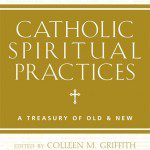
November 30, 2012 Catholic Spiritual Practices: A Treasury of Old and New
Recent Comments
1,922 Comments | Leave a Comment
Browse Our Archives
Select a Category Author Q&A Book Review Christian Living Church Leadership Stump a Scholar Theology Uncategorized
Select a Month June 2022 March 2021 October 2020 August 2020 February 2019 November 2017 July 2017 June 2017 May 2017 March 2017 February 2017 January 2017 November 2016 October 2016 August 2016 July 2016 June 2016 May 2016 April 2016 March 2016 February 2016 January 2016 November 2015 October 2015 September 2015 August 2015 July 2015 June 2015 May 2015 April 2015 March 2015 February 2015 January 2015 December 2014 November 2014 October 2014 September 2014 August 2014 July 2014 June 2014 May 2014 April 2014 March 2014 February 2014 January 2014 December 2013 November 2013 October 2013 September 2013 August 2013 July 2013 June 2013 May 2013 April 2013 March 2013 February 2013 January 2013 December 2012 November 2012 October 2012 September 2012 August 2012 July 2012 June 2012 May 2012 April 2012 March 2012 February 2012 January 2012 December 2011 November 2011 October 2011 September 2011 August 2011 July 2011 June 2011 May 2011 April 2011 March 2011 February 2011 January 2011 December 2010 November 2010 October 2010 September 2010 August 2010 July 2010 June 2010
Follow Us!
TAKE THE
Religious Wisdom Quiz
Which prophet was told to eat a scroll in a vision?
Select your answer to see how you score.
Daniel Joel Ezekiel Obadiah
Related posts from Take and Read

"The Slow March of Light" Highlights The Human...

"A Brilliant Night of Stars and Ice" Recounts...

How To Judge The Bible By Its Cover

Life is an Endless Invitation: Q&A With Rob...
TRENDING AT PATHEOS Religious Music & Entertainment

"Les Diabolique" and Transgression
Alongside something like Arrival, Vertigo, or Charade, Les Diaboliques is a...

"The Plague Dogs" and Mortality
So, flashback to the late 70s, early 80s. Walt Disney Studios is...

With the recent and highly successful release of Christopher Nolan’s epic film,...

"L'avventura" and Human Weakness
Today's piece is going to be a little different for a few...

I first want to apologize for not posting or writing anything. I'm...

I've engaged in the multi-year project of reading through the Church Fathers,...
view all Religious Music & Entertainment blogs
Ad-Free & Subscriber Log-In Subscription Support
- About Us
- 2026 Calendar
- Videos
- Podcasts
- Library of World Religions
- Faith In Media Tracker
- Advertise With Us
- Write for Us
- Privacy Policy
- Terms of Service
- Do Not Sell My Data
- Contact Us
- Radiant Digital
- Manage Newsletter Subscriptions
- Unsubscribe From Notifications
- Sitemap
Copyright 2008-2026, Patheos. All rights reserved.
Subscription Support Ad-Free & Subscriber Log-In
Follow Patheos