
BuddhistCatholicContemplativeEvangelicalGeneral ChristianHinduJewishLatter-day SaintMuslimNew VisionsProgressive Christian
Beliefs
- Buddhist
- Catholic
- Contemplative
- Evangelical
- General Christian
- Hindu
- Jewish
- Latter-day Saint
- More Voices
- Muslim
- New Visions
- Pagan
- Progressive Christian
Topics
- Religion News
- Food and Religion
- Sports and Religion
- Religious Art
- Religious Music and Entertainment
- Religious Events
- History and Religion
- Style and Religion
- Politics and Religion
- Women in Religion
- Recreation Outdoors and Religion
- Business Finance and Religion
- Careers Workplace and Religion
- Education and Religion
- Family Parenting and Religion
- Health Fitness and Religion
- Home and Religion
- Relationships and Religion
- Technology and Religion
- Travel and Religion
Columnists
- Buddhist Columnists
- Business Finance and Religion Columnists
- Careers Workplace and Religion Columnists
- Catholic Columnists
- Contemplative Columnists
- Education and Religion Columnists
- Evangelists Columnists
- Family Parenting and Religion Columnists
- General Christian Columnists
- Health Fitness and Religion Columnists
- Hindu Columnists
- History and Religion Columnists
- Home and Religion Columnists
- Jewish Columnists
- More Voices Columnists
- Latter Day Columnists
- Muslim Columnists
- New Visions Columnists
- Nonreligious Columnists
- Pagan Columnists
- Politics and Religion Columnists
- Progressive Columnists
- Recreation Outdoors and Religion Columnists
- Relationships and Religion Columnists
- Religion News Columnists
- Religious Art Columnists
- Religious Events Columnists
- Religious Music and Entertainment Columnists
- Sports and Religion Columnists
- Style and Religion Columnists
- Technology and Religion Columnists
- Travel and Religion Columnists
- Women in Religion Columnists
Resource Library
- 2026 Calendar
- Library of World Religions
- The 100 Most Holy Places on Earth
- Patheos Answers
- Podcasts
- Videos
- Faith Leaders Database
- Anglican Episcopalian
- Bahai
- Baptist
- Buddhism
- Christianity
- Confucianism
- Eastern Orthodoxy
- Hinduism
- Holiness and Pentecostal
- ISKCON
- Islam
- Judaism
- Lutheran
- Methodist
- The Church of Jesus Christ of Latter-day Saints
- New Age
- Paganism
- Presbytarian and Reformed
- Protestantism
- Religion Behind the Scenes
- Roman Catholic
- Scientology
- Shia Islam
- Sikhism
- Sufism
- Sunni Islam
- Taoism
- Zen
- See all religions
Research Tools
 Ad-Free & Subscriber Log-In Subscription Support
Ad-Free & Subscriber Log-In Subscription Support
Follow Patheos 

- Trending:
- Forgiveness
- |
- Marriage
- |
- Consciousness
- |
- Death Penalty
- |
- Election
- |
- Halloween
 Synapses of the Soul
- Home
- Catholic
- Does Your Mind Extend Into the World?
Does Your Mind Extend Into the World?
Last updated on: March 5, 2021 at 7:02 am by Synapses of the Soul
Does Your Mind Extend Into the World? 2021-03-05T07:02:04-06:00 Synapses of the Soul
Patheos Explore the world's faith through different perspectives on religion and spirituality! Patheos has the views of the prevalent religions and spiritualities of the world.
“Where does the mind stop and the rest of the world begin?” You may never have considered this question; intuitively, the answer seems obvious, and few day-to-day experiences may blur the boundary. But what if the mind and environment aren’t quite as separate as we tend to think? What if features of our external world play an active part in our mental processes? Would that mean they are a part of our minds?
The extended mind
For philosophers Andy Clark and David Chalmers, the answer is “yes”: the mind extends beyond what takes place within the head. In their seminal paper The extended mind, the two argued that aspects of the environment actively drive cognition and reasoning. For example, consider a game of tetris. As you play the game, you choose to rotate the falling shape with the press of a button in order to determine whether or not it will fit in the slot, as this physical rotation is five times faster than the corresponding mental rotation. Such an alteration of the world appears to be an active part of your cognition; if one were to remove the external component (in this case, the rotation button), your cognitive process would change or fail. Therefore, the authors conclude that cognition extends beyond the confines of the brain.
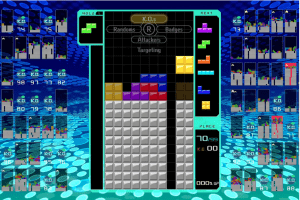
But the authors don’t stop with cognition. Instead, they take a further step and claim that mental states themselves (such as beliefs, desires, and emotions) are extended because they may involve external factors. For instance, a man on his way to a museum may remember its location only upon consulting his notebook, in which he has written the address. His ordinary memory appears to involve external objects, and therefore extends into the environment. In our modern technological world, in which there is an app for every task, examples of such extension are abundant.
The mind is not an isolated abstraction
The extended mind thesis is a refreshing change from most accounts, for it makes room for the embodied and embedded character of the cognition. The mind is not some abstract computational center confined to the head. Rather, the mind is embodied, because mental processes often depend on the structure and function of the rest of our body (perhaps especially when it comes to emotions and perceptions). And the mind is embedded, in intimate dialogue with our external environment, rather than floating in some removed state of isolation. When we draw too sharp of a boundary between the mind and ‘the rest of the world,’ we lose its embodied, embedded character.

The thesis also holds well with the biology of brain function. For instance, consider interpersonal brain synchrony. Using a cutting-edge method called ‘hyperscanning,’ which records the neural activity of two people at once, researchers have discovered that communication and cooperation leads to the inter-brain synchronisation of neural oscillations. Synchrony, in turn, appears to support empathy and perspective-taking, as well as learning. Finally, this process may play an essential role in the early development of a child’s brain. Perhaps the brain should be described as interpersonal, if it is fundamentally in dialogue with the brains of others.*
But the mind doesn’t quite extend into the world
While cognition may rely on environment factors, mental states need not extend into the world. Let’s think back to the example of the man on his way to a museum. Rather than saying that the notebook is part of his memory, we could also say that he desires to go to the museum and believes that the location is contained within the notebook. Clark and Chalmers claim this sort of explanation is ‘excessively complex.’
But I disagree, because mental states are not reducible to the part that they play in cognition. When fully explored, this brand of functionalism — which defines mental states by their functional role alone — presents a number of philosophical difficulties and contradictions. But the problem with functionalism is even more immediately apparent when approached scientifically. Neuroscience cannot study the mind as such. However, it readily distinguishes between different cognitive processes, as well as between cognitive processes and the external factors on which those processes rely. Let’s go back to memory. The act of retrieving information stored in the notebook is one of perception. The act of retrieving information stored in the mind is one of recall. Different neurobiological processes underpin these two acts, and neuroscience methods such as imaging can untangle them.
Of course, Chalmers and Clark might reply, mental states and neural states are not identical. And they would be right. But from a phenomenological perspective, as well, it does not make sense to equate perception with recall. Is there not an essential difference in the structure of the two experiences? Clark and Chalmers hold that these sorts of objections are ‘shallow’ and that they result in a ‘pointlessly complex’ account of mental states. But it’s worth asking what reality they intend to describe, then, if they subordinate both the scientific and the experiential to the conclusions they draw from their self-referential system of self-defined terms.
So what’s next?
The extended mind theory is a useful corrective to a false understanding of the mind as abstract and isolated. However, on its own, it is insufficient. Additional scientific and philosophical inquiry is needed if we are to develop a satisfying account of the mind, one that is reasonable on every level of human knowledge. The need is urgent, for we live in a world that lacks a coherent articulation of what is perhaps the most defining feature of our human existence.
*This one of the theses of the book I am currently writing.
For my regular readers: I chose today’s topic after a few readers requested more philosophy of mind content. If you appreciated it, I can do more! If you barely skimmed it because you’re only here for my hot takes on living the good life, that’s OK too! Let me know at [email protected].
As per usual, you can find my newsletter here.

About Synapses of the Soul
You can contact Sofia at [email protected]. You can read more about the author here.
Previous Post

July 6, 2020
The Dizzying Smallness of Life
Next Post

September 25, 2020 The End of Education
Browse Our Archives
Select a Category Monthly Roundup Series: Habits Uncategorized
Select a Month November 2020 October 2020 September 2020 August 2020 July 2020 June 2020 May 2020 April 2020 January 2020 December 2019 November 2019 October 2019 September 2019 August 2019 March 2019 February 2019 January 2019 December 2018 November 2018 October 2018 September 2018 August 2018
TAKE THE
Religious Wisdom Quiz
In Philemon, what does Paul call Onesimus?
Select your answer to see how you score.
My friend My helper My very heart My brother
Related posts from Synapses of the Soul


Your Life Should Cause Cognitive Dissonance


The Dizzying Smallness of Life
TRENDING AT PATHEOS Catholic

Rejecting Doom: Christian Hope And Human Action
Christianity is a religion of hope. We are to have hope and...

It’s What Comes From Within Which Matters
One of the most difficult things for us to understand is why...

Why I Choose the Eucharist Over the Sermon
Choose the Eucharist, Not the Sermon What are we supposed to get...

5 Design Elements Found in Spiritually Rooted Homes
Putting Spirituality Into Home Decor Our homes are more than our living...

Credo: A Story of God Told with the...
About 10 years ago, I began to imagine a personal "Credo" that...

The Anatomy of Divine Revelation in Catholic Thought
The claim that God has made Himself known to human beings is...
view all Catholic blogs
Ad-Free & Subscriber Log-In Subscription Support
- About Us
- 2026 Calendar
- Videos
- Podcasts
- Library of World Religions
- Faith In Media Tracker
- Advertise With Us
- Write for Us
- Privacy Policy
- Terms of Service
- Do Not Sell My Data
- Contact Us
- Radiant Digital
- Manage Newsletter Subscriptions
- Unsubscribe From Notifications
- Sitemap
Copyright 2008-2026, Patheos. All rights reserved.
Subscription Support Ad-Free & Subscriber Log-In
Follow Patheos