
BuddhistCatholicContemplativeEvangelicalGeneral ChristianHinduJewishLatter-day SaintMuslimNew VisionsProgressive Christian
Beliefs
- Buddhist
- Catholic
- Contemplative
- Evangelical
- General Christian
- Hindu
- Jewish
- Latter-day Saint
- More Voices
- Muslim
- New Visions
- Pagan
- Progressive Christian
Topics
- Religion News
- Food and Religion
- Sports and Religion
- Religious Art
- Religious Music and Entertainment
- Religious Events
- History and Religion
- Style and Religion
- Politics and Religion
- Women in Religion
- Recreation Outdoors and Religion
- Business Finance and Religion
- Careers Workplace and Religion
- Education and Religion
- Family Parenting and Religion
- Health Fitness and Religion
- Home and Religion
- Relationships and Religion
- Technology and Religion
- Travel and Religion
Columnists
- Buddhist Columnists
- Business Finance and Religion Columnists
- Careers Workplace and Religion Columnists
- Catholic Columnists
- Contemplative Columnists
- Education and Religion Columnists
- Evangelists Columnists
- Family Parenting and Religion Columnists
- General Christian Columnists
- Health Fitness and Religion Columnists
- Hindu Columnists
- History and Religion Columnists
- Home and Religion Columnists
- Jewish Columnists
- More Voices Columnists
- Latter Day Columnists
- Muslim Columnists
- New Visions Columnists
- Nonreligious Columnists
- Pagan Columnists
- Politics and Religion Columnists
- Progressive Columnists
- Recreation Outdoors and Religion Columnists
- Relationships and Religion Columnists
- Religion News Columnists
- Religious Art Columnists
- Religious Events Columnists
- Religious Music and Entertainment Columnists
- Sports and Religion Columnists
- Style and Religion Columnists
- Technology and Religion Columnists
- Travel and Religion Columnists
- Women in Religion Columnists
Resource Library
- 2026 Calendar
- Library of World Religions
- The 100 Most Holy Places on Earth
- Patheos Answers
- Podcasts
- Videos
- Faith Leaders Database
- Anglican Episcopalian
- Bahai
- Baptist
- Buddhism
- Christianity
- Confucianism
- Eastern Orthodoxy
- Hinduism
- Holiness and Pentecostal
- ISKCON
- Islam
- Judaism
- Lutheran
- Methodist
- The Church of Jesus Christ of Latter-day Saints
- New Age
- Paganism
- Presbytarian and Reformed
- Protestantism
- Religion Behind the Scenes
- Roman Catholic
- Scientology
- Shia Islam
- Sikhism
- Sufism
- Sunni Islam
- Taoism
- Zen
- See all religions
Research Tools
 Ad-Free & Subscriber Log-In Subscription Support
Ad-Free & Subscriber Log-In Subscription Support
Follow Patheos 

- Trending:
- Forgiveness
- |
- Marriage
- |
- Consciousness
- |
- Death Penalty
- |
- Election
- |
- Halloween
 Synapses of the Soul
- Home
- Catholic
- Is Most of Life Emptiness and Pain?
Is Most of Life Emptiness and Pain?
Last updated on: March 5, 2021 at 7:02 am by Synapses of the Soul
Is Most of Life Emptiness and Pain? 2021-03-05T07:02:16-06:00 Synapses of the Soul
Patheos Explore the world's faith through different perspectives on religion and spirituality! Patheos has the views of the prevalent religions and spiritualities of the world.
If you know me, you know that I like thinking about death. Not in a morbid way. No, I like it because meditating on death allows me to understand the truth and purpose of my life.
Because of this, I always look forward to Week IV of the Psalter. That week, Morning Prayer on Monday begins with one of my favorite meditations on death, Psalm 90.
O Lord… / You turn men back to dust / and say: Go back, sons of men. / To your eyes a thousand years / are like yesterday, come and gone, / no more than a watch in the night. / You sweep men away like a dream, / like the grass which springs up in the morning. / In the morning it springs up and flowers: by evening it withers and fades… Make us know the shortness of our life / that we may gain wisdom of heart.
However, there’s one line in particular that always grabs my attention. In verse 10, the psalmist writes:
Our span is seventy years, / or eighty for those who are strong. / And most of these are emptiness and pain. / They pass swiftly and we are gone.
On good days, this line makes me smile. On bad days, when I’m a bit too Nietzschean for my own good, this line gives voice to the morose nihilism of my heart.
But on all days, there’s something about this line that rings true. Most of us carry heavy burdens, hidden or visible, throughout our lives. Experiences of deep human connection, instances of true fulfillment, and moments of wonder and awe can be few and far between. Even if we never suffer from clinically diagnosable depression (MDD), most of us will experience the sorrow and emptiness described by the psalmist.
The Negativity Bias
Why do these negative experiences loom so large on the horizon of our lives?
For one, our brains are biologically driven to focus on the difficult aspects of life. Psychologists call this the negativity bias. We are more likely to notice negative events, we have better attention for negative information, and our memory for negative events is enhanced. We are even more likely to make decisions based on negative data.
In the brain, this takes shape as greater electrical activity — a higher degree of neural processing — in the cerebral cortex in response to negative stimuli. From an evolutionary standpoint, this bias makes sense: information about danger and pain is more likely to improve organism’s odds of survival than information about love and joy. In fact, the negativity bias is evident even in infants, showing that it’s deeply grounded in our biology.
So your brain is more attuned to negative, difficult, painful features of your environment. Even if this doesn’t reflect the totality of reality, you are wired to think that most of life is emptiness and pain.
The alternative of Positive Psychology
But does it have to be this way? Can we re-orient our cognitive resources toward positive events, memories, and information?
Positive psychology, the field spearheaded by Martin Seligman, tells us “Yes!” Research in this area shows that it is possible to shift your attention, change your habits, and alter your environment in order to tip the scale in your brain from negativity to positivity.
There are many ways to reinforce positivity. Practice gratitude. Express your emotions. Form strong habits of socializing, exercising, and learning every day. Notice small instances of beauty, wonder, surprise, and joy. Dwell on moments of connection and fulfillment. Repeat a mantra, prayer, or phrase that reminds you of reasons for hope and confidence. Forgive yourself, and others, for faults and failings.
In popular culture, Seligman’s work has often been reduced to a simple optimism, a blind exhortation to “look on the bright side.” But in reality, positive psychology is much more nuanced. It does not deny the presence of pain, or the reality of suffering. Rather, it demands acceptance of that pain and suffering, so that you can move into a space of hope and meaning.
A presence in the emptiness and pain
Life is hard. Often, our days are empty and painful. But life isn’t only emptiness and pain.
Our brain’s negativity bias blinds us, hardens our hearts to the positivity of reality. But our eyes can be opened, and our hearts softened. We can begin to experience life in its fullness by paying attention to all of the factors of reality, not just the negative ones.
In Psalm 90, the psalmist begs: “In the morning, let me know your love.” We can wake up this way, asking God to show us His love. We can begin each morning by begging God to show us the positivity of the life He has given us. How does God do that? By reminding us of the presence of Christ, His Son. By the Incarnation, Christ breaks into our lives again each day. We can learn to recognize the signs of His presence and His preference. Learning to recognize Jesus doesn’t take away our trials, or invalidate our suffering. Rather, it means that we are accompanied in our carrying of the Cross.
In the words of playwright Paul Claudel, “Jesus did not come to explain away suffering or remove it. He came to fill it with His presence.”
By paying attention to the positive things in life, we can see that God does in fact “give us joy to balance the affliction” (Psalm 90:15). Our emptiness is filled with His presence.

About Synapses of the Soul
You can contact Sofia at [email protected]. You can read more about the author here.
Previous Post
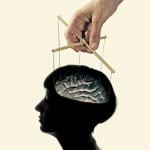
September 30, 2019
Neuroscience Does (not?) Disprove Free Will
Next Post

October 29, 2019 Can Children Flourish in our Modern Society?
Browse Our Archives
Select a Category Monthly Roundup Series: Habits Uncategorized
Select a Month November 2020 October 2020 September 2020 August 2020 July 2020 June 2020 May 2020 April 2020 January 2020 December 2019 November 2019 October 2019 September 2019 August 2019 March 2019 February 2019 January 2019 December 2018 November 2018 October 2018 September 2018 August 2018
TAKE THE
Religious Wisdom Quiz
What did Samuel's mother promise if God gave her a son?
Select your answer to see how you score.
To offer a burnt sacrifice To dedicate him to the Lord To fast for 40 days To move to Jerusalem
Related posts from Synapses of the Soul


Your Life Should Cause Cognitive Dissonance


Does Your Mind Extend Into the World?
TRENDING AT PATHEOS Catholic

Creation, Preservation, and Teleology in Catholic Theology
As I write this, it is very early Monday morning. Like millions...

The Parable Of The Sower And The Word...
One of Christ’s most famous parables is that of the sower who...

Rejecting Doom: Christian Hope And Human Action
Christianity is a religion of hope. We are to have hope and...

Why I Choose the Eucharist Over the Sermon
Choose the Eucharist, Not the Sermon What are we supposed to get...

5 Design Elements Found in Spiritually Rooted Homes
Putting Spirituality Into Home Decor Our homes are more than our living...

Credo: A Story of God Told with the...
About 10 years ago, I began to imagine a personal "Credo" that...
view all Catholic blogs
Ad-Free & Subscriber Log-In Subscription Support
- About Us
- 2026 Calendar
- Videos
- Podcasts
- Library of World Religions
- Faith In Media Tracker
- Advertise With Us
- Write for Us
- Privacy Policy
- Terms of Service
- Do Not Sell My Data
- Contact Us
- Radiant Digital
- Manage Newsletter Subscriptions
- Unsubscribe From Notifications
- Sitemap
Copyright 2008-2026, Patheos. All rights reserved.
Subscription Support Ad-Free & Subscriber Log-In
Follow Patheos