
BuddhistCatholicContemplativeEvangelicalGeneral ChristianHinduJewishLatter-day SaintMuslimNew VisionsProgressive Christian
Beliefs
- Buddhist
- Catholic
- Contemplative
- Evangelical
- General Christian
- Hindu
- Jewish
- Latter-day Saint
- More Voices
- Muslim
- New Visions
- Pagan
- Progressive Christian
Topics
- Religion News
- Food and Religion
- Sports and Religion
- Religious Art
- Religious Music and Entertainment
- Religious Events
- History and Religion
- Style and Religion
- Politics and Religion
- Women in Religion
- Recreation Outdoors and Religion
- Business Finance and Religion
- Careers Workplace and Religion
- Education and Religion
- Family Parenting and Religion
- Health Fitness and Religion
- Home and Religion
- Relationships and Religion
- Technology and Religion
- Travel and Religion
Columnists
- Buddhist Columnists
- Business Finance and Religion Columnists
- Careers Workplace and Religion Columnists
- Catholic Columnists
- Contemplative Columnists
- Education and Religion Columnists
- Evangelists Columnists
- Family Parenting and Religion Columnists
- General Christian Columnists
- Health Fitness and Religion Columnists
- Hindu Columnists
- History and Religion Columnists
- Home and Religion Columnists
- Jewish Columnists
- More Voices Columnists
- Latter Day Columnists
- Muslim Columnists
- New Visions Columnists
- Nonreligious Columnists
- Pagan Columnists
- Politics and Religion Columnists
- Progressive Columnists
- Recreation Outdoors and Religion Columnists
- Relationships and Religion Columnists
- Religion News Columnists
- Religious Art Columnists
- Religious Events Columnists
- Religious Music and Entertainment Columnists
- Sports and Religion Columnists
- Style and Religion Columnists
- Technology and Religion Columnists
- Travel and Religion Columnists
- Women in Religion Columnists
Resource Library
- 2026 Calendar
- Library of World Religions
- The 100 Most Holy Places on Earth
- Patheos Answers
- Podcasts
- Videos
- Faith Leaders Database
- Anglican Episcopalian
- Bahai
- Baptist
- Buddhism
- Christianity
- Confucianism
- Eastern Orthodoxy
- Hinduism
- Holiness and Pentecostal
- ISKCON
- Islam
- Judaism
- Lutheran
- Methodist
- The Church of Jesus Christ of Latter-day Saints
- New Age
- Paganism
- Presbytarian and Reformed
- Protestantism
- Religion Behind the Scenes
- Roman Catholic
- Scientology
- Shia Islam
- Sikhism
- Sufism
- Sunni Islam
- Taoism
- Zen
- See all religions
Research Tools
 Ad-Free & Subscriber Log-In Subscription Support
Ad-Free & Subscriber Log-In Subscription Support
Follow Patheos 

- Trending:
- Forgiveness
- |
- Marriage
- |
- Consciousness
- |
- Death Penalty
- |
- Election
- |
- Halloween
 Synapses of the Soul
- Home
- Catholic
- Habits #1: The Secret is to Start Small
Habits #1: The Secret is to Start Small
Last updated on: March 5, 2021 at 7:24 am by Synapses of the Soul
Habits #1: The Secret is to Start Small 2021-03-05T07:24:34-06:00 Synapses of the Soul
Patheos Explore the world's faith through different perspectives on religion and spirituality! Patheos has the views of the prevalent religions and spiritualities of the world.
So New Year’s Resolutions are ineffective. You may have set them anyway. But even if you didn’t, you probably still want to change and improve your personal life this year. There are virtues you want to develop, skills you want to take strengthen, and vices you want to eliminate.
In order to salvage our collective attempts at personal growth, I’m writing a series on how to effectively and efficiently build habits. This process changes your brain, rewiring connections between neurons so that you can change your thoughts and actions.
So what does neuroscience tell us about habit formation? What’s the most effective way of changing your brain?
The first (and arguably, most important) key to habit formation is to start small and be consistent. In other words, you want to build microhabits, incremental adjustments to your daily behavior.
The neuroscience of microhabits
Our brains try to resist change, because they evolved to conserve energy to keep you alive. This means that, build strong neuronal circuits, you need to take one tiny step at a time. Neuroscience research in mice shows that, when neurons are repeatedly activated in a continuous circuit, the connections between these brain cells grow strong. This makes it easier for these neurons to communicate in the future – which, as we know, allows you to express that desired behavior or action.
This process is called consolidation. Microhabits, small incremental changes to your daily behavior, take advantage of consolidation. If you try to change too quickly, this won’t happen. But through microhabits, you can gradually increase communication between neurons, so that they form a strong circuit that lasts over time.
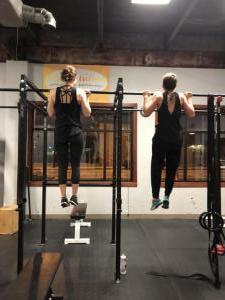
Think of the gym. To get to a pull-up, you have to start small, just hanging on the bar to build your grip strength.
You can use microhabits to get in shape, strengthen your prayer and relationships, develop gratitude, learn a new language, practice a musical instrument, stop procrastinating, cultivate honesty, and more.
How to use microhabits
To use microhabits, first identify a goal of yours. Maybe it’s to be a prayerful person. Now, make a roadmap for getting there. Maybe it’s praying the Divine Office each day.
Now, start really small. The first step toward forming a habit isn’t to commit to Lauds every day. The first step doesn’t even involve opening your breviary. No, the first step is to habitually make the Sign of the Cross.
Microhabits should be the least cognitively taxing possible; we don’t want your brain to have the chance to procrastinate, forget, or avoid the behavior.
So every morning, when you roll out of bed, just make the Sign of the Cross. It takes little to no effort, but soon enough your brain will link up those neurons to make it automatic. You will have the urge to make the Sign of the Cross in the morning. After a few weeks, when that small habit is automatic, start taking five minutes to pray. And after a couple weeks of that, add Lauds.
Because these steps are so small, you can overcome your brain’s resistance to change. And before you know it, almost effortlessly, you will have consolidated a neural circuit that underlies a habit of praying the Divine Office.
What the Saints say about microhabits (more or less)
This first key to habit formation – the use of microhabits – echoes what the Saints have modeled and preached for centuries.
St Alphonsus Liguori often exhorted his people to start small as they were building a strong foundation for their prayer life. “What does it cost us to say, ‘My God help me! Have mercy on me!’ Is there anything easier than this? And this little will suffice to save us if we be diligent in doing it.”
Pope Francis recently reiterated that all Christians are called to sanctity, and that “The path to holiness is almost always gradual, made up of small steps in prayer, in sacrifice and in service to others.” He writes that vibrant life of prayer, sacraments, and community always begins with the smallest gestures. Holiness requires sincere daily effort; it is not accomplished in a single act of heroism.
Think of Saint Therese and her “little way.” She understood the path of holiness to be comprised of the smallest steps and the most hidden sacrifices of love, that all accumulate to built you into the image of God. “Miss no single opportunity of making some small sacrifice, here by a smiling look, there by a kindly word; always doing the smallest right and doing it all for love.”
So you can see that neuroscience and theology, here, are revealing the same truth: that growth in virtue takes place through small, consistent steps.
Find the rest of this series here.
Further reading recommendations
B.J. Fogg is a leader in psychology on building habits, and his work on tiny habits is helpful for anyone trying to grow or change.
And for a great philosophical exploration of the connection between habits and the virtues, read Prof. Stanley Hauerwas’ lecture “Habit Matters: The Bodily Character of the Virtues,” given in 2012 at the The Von Hügel Institute.

About Synapses of the Soul
You can contact Sofia at [email protected]. You can read more about the author here.
Previous Post
December 30, 2018
A few recent finds
Next Post

January 10, 2019 Habits #2: Use Cues and Rewards
Recent Comments
Browse Our Archives
Select a Category Monthly Roundup Series: Habits Uncategorized
Select a Month November 2020 October 2020 September 2020 August 2020 July 2020 June 2020 May 2020 April 2020 January 2020 December 2019 November 2019 October 2019 September 2019 August 2019 March 2019 February 2019 January 2019 December 2018 November 2018 October 2018 September 2018 August 2018
TAKE THE
Religious Wisdom Quiz
I found the Book of the Law in the temple during repairs and wept when it was read to me. Who am I?
Select your answer to see how you score.
Hezekiah Josiah Joash Asa
Related posts from Synapses of the Soul


Does Your Mind Extend Into the World?
The Science of the Sacred Heart: Tender yet...
Love and Longing in the Time of Coronavirus
TRENDING AT PATHEOS Catholic

The Parable Of The Sower And The Word...
One of Christ’s most famous parables is that of the sower who...

Rejecting Doom: Christian Hope And Human Action
Christianity is a religion of hope. We are to have hope and...

Why I Choose the Eucharist Over the Sermon
Choose the Eucharist, Not the Sermon What are we supposed to get...

5 Design Elements Found in Spiritually Rooted Homes
Putting Spirituality Into Home Decor Our homes are more than our living...

Credo: A Story of God Told with the...
About 10 years ago, I began to imagine a personal "Credo" that...

The Anatomy of Divine Revelation in Catholic Thought
The claim that God has made Himself known to human beings is...
view all Catholic blogs
Ad-Free & Subscriber Log-In Subscription Support
- About Us
- 2026 Calendar
- Videos
- Podcasts
- Library of World Religions
- Faith In Media Tracker
- Advertise With Us
- Write for Us
- Privacy Policy
- Terms of Service
- Do Not Sell My Data
- Contact Us
- Radiant Digital
- Manage Newsletter Subscriptions
- Unsubscribe From Notifications
- Sitemap
Copyright 2008-2026, Patheos. All rights reserved.
Subscription Support Ad-Free & Subscriber Log-In
Follow Patheos