
BuddhistCatholicContemplativeEvangelicalGeneral ChristianHinduJewishLatter-day SaintMuslimNew VisionsProgressive Christian
Beliefs
- Buddhist
- Catholic
- Contemplative
- Evangelical
- General Christian
- Hindu
- Jewish
- Latter-day Saint
- More Voices
- Muslim
- New Visions
- Pagan
- Progressive Christian
Topics
- Religion News
- Food and Religion
- Sports and Religion
- Religious Art
- Religious Music and Entertainment
- Religious Events
- History and Religion
- Style and Religion
- Politics and Religion
- Women in Religion
- Recreation Outdoors and Religion
- Business Finance and Religion
- Careers Workplace and Religion
- Education and Religion
- Family Parenting and Religion
- Health Fitness and Religion
- Home and Religion
- Relationships and Religion
- Technology and Religion
- Travel and Religion
Columnists
- Buddhist Columnists
- Business Finance and Religion Columnists
- Careers Workplace and Religion Columnists
- Catholic Columnists
- Contemplative Columnists
- Education and Religion Columnists
- Evangelists Columnists
- Family Parenting and Religion Columnists
- General Christian Columnists
- Health Fitness and Religion Columnists
- Hindu Columnists
- History and Religion Columnists
- Home and Religion Columnists
- Jewish Columnists
- More Voices Columnists
- Latter Day Columnists
- Muslim Columnists
- New Visions Columnists
- Nonreligious Columnists
- Pagan Columnists
- Politics and Religion Columnists
- Progressive Columnists
- Recreation Outdoors and Religion Columnists
- Relationships and Religion Columnists
- Religion News Columnists
- Religious Art Columnists
- Religious Events Columnists
- Religious Music and Entertainment Columnists
- Sports and Religion Columnists
- Style and Religion Columnists
- Technology and Religion Columnists
- Travel and Religion Columnists
- Women in Religion Columnists
Resource Library
- 2026 Calendar
- Library of World Religions
- The 100 Most Holy Places on Earth
- Patheos Answers
- Podcasts
- Videos
- Faith Leaders Database
- Anglican Episcopalian
- Bahai
- Baptist
- Buddhism
- Christianity
- Confucianism
- Eastern Orthodoxy
- Hinduism
- Holiness and Pentecostal
- ISKCON
- Islam
- Judaism
- Lutheran
- Methodist
- The Church of Jesus Christ of Latter-day Saints
- New Age
- Paganism
- Presbytarian and Reformed
- Protestantism
- Religion Behind the Scenes
- Roman Catholic
- Scientology
- Shia Islam
- Sikhism
- Sufism
- Sunni Islam
- Taoism
- Zen
- See all religions
Research Tools
 Ad-Free & Subscriber Log-In Subscription Support
Ad-Free & Subscriber Log-In Subscription Support
Follow Patheos 

- Trending:
- Forgiveness
- |
- Marriage
- |
- Consciousness
- |
- Death Penalty
- |
- Election
- |
- Halloween
 Synapses of the Soul
- Home
- Catholic
- Don’t Set New Year’s Resolutions
Don’t Set New Year’s Resolutions
Last updated on: March 5, 2021 at 7:27 am by Synapses of the Soul
Don’t Set New Year’s Resolutions 2021-03-05T07:27:10-06:00 Synapses of the Soul
Patheos Explore the world's faith through different perspectives on religion and spirituality! Patheos has the views of the prevalent religions and spiritualities of the world.
Happy New Year! Many of you are likely thinking about changes you want to make in 2020. You want enhanced productivity, more consistent prayer, stronger health. And this is great, we should always be striving to align what we believe to be important with how we act on a daily basis.
But stop before you make any New Year’s resolutions. There is a better way to effect change.
Three reasons not to set New Year’s resolutions
- January 1 is an arbitrary starting point. Why pin your hopes on the start of a new year? Every morning is the beginning of a new day, and the opportunity to grow closer to who you want to be. If you only commit to positive change on January 1, you are missing out on innumerable “new beginnings” throughout the year. It’s never a wrong time to commit to being your best self.
- New Year’s Resolutions foster unhealthy competition. “What are you doing for the New Year?” Hearing about your neighbor’s weight loss plan or your coworker’s reading list can lead to comparison with your own resolutions. Not only does this distract you, it creates guilt and insecurity about your personal habits and goals.
- New Year’s Resolutions don’t work. They are just not an effective way of achieving positive personal growth. You may call to mind a wealth of anecdotal evidence, but science debunks the idea that New Year’s Resolutions are the best way to achieve change.
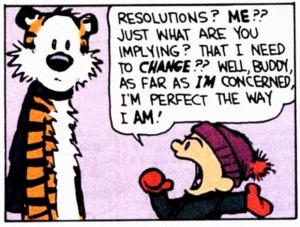
Calvin & Hobbes on New Year’s resolutions
Why we fail at your New Year’s resolutions
More than eighty percent of New Year’s Resolutions fail within six weeks. That’s the second week of February.
The reason New Year’s Resolutions don’t work is because we think about personal change all wrong. We make a single decision or commitment, and then go all out until we crash and burn. In other words, we lack patience and perspective. We try to conquer our failings all at once through single heroic acts.
Because our approach to personal change is quick and dramatic, it’s unsustainable. We fail to keep our New Year’s Resolution once, and so we quit. We don’t see results right away, so the seed of our new self dies before it can ever blossom.
This approach to habits doesn’t work because it’s incompatible with how our brain is hardwired. Using willpower and motivation for change is extremely costly from an energetic standpoint. And the number one task of our brain is to keep us alive, so it is evolutionarily designed to conserve energy at any cost. The brain is built to take the past of least resistance through life.
In other words, our brain isn’t build to use heroic willpower to stick to New Year’s Resolutions. Rather, it’s built to rely on habits. Sub-conscious thoughts and automatic actions have saved us from predators and helped us find food for millennia. Evolution loves habits, especially habits that are hard to break.
The neuroscience of habits
To understand habits, you need a little neuroscience background.
Two neighboring regions in the brain are responsible for your habitual and goal-directed actions: the dorsal lateral and dorsal medial striatum, respectively. However, the activity of these regions is regulated by the prefrontal cortex, where higher-level decisions and thoughts come into play. As you use your cortex to form a new habit, the connections between your striatal neurons change. In other words, your neural structure is re-organized to support your new habit. It’s these physical changes in your brain structure that allow personal growth.
You have 86 billion brain cells, or neurons, in your brain. Each neuron is connected in overlapping circuits. These circuits are the basis for your particular behaviors, emotions, and memories. Two neurons communicate at a gap called a synapse.
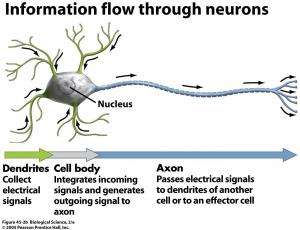
When the synapse is consistently activated, it gets bigger and stronger over time. Stronger synapses make it easier to activate the brain circuit in the future. This is a foundational doctrine in neuroscience, known as “neurons that fire together wire together.” In other words, neurons that are activated together are consolidated into circuits. This consolidation lets you learn skills, store long term memories, and form habits.
So what’s the alternative to New Year’s Resolutions?
Forming good habits is the key to flourishing; our habits constitute our character. But all too often, the narrative about personal change is all about willpower and motivation. And this is not a recipe for effective habit formation.
What’s the best approach to forming habits? How can you best form neuronal circuits that allow you to habitually choose the good?
Based on what we know about the brain, there are three key parts of habit formation. Without them, you are going to waste time and energy, because you’ll be trying to swim against the tide of neurobiology.
Find the rest of this series here.
Further reading recommendations
Aristotelian virtue ethics is a great resource if you’re thinking about habits and character. Try the Nicomachean Ethics. Even better, check out Aquinas on virtue as a habit in the Summa, 1.11 49.1-4, 55.1-2.

About Synapses of the Soul
You can contact Sofia at [email protected]. You can read more about the author here.
Previous Post

December 23, 2018
Darkness of the Solstice, Redeemed by the Nativity
Next Post

December 30, 2018 A few recent finds
Browse Our Archives
Select a Category Monthly Roundup Series: Habits Uncategorized
Select a Month November 2020 October 2020 September 2020 August 2020 July 2020 June 2020 May 2020 April 2020 January 2020 December 2019 November 2019 October 2019 September 2019 August 2019 March 2019 February 2019 January 2019 December 2018 November 2018 October 2018 September 2018 August 2018
TAKE THE
Religious Wisdom Quiz
In the Parable of the Good Samaritan, who ignored the injured man before the Samaritan helped?
Select your answer to see how you score.
A Roman soldier and a scribe A fisherman and a tax collector A farmer and a shepherd A priest and a Levite
Related posts from Synapses of the Soul

Does Your Mind Extend Into the World?

Love and Longing in the Time of Coronavirus

Discerning the Voice of the Good Shepherd
TRENDING AT PATHEOS Catholic

Rejecting Doom: Christian Hope And Human Action
Christianity is a religion of hope. We are to have hope and...

It’s What Comes From Within Which Matters
One of the most difficult things for us to understand is why...

Why I Choose the Eucharist Over the Sermon
Choose the Eucharist, Not the Sermon What are we supposed to get...

5 Design Elements Found in Spiritually Rooted Homes
Putting Spirituality Into Home Decor Our homes are more than our living...

Credo: A Story of God Told with the...
About 10 years ago, I began to imagine a personal "Credo" that...

The Anatomy of Divine Revelation in Catholic Thought
The claim that God has made Himself known to human beings is...
view all Catholic blogs
Ad-Free & Subscriber Log-In Subscription Support
- About Us
- 2026 Calendar
- Videos
- Podcasts
- Library of World Religions
- Faith In Media Tracker
- Advertise With Us
- Write for Us
- Privacy Policy
- Terms of Service
- Do Not Sell My Data
- Contact Us
- Radiant Digital
- Manage Newsletter Subscriptions
- Unsubscribe From Notifications
- Sitemap
Copyright 2008-2026, Patheos. All rights reserved.
Subscription Support Ad-Free & Subscriber Log-In
Follow Patheos