
BuddhistCatholicContemplativeEvangelicalGeneral ChristianHinduJewishLatter-day SaintMuslimNew VisionsProgressive Christian
Beliefs
- Buddhist
- Catholic
- Contemplative
- Evangelical
- General Christian
- Hindu
- Jewish
- Latter-day Saint
- More Voices
- Muslim
- New Visions
- Pagan
- Progressive Christian
Topics
- Religion News
- Food and Religion
- Sports and Religion
- Religious Art
- Religious Music and Entertainment
- Religious Events
- History and Religion
- Style and Religion
- Politics and Religion
- Women in Religion
- Recreation Outdoors and Religion
- Business Finance and Religion
- Careers Workplace and Religion
- Education and Religion
- Family Parenting and Religion
- Health Fitness and Religion
- Home and Religion
- Relationships and Religion
- Technology and Religion
- Travel and Religion
Columnists
- Buddhist Columnists
- Business Finance and Religion Columnists
- Careers Workplace and Religion Columnists
- Catholic Columnists
- Contemplative Columnists
- Education and Religion Columnists
- Evangelists Columnists
- Family Parenting and Religion Columnists
- General Christian Columnists
- Health Fitness and Religion Columnists
- Hindu Columnists
- History and Religion Columnists
- Home and Religion Columnists
- Jewish Columnists
- More Voices Columnists
- Latter Day Columnists
- Muslim Columnists
- New Visions Columnists
- Nonreligious Columnists
- Pagan Columnists
- Politics and Religion Columnists
- Progressive Columnists
- Recreation Outdoors and Religion Columnists
- Relationships and Religion Columnists
- Religion News Columnists
- Religious Art Columnists
- Religious Events Columnists
- Religious Music and Entertainment Columnists
- Sports and Religion Columnists
- Style and Religion Columnists
- Technology and Religion Columnists
- Travel and Religion Columnists
- Women in Religion Columnists
Resource Library
- 2026 Calendar
- Library of World Religions
- The 100 Most Holy Places on Earth
- Patheos Answers
- Podcasts
- Videos
- Faith Leaders Database
- Anglican Episcopalian
- Bahai
- Baptist
- Buddhism
- Christianity
- Confucianism
- Eastern Orthodoxy
- Hinduism
- Holiness and Pentecostal
- ISKCON
- Islam
- Judaism
- Lutheran
- Methodist
- The Church of Jesus Christ of Latter-day Saints
- New Age
- Paganism
- Presbytarian and Reformed
- Protestantism
- Religion Behind the Scenes
- Roman Catholic
- Scientology
- Shia Islam
- Sikhism
- Sufism
- Sunni Islam
- Taoism
- Zen
- See all religions
Research Tools
 Ad-Free & Subscriber Log-In Subscription Support
Ad-Free & Subscriber Log-In Subscription Support
Follow Patheos 

- Trending:
- Forgiveness
- |
- Marriage
- |
- Consciousness
- |
- Death Penalty
- |
- Election
- |
- Halloween
 Synapses of the Soul
- Home
- Catholic
- Actively Anticipating the Nativity
Actively Anticipating the Nativity
Last updated on: March 5, 2021 at 7:04 am by Synapses of the Soul
Actively Anticipating the Nativity 2021-03-05T07:04:09-06:00 Synapses of the Soul
Patheos Explore the world's faith through different perspectives on religion and spirituality! Patheos has the views of the prevalent religions and spiritualities of the world.
Advent is a season of preparation in joyful hope for the coming of Christ. We remember His first coming 2000 years ago, anticipate His coming in glory at the end of times, and so make our hearts ready to welcome Him in the moments of each and every day. Advent is a season of preparation.
But preparation is difficult and uncomfortable. It’s hard to listen to John the Baptist’s call to prepare the way for the Lord. It’s tempting to blindly abdicate to the pressures of our materialist society, where we are taught that the only preparation we need is checking everyone off of our Christmas shopping list.
So what does it mean to live Advent authentically? And why is it worth it?
Waiting as delayed gratification
In the face of this tension, some Catholics advocate for an Advent of delayed gratification. Just a little bit of Christmas music every day, then turn it off. Only a single Christmas party per weekend, then stay home. Learning to sometimes say no to these celebratory characteristics of the Christmas season is supposed to adequately prepare us to celebrate in fullness at Christmas. This is the way of moderation, the mean. In theory, this allows us to arrive at Christmas with hearts ready to welcome Jesus’s coming as the astonishing miracle that it is.
This echoes neuroscience research on delayed gratification. Researchers use a famous study paradigm called “the marshmallow test” to measure impulse control and gratification delay. The foundational studies in this field were conducted in the mid 20th century by Walter Mischel. Children in his lab had to choose between eating a single marshmallow immediately, or two marshmallows after a 15-minute waiting period. The experimenter would leave the room during this period, forcing the child to wait alone. From this and similar studies, we know that the ability to delay gratification is essential to health and success in every domain of life – academic, social, economic, physical. This is likely because it measures brain capacity for self-control and goal-directed behavior, what neuroscientists call “executive function.”
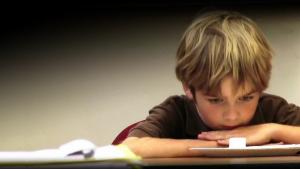
Along this line of reasoning, Advent is a time of practicing self-control and delayed gratification. By passively waiting and saying “no” to celebrations along the way, we are strengthening our executive function and preparing ourselves for Christmas.
But this is to miss the point.
Waiting as active anticipation
In this season, we do not merely say, “I would be available, Christ, if you were to come one day.” Rather, we dare to beg with urgency, Come, Lord Jesus! Come quickly!
What does this mean?
Delayed gratification is part of the season. But more importantly, Advent is a time of active anticipation. These days, the Gospel readings are full of exhortations to be vigilant (Luke 21), to do the will of the Father (Mt 7), and to approach Christ and beg Him to enter our house (Mt 8) crying out to Him to heal us (Mt 9). Far from passivity, Sacred Scripture calls us to conversion, which is the act of running toward Christ with arms outstretched.
This anticipation is active because we are confident in the promise that awaits us. We know the earth-shattering power of the Incarnation. We have tasted the goodness of the event of Christ, when we encounter Him in our everyday life. And we long for His Second Coming, because we know that His Kingdom is the fulfillment of all of our restless longing.
So we wait actively, we run toward Christ through conversion of heart, because we are certain of the promise that awaits us.
How to live Advent
So, how do we practice this active anticipation? There are three essential ways we should live this season.
-
Slow down and make room for silence
We are to cultivate joyful hope in His coming, today and at the end of time. This is impossible if we are full of clamorous noise. This noise may be coming from the busyness of a hectic work schedule, the constant stimulation of an overwhelming social life, or the addictive messages of technology. Our brains and our spirits are desperately in need of silence, of quiet, of rest from busyness, from socializing, from technology. Exterior silence allows us to notice and quiet the interior noise that might stifle the voice of the Holy Spirit in our hearts.
-
Say “yes” to discipline, not just “no” to materialist secular celebrations
We are to examine our lives and, in response to the call of John the Baptist, make our hearts ready to welcome the Lord. This demands conversion. Ask God to help you see where in your life you are closed off to Him because of selfishness, distraction, and hard-heartedness. These are “swords” that hurt others, and we are asked to turn them into “plowshares” that till our hearts to make them gentle and life-giving. Only through asceticism, fearless conversion, and self-sacrificial love will we make the soil of our hearts ready for His coming.
-
Draw close to Him in Word and in Sacrament
The beauty of the Advent season is that we know the One whom we await. He comes to us in the Sacred Scripture and in the Eucharist, to strengthen us in hope of His coming. So take advantage of the inestimable gifts He gives us. Go to Daily Mass. Adore Him in prayer. Receive His forgiveness through Confession. Contemplate His words, promises, and exhortations in the Bible.
Today, we celebrate the Solemnity of the Immaculate Conception. She is the perfect model for the season of Advent. Though she was preserved from the stain of Original Sin, her free will was not taken away. The Virgin Mother still had to make a lifetime of decisions, which built up in her a holy character, a radical love, an active anticipation of unity with God the Father. Let’s imitate her heroic virtue during this season.
Further reading recommendations
For Advent, I’m preparing with Mother Mary Francis’ Come Lord Jesus: Meditations on the Art of Waiting. It’s powerful and I highly recommend it.

About Synapses of the Soul
You can contact Sofia at [email protected]. You can read more about the author here.
Previous Post
December 6, 2018
On neuroscience and individualism in Advent
Next Post
December 13, 2018 Psychopathology or Holy Mysticism? Ron Hansen’s Mariette in Ecstasy
Browse Our Archives
Select a Category Monthly Roundup Series: Habits Uncategorized
Select a Month November 2020 October 2020 September 2020 August 2020 July 2020 June 2020 May 2020 April 2020 January 2020 December 2019 November 2019 October 2019 September 2019 August 2019 March 2019 February 2019 January 2019 December 2018 November 2018 October 2018 September 2018 August 2018
TAKE THE
Religious Wisdom Quiz
What is the name for Christian monastic orders that focus on community life and prayer?
Select your answer to see how you score.
Benedictines Pentecostals Franciscans Waldensians
Related posts from Synapses of the Soul


Your Life Should Cause Cognitive Dissonance


Does Your Mind Extend Into the World?
TRENDING AT PATHEOS Catholic

Rejecting Doom: Christian Hope And Human Action
Christianity is a religion of hope. We are to have hope and...

It’s What Comes From Within Which Matters
One of the most difficult things for us to understand is why...

Why I Choose the Eucharist Over the Sermon
Choose the Eucharist, Not the Sermon What are we supposed to get...

5 Design Elements Found in Spiritually Rooted Homes
Putting Spirituality Into Home Decor Our homes are more than our living...

Credo: A Story of God Told with the...
About 10 years ago, I began to imagine a personal "Credo" that...

The Anatomy of Divine Revelation in Catholic Thought
The claim that God has made Himself known to human beings is...
view all Catholic blogs
Ad-Free & Subscriber Log-In Subscription Support
- About Us
- 2026 Calendar
- Videos
- Podcasts
- Library of World Religions
- Faith In Media Tracker
- Advertise With Us
- Write for Us
- Privacy Policy
- Terms of Service
- Do Not Sell My Data
- Contact Us
- Radiant Digital
- Manage Newsletter Subscriptions
- Unsubscribe From Notifications
- Sitemap
Copyright 2008-2026, Patheos. All rights reserved.
Subscription Support Ad-Free & Subscriber Log-In
Follow Patheos