
BuddhistCatholicContemplativeEvangelicalGeneral ChristianHinduJewishLatter-day SaintMuslimNew VisionsProgressive Christian
Beliefs
- Buddhist
- Catholic
- Contemplative
- Evangelical
- General Christian
- Hindu
- Jewish
- Latter-day Saint
- More Voices
- Muslim
- New Visions
- Pagan
- Progressive Christian
Topics
- Religion News
- Food and Religion
- Sports and Religion
- Religious Art
- Religious Music and Entertainment
- Religious Events
- History and Religion
- Style and Religion
- Politics and Religion
- Women in Religion
- Recreation Outdoors and Religion
- Business Finance and Religion
- Careers Workplace and Religion
- Education and Religion
- Family Parenting and Religion
- Health Fitness and Religion
- Home and Religion
- Relationships and Religion
- Technology and Religion
- Travel and Religion
Columnists
- Buddhist Columnists
- Business Finance and Religion Columnists
- Careers Workplace and Religion Columnists
- Catholic Columnists
- Contemplative Columnists
- Education and Religion Columnists
- Evangelists Columnists
- Family Parenting and Religion Columnists
- General Christian Columnists
- Health Fitness and Religion Columnists
- Hindu Columnists
- History and Religion Columnists
- Home and Religion Columnists
- Jewish Columnists
- More Voices Columnists
- Latter Day Columnists
- Muslim Columnists
- New Visions Columnists
- Nonreligious Columnists
- Pagan Columnists
- Politics and Religion Columnists
- Progressive Columnists
- Recreation Outdoors and Religion Columnists
- Relationships and Religion Columnists
- Religion News Columnists
- Religious Art Columnists
- Religious Events Columnists
- Religious Music and Entertainment Columnists
- Sports and Religion Columnists
- Style and Religion Columnists
- Technology and Religion Columnists
- Travel and Religion Columnists
- Women in Religion Columnists
Resource Library
- 2026 Calendar
- Library of World Religions
- The 100 Most Holy Places on Earth
- Patheos Answers
- Podcasts
- Videos
- Faith Leaders Database
- Anglican Episcopalian
- Bahai
- Baptist
- Buddhism
- Christianity
- Confucianism
- Eastern Orthodoxy
- Hinduism
- Holiness and Pentecostal
- ISKCON
- Islam
- Judaism
- Lutheran
- Methodist
- The Church of Jesus Christ of Latter-day Saints
- New Age
- Paganism
- Presbytarian and Reformed
- Protestantism
- Religion Behind the Scenes
- Roman Catholic
- Scientology
- Shia Islam
- Sikhism
- Sufism
- Sunni Islam
- Taoism
- Zen
- See all religions
Research Tools
 Ad-Free & Subscriber Log-In Subscription Support
Ad-Free & Subscriber Log-In Subscription Support
Follow Patheos 

- Trending:
- Forgiveness
- |
- Marriage
- |
- Consciousness
- |
- Death Penalty
- |
- Election
- |
- Halloween
 Synapses of the Soul
- Home
- Catholic
- What matters in the end?
What matters in the end?
Last updated on: March 5, 2021 at 7:04 am by Synapses of the Soul
What matters in the end? 2021-03-05T07:04:16-06:00 Synapses of the Soul
Patheos Explore the world's faith through different perspectives on religion and spirituality! Patheos has the views of the prevalent religions and spiritualities of the world.
Because of modern medicine, we live longer now than any time in human history. But as we grow closer to death, medicine fails to address our human needs and desires. Ultimately, it may do more harm than good.
This is Atul Gawande’s grim conclusion in Being Mortal: Medicine and What Matters in the End. The author is a distinguished surgeon and public health specialist, and certainly believes in the importance of medicine. But he argues that, if medicine is to assist people in their old age, its focus must change.
Although I agree with his conclusions, Gawande’s analysis is problematic in a few ways.
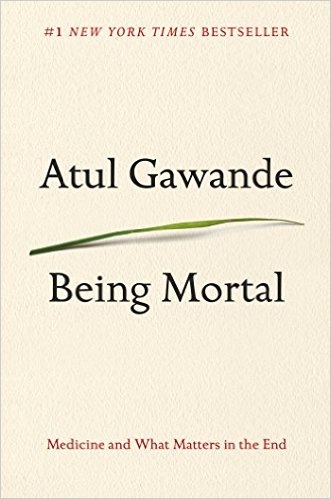
Overview of Being Mortal
Revolutionary advances in modern medicine have transformed the course of our lives, allowing us to overcome injury, childbirth, and infectious disease. However, medicinal advances cannot free us from aging and death. Microcellular problems — such as oxygen free radical damage, lipofuscin, and DNA damage — gradually accumulate, wearing the body down until it inevitably stops functioning.
Throughout this process, geriatric care can preserve what matters most to the aging individual. It can reduce her suffering, foster her dignity and agency, and strengthen her relationships.
But these ways of bolstering resilience in old age are difficult and unappealingly limited. As such, modern medicine has taken a different approach.
In nursing homes, the elderly are subject to dehumanizing restraints, a lack of spiritual and social care, and reductions in their choice and agency. In hospitals, doctors turn medical means into ends, and extend suffering in their efforts to extend life.
The assisted living movement was initially intended to create a home for the aging, where they can live with dignity and agency. It aimed to help residents with comfort, companionship, and their ability to meet their own needs. But financial and practical considerations distorted this mission. Assisted living has become just another way station on the way to a nursing home, just another part of the medicinal continuum of care.
Gawande calls for us medicine to return to humane and dignifying care. Yes, medicine should be used to extend life. But we must focus on what matters in the end, rather than just delaying that end as much as possible.
What does Being Mortal have to offer?
Throughout the book, Gawande seamlessly combines rigorous research with moving personal testimony. Drawing not only on his experience as a surgeon, but his family and community life, Gawande offers examples of ways of aging — and dying — well.
And the good news is the medicine is changing. Despite his bleak thesis, Gawande presents a number of models of care that respect the wishes and desires of the aging individual. New forms of assisted living for the disabled and aging show that medicine has much potential, when used in the right way. Such humane care offers measurable positive outcomes in the aging individual’s health, and the well-being of their family members.
Where does Gawande go wrong?
Right from the introduction, I knew I wasn’t going to be satisfied by this book. And I was right, in three ways.
1. Autonomy and independence
Gawande frames his discussion on the basis of independence and autonomy, equating them with quality of life. Everyone, even the frail, desire some measure of control over their lives. This is true, and it is not a bad thing. But Gawande writes that the desire “to retain the autonomy — and freedom — to be the authors of our lives… is the very marrow of being human.”
This is false. We are inherently relational, dependent creatures. Though we are taught by our individualistic culture – and our baser instincts – to desire total autonomy, this is not freedom. Radical independence, in my opinion, is a marker of low quality of life rather than high quality of life.
As such, being a burden to our families and communities not inherently a bad thing. It is a natural part of life, an essential part of relationship. This is especially true of the aging process, and should not be considered a medical failure. The goal of medicine, then, should not be to restore total independence and autonomy to the aging individual at all costs.
2. Keeping dignity “intact”?
Gawande writes that medicine should help the aging reach the end of their life with their dignity intact. By this, he means that medicine should work to preserve cognitive and physical capacities. He also means that medicine should not artificially extend of life’s duration at the cost of its quality. I agree with these two conclusions.
However, there is a false premise to his argument. By his exhortation to preserve the dignity of the aging, Gawande implies that one’s dignity is reduced by cognitive and physical decline, as well as by excessive artificial extension of one’s life.
I disagree. Our dignity as humans is independent of our health, and independent of the care we receive. The origin of our dignity is not in our cognitive capacities; no matter what Descartes might tell us, our essence is not a thinking thing. Our dignity is not derived from our physical health, nor can it be damaged by improper medical care.
Dignity is inherent and cannot be broken. Rather than preserving dignity, humane medical care respects it.
3. Total empiricism
Gawande appears to be a thoroughgoing empiricist, buying into the Humean understanding of the self as a mere “bundle of experiences.” He proposes that life is understood as a cumulative narrative of pleasure and pain, and that judgments about the meaning of emerge out of this collection of your experiences. Nothing larger than yourself comes into play; the only origin of meaning is “the chance to shape one’s story.”
This is a woefully inadequate understanding of the self. In particular, it neglects our deep need for transcendent meaning. This is a particularly conspicuous absence in Gawande’s work, because our need for meaning only increases as we approach death. Furthermore, suffering can be one way of finding transcendent meaning, but Gawande seems to see no value in it.
So on the whole, Being Mortal is a valuable book, but it that raises more questions than it answers.
Further Reading Recommendations
I’m in the process of reading Alasdair MacIntyre’s Dependent Rational Animals, which presents an alternative to Lockean individualism and autonomy.
For another (better, in my opinion) take on the question of life and death, I highly recommend Viktor Frankl’s Man’s Search for Meaning.

About Synapses of the Soul
You can contact Sofia at [email protected]. You can read more about the author here.
Previous Post

October 25, 2018
Depression, death and new life in autumn
Next Post

November 8, 2018 Therapy, truth, and freedom
Recent Comments
Browse Our Archives
Select a Category Monthly Roundup Series: Habits Uncategorized
Select a Month November 2020 October 2020 September 2020 August 2020 July 2020 June 2020 May 2020 April 2020 January 2020 December 2019 November 2019 October 2019 September 2019 August 2019 March 2019 February 2019 January 2019 December 2018 November 2018 October 2018 September 2018 August 2018
TAKE THE
Religious Wisdom Quiz
How many times does the book of Genesis mention "God created"?
Select your answer to see how you score.
11 5 9 7
Related posts from Synapses of the Soul


Your Life Should Cause Cognitive Dissonance


Does Your Mind Extend Into the World?
TRENDING AT PATHEOS Catholic

Rejecting Doom: Christian Hope And Human Action
Christianity is a religion of hope. We are to have hope and...

It’s What Comes From Within Which Matters
One of the most difficult things for us to understand is why...

Why I Choose the Eucharist Over the Sermon
Choose the Eucharist, Not the Sermon What are we supposed to get...

5 Design Elements Found in Spiritually Rooted Homes
Putting Spirituality Into Home Decor Our homes are more than our living...

Credo: A Story of God Told with the...
About 10 years ago, I began to imagine a personal "Credo" that...

The Anatomy of Divine Revelation in Catholic Thought
The claim that God has made Himself known to human beings is...
view all Catholic blogs
Ad-Free & Subscriber Log-In Subscription Support
- About Us
- 2026 Calendar
- Videos
- Podcasts
- Library of World Religions
- Faith In Media Tracker
- Advertise With Us
- Write for Us
- Privacy Policy
- Terms of Service
- Do Not Sell My Data
- Contact Us
- Radiant Digital
- Manage Newsletter Subscriptions
- Unsubscribe From Notifications
- Sitemap
Copyright 2008-2026, Patheos. All rights reserved.
Subscription Support Ad-Free & Subscriber Log-In
Follow Patheos