
BuddhistCatholicContemplativeEvangelicalGeneral ChristianHinduJewishLatter-day SaintMuslimNew VisionsProgressive Christian
Beliefs
- Buddhist
- Catholic
- Contemplative
- Evangelical
- General Christian
- Hindu
- Jewish
- Latter-day Saint
- More Voices
- Muslim
- New Visions
- Pagan
- Progressive Christian
Topics
- Religion News
- Food and Religion
- Sports and Religion
- Religious Art
- Religious Music and Entertainment
- Religious Events
- History and Religion
- Style and Religion
- Politics and Religion
- Women in Religion
- Recreation Outdoors and Religion
- Business Finance and Religion
- Careers Workplace and Religion
- Education and Religion
- Family Parenting and Religion
- Health Fitness and Religion
- Home and Religion
- Relationships and Religion
- Technology and Religion
- Travel and Religion
Columnists
- Buddhist Columnists
- Business Finance and Religion Columnists
- Careers Workplace and Religion Columnists
- Catholic Columnists
- Contemplative Columnists
- Education and Religion Columnists
- Evangelists Columnists
- Family Parenting and Religion Columnists
- General Christian Columnists
- Health Fitness and Religion Columnists
- Hindu Columnists
- History and Religion Columnists
- Home and Religion Columnists
- Jewish Columnists
- More Voices Columnists
- Latter Day Columnists
- Muslim Columnists
- New Visions Columnists
- Nonreligious Columnists
- Pagan Columnists
- Politics and Religion Columnists
- Progressive Columnists
- Recreation Outdoors and Religion Columnists
- Relationships and Religion Columnists
- Religion News Columnists
- Religious Art Columnists
- Religious Events Columnists
- Religious Music and Entertainment Columnists
- Sports and Religion Columnists
- Style and Religion Columnists
- Technology and Religion Columnists
- Travel and Religion Columnists
- Women in Religion Columnists
Resource Library
- 2026 Calendar
- Library of World Religions
- The 100 Most Holy Places on Earth
- Patheos Answers
- Podcasts
- Videos
- Faith Leaders Database
- Anglican Episcopalian
- Bahai
- Baptist
- Buddhism
- Christianity
- Confucianism
- Eastern Orthodoxy
- Hinduism
- Holiness and Pentecostal
- ISKCON
- Islam
- Judaism
- Lutheran
- Methodist
- The Church of Jesus Christ of Latter-day Saints
- New Age
- Paganism
- Presbytarian and Reformed
- Protestantism
- Religion Behind the Scenes
- Roman Catholic
- Scientology
- Shia Islam
- Sikhism
- Sufism
- Sunni Islam
- Taoism
- Zen
- See all religions
Research Tools
 Ad-Free & Subscriber Log-In Subscription Support
Ad-Free & Subscriber Log-In Subscription Support
Follow Patheos 

- Trending:
- Forgiveness
- |
- Marriage
- |
- Consciousness
- |
- Death Penalty
- |
- Election
- |
- Halloween
 Synapses of the Soul
- Home
- Catholic
- The psychology and spirituality of climate change (part one)
The psychology and spirituality of climate change (part one)
Last updated on: March 5, 2021 at 7:04 am by Synapses of the Soul
The psychology and spirituality of climate change (part one) 2021-03-05T07:04:19-06:00 Synapses of the Soul
Patheos Explore the world's faith through different perspectives on religion and spirituality! Patheos has the views of the prevalent religions and spiritualities of the world.
On Monday, climate scientists from the UN’s Intergovernmental Panel on Climate Change (IPCC) released a special report on global warming.
Just another report on climate change, right?
Wrong. If previous reports were like alarm clocks, this one is a nuclear warning siren.
It cites more than 6,000 scientific papers, and fielded contributions from thousands of experts and government reviewers worldwide. The key message: we are already seeing drastic effects from a 1 degree C rise in global temperature, and if this rises beyond 1.5 degrees, the effects will be irreversible and extreme.
In 2015, world leaders formed the Paris Agreement in order to limit global warming to under 2 degrees Celsius, but also committed to measures that would limit it to 1.5 degrees.
But this new report shows that, in order to keep global warming to 1.5 degrees, human emissions of CO2 fall to zero by the year 2050. This is a dauntingly fast and dramatic change. It would require replacing fossil fuels with renewable energy, and developing effective technologies to suck CO2 out of the atmosphere – all within the next three decades.
There is no question about their results. The only question is how to communicate the gravity of our situation to the non-scientific public. In the words of Kaisa Kosonen, an observer at the negotiations, “Scientists might want to write in capital letters, ‘ACT NOW, IDIOTS,’ but they need to say that with facts and numbers.”
As severe as our predicament is, the authors think action against climate change is feasible. Certainly, it would be less expensive than coping with the disastrous effects of global warming. These effects include sea level rise and flooding, infectious disease, the destruction of coral reefs and species extinction, droughts, hurricanes and landslides. As with many world problems, the effects are disproportionately borne by marginalized and impoverished communities.
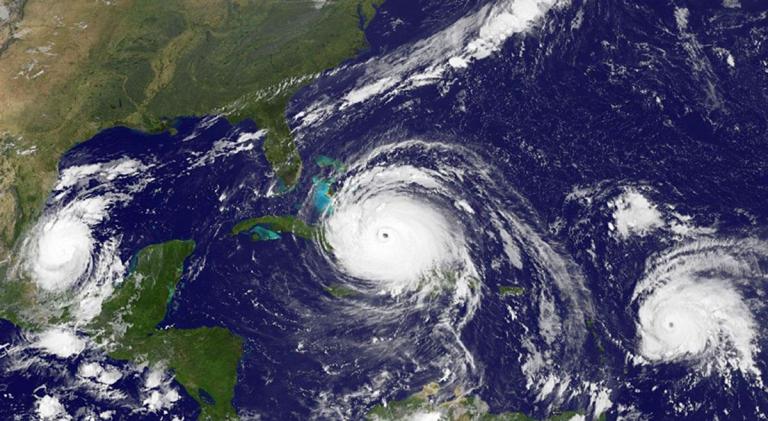
Image from National Oceanic and Atmospheric Administration.
How did we get here?
That’s a great question.
The the current global average temperature is 1 degree C higher than it was before the industrial revolution. Climate scientists believe human activities are the main cause of the warming. This is because human action has led to rapidly rising emissions of greenhouse gasses. Deforestation, the burning of fossil fuels, an increase in livestock farming, and the use of nitrogen fertilizers are primary culprits.
But this historical account doesn’t explain why. Why is it so hard to fight climate change. We fixed the hole in the ozone, so why can’t we cool the planet?
First of all, the activities that release greenhouse gases are deeply embedded in our modern life. The reduction of greenhouse gas emissions requires significant changes in the most fundamental aspects of our life – our work, recreation, travel, and even food and drink.

Image from Pexels.
Secondly, most of the impacts fall on future generations or people living in developing nations. This decreases our incentive to take action, because we do not bear the negative externalities of our lifestyle. Furthermore, we are shaped by Western individualistic norms to think primarily about our own self-interest instead of the common good.
Perhaps more importantly, our brains are wired to ignore climate change. For instance, delay discounting is the decline in the value of a reward based on how long it will take to achieve it. Because a healthy climate is a remote goal, it is subject to this bias. We also fall victim to the planning fallacy, the tendency to underestimate the risk and cost of a course of action (by about 40%!). The bystander effect explains why we believe others will take action, and it’s not up to us to implement change. Finally, the ostrich effect allows us to ignore the obvious disaster that awaits.
What must our response be? In society, in the Church, and in our lives, what do we do?
Check back on Sunday for part two.
Further reading recommendations
Nobel Laureate William Nordhaus wrote an incredible book called The Climate Casino, in which he analyzes the politics and economics of climate change and suggests feasible solutions.

About Synapses of the Soul
You can contact Sofia at [email protected]. You can read more about the author here.
Previous Post

October 7, 2018
Seeing in grey and white matter
Next Post
October 14, 2018 The psychology and spirituality of climate change (part two)
Browse Our Archives
Select a Category Monthly Roundup Series: Habits Uncategorized
Select a Month November 2020 October 2020 September 2020 August 2020 July 2020 June 2020 May 2020 April 2020 January 2020 December 2019 November 2019 October 2019 September 2019 August 2019 March 2019 February 2019 January 2019 December 2018 November 2018 October 2018 September 2018 August 2018
TAKE THE
Religious Wisdom Quiz
What does the Hebrew title for Psalms, "Tehillim," mean?
Select your answer to see how you score.
Praises Poems Wisdom Prayers
Related posts from Synapses of the Soul


Your Life Should Cause Cognitive Dissonance


Does Your Mind Extend Into the World?
TRENDING AT PATHEOS Catholic

Rejecting Doom: Christian Hope And Human Action
Christianity is a religion of hope. We are to have hope and...

It’s What Comes From Within Which Matters
One of the most difficult things for us to understand is why...

Why I Choose the Eucharist Over the Sermon
Choose the Eucharist, Not the Sermon What are we supposed to get...

5 Design Elements Found in Spiritually Rooted Homes
Putting Spirituality Into Home Decor Our homes are more than our living...

Credo: A Story of God Told with the...
About 10 years ago, I began to imagine a personal "Credo" that...

The Anatomy of Divine Revelation in Catholic Thought
The claim that God has made Himself known to human beings is...
view all Catholic blogs
Ad-Free & Subscriber Log-In Subscription Support
- About Us
- 2026 Calendar
- Videos
- Podcasts
- Library of World Religions
- Faith In Media Tracker
- Advertise With Us
- Write for Us
- Privacy Policy
- Terms of Service
- Do Not Sell My Data
- Contact Us
- Radiant Digital
- Manage Newsletter Subscriptions
- Unsubscribe From Notifications
- Sitemap
Copyright 2008-2026, Patheos. All rights reserved.
Subscription Support Ad-Free & Subscriber Log-In
Follow Patheos