
BuddhistCatholicContemplativeEvangelicalGeneral ChristianHinduJewishLatter-day SaintMuslimNew VisionsProgressive Christian
Beliefs
- Buddhist
- Catholic
- Contemplative
- Evangelical
- General Christian
- Hindu
- Jewish
- Latter-day Saint
- More Voices
- Muslim
- New Visions
- Pagan
- Progressive Christian
Topics
- Religion News
- Food and Religion
- Sports and Religion
- Religious Art
- Religious Music and Entertainment
- Religious Events
- History and Religion
- Style and Religion
- Politics and Religion
- Women in Religion
- Recreation Outdoors and Religion
- Business Finance and Religion
- Careers Workplace and Religion
- Education and Religion
- Family Parenting and Religion
- Health Fitness and Religion
- Home and Religion
- Relationships and Religion
- Technology and Religion
- Travel and Religion
Columnists
- Buddhist Columnists
- Business Finance and Religion Columnists
- Careers Workplace and Religion Columnists
- Catholic Columnists
- Contemplative Columnists
- Education and Religion Columnists
- Evangelists Columnists
- Family Parenting and Religion Columnists
- General Christian Columnists
- Health Fitness and Religion Columnists
- Hindu Columnists
- History and Religion Columnists
- Home and Religion Columnists
- Jewish Columnists
- More Voices Columnists
- Latter Day Columnists
- Muslim Columnists
- New Visions Columnists
- Nonreligious Columnists
- Pagan Columnists
- Politics and Religion Columnists
- Progressive Columnists
- Recreation Outdoors and Religion Columnists
- Relationships and Religion Columnists
- Religion News Columnists
- Religious Art Columnists
- Religious Events Columnists
- Religious Music and Entertainment Columnists
- Sports and Religion Columnists
- Style and Religion Columnists
- Technology and Religion Columnists
- Travel and Religion Columnists
- Women in Religion Columnists
Resource Library
- 2026 Calendar
- Library of World Religions
- The 100 Most Holy Places on Earth
- Patheos Answers
- Podcasts
- Videos
- Faith Leaders Database
- Anglican Episcopalian
- Bahai
- Baptist
- Buddhism
- Christianity
- Confucianism
- Eastern Orthodoxy
- Hinduism
- Holiness and Pentecostal
- ISKCON
- Islam
- Judaism
- Lutheran
- Methodist
- The Church of Jesus Christ of Latter-day Saints
- New Age
- Paganism
- Presbytarian and Reformed
- Protestantism
- Religion Behind the Scenes
- Roman Catholic
- Scientology
- Shia Islam
- Sikhism
- Sufism
- Sunni Islam
- Taoism
- Zen
- See all religions
Research Tools
 Ad-Free & Subscriber Log-In Subscription Support
Ad-Free & Subscriber Log-In Subscription Support
Follow Patheos 

- Trending:
- Forgiveness
- |
- Marriage
- |
- Consciousness
- |
- Death Penalty
- |
- Election
- |
- Halloween

- Home
- General Christian
- Religion News
- Devout: a Book Review
Devout: a Book Review
Last updated on: November 29, 2024 at 7:58 am by Joel Furches
Devout: a Book Review 2024-11-22T14:23:04-05:00 Joel Furches
Patheos Explore the world's faith through different perspectives on religion and spirituality! Patheos has the views of the prevalent religions and spiritualities of the world.

The 2024 book Devout by first-time published author Anna Gazmarian is an autobiography exploring her journey of doubt and discovery through the faith of her childhood in light of her struggles with mental illness. While the book is entirely autobiographical, with no overt attempts to draw lessons or meaning which might be applicable to the reader, it does follow three themes: faith, mental illness, and creative writing.
Synopsis
Anna grew up in the church, but as she began to experience swings in emotion and difficulty with focus or drive to accomplish everyday tasks, she sought out counseling. At first, she went to the church for counseling, and was given the sorts of trite and reductive answers one expects from a church: her problems were spiritual. She needed to read her Bible and pray. Counselors and well-meaning church members would pray over her or offer scriptures of encouragement. But none of it seemed to help, and it all became a bit cloying and cliché for her.
Seeking out professional help, Anna was diagnosed with a form of bipolar disorder. She was placed on a regimen of medications, all of which would work for a time before her manic and depressive symptoms would break through and she would be back in the same spot.
Anna ended up moving from place to place in her home state of North Carolina, pursuing higher education at various places, meeting and then losing friends and romantic partners. During this transient period, she became less and less interested in finding church environments. However, upon attending a church during one of her more steady periods of life, she met her future husband. She was drawn to him and initiated a creative and indirect kind of flirtation. It took some time, but the two of them began hanging out, then dating, and eventually marrying.
Her new life of matrimony did not overcome her mental health struggles, and it turned out that her husband had a few depressive symptoms of his own. But the two of them continued to support one another, and he found work sufficient to send her to college.
In college, she pursued courses in creative writing and poetry, and this deep interest in writing and poetry became central to her identity such that her identity tiers went something like: Poet, then Student, then Bipolar, then Wife, with her identity as Christian taking a back seat.
However, early in their marriage, she and her husband found a church whose ministers and many members also suffered from mental health conditions. The church spoke of mental health very openly, and was very welcoming and supportive to members who suffered as they did. It was within this environment that Anna finally found a spiritual home, and her poetry and writing began to drift their focus back toward her Christian roots.
Anna eventually found more stabilizing treatment and though, while not cured of her difficulties, was much better off than she had been for most of her life.
The story ends with some news for her and her husband which brought both joy and challenges for their shared future.
Impressions
I am a researcher of Christian conversion and deconversion. While this book was broadly adjacent to my area of research, it doesn’t actually contain any conversion or deconversion. Growing up in the church, as so many Christians do, Anna never undergoes a deeply significant conversion experience, and instead struggles and eventually finds a form of faith-practice as well as a religious community which best suits her emotional and spiritual needs.
While she alludes to something akin to “spiritual abuse,” this area of her story got buried in all of the biographical details such as her search for viable medical treatments, her experiences in higher education, her dating life, and eventually her marriage and pregnancy.
Despite her rather severe mental health struggles, the story follows an upward trajectory with a happy ending, wherein she expresses deep content with her husband, child, and personal Christian faith.
There is nothing approaching a full deconversion, or even necessarily “deconstruction” in the popular religious sense of that word.
The spiritual struggle in this book seems to be primarily about the church’s inability to appropriately address her mental health needs, with various members trying to lob trite snippets of scripture at her, console her with tired Christian clichés, and generally fail to support her in ways she found to be helpful.
Worth mentioning, however, is that her impression of the church was at its worst when her mental health was at its most unstable. As various treatments gradually stabilized her mental health near the end of the book, her relationship with her new church and her idea of faith also stabilized. This is not an attempt to let the church in which she started off the hook, but from an empirical standpoint, it is difficult to determine how much of her struggle was directly inflicted by the church versus the perception of the world through the lens of her neurological condition.
The church in which she finds herself at home near the end of the story places a heavy emphasis on mental health, with many of the members struggling with various mental health difficulties of their own, sharing their struggles and supporting one another in the process.
The book’s author has her degree in creative writing (a topic explored extensively in the story) which is probably the impetus for her to write the book in the first place.
As for her religious journey, she appears to have begun in a generally fundamentalist southern church and ended in a heterodox, modernized, non-denominational church.
How is the Book?
As the holder of a degree in creative writing, Anna writes in a relatable, readable, and very genuine way. The book is probably best suited to a Christian audience, especially those who have undergone some disappointment or frustration with their church, or with people who have suffered mental health challenges in their own lives.
Unlike many of the autobiographies I have read on the subject of faith struggles, Anna’s does not contain a tone of bitterness or accusation. Also unlike other books of its kind, this script ends on a positive and very hopeful note, making it not merely a pleasant read, but also an uplifting read as well. The book is something of a personal theodicy, wherein a struggling Christian has to directly confront and struggle with the difficulties of the real world and reconcile them with her religious beliefs.
Anna’s book is not overly long, nor is it preachy (either in favor of or against Christianity), making it a quick and comfortable read.

About Joel Furches
Joel Furches is a writer, educator, journalist, and researcher who has written extensively on subjects related to religion and Christianity specifically. Joel has a Master's Degree in education, academic training and experience in Applied Behavioral Psychology, and is pursuing a Ph.D. in psychology with his dissertation on religious deconversion. You can read more about the author here.
Previous Post
November 21, 2024
Book Review: Deconstructing, Leaving Church, Finding Faith
Next Post
December 17, 2024 Complex Simplicity - A Book Review
Recent Comments
Browse Our Archives
Select a Category biography Conversion Stories Deconversion Stories Historical Religious Figures Psychology Uncategorized
Select a Month December 2024 November 2024 September 2024 August 2024 July 2024 March 2024 January 2024 December 2023 November 2023 October 2023 September 2023 August 2023 July 2023 June 2023 May 2023 April 2023 March 2023 February 2023 January 2023 December 2022 November 2022 October 2022 September 2022
Follow Us!
TAKE THE
Religious Wisdom Quiz
True or False: John's Gospel does not record any parables.
Select your answer to see how you score.
FALSE TRUE
Related posts from Switching Sides

Complex Simplicity - A Book Review
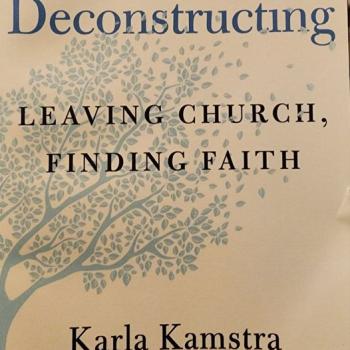
Book Review: Deconstructing, Leaving Church, Finding Faith

Consequences of Ideas: Philosophy and Deconversion
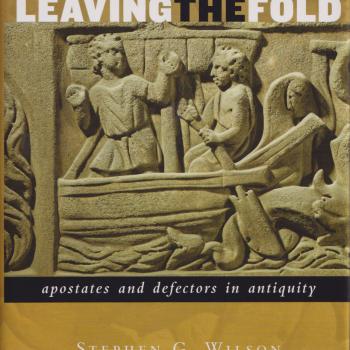
Deconversion in the Ancient World: The Research
TRENDING AT PATHEOS General Christian

Seventy and Five Years Old: God Still Starts...
There is a small detail tucked into Genesis 12 that I skipped...

A Biblical Vision of Success in Christian Life...
The Concern and Quest Recent trends and tendencies I note around me...

Indigenous Peoples’ Day and the Church
Indigenous' Peoples Day or Columbus Day? Depending on where you live...

When Spiritual Growth Looks Like Losing Ground
Four Passive Spiritual Disciplines: An Introduction When I was a college freshman,...

Faith and Finding Your Current Season
“To everything there is a season,” Ecclesiastes tells us, “and a time...

Did Jesus Fear God's Wrath in Gethsemane?
That Time Jesus Was Terrified Before we begin, let me say at...
view all General Christian blogs
What Are Your Thoughts?leave a comment
Ad-Free & Subscriber Log-In Subscription Support
- About Us
- 2026 Calendar
- Videos
- Podcasts
- Library of World Religions
- Faith In Media Tracker
- Advertise With Us
- Write for Us
- Privacy Policy
- Terms of Service
- Do Not Sell My Data
- Contact Us
- Radiant Digital
- Manage Newsletter Subscriptions
- Unsubscribe From Notifications
- Sitemap
Copyright 2008-2026, Patheos. All rights reserved.
Subscription Support Ad-Free & Subscriber Log-In
Follow Patheos