
BuddhistCatholicContemplativeEvangelicalGeneral ChristianHinduJewishLatter-day SaintMuslimNew VisionsProgressive Christian
Beliefs
- Buddhist
- Catholic
- Contemplative
- Evangelical
- General Christian
- Hindu
- Jewish
- Latter-day Saint
- More Voices
- Muslim
- New Visions
- Pagan
- Progressive Christian
Topics
- Religion News
- Food and Religion
- Sports and Religion
- Religious Art
- Religious Music and Entertainment
- Religious Events
- History and Religion
- Style and Religion
- Politics and Religion
- Women in Religion
- Recreation Outdoors and Religion
- Business Finance and Religion
- Careers Workplace and Religion
- Education and Religion
- Family Parenting and Religion
- Health Fitness and Religion
- Home and Religion
- Relationships and Religion
- Technology and Religion
- Travel and Religion
Columnists
- Buddhist Columnists
- Business Finance and Religion Columnists
- Careers Workplace and Religion Columnists
- Catholic Columnists
- Contemplative Columnists
- Education and Religion Columnists
- Evangelists Columnists
- Family Parenting and Religion Columnists
- General Christian Columnists
- Health Fitness and Religion Columnists
- Hindu Columnists
- History and Religion Columnists
- Home and Religion Columnists
- Jewish Columnists
- More Voices Columnists
- Latter Day Columnists
- Muslim Columnists
- New Visions Columnists
- Nonreligious Columnists
- Pagan Columnists
- Politics and Religion Columnists
- Progressive Columnists
- Recreation Outdoors and Religion Columnists
- Relationships and Religion Columnists
- Religion News Columnists
- Religious Art Columnists
- Religious Events Columnists
- Religious Music and Entertainment Columnists
- Sports and Religion Columnists
- Style and Religion Columnists
- Technology and Religion Columnists
- Travel and Religion Columnists
- Women in Religion Columnists
Resource Library
- 2026 Calendar
- Library of World Religions
- The 100 Most Holy Places on Earth
- Patheos Answers
- Podcasts
- Videos
- Faith Leaders Database
- Anglican Episcopalian
- Bahai
- Baptist
- Buddhism
- Christianity
- Confucianism
- Eastern Orthodoxy
- Hinduism
- Holiness and Pentecostal
- ISKCON
- Islam
- Judaism
- Lutheran
- Methodist
- The Church of Jesus Christ of Latter-day Saints
- New Age
- Paganism
- Presbytarian and Reformed
- Protestantism
- Religion Behind the Scenes
- Roman Catholic
- Scientology
- Shia Islam
- Sikhism
- Sufism
- Sunni Islam
- Taoism
- Zen
- See all religions
Research Tools
 Ad-Free & Subscriber Log-In Subscription Support
Ad-Free & Subscriber Log-In Subscription Support
Follow Patheos 

- Trending:
- Forgiveness
- |
- Marriage
- |
- Consciousness
- |
- Death Penalty
- |
- Election
- |
- Halloween

- Home
- General Christian
- Religion News
- Conversion, Deconversion, and Initiation Ceremonies
Conversion, Deconversion, and Initiation Ceremonies
Last updated on: July 9, 2024 at 3:06 pm by Joel Furches
Conversion, Deconversion, and Initiation Ceremonies 2024-07-09T15:06:37-04:00 Joel Furches
Patheos Explore the world's faith through different perspectives on religion and spirituality! Patheos has the views of the prevalent religions and spiritualities of the world.

Conversion
Within Christianity, there is a theological and social concept called “conversion.” In the mind of most Christian, there exists a demarcation line in time that represents the moment in which a person is “saved.” So that, if the person were to die a second prior to this moment in time, that person would go to hell, but if the person were to die the next second after, he or she would go to heaven.
The social sciences, however, do not have access to the hearts and minds of a person. Consequently, giving an anthropological definition of conversion becomes a bit more complicated.
For instance, if a man walks into his therapist’s office and says, “I just got saved! I’m a Christian now!” the therapist is treating this guy for his emotions and thinking. The only thing the therapist is going to be interested in is, how does this new development affect the client? If nothing changes, this is not much different than him telling the therapist that he had an egg-salad sandwich for lunch.
On a larger scale, if an anthropologist were studying a village in Peru, all of whom worshiped Quetzalcoatl, and then a missionary comes in and many of them begin attending Sunday school, the anthropologist must ask the question, “have these people converted to Christianity?” Maybe they have. Or maybe they simply have nothing better to do on Sunday mornings.
In the social sciences, one must ask, “What does it mean to be ‘converted’ and how can you say that a person or people group have ‘converted’?”
It’s more complicated than it might seem.
There are two popular models used within the social sciences to represent conversion. The first of these is the Gerlach and Hines model. It has seven stages a person must complete in order to be converted. They are:
- The initial contact with a religious person
- A focus on the person’s needs. This would be like the sales tactic where you demonstrate the customer has a need that requires some kind of solution.
- Interacting with the religious group which results in some kind of understanding of how the religion works.
- The Decision and surrender of that person.
- A “Commitment event”
- Testifying to the experience
- Group support for the change
In the average Christian mind, the person is probably “saved” at around step four: the “decision and surrender” stage.
A sociologist, however, would not be satisfied there. He or she would want to see the person commit, and incorporate into the group.
This next model is apparently the standard model across the board. It’s the most frequently cited in studies on religion and religious conversion. This is the celebrated Lofland and Stark model. It also has seven stages and looks like this:
- First, the person is experiencing some kind of enduring, and acutely felt tensions. This is like step 2 in the last model, except this time, it’s not the religious person trying to sell them on their problems. This person has problems, and they know it.
- Now the person is looking for solutions within a religious problem-solving perspective. Now we can sort of compare this to the last model again. The person has a problem. Maybe they are already aware of it, or a religious person sells them on it, but either way, they are looking to religion as a possible solution.
- After looking into religion – either superficially or in earnest – the person begins thinking of his or herself as a religious seeker. If one were to interview the person at this stage, he or she might say he or she is “spiritual person,” or begin telling the interviewer interesting things about religion. The person has not committed, but he or she has adopted an identity as being a “seeker.”
- At stage four, Lofland and Stark say the person has “Encounter a D.P. [Divine Precepts] at a turning point in life.” What does that mean? It is a moment of epiphany. Seekers have an “Oh THAT’S what they’re saying,” kind of moment where they suddenly understand something about the religion that kind of strikes a cord with them. So first, they have to “get it,” and secondly, it has to really speak to their interests and needs at that particular moment.
- At stage five, the person forms a bond with another convert. The model says the bond might form at this point, or pre-exist, but the bond must be there after the epiphany moment.
- At stage six, all of their other interests and attachments become dissolved or at a lower priority. Suddenly religion is of top shelf importance.
- In the last stage, the person begins heavy interaction with the religious community. This becomes their main social group, if you will.
The thing that really stands out in the literature on conversion is a focus on community. One can sit up in one’s cabin in the woods reading one’s bible and spending time in prayer, but at the end of the day, a scientist isn’t going to really consider this person a convert unless he or she is hanging out with the rest of the group participating in religious activities. And this is not without some results.
It is frequently suggested that divorce rates among Christians are just as bad as those experienced by non-Christians, however those statistics don’t hold if one accounts for church attendance. The less a family attends church, the higher their divorce rates are. The more heavily involved they are in church, the further the divorce rates drop. There are data that suggest that higher church attendance is linked to better mental and physical health. Ultimately, participation in the church community makes a significant difference, and is one of the defining factors social scientists look for in conversion.
Initiations
Initiation rituals are quite important in society. If a person joins a sorority, there is typically an initiation ritual. The same is true of societies such as the Freemasons and even street gangs. These sorts of initiation rituals are important to both the person and the group, because they mark a point when the person moves from “not one of us” to “one of us.”
The Jewish Rite of Initiation
The Jewish rite of initiation, circumcision, is different than most religions. This stands apart because Judaism is both a race and a religion. Meaning one can be circumcised, making that person part of the Jewish people, and then later become an atheist. The person still has physical evidence that he is a Jew, but he does not participate in the religion associated with Jews.
The Christian Initiation
When a person joins Christianity, that person is typically expected to undergo baptism at some point.
Among Christians, Baptism can be a point of disagreement. It’s significance in terms of spiritual salvation is a matter of debate, as is the interval and age at which the baptism must occur. Viewed as a rite of initiation, however, baptism makes much more sense in the process of entering the religion.
Children who are raised in a Christian family within the context of a Christian church are part of that community. So, some kind of ceremony signifying that they are part of that community doesn’t seem inappropriate for the community. Some churches do dedication ceremonies. Others hold a ceremony of baptism and then give out a certificate which they keep on record. This is especially true of European churches, because the church is something associated with the nation. It becomes a matter of national identity to go through the Anglican baptism, for instance.
But as an adult, a person might want to go through an initiation ceremony because they want to take a more volitional role in the community. They are no longer being raised in the community, they are now an active part of the community.
“Exit Ceremonies”
One of the difficulties experienced by people who have moved from religion to atheism is the loss of community. Research tends to indicate that it the community that rejects the person, not the other way around. Some undergo an experienced known as “shunning.” And apparently this happens in a lot of different religious communities, although Latter Day Saints and Jehovah’s Witnesses are best known for this.
Either way, this loss of community is damaging. If a person were to move from Christianity to Islam, he or she would be losing one community, but would be adopted into another. There is no loss of community itself, just a transition between communities. The person loses one community, but gains another. This is one thing that separates conversion from deconversion: does the person move into a community, or move away from community entirely?
During the height of the movement, there was an active move within the atheism movement at large to make up for this loss of community. Humans need community, and going to a solitary lifestyle (especially if one is accustomed to being part of a community) it can be devastating.
To be fair, people who become atheists tend to be more predisposed to individualism and antiauthoritarianism, but at the end of the day, they appear to still crave community.
It was trendy at one point for atheists to establish “atheist churches,” or other programs for “life after God.” And after deconversion, people DO tend to seek these things out. More recently it has been support groups for “deconstruction.”
Initiation ceremonies became part of these groups as well.
These might include giving personal info, and to say and do certain things on these websites and conferences, partly as a way to avoid being infiltrated by insincere individuals – religious people posing as deconverts.
In Europe, some atheist groups began to “de-baptisms” which involved, among other things, attempts to remove records of their baptisms.
Another initiation ceremony performed by some groups of atheists were events in which they “blasphemed the holy spirit.” Allegedly, to perform blasphemy against the Holy Spirit is unforgivable according to Christian doctrine, such that the deconverts were burning their bridges behind them.
A final ceremony once performed in Atheist circles would be a “baby naming,” a substitute for infant baptism.
Despite the fact that deconversion is supposed to be a movement away from religion, it seems that some people still feel the need for initiation ceremonies, which in this case might be called “exit ceremonies” to signify the need to quit the religion altogether. For reasons unknown, initiation ceremonies are an essential part of life transitions, and this includes the transition away from religious participation.

About Joel Furches
Joel Furches is a writer, educator, journalist, and researcher who has written extensively on subjects related to religion and Christianity specifically. Joel has a Master's Degree in education, academic training and experience in Applied Behavioral Psychology, and is pursuing a Ph.D. in psychology with his dissertation on religious deconversion. You can read more about the author here.
Previous Post

March 28, 2024
Craving Confidence: A Simple Model to Explain Deconversion
Next Post

July 15, 2024 A Brief History of Counter-Christian Movements
Recent Comments
Browse Our Archives
Select a Category biography Conversion Stories Deconversion Stories Historical Religious Figures Psychology Uncategorized
Select a Month December 2024 November 2024 September 2024 August 2024 July 2024 March 2024 January 2024 December 2023 November 2023 October 2023 September 2023 August 2023 July 2023 June 2023 May 2023 April 2023 March 2023 February 2023 January 2023 December 2022 November 2022 October 2022 September 2022
Follow Us!
TAKE THE
Religious Wisdom Quiz
What does "Tetragrammaton" refer to in biblical studies?
Select your answer to see how you score.
The four Gospels The first four books of the Bible The four-letter name of God The first four commandments
Related posts from Switching Sides

Complex Simplicity - A Book Review

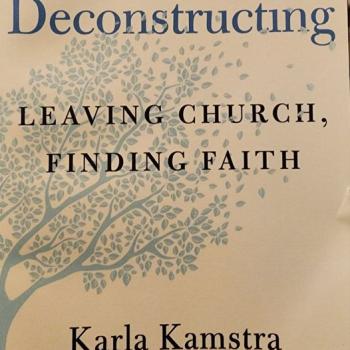
Book Review: Deconstructing, Leaving Church, Finding Faith

Consequences of Ideas: Philosophy and Deconversion
TRENDING AT PATHEOS General Christian

Seventy and Five Years Old: God Still Starts...
There is a small detail tucked into Genesis 12 that I skipped...

A Biblical Vision of Success in Christian Life...
The Concern and Quest Recent trends and tendencies I note around me...

Indigenous Peoples’ Day and the Church
Indigenous' Peoples Day or Columbus Day? Depending on where you live...

When Spiritual Growth Looks Like Losing Ground
Four Passive Spiritual Disciplines: An Introduction When I was a college freshman,...

Faith and Finding Your Current Season
“To everything there is a season,” Ecclesiastes tells us, “and a time...

Did Jesus Fear God's Wrath in Gethsemane?
That Time Jesus Was Terrified Before we begin, let me say at...
view all General Christian blogs
What Are Your Thoughts?leave a comment
Ad-Free & Subscriber Log-In Subscription Support
- About Us
- 2026 Calendar
- Videos
- Podcasts
- Library of World Religions
- Faith In Media Tracker
- Advertise With Us
- Write for Us
- Privacy Policy
- Terms of Service
- Do Not Sell My Data
- Contact Us
- Radiant Digital
- Manage Newsletter Subscriptions
- Unsubscribe From Notifications
- Sitemap
Copyright 2008-2026, Patheos. All rights reserved.
Subscription Support Ad-Free & Subscriber Log-In
Follow Patheos