
BuddhistCatholicContemplativeEvangelicalGeneral ChristianHinduJewishLatter-day SaintMuslimNew VisionsProgressive Christian
Beliefs
- Buddhist
- Catholic
- Contemplative
- Evangelical
- General Christian
- Hindu
- Jewish
- Latter-day Saint
- More Voices
- Muslim
- New Visions
- Pagan
- Progressive Christian
Topics
- Religion News
- Food and Religion
- Sports and Religion
- Religious Art
- Religious Music and Entertainment
- Religious Events
- History and Religion
- Style and Religion
- Politics and Religion
- Women in Religion
- Recreation Outdoors and Religion
- Business Finance and Religion
- Careers Workplace and Religion
- Education and Religion
- Family Parenting and Religion
- Health Fitness and Religion
- Home and Religion
- Relationships and Religion
- Technology and Religion
- Travel and Religion
Columnists
- Buddhist Columnists
- Business Finance and Religion Columnists
- Careers Workplace and Religion Columnists
- Catholic Columnists
- Contemplative Columnists
- Education and Religion Columnists
- Evangelists Columnists
- Family Parenting and Religion Columnists
- General Christian Columnists
- Health Fitness and Religion Columnists
- Hindu Columnists
- History and Religion Columnists
- Home and Religion Columnists
- Jewish Columnists
- More Voices Columnists
- Latter Day Columnists
- Muslim Columnists
- New Visions Columnists
- Nonreligious Columnists
- Pagan Columnists
- Politics and Religion Columnists
- Progressive Columnists
- Recreation Outdoors and Religion Columnists
- Relationships and Religion Columnists
- Religion News Columnists
- Religious Art Columnists
- Religious Events Columnists
- Religious Music and Entertainment Columnists
- Sports and Religion Columnists
- Style and Religion Columnists
- Technology and Religion Columnists
- Travel and Religion Columnists
- Women in Religion Columnists
Resource Library
- 2026 Calendar
- Library of World Religions
- The 100 Most Holy Places on Earth
- Patheos Answers
- Podcasts
- Videos
- Faith Leaders Database
- Anglican Episcopalian
- Bahai
- Baptist
- Buddhism
- Christianity
- Confucianism
- Eastern Orthodoxy
- Hinduism
- Holiness and Pentecostal
- ISKCON
- Islam
- Judaism
- Lutheran
- Methodist
- The Church of Jesus Christ of Latter-day Saints
- New Age
- Paganism
- Presbytarian and Reformed
- Protestantism
- Religion Behind the Scenes
- Roman Catholic
- Scientology
- Shia Islam
- Sikhism
- Sufism
- Sunni Islam
- Taoism
- Zen
- See all religions
Research Tools
 Ad-Free & Subscriber Log-In Subscription Support
Follow Patheos 

- Trending:
- Advent
- |
- Forgiveness
- |
- Thanksgiving
- |
- Election
- |
- Seasonal Holidays
- |
- Marriage

- Home
- General Christian
- Religion News
- A Brief History of Counter-Christian Movements
A Brief History of Counter-Christian Movements
Last updated on: July 15, 2024 at 9:30 pm by Joel Furches
A Brief History of Counter-Christian Movements 2024-07-15T21:30:13-04:00 Joel Furches
Patheos Explore the world's faith through different perspectives on religion and spirituality! Patheos has the views of the prevalent religions and spiritualities of the world.

The movement most prominently embattled against Christianity in the United States has been labeled the “Deconstruction Movement.” But what is this movement, how did it arise, and what is the history leading up to it?
The Founding of the United States
Christianity has been an ever-present force in American culture, with the United States largely being founded by Christian sects attempting to escape persecution by government-sanctioned religions in Europe. As a result of this history, one of the founding principles of the United States has been to keep religion and government entirely separate. For the most part this has worked as intended, as the government of the United States has not yet declared one religion the national religion, and tied religious practice to citizenship.
However, in the 1980s, a coalition of Christians with right-leaning politics attached themselves to the American Republican Party forming the so-called “moral majority,” and becoming a steady base of support to that party. While nothing akin to the government-sponsored religions of early Europe, the moral majority nevertheless stoked a kind of nation-wide resentment from those who did not ascribe to their values and doctrines. American Evangelicalism eventually became a political force in the minds of the wider culture, and to dissent from one was to dissent from the other.
The Emergent Church
In the late 1990s and early 2000s, this led to a movement which, at the time, was labeled “The Emergent Church.” In many ways the Emergent Church Movement closely resembles the current Deconstruction Movement. These church bodies gathered together largely to voice their criticisms of the politics – both national and internal – of the Evangelical church, and to commiserate with one another regarding the abuses and mistreatment they had received within the Evangelical environment. As well, the Emergent Church Movement tended to be very critical of the Bible and Christian doctrine, sanctifying their doubts and skepticism as a religious sacrament.
It was a way in which the participants could maintain the community and label of Christianity while jettisoning the baggage that came along with it.
New Atheism and Deconstructionism
Overlapping the Emergent Church Movement in the early and mid-2000s was the rise of the New Atheist Movement. In the United States, atheism had always been around, but it had been most prominent in elite and exclusive communities such as those found in academia and the arts. When it became a social movement, suddenly people had some place they could go to share their frustrations with Christianity, with the politics of Evangelicalism, and with Churches. They also had the tools to hit Christianity where it hurt: its beliefs and doctrines.
The method by which the Deconstruction Movement subsumed and replaced the New Atheist movement is a matter of interest. New Atheists had more or less united around public figures in the sciences: evolutionary biologists, astrophysicists, and psychologists. The general sentiment within New Atheism was that science would replace religion, with people like Stephen Hawking suggesting that even philosophy should be done away with in deference to science. Something important to note with this line of thinking is that it stresses an interest in truth. That is to say, pure empirical science is most interested in accuracy and a consensus reality under which everyone would be compelled to unite because it is true. The earth really is a sphere. Climate really is being influenced by human pollutants. Life on earth really did evolve over millions of years. Facts are facts, and no amount of religious belief can change that, say the New Atheists. Truth.
However, near the end of the 2010s a movement which had been present for some time rapidly overwhelmed culture and became its most potent driver: cultural progressivism. Superficially, progressivism was quite compatible with the New Atheism. Both movements aligned themselves with the political Left, and saw the political and religious Right Wing as an enemy to progress. However, there was a philosophical difference between the two movements which was all but irreconcilable. Progressivism aligned itself with postmodernism and critical theory which was radically opposed to the idea of a consensus reality and any institution which claimed to represent Truth. Progressivism stressed that personal authenticity was the determiner of reality, and that this reality is different from person to person. Progressivism didn’t simply want to do away with religious standards, but with all power structures – including those within the academy.
No longer was the anti-Christian culture primarily interested in proving religion to be factually incorrect*.* Instead, it wished to prove Christianity harmful or even evil. And thus was born “Deconstruction.” Deconstruction took a form more similar to the Emergent Church. Members of the deconstruction community would commiserate, largely in online spaces, about how they had been emotionally and mentally damaged by the Church. Unlike New Atheism, this was not a space for those who never were Christian to begin with, but rather for those who had left or were in the process of leaving Christian communities. Deconstruction Communities resembled New Atheism insofar as they were criticizing the doctrines and beliefs of Christianity, but differed insofar as they were primarily interested in the social and emotional damage the church was causing, rather than its impediment to truth-seeking. Deconstructionists resembled the Emergent Church movement insofar as they commiserated with one another about the hurt and abuses they had undergone within the Evangelical community, but differed in that they were not trying to form an alternative to Evangelicalism. This was not a corporate movement at all, but rather large groups of individuals, each of which was interested in intensely personal validation and sympathy.
Deconstructionists were not launching full-out assaults on Christianity with the militant fervor of the New Atheists, but rather inviting people from within Christianity to join them in an exit which would allow each person the opportunity to be authentic to him or herself absent the standards of the authoritarian church. Criticisms of the church occurred in the form of material posted around the internet which alerted individuals to the fact that church doctrines were inherently abusive. That being told that one is a sinner in need of salvation, that being told about hell, the rapture, or Satan were all toxic and could bind one in lifetime servitude without the possibility of ever experiencing the freedom of autonomy and authenticity. And perhaps worst of all, that the seemingly overwhelming support of the Evangelical Church for dictatorial politicians was evidence that the Right wanted to place the entire country under religious control and eliminate freedom entirely.
As of the writing of this article, this is where culture stands. The rise of this movement was not as sudden as it might seem, undercurrents of which had been brewing since at least the time of the Emergent Church. But its appearance in the cultural spotlight nevertheless seemed quite sudden. While never explicitly anti-atheist in nature, the New Atheists found themselves at odds with cultural progressivism when certain inappropriate behaviors of visible members of the group toward women became headline news in the late 2010s. Further, as cultural progressivism began to display sympathy toward and acceptance of Muslims, it became difficult for Atheists – who were traditionally against religions of any kind – to integrate with Progressives.
As a result, many of the leaders in the New Atheist community found themselves at odds with Deconstructionists, continuing to champion reason, rationality, empiricism, and consensus reality in a culture which found such principles to be limiting and perhaps even toxic. As a result, Deconstruction is not inherently atheistic in nature. Upon deconstructing one’s faith, one may adopt any position one chooses, or no position at all, so long as one does not feel that he or she is placed back under the oppressive power of an institution.
Previous Post

July 9, 2024
Conversion, Deconversion, and Initiation Ceremonies
Next Post

July 22, 2024 Book Review: The Deconstruction of Christianity
Recent Comments
Browse Our Archives
Select a Category biography Conversion Stories Deconversion Stories Historical Religious Figures Psychology Uncategorized
Select a Month December 2024 November 2024 September 2024 August 2024 July 2024 March 2024 January 2024 December 2023 November 2023 October 2023 September 2023 August 2023 July 2023 June 2023 May 2023 April 2023 March 2023 February 2023 January 2023 December 2022 November 2022 October 2022 September 2022
Follow Us!
TAKE THE
Religious Wisdom Quiz
What Jewish festival was being celebrated when the Holy Spirit descended at Pentecost?
Select your answer to see how you score.
Purim Shavuot Passover Hanukkah
Related posts from Switching Sides
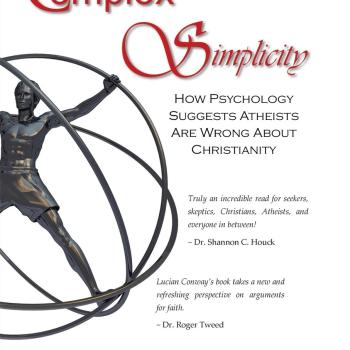
Complex Simplicity - A Book Review


Book Review: Deconstructing, Leaving Church, Finding Faith

Book Review: The Subtle Power of Spiritual Abuse
TRENDING AT PATHEOS General Christian

The Thanksgiving Hymn Born in a Plague-Ravaged Town
The Impossible Story of “Now Thank We All Our God" It’s an...
Does Islam Teach the Subjugation of Christians and...
“There is no compulsion in religion.” When discussions about Islam's relationship...

The Church calendar begins Advent this year on Sunday November 29....

Apples of Gold: Words Around the Thanksgiving Table
There is a verse in Proverbs that I think every mother should...

Why Jesus Shone on the Mountain and Moses...
The Divine Glory In all three of the synoptic gospels, Matthew, Mark,...

What the Midterms Say About White Christian Nationalism
Christian Nationalism has been in the news more and more since the...
view all General Christian blogs
What Are Your Thoughts?leave a comment
Ad-Free & Subscriber Log-In Subscription Support
- About Us
- 2026 Calendar
- Videos
- Podcasts
- Library of World Religions
- Faith In Media Tracker
- Advertise With Us
- Write for Us
- Privacy Policy
- Terms of Service
- Do Not Sell My Data
- Contact Us
- Radiant Digital
- Manage Newsletter Subscriptions
- Unsubscribe From Notifications
- Sitemap
Copyright 2008-2026, Patheos. All rights reserved.
Subscription Support Ad-Free & Subscriber Log-In
Follow Patheos