
BuddhistCatholicContemplativeEvangelicalGeneral ChristianHinduJewishLatter-day SaintMuslimNew VisionsProgressive Christian
Beliefs
- Buddhist
- Catholic
- Contemplative
- Evangelical
- General Christian
- Hindu
- Jewish
- Latter-day Saint
- More Voices
- Muslim
- New Visions
- Pagan
- Progressive Christian
Topics
- Religion News
- Food and Religion
- Sports and Religion
- Religious Art
- Religious Music and Entertainment
- Religious Events
- History and Religion
- Style and Religion
- Politics and Religion
- Women in Religion
- Recreation Outdoors and Religion
- Business Finance and Religion
- Careers Workplace and Religion
- Education and Religion
- Family Parenting and Religion
- Health Fitness and Religion
- Home and Religion
- Relationships and Religion
- Technology and Religion
- Travel and Religion
Columnists
- Buddhist Columnists
- Business Finance and Religion Columnists
- Careers Workplace and Religion Columnists
- Catholic Columnists
- Contemplative Columnists
- Education and Religion Columnists
- Evangelists Columnists
- Family Parenting and Religion Columnists
- General Christian Columnists
- Health Fitness and Religion Columnists
- Hindu Columnists
- History and Religion Columnists
- Home and Religion Columnists
- Jewish Columnists
- More Voices Columnists
- Latter Day Columnists
- Muslim Columnists
- New Visions Columnists
- Nonreligious Columnists
- Pagan Columnists
- Politics and Religion Columnists
- Progressive Columnists
- Recreation Outdoors and Religion Columnists
- Relationships and Religion Columnists
- Religion News Columnists
- Religious Art Columnists
- Religious Events Columnists
- Religious Music and Entertainment Columnists
- Sports and Religion Columnists
- Style and Religion Columnists
- Technology and Religion Columnists
- Travel and Religion Columnists
- Women in Religion Columnists
Resource Library
- 2026 Calendar
- Library of World Religions
- The 100 Most Holy Places on Earth
- Patheos Answers
- Podcasts
- Videos
- Faith Leaders Database
- Anglican Episcopalian
- Bahai
- Baptist
- Buddhism
- Christianity
- Confucianism
- Eastern Orthodoxy
- Hinduism
- Holiness and Pentecostal
- ISKCON
- Islam
- Judaism
- Lutheran
- Methodist
- The Church of Jesus Christ of Latter-day Saints
- New Age
- Paganism
- Presbytarian and Reformed
- Protestantism
- Religion Behind the Scenes
- Roman Catholic
- Scientology
- Shia Islam
- Sikhism
- Sufism
- Sunni Islam
- Taoism
- Zen
- See all religions
Research Tools
 Ad-Free & Subscriber Log-In Subscription Support
Ad-Free & Subscriber Log-In Subscription Support
Follow Patheos 

- Trending:
- Forgiveness
- |
- Marriage
- |
- Consciousness
- |
- Death Penalty
- |
- Election
- |
- Halloween

- Home
- General Christian
- Religion News
- Tales of Deconversion: The Monk Who Became an Atheist
Tales of Deconversion: The Monk Who Became an Atheist
Last updated on: April 24, 2023 at 8:27 am by Joel Furches
Tales of Deconversion: The Monk Who Became an Atheist 2023-04-18T08:53:15-04:00 Joel Furches
Patheos Explore the world's faith through different perspectives on religion and spirituality! Patheos has the views of the prevalent religions and spiritualities of the world.
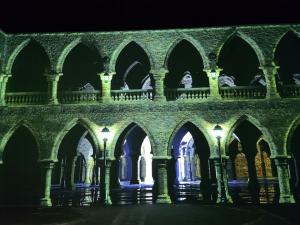
Joseph McCabe is a man who vies for a place as perhaps the most eloquent and prolific writer and speaker to wage a battle against religion – the Catholic Church specifically – in the 19th and 20th century. In his life, which extended from 1867 to 1955, McCabe wrote 250 books – about 15 million words, total – and gave thousands of lectures from venues as diverse as England, Germany, America, and Australia.
The Making of a Friar
McCabe was born to an Irish Catholic family. Both of his parents were Catholics, his father having been born into the Catholic tradition in his native land of Ireland, and his British mother converting after marrying his father. Joseph’s mother wanted him to get involved in the church early, and opted to christen him with the name of Joseph – a trivial Biblical character to Protestants, but a saint to the Catholics.
Because of the enthusiasm his parents had for his participation in the church, they sent him to a Catholic school as soon as he was of school age. Here, Joseph immediately proved himself to be a bright student, and excelled in his lessons. But Joseph’s enthusiasm didn’t end at academics. His interest in religion was also sparked immediately, and his instructors described him as a “zealous” Catholic while he was still a child.
Given his personal interest, the pressure placed on him by his parents, and his instructors’ encouragement, Joseph entered the Franciscan order of monks at the early age of 15, and four years later, became a monk. For a year, Joseph studied at the monastery, and then he advanced his religious education, training to be a priest. Joseph was finally ordained at the age of 23.
But Joseph’s career advancement was not entirely religious. With both religious and academic goals in mind, Joseph became fluent in Hebrew. He was also recognized as an outstanding philosopher, and was soon awarded the prestigious title and station of “professor of philosophy” in charge of a Franciscan college at the youthful age of 28.
The Making of an Atheist
Only a year after being granted professorship, McCabe renounced his faith, left his post, and exited the priesthood. According to one source, he was “disgusted” by his fellow monks and with Christian doctrine. Another source claims that it was his intense and continuous learning and scholarship that led him to the position of atheism. Perhaps it was some of both. He put it this way:
“I took a sheet of paper, divided it into debt and credit columns on the arguments for and against God and immortality.
“On Christmas Eve I wrote ‘bankrupt’ at the foot. And it was on Christmas morning 1895, after I had celebrated three Masses, while the bells of the parish church were ringing out the Christmas message of peace, that, with great pain, I found myself far out from the familiar land–homeless, aimlessly drifting. But the bells were right after all; from that hour on I have been wholly free from the nightmare of doubt that had lain on me for ten years.”
Joseph left the priesthood for good on February 19, 1896.
Life as an Atheist
All of the ambition and zeal Joseph had once had for the church, he now directed against it. He began almost immediately by publishing pamphlets – his “little blue books” – about his experience, and what led him away from the church. Eventually he began to write full books – his “big blue books” – actively attacking the church. Joseph’s goal in writing appeared to be not merely to recuse the church, but to actively emancipate others from the captivity of doctrine and into the freedom of pure rationalism.
Joseph’s new perspective on Jesus was that he was a Jewish holy man who had been exaggerated and mythologized over time, borrowing elements from a number of other religious traditions to turn him into a dying and rising God. Said William Ferguson, “He was bitterly anti-Catholic but also actively undermined religious faith in general.” For example, Joseph devoted considerable time to debunking spiritualists.
Joseph’s intelligence was impressive and persuasive enough to sell his many books and land him many speaking opportunities and lectureships. Emanuel Haldeman-Julius, the famous atheist publisher responsible for the publication of Joseph’s books, described McCabe as “the world’s greatest scholar” and as “the atomic bomb of the intellectual world.”
Joseph’s intense and effective campaigning against the church quickly gained wide attention. He was asked to step into a secretary position at the Leicester Secular Society, and eventually became a founding member of the Rationalist Press Association as he continued publishing his work.
With his broad influence, Joseph began to expand his efforts beyond mere campaigning against religion. He used this platform as a springboard into campaigning for women’s rights and for the publicization of science – especially the evolutionary theory. As part of this effort, Joseph translated Ernst Haeckel’s work on evolution in 1900. This became one of his greatest literary achievements, the translation selling at an astounding rate – over half a million copies in Germany alone.
Joseph’s work as a secularist and rationalist became his entire life. He spent practically all of his time on the road, and eventually these long absences built up tension within his family life. After 26 years of marriage, Joseph and his wife Beatrice parted ways. He claimed that this was a mutual decision, and it further distanced him from his two boys and two girls.
At the age of 88 years, Joseph passed away. He left an unrivaled legacy of work disputing religion, debunking spiritualism, promoting rationalism, and promoting secular philosophy and ideals. His signature works, still popular long after his death, were these:
- The Key to Culture (40 volumes beginning in 1929)
- The Key to Love and Sex (8 volumes beginning in 1929)
- The Rise and Fall of the Gods (6 volumes beginning in 1931).

About Joel Furches
Joel Furches is a writer, educator, journalist, and researcher who has written extensively on subjects related to religion and Christianity specifically. Joel has a Master's Degree in education, academic training and experience in Applied Behavioral Psychology, and is pursuing a Ph.D. in psychology with his dissertation on religious deconversion. You can read more about the author here.
Next Post
May 1, 2023 Tales of Deconversion: The Crisis of a Preacher's Wife
Recent Comments
Browse Our Archives
Select a Category biography Conversion Stories Deconversion Stories Historical Religious Figures Psychology Uncategorized
Select a Month December 2024 November 2024 September 2024 August 2024 July 2024 March 2024 January 2024 December 2023 November 2023 October 2023 September 2023 August 2023 July 2023 June 2023 May 2023 April 2023 March 2023 February 2023 January 2023 December 2022 November 2022 October 2022 September 2022
Follow Us!
TAKE THE
Religious Wisdom Quiz
What was the purpose of the cities of refuge?
Select your answer to see how you score.
To store food for famine To train future priests To protect those accused of manslaughter To house the sick
Related posts from Switching Sides

Complex Simplicity - A Book Review

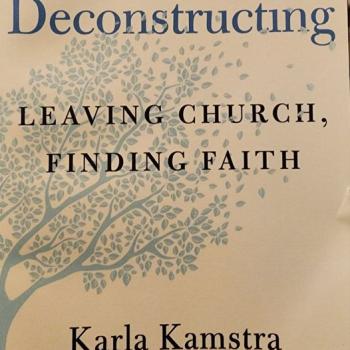
Book Review: Deconstructing, Leaving Church, Finding Faith

Consequences of Ideas: Philosophy and Deconversion
TRENDING AT PATHEOS General Christian

Seventy and Five Years Old: God Still Starts...
There is a small detail tucked into Genesis 12 that I skipped...

A Biblical Vision of Success in Christian Life...
The Concern and Quest Recent trends and tendencies I note around me...

Indigenous Peoples’ Day and the Church
Indigenous' Peoples Day or Columbus Day? Depending on where you live...

When Spiritual Growth Looks Like Losing Ground
Four Passive Spiritual Disciplines: An Introduction When I was a college freshman,...

Faith and Finding Your Current Season
“To everything there is a season,” Ecclesiastes tells us, “and a time...

Did Jesus Fear God's Wrath in Gethsemane?
That Time Jesus Was Terrified Before we begin, let me say at...
view all General Christian blogs
What Are Your Thoughts?leave a comment
Ad-Free & Subscriber Log-In Subscription Support
- About Us
- 2026 Calendar
- Videos
- Podcasts
- Library of World Religions
- Faith In Media Tracker
- Advertise With Us
- Write for Us
- Privacy Policy
- Terms of Service
- Do Not Sell My Data
- Contact Us
- Radiant Digital
- Manage Newsletter Subscriptions
- Unsubscribe From Notifications
- Sitemap
Copyright 2008-2026, Patheos. All rights reserved.
Subscription Support Ad-Free & Subscriber Log-In
Follow Patheos