
BuddhistCatholicContemplativeEvangelicalGeneral ChristianHinduJewishLatter-day SaintMuslimNew VisionsProgressive Christian
Beliefs
- Buddhist
- Catholic
- Contemplative
- Evangelical
- General Christian
- Hindu
- Jewish
- Latter-day Saint
- More Voices
- Muslim
- New Visions
- Pagan
- Progressive Christian
Topics
- Religion News
- Food and Religion
- Sports and Religion
- Religious Art
- Religious Music and Entertainment
- Religious Events
- History and Religion
- Style and Religion
- Politics and Religion
- Women in Religion
- Recreation Outdoors and Religion
- Business Finance and Religion
- Careers Workplace and Religion
- Education and Religion
- Family Parenting and Religion
- Health Fitness and Religion
- Home and Religion
- Relationships and Religion
- Technology and Religion
- Travel and Religion
Columnists
- Buddhist Columnists
- Business Finance and Religion Columnists
- Careers Workplace and Religion Columnists
- Catholic Columnists
- Contemplative Columnists
- Education and Religion Columnists
- Evangelists Columnists
- Family Parenting and Religion Columnists
- General Christian Columnists
- Health Fitness and Religion Columnists
- Hindu Columnists
- History and Religion Columnists
- Home and Religion Columnists
- Jewish Columnists
- More Voices Columnists
- Latter Day Columnists
- Muslim Columnists
- New Visions Columnists
- Nonreligious Columnists
- Pagan Columnists
- Politics and Religion Columnists
- Progressive Columnists
- Recreation Outdoors and Religion Columnists
- Relationships and Religion Columnists
- Religion News Columnists
- Religious Art Columnists
- Religious Events Columnists
- Religious Music and Entertainment Columnists
- Sports and Religion Columnists
- Style and Religion Columnists
- Technology and Religion Columnists
- Travel and Religion Columnists
- Women in Religion Columnists
Resource Library
- 2026 Calendar
- Library of World Religions
- The 100 Most Holy Places on Earth
- Patheos Answers
- Podcasts
- Videos
- Faith Leaders Database
- Anglican Episcopalian
- Bahai
- Baptist
- Buddhism
- Christianity
- Confucianism
- Eastern Orthodoxy
- Hinduism
- Holiness and Pentecostal
- ISKCON
- Islam
- Judaism
- Lutheran
- Methodist
- The Church of Jesus Christ of Latter-day Saints
- New Age
- Paganism
- Presbytarian and Reformed
- Protestantism
- Religion Behind the Scenes
- Roman Catholic
- Scientology
- Shia Islam
- Sikhism
- Sufism
- Sunni Islam
- Taoism
- Zen
- See all religions
Research Tools
 Ad-Free & Subscriber Log-In Subscription Support
Ad-Free & Subscriber Log-In Subscription Support
Follow Patheos 

- Trending:
- Forgiveness
- |
- Marriage
- |
- Consciousness
- |
- Death Penalty
- |
- Election
- |
- Halloween

- Home
- General Christian
- Religion News
- Lone Christians: People who Exit the Church but not the Faith
Lone Christians: People who Exit the Church but not the Faith
Last updated on: March 13, 2023 at 8:29 am by Joel Furches
Lone Christians: People who Exit the Church but not the Faith 2023-03-11T15:18:55-05:00 Joel Furches
Patheos Explore the world's faith through different perspectives on religion and spirituality! Patheos has the views of the prevalent religions and spiritualities of the world.

Credit: Joel Furches
Today, nearly half of America is unchurched. But even though more and more Americans are abandoning the institutional church and its defined boundary markers of religious identity, many still believe in God and practice faith outside its walls.
The Declining Church
It is old news by now that there has been a dramatic spike in secularization and a dramatic decline in church attendance within America over the last decade. Most of the attention in research has been given to those individuals who either exit the church and stop practicing their religion (disaffiliates), or those who exit the church and become vocally anti-religious (deconverts). However, very little attention has been given to those who exit corporate religion, but continue to practice their Christian beliefs privately.
Only a few years prior to the infamous Pew Report which highlighted the religious decline in America, a Barna report delved into this topic: exiting the church, but retaining religious identity.
Lone Christians
In a surprising finding, Barna reported that as much as 10% of the population dropped out of church but remained religious, most of whom were women, and mostly Gen Xers or Boomers – very few of which occupied the younger generations.
Related, perhaps, to a previous subject I examined on so-called “Leftward Drift,” a significant number of these dropouts came from Red States, and identified as Democrat. It is, perhaps, unsurprising that these individuals could not find their home in a church full of political views with which they could not relate.
The group in question still held broadly orthodox views of God, such as monotheism, omnipresence, omniscience, omnipotence, and omnibenevolence. Further, these people had broadly positive feelings about religion, even if they were somewhat pessimistic concerning the church.
This group reported maintaining strong private religious practices and views, but masking their religious identity publicly, compartmentalizing this part of their identity internally.
As public as the topic of “Church Hurt” or “Religious Trauma Syndrome” has become, one could be forgiven for suspecting that these individuals have abandoned the church because they feel hurt by the church. However, the Barna report says that these individuals did not primarily exit the church due to “wounding,” but rather because they no longer found church relevant to their lives.
The report in question is six years old at time of writing, and it remains to be seen if these lone Christians can maintain their spiritual identity long after church exit. However, research thus far indicates that the probability of religious exit is inversely related to the integration of a person within the religious community. Existing research strongly suggests that integration and participation within a religious community (as opposed to personal traits or attributes disassociated with group affiliation) are primary to the maintenance of one’s religious identity.
Persistence through Participation
William James (1902) was the first academic psychologist on record to advance a theoretical model of religious conversion. James’ model was very individualistic, suggesting that religion was an attribute of an individual without respect to group affiliation. The most significant model of religious conversion currently accepted (Malony & Southard, 1992) treats religious conversion as a process of participating in a religious community, not a personal attribute without respect to a community of like-minded believers.
Similarly, the growing body of research on religious deconversion suggests that it is not simply the act of rejecting religious ideas, but rather of exit and alienation from a religious community (Łysiak et al, 2020; Sergio et al, 2019; Streib, 2021).
Deconversion research has been diligent in studying what causes individuals to transition from self-identification as religious to self-identification as irreligious. However, the research on what causes an individual to remain faithful to religion when they might otherwise exit is lacking. Streib (2021) has done some work comparing personal values of deconverts with values of people who remain religious and of those who were never religious. His work suggests that deconverts display a shift in values after exiting the religion to be more similar to their secular peers, which suggests that the values are socially driven rather than intrinsic.
Łysiak et al (2020) addressed the question more directly, determining that young people who remain in the religion are those who tend to have strong bonds with parents and religious peers, whereas those who exit their religion are rewarded by peer praise for challenging systems of authority.
While not directly addressing the topic of deconversion, both Patten et al (2008; 2009;) and Dillon (1996) studied religious minorities at religious colleges in an effort to determine the effects of being minorities would affect their integration with peers.
Patten et al (2008; 2009;) studied racial minorities, and found that integration with majority peers was successful on the basis of their shared religious identity. Dillon (1996) studied Catholic students at a majority Protestant college. His findings indicated that those students who attended and participated in Catholic churches off-campus were more successful at maintaining their Catholic identities than the students who did not.
Can you stay Christian if you don’t Participate?
The weight of evidence suggests that an individual’s religious identity is socially constructed and maintained. Due to this social factor, one would expect these lone Christians to not maintain their religious identity over the long run. If further research emerges which suggests that these lone Christians have managed to stay faithful to their religious identities, this would be a fascinating topic to explore. How do they manage to keep thinking of themselves as Christians without the group affiliation which seems so essential to maintaining one’s group identity?
Barna reports that these individuals practice regular prayer about as often as “churched” Christians, but read the Bible somewhat less. They also don’t tend to pick up and read Christian books or material much.
In place of practices like corporate worship, these individuals pursue alternative spiritual practices such as meditation. They also tend to be less exclusivist as practicing Christians, suggesting that other religions may have valuable spiritual ideas.
Could such practices maintain identity beyond Christian interaction? Perhaps the work of James Fowler may be instructive here. In the last three stages of Fowler’s model of faith development, the individual begins to form a wholistic worldview which includes faith along with all of the other parts of life, begins to form an identity apart from the group, and, in the later stages of faith acquisition, the person universalizes their faith, such that it becomes a worldview separate from group allegiance. Part of “thinking for yourself,” so to speak.
Or this could be more similar to the thesis of Brian McLaren, who states that one may finally find peace when one realizes that love is the sole, universalizing essential to religion, absent of doctrine and dogma. However, the fact that Barna reports these lone Christians have more orthodox views suggests that they have not gone the way of McLaren or the so-called “emergent church.”
This exit from the religious community whilst maintaining a Christian identity may be partly in response to the rampant politicization of the Church. Possibly, this may be a coping mechanism by which these lone Christians have managed to throw out the bathwater but rescue the baby. Only time will tell.

About Joel Furches
Joel Furches is a writer, educator, journalist, and researcher who has written extensively on subjects related to religion and Christianity specifically. Joel has a Master's Degree in education, academic training and experience in Applied Behavioral Psychology, and is pursuing a Ph.D. in psychology with his dissertation on religious deconversion. You can read more about the author here.
Previous Post

March 6, 2023
What Happens in the Brain When Beliefs Change?
Next Post

March 20, 2023 Psychology and Religious Deconversion: What we Know so far
Recent Comments
Browse Our Archives
Select a Category biography Conversion Stories Deconversion Stories Historical Religious Figures Psychology Uncategorized
Select a Month December 2024 November 2024 September 2024 August 2024 July 2024 March 2024 January 2024 December 2023 November 2023 October 2023 September 2023 August 2023 July 2023 June 2023 May 2023 April 2023 March 2023 February 2023 January 2023 December 2022 November 2022 October 2022 September 2022
Follow Us!
TAKE THE
Religious Wisdom Quiz
At my dedication prayer, fire came down from heaven and God's glory filled the house.
Select your answer to see how you score.
The Palace The temple The prophet's home The tabernacle
Related posts from Switching Sides

Complex Simplicity - A Book Review

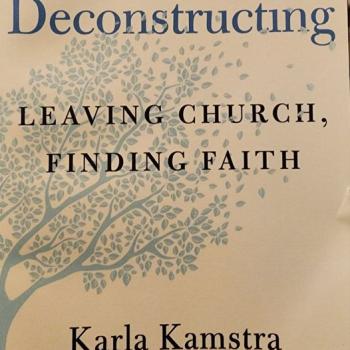
Book Review: Deconstructing, Leaving Church, Finding Faith

Consequences of Ideas: Philosophy and Deconversion
TRENDING AT PATHEOS General Christian

Seventy and Five Years Old: God Still Starts...
There is a small detail tucked into Genesis 12 that I skipped...

A Biblical Vision of Success in Christian Life...
The Concern and Quest Recent trends and tendencies I note around me...

Indigenous Peoples’ Day and the Church
Indigenous' Peoples Day or Columbus Day? Depending on where you live...

When Spiritual Growth Looks Like Losing Ground
Four Passive Spiritual Disciplines: An Introduction When I was a college freshman,...

Faith and Finding Your Current Season
“To everything there is a season,” Ecclesiastes tells us, “and a time...

Did Jesus Fear God's Wrath in Gethsemane?
That Time Jesus Was Terrified Before we begin, let me say at...
view all General Christian blogs
What Are Your Thoughts?leave a comment
Ad-Free & Subscriber Log-In Subscription Support
- About Us
- 2026 Calendar
- Videos
- Podcasts
- Library of World Religions
- Faith In Media Tracker
- Advertise With Us
- Write for Us
- Privacy Policy
- Terms of Service
- Do Not Sell My Data
- Contact Us
- Radiant Digital
- Manage Newsletter Subscriptions
- Unsubscribe From Notifications
- Sitemap
Copyright 2008-2026, Patheos. All rights reserved.
Subscription Support Ad-Free & Subscriber Log-In
Follow Patheos