
BuddhistCatholicContemplativeEvangelicalGeneral ChristianHinduJewishLatter-day SaintMuslimNew VisionsProgressive Christian
Beliefs
- Buddhist
- Catholic
- Contemplative
- Evangelical
- General Christian
- Hindu
- Jewish
- Latter-day Saint
- More Voices
- Muslim
- New Visions
- Pagan
- Progressive Christian
Topics
- Religion News
- Food and Religion
- Sports and Religion
- Religious Art
- Religious Music and Entertainment
- Religious Events
- History and Religion
- Style and Religion
- Politics and Religion
- Women in Religion
- Recreation Outdoors and Religion
- Business Finance and Religion
- Careers Workplace and Religion
- Education and Religion
- Family Parenting and Religion
- Health Fitness and Religion
- Home and Religion
- Relationships and Religion
- Technology and Religion
- Travel and Religion
Columnists
- Buddhist Columnists
- Business Finance and Religion Columnists
- Careers Workplace and Religion Columnists
- Catholic Columnists
- Contemplative Columnists
- Education and Religion Columnists
- Evangelists Columnists
- Family Parenting and Religion Columnists
- General Christian Columnists
- Health Fitness and Religion Columnists
- Hindu Columnists
- History and Religion Columnists
- Home and Religion Columnists
- Jewish Columnists
- More Voices Columnists
- Latter Day Columnists
- Muslim Columnists
- New Visions Columnists
- Nonreligious Columnists
- Pagan Columnists
- Politics and Religion Columnists
- Progressive Columnists
- Recreation Outdoors and Religion Columnists
- Relationships and Religion Columnists
- Religion News Columnists
- Religious Art Columnists
- Religious Events Columnists
- Religious Music and Entertainment Columnists
- Sports and Religion Columnists
- Style and Religion Columnists
- Technology and Religion Columnists
- Travel and Religion Columnists
- Women in Religion Columnists
Resource Library
- 2026 Calendar
- Library of World Religions
- The 100 Most Holy Places on Earth
- Patheos Answers
- Podcasts
- Videos
- Faith Leaders Database
- Anglican Episcopalian
- Bahai
- Baptist
- Buddhism
- Christianity
- Confucianism
- Eastern Orthodoxy
- Hinduism
- Holiness and Pentecostal
- ISKCON
- Islam
- Judaism
- Lutheran
- Methodist
- The Church of Jesus Christ of Latter-day Saints
- New Age
- Paganism
- Presbytarian and Reformed
- Protestantism
- Religion Behind the Scenes
- Roman Catholic
- Scientology
- Shia Islam
- Sikhism
- Sufism
- Sunni Islam
- Taoism
- Zen
- See all religions
Research Tools
 Ad-Free & Subscriber Log-In Subscription Support
Ad-Free & Subscriber Log-In Subscription Support
Follow Patheos 

- Trending:
- Forgiveness
- |
- Marriage
- |
- Consciousness
- |
- Death Penalty
- |
- Election
- |
- Halloween

- Home
- General Christian
- Religion News
- Research into Religious Deconversion Flourishes in the Post Christian West
Research into Religious Deconversion Flourishes in the Post Christian West
Last updated on: January 30, 2023 at 8:01 am by Joel Furches
Research into Religious Deconversion Flourishes in the Post Christian West 2023-01-30T08:01:58-05:00 Joel Furches
Patheos Explore the world's faith through different perspectives on religion and spirituality! Patheos has the views of the prevalent religions and spiritualities of the world.
A Brief History of Conversion Research
Ever since William James’ landmark study, A Variety of Religious Experiences (1902), the topic of religious conversion has been an open interest in the fields of social sciences. James’ book was the standard in the field for decades, however in 1965, John Lofland and Rodney Stark published their now-famous study in the field of religious conversion which provided the first widely recognized model of religious conversion (Lofland & Stark, 1965).
Since Lofland and Stark, other researchers have contributed more nuanced models to the field which take into account a broader set of data and years of further research. These include such notables as Henry Gooren (2010) and John Rambo (2014), whose works are currently the standards in the field.
In all of this time, very little consideration has been given to the modeling of religious deconversion, however. The 2014 omnibus The Oxford Handbook of Religious Conversion (Rambo, 2014) contained a minor bit of research which compared modes of religious exit from secular European countries, but the work on this field has been sporadic until very recently.
Interest in religious deconversion has accelerated in recent years, partly because of the 2019 Pew Report which noted the rapid decline in church attendance and a decline in Americans identifying themselves as religious. This is further enhanced by what appears to be an accelerated degree of high-profile Christians who are making public declarations of their respective religious exits.
Whatever the case, there is a general perception that America is rapidly secularizing, and religious practice is suffering as a result.
When Lofland and Stark conducted their groundbreaking research in 1965, they did so in a heavily spiritualistic California using the rise of communes and cults as a source of ready data for a constant stream of religious converts – far more than one would discover in the pews of a standard Methodist church. It was a target-rich environment.
For the topic of religious deconversion, America has become a target-rich environment, which makes these grounds of study more possible than they would be in the secularized European or Canadian countries, where religion is marginal and deconversions are less likely to occur.
Problems With Religion
The relatively recent acceleration of public deconversion has made this a field of contemporary interest. In 2014, Dr. John Marriot of Biola University submitted his dissertation titled The Cost of Freedom: a Grounded Theory Study of the Impact of Deconversion from Christianity to Atheism. In this dissertation, Marriot documented common objections among deconverts, and – like Lofland and Stark – developed a model of deconversion.
Marriot’s model was not unlike previous conversions models. It began with a crisis, followed by a period of seeking. After that, it diverged into the struggle to maintain faith, the devolution into agnosticism, with the final arrival at deconversion.
A more recent project is the Sergio and Vallières model (2019). Like Marriot, Sergio and Vallieres developed a model of deconversion wherein they identified drivers and mental processes behind deconversion rather than stages.
Sergio and Vallieres identified problems with religious ideas (reason and enquiry), negative feelings (criticism and discontent), and personal growth and development as the primary drivers behind deconversion. When Marriot did his research, his focus was more about specific problems people expressed with Christianity. The strength of the Sergio and Vallieres model is that it provides broad categories into which deconversion can be placed. The strength of Marriot’s model is that it identifies specific objections and stages.
What Makes Deconversion Easier Than it Used to Be?
Others have contributed insights which help to better explain the acceleration of deconversion in the United States. Starr et al (2019) have identified the growing use of the internet, and online communities as facilitators of deconversion. Given that one’s religious community tends to be one’s primary social network, a world wherein social circles are migrating to the internet opens possibilities for a readily available community outside of one’s immediate religious circle, making the transition from religious to irreligious less socially difficult.
Ahead of his time, Adam (2009) did a study in which he supported the claim that deconverts tended to emerge from Fundamentalist churches. He identified this as having to do with the dogmatic certainty required by the Fundamentalist environment which sees the world in a black-and-white perspective wherein one is either certain or nihilistic with very little middle ground.
In a similar vein, Nagle (2017), suggested that religious education might also be partly instrumental in facilitating deconversion.
Nagle observed that individuals coming from a Fundamentalist environment tended to be unwilling to consider ideas which did not conform to their dogma. However, after entering religious universities, the value of truth-seeking was impressed upon them by way of their education, and they became open to elevating the value of truth above dogma. This opened these students to the possibility of deconversion if they became convinced of the error of religion.
While the focal point of deconversion studies has largely been in the United States, Heinz Streib of Bielefeld University in Germany contributed to the field by identifying potential predictors and characteristics shared by deconverts (2021). Drawing data from both the United States and Germany, Streib’s most significant contribution was identifying particular personality profiles (the five factors of personality) which served as predictors of deconversion, as well as factors such as values, socialization, and attachments. Complimenting Streib’s work is the work of Matt Baker, whose dissertation on the personality traits of atheists who were raised as Christian used the Myers-Briggs system.
Where to go From Here?
The religious exit in the Western World doesn’t seem to be slowing, and as a result, neither does the research. Within another generation, religion will be scarce enough in the West, that deconversion study will be more difficult to conduct. One area in which religious deconversion research may benefit is by looking at setting conditions. As mentioned above, several researchers have found specific problems that seem to drive deconversion, but the question remains, why are those problems? For example, if a person is convinced that religion must be untrue because they have found problems in the Bible, they must have been led to believe at some point that religion can only be true if the Bible has no problems. Identifying these kinds of assumptions, and where they begin is an important direction of research into which I, as a researcher, have been looking.

About Joel Furches
Joel Furches is a writer, educator, journalist, and researcher who has written extensively on subjects related to religion and Christianity specifically. Joel has a Master's Degree in education, academic training and experience in Applied Behavioral Psychology, and is pursuing a Ph.D. in psychology with his dissertation on religious deconversion. You can read more about the author here.
Previous Post

January 23, 2023
The Boy Preacher who Became an Adult Atheist Advocate: Anthony Pinn
Next Post

February 6, 2023 The son of a Famous Evangelist who Became a Convinced Atheist
Recent Comments
Browse Our Archives
Select a Category biography Conversion Stories Deconversion Stories Historical Religious Figures Psychology Uncategorized
Select a Month December 2024 November 2024 September 2024 August 2024 July 2024 March 2024 January 2024 December 2023 November 2023 October 2023 September 2023 August 2023 July 2023 June 2023 May 2023 April 2023 March 2023 February 2023 January 2023 December 2022 November 2022 October 2022 September 2022
Follow Us!
TAKE THE
Religious Wisdom Quiz
Which book of the Bible records Paul’s shipwreck?
Select your answer to see how you score.
Acts 2 Timothy Romans 1 Corinthians
Related posts from Switching Sides

Complex Simplicity - A Book Review

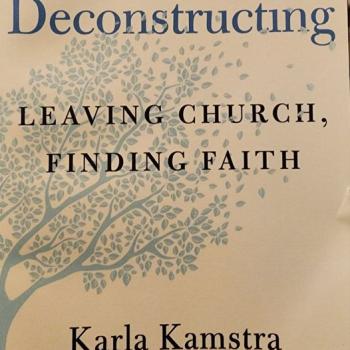
Book Review: Deconstructing, Leaving Church, Finding Faith

Consequences of Ideas: Philosophy and Deconversion
TRENDING AT PATHEOS General Christian

Seventy and Five Years Old: God Still Starts...
There is a small detail tucked into Genesis 12 that I skipped...

A Biblical Vision of Success in Christian Life...
The Concern and Quest Recent trends and tendencies I note around me...

Indigenous Peoples’ Day and the Church
Indigenous' Peoples Day or Columbus Day? Depending on where you live...

When Spiritual Growth Looks Like Losing Ground
Four Passive Spiritual Disciplines: An Introduction When I was a college freshman,...

Faith and Finding Your Current Season
“To everything there is a season,” Ecclesiastes tells us, “and a time...

Did Jesus Fear God's Wrath in Gethsemane?
That Time Jesus Was Terrified Before we begin, let me say at...
view all General Christian blogs
What Are Your Thoughts?leave a comment
Ad-Free & Subscriber Log-In Subscription Support
- About Us
- 2026 Calendar
- Videos
- Podcasts
- Library of World Religions
- Faith In Media Tracker
- Advertise With Us
- Write for Us
- Privacy Policy
- Terms of Service
- Do Not Sell My Data
- Contact Us
- Radiant Digital
- Manage Newsletter Subscriptions
- Unsubscribe From Notifications
- Sitemap
Copyright 2008-2026, Patheos. All rights reserved.
Subscription Support Ad-Free & Subscriber Log-In
Follow Patheos