
BuddhistCatholicContemplativeEvangelicalGeneral ChristianHinduJewishLatter-day SaintMuslimNew VisionsProgressive Christian
Beliefs
- Buddhist
- Catholic
- Contemplative
- Evangelical
- General Christian
- Hindu
- Jewish
- Latter-day Saint
- More Voices
- Muslim
- New Visions
- Pagan
- Progressive Christian
Topics
- Religion News
- Food and Religion
- Sports and Religion
- Religious Art
- Religious Music and Entertainment
- Religious Events
- History and Religion
- Style and Religion
- Politics and Religion
- Women in Religion
- Recreation Outdoors and Religion
- Business Finance and Religion
- Careers Workplace and Religion
- Education and Religion
- Family Parenting and Religion
- Health Fitness and Religion
- Home and Religion
- Relationships and Religion
- Technology and Religion
- Travel and Religion
Columnists
- Buddhist Columnists
- Business Finance and Religion Columnists
- Careers Workplace and Religion Columnists
- Catholic Columnists
- Contemplative Columnists
- Education and Religion Columnists
- Evangelists Columnists
- Family Parenting and Religion Columnists
- General Christian Columnists
- Health Fitness and Religion Columnists
- Hindu Columnists
- History and Religion Columnists
- Home and Religion Columnists
- Jewish Columnists
- More Voices Columnists
- Latter Day Columnists
- Muslim Columnists
- New Visions Columnists
- Nonreligious Columnists
- Pagan Columnists
- Politics and Religion Columnists
- Progressive Columnists
- Recreation Outdoors and Religion Columnists
- Relationships and Religion Columnists
- Religion News Columnists
- Religious Art Columnists
- Religious Events Columnists
- Religious Music and Entertainment Columnists
- Sports and Religion Columnists
- Style and Religion Columnists
- Technology and Religion Columnists
- Travel and Religion Columnists
- Women in Religion Columnists
Resource Library
- 2026 Calendar
- Library of World Religions
- The 100 Most Holy Places on Earth
- Patheos Answers
- Podcasts
- Videos
- Faith Leaders Database
- Anglican Episcopalian
- Bahai
- Baptist
- Buddhism
- Christianity
- Confucianism
- Eastern Orthodoxy
- Hinduism
- Holiness and Pentecostal
- ISKCON
- Islam
- Judaism
- Lutheran
- Methodist
- The Church of Jesus Christ of Latter-day Saints
- New Age
- Paganism
- Presbytarian and Reformed
- Protestantism
- Religion Behind the Scenes
- Roman Catholic
- Scientology
- Shia Islam
- Sikhism
- Sufism
- Sunni Islam
- Taoism
- Zen
- See all religions
Research Tools
 Ad-Free & Subscriber Log-In Subscription Support
Ad-Free & Subscriber Log-In Subscription Support
Follow Patheos 

- Trending:
- Forgiveness
- |
- Marriage
- |
- Consciousness
- |
- Death Penalty
- |
- Election
- |
- Halloween

- Home
- General Christian
- Religion News
- Deconversion and “Cuss-Words”
Deconversion and “Cuss-Words”
Last updated on: January 9, 2023 at 8:16 am by Joel Furches
Deconversion and “Cuss-Words” 2023-01-09T08:16:13-05:00 Joel Furches
Patheos Explore the world's faith through different perspectives on religion and spirituality! Patheos has the views of the prevalent religions and spiritualities of the world.

Thirty or forty years ago, investigating the phenomenon of religious deconversion would have been a challenging task. Surely people were leaving the church at that time, but finding those people and getting quality data from them would have been difficult.
In the 1960’s, for instance, Lofland and Stark had to camp out in a cult compound and observe new recruits in order to study religious conversion. Imagine camping out on a college campus waiting for students to leave the faith in order to study deconversion.
The availability of personal information in the digital age has overcome most of these challenges. Early in my work on deconversion, I discovered about a half-dozen podcasts entirely focused on interviewing people about their deconversions. Even when I wasn’t taking notes or recording data, I would still listen to these podcasts in order to gain further insights.
Of the many things I found during this process, one that gained my attention was what appeared to be an excessive use of profanity, curse words, or cussing in guests and hosts alike.
Investigating Profanity in Deconversion
As a person, I am not all research and study, I have other interests, and I mingle within the real, non-academic world. As a result, I am not unfamiliar with, or sheltered from, casual conversation and the degree to which average people or entertainers employ profanity. Based on my experience, the usage in these podcasts seemed to be above average.
To test this theory, I listened to around 2 hours of “unplugged” stand up comedy, counting the frequency in which the entertainers used foul language. I then performed the same count on 2 hours of deconversion podcasts.
Upon completion of this simple experiment, I found that the use of profanity was roughly equivalent between uncensored stand-up comedy and deconversion podcasts, with the podcasts edging out the comedy only slightly.
It is not difficult to speculate why individuals who have recently left religious environments may tend to be less guarded, or even more liberal with their usage of profanity. There has long been a stigma that when teenagers leave home, they begin trying all of the things they were forbidden at home. That when good Catholic children graduate from Catholic school, they run about and try all of the things they weren’t allowed to do in their religious environment.
Put simply, when a person’s environment constricts his or her behavior, exiting the environment causes less restrained behavior.
However, as a researcher, I did not wish to leap to any conclusions based on stereotypes and speculation. Instead, I took advantage of another feature of the digital age, and began interviewing members of digital spaces reserved for deconverts.
It seems that the conventional wisdom of people’s behavior becoming unrestrained once the restraints are removed was shared by the people who had that experience.
For instance, one user said:
Yes! I feel free to express rather than suppress the negative thoughts and feelings. I say what I think. I express how I feel. I say “****” a lot! And it feels good! Lol Even my counselor encouraged it. He said to cuss and break things and stop repressing my emotions. In church, I was always taught to be thankful no matter what. And that I needed to constantly represent Christ to the world. So every action and word was to be carefully considered. Now I can just be me.
Interview Trends
Whereas the vast majority of interviewees confirmed that their use of profanity had increased remarkably, a small percentage said that it had not. These users suggested that it seemed uncouth, unprofessional, or uneducated.
I’m just someone who has never cared for the sound of vulgarity and have always sought more poetic forms of expression. So my language didn’t change much. A lot of vulgarity just sounds uneducated to me. And deconstruction for me was about becoming more educated, not less.
Some said that, while they felt free to curse, they would avoid outright blasphemy (such as saying Jesus or God’s name as a profanity) because they did not wish to make religious people uncomfortable.
-
I did it more for a while and now I do it more selectively and NEVER blasphemous. I just would never. Because I am a Christian Agnostic now and I just don’t think there is a reason for that. Haha. My husband is still a conservative evangelical and so around him I use slang for the words (i.e. “F that” and such).
-
Definitely swear more, though interestingly tend not to use words that may be considered overtly blasphemous as I’ve no wish to cause discomfort for those who have faith.
However, more interviewees went the entirely opposite direction. They said that they went out of their way to say as much blasphemy as they could.
-
A resounding “YES” for me. 10+ years deconstructing. My most frequent curse is even “Jesus Christ”.
-
I remember the first thing I did was say ‘Jesus Christ’ out loud as ‘profanity’. honestly it changed my life. I always thought if I did that then something would happen like I would get struck by lightening. but nothing happened. then I realized maybe it was all fake, and I have felt more free ever since.
One of the more interesting trends described by an interviewee was that his use of profanity spiked initially after leaving religion, but gradually declined to be more similar to his level of use prior to leaving religion:
Yes, I swear or curse more after leaving Christianity. Why? Because it’s natural language use and for some strange reason, my Christianity had a focus on ‘purity of language’ which means not swearing. Which is actually problematic because sometimes a swear word is more appropriate. There are even studies that show that swearing increases our ability to withstand discomfort.
But there is more to the story than that. My swearing, especially blasphemy, became excessive initially, mainly as a reaction to leaving the shackles of religion. After that initial spike how much I swore reduced and is now at a level that actually isn’t that different to how much I swore as a Christian. So the effect was largely temporary.
Several other respondents echoed this user’s experience: that the spike in profanity usage was immediately following deconversion, but gradually declined over time.
Benefits of Swearing
More than a few interviewees were quick to point to various studies which indicate that the use of curse words indicate intelligence or are a helpful means of dealing with stress or pain. The latter is evidently true for the mere reason that when one uses forbidden words, one activates a specific speech center in the brain storing those words. That speech center releases dopamine as it activates, causing relaxation and reduction of pain. The degree to which this is effective varies somewhat, but it is nevertheless a thing known to happen.
The Use of Language in Religious versus Irreligious People
In 2018 a group of researchers did a study to see how the complexity of language usage differed between religious people and irreligious people. The study did a “complexity analysis” using samples of writing from religious and irreligious people, and in one case, a sample of writing of a former atheist who became a Christian – comparing his use of language as an atheist with his use of language as a Christian.
To the best of my knowledge, no similar study has been done on a person pre and post deconversion. However, the study found that the use of language among religious people was as complex, if not slightly moreso, than that used among the irreligious.
A deconvert has certain restrictions removed from his use of language. His language is no longer policed by his religious environment, and he may speak about heretofore “forbidden” topics using “off-limits” language.
However, there is a frequently unrecognized restriction placed on language usage to the deconvert:
He no longer has access to the rich literary tradition of religious history (i.e. most of history).
An ex-Christian might go to Aesop or perhaps Plato to illustrate or make a point, but never Solomon or Aquinas.
What may we Conclude?
The best conclusion for this account may be the one given by one of the interviewees when he said:
Perhaps it’s a parallel to adolescence, when kids start cussing as soon as they realize their parents can’t hear them if they’re not around. I’m no longer worried about cursing causing me to lose my salvation, so I let ‘em rip.
Integrative Complexity Analysis
Previous Post

January 2, 2023
Brian McLaren and Faith After Doubt
Next Post

January 16, 2023 What the Book "How Minds Change" Tells us About Deconversion
Recent Comments
Browse Our Archives
Select a Category biography Conversion Stories Deconversion Stories Historical Religious Figures Psychology Uncategorized
Select a Month December 2024 November 2024 September 2024 August 2024 July 2024 March 2024 January 2024 December 2023 November 2023 October 2023 September 2023 August 2023 July 2023 June 2023 May 2023 April 2023 March 2023 February 2023 January 2023 December 2022 November 2022 October 2022 September 2022
Follow Us!
TAKE THE
Religious Wisdom Quiz
Who said, "Here am I, send me"?
Select your answer to see how you score.
Jeremiah Isaiah Ezekiel Elijah
Related posts from Switching Sides

Complex Simplicity - A Book Review

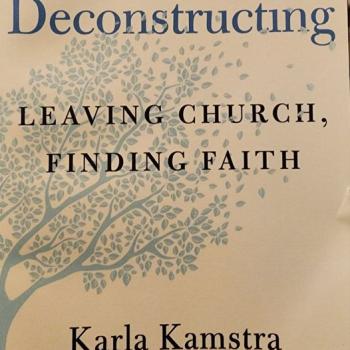
Book Review: Deconstructing, Leaving Church, Finding Faith

Consequences of Ideas: Philosophy and Deconversion
TRENDING AT PATHEOS General Christian

Seventy and Five Years Old: God Still Starts...
There is a small detail tucked into Genesis 12 that I skipped...

A Biblical Vision of Success in Christian Life...
The Concern and Quest Recent trends and tendencies I note around me...

Indigenous Peoples’ Day and the Church
Indigenous' Peoples Day or Columbus Day? Depending on where you live...

When Spiritual Growth Looks Like Losing Ground
Four Passive Spiritual Disciplines: An Introduction When I was a college freshman,...

Faith and Finding Your Current Season
“To everything there is a season,” Ecclesiastes tells us, “and a time...

Did Jesus Fear God's Wrath in Gethsemane?
That Time Jesus Was Terrified Before we begin, let me say at...
view all General Christian blogs
What Are Your Thoughts?leave a comment
Ad-Free & Subscriber Log-In Subscription Support
- About Us
- 2026 Calendar
- Videos
- Podcasts
- Library of World Religions
- Faith In Media Tracker
- Advertise With Us
- Write for Us
- Privacy Policy
- Terms of Service
- Do Not Sell My Data
- Contact Us
- Radiant Digital
- Manage Newsletter Subscriptions
- Unsubscribe From Notifications
- Sitemap
Copyright 2008-2026, Patheos. All rights reserved.
Subscription Support Ad-Free & Subscriber Log-In
Follow Patheos