
BuddhistCatholicContemplativeEvangelicalGeneral ChristianHinduJewishLatter-day SaintMuslimNew VisionsProgressive Christian
Beliefs
- Buddhist
- Catholic
- Contemplative
- Evangelical
- General Christian
- Hindu
- Jewish
- Latter-day Saint
- More Voices
- Muslim
- New Visions
- Pagan
- Progressive Christian
Topics
- Religion News
- Food and Religion
- Sports and Religion
- Religious Art
- Religious Music and Entertainment
- Religious Events
- History and Religion
- Style and Religion
- Politics and Religion
- Women in Religion
- Recreation Outdoors and Religion
- Business Finance and Religion
- Careers Workplace and Religion
- Education and Religion
- Family Parenting and Religion
- Health Fitness and Religion
- Home and Religion
- Relationships and Religion
- Technology and Religion
- Travel and Religion
Columnists
- Buddhist Columnists
- Business Finance and Religion Columnists
- Careers Workplace and Religion Columnists
- Catholic Columnists
- Contemplative Columnists
- Education and Religion Columnists
- Evangelists Columnists
- Family Parenting and Religion Columnists
- General Christian Columnists
- Health Fitness and Religion Columnists
- Hindu Columnists
- History and Religion Columnists
- Home and Religion Columnists
- Jewish Columnists
- More Voices Columnists
- Latter Day Columnists
- Muslim Columnists
- New Visions Columnists
- Nonreligious Columnists
- Pagan Columnists
- Politics and Religion Columnists
- Progressive Columnists
- Recreation Outdoors and Religion Columnists
- Relationships and Religion Columnists
- Religion News Columnists
- Religious Art Columnists
- Religious Events Columnists
- Religious Music and Entertainment Columnists
- Sports and Religion Columnists
- Style and Religion Columnists
- Technology and Religion Columnists
- Travel and Religion Columnists
- Women in Religion Columnists
Resource Library
- 2026 Calendar
- Library of World Religions
- The 100 Most Holy Places on Earth
- Patheos Answers
- Podcasts
- Videos
- Faith Leaders Database
- Anglican Episcopalian
- Bahai
- Baptist
- Buddhism
- Christianity
- Confucianism
- Eastern Orthodoxy
- Hinduism
- Holiness and Pentecostal
- ISKCON
- Islam
- Judaism
- Lutheran
- Methodist
- The Church of Jesus Christ of Latter-day Saints
- New Age
- Paganism
- Presbytarian and Reformed
- Protestantism
- Religion Behind the Scenes
- Roman Catholic
- Scientology
- Shia Islam
- Sikhism
- Sufism
- Sunni Islam
- Taoism
- Zen
- See all religions
Research Tools
 Ad-Free & Subscriber Log-In Subscription Support
Ad-Free & Subscriber Log-In Subscription Support
Follow Patheos 

- Trending:
- Forgiveness
- |
- Marriage
- |
- Consciousness
- |
- Death Penalty
- |
- Election
- |
- Halloween

- Home
- General Christian
- Religion News
- Going off to College and Losing Faith
Going off to College and Losing Faith
Last updated on: January 3, 2023 at 12:01 pm by Joel Furches
Going off to College and Losing Faith 2023-01-03T12:01:37-05:00 Joel Furches
Patheos Explore the world's faith through different perspectives on religion and spirituality! Patheos has the views of the prevalent religions and spiritualities of the world.

It has almost become a trope among Christians that sending your kids off to college will cause them to abandon the faith. And this isn’t entirely untrue. Research done in 2020 by the researchers Łysiak, Zarzycka, Puchalska-Wasyl suggests that social ties have a lot to do with either religious fidelity or deconversion in youth. Meaning that youth who have strong ties to family and religious peers are far less likely to deconvert than those whose ties to family and church are weaker.
There is a risk/reward factor here that a youth has to weigh out:
If the youth chooses to challenge their childhood notions of religion, they risk, as the researchers put it, “Transcendental Emptiness,” meaning that the sense of purpose or value provided by religion is gone. However, if they challenge the establishment – in this case, religion – they are rewarded by peer support – meaning that teenagers and young adults, as a general rule, appreciate and support a peer who challenges authority.
When transitioning to college, a young person is usually moving away from family and religious friends, and gradually become part of peer groups who do not share the religious background or the values which helped to reenforce their beliefs and standards. Since the move to college usually happens while the person is still a teenager, they are still in the period of life where their identity tends to mirror their peer group.
However, this same effect may be seen in religious education.
Work done by J.M. Nagle (2017) notes that deconversion rates from religious colleges is still higher than people who never leave home and attend university. Even within a Bible College, Nagle notes, individuals are exposed to a variety of new ideas and theological perspectives. The wider the range of ideas a person entertains, the more problematic the idea of “exclusivism” becomes. Meaning that this idea that only those people who hold to a strict set of beliefs will be let into heaven begins to seem offensive.
Another interesting effect of religious education is that it makes the student begin to value truth-seeking over mere loyalty. Religious individuals tend to remain within their religious system and trust the word of their religious leaders because they value loyalty. But when the importance of truth-seeking is placed higher than loyalty, students will become more comfortable challenging ideas and authorities who are not making sense of new ideas. They become more comfortable with discarding old ideas for new ones, so long as the new ones do a better job of making sense of the world.
Stages of Morality
Lawrence Kohlberg was a psychologist in the mid-20th century who will forever go down for his revolutionary creation of a model for how people gradually develop and mature in understanding morality.
He suggested 6 stages of moral development which run roughly like this:
- Obedience and punishment: “Whatever they tell me to do is good, whatever gets me punished is bad.”
- Self Interest – “Good is whatever gets me what I want, bad is whatever gets a bad consequence”
- Relationships and Conformity – “You should do what is expected of you as a son/daughter, student, friend, employee, etc.”
- Social Order – “Obey the law in order to keep society stable”
- Social Contract – “Right and wrong are those things people and organizations agree upon”
- Universal Principles – “There are fundamental ethics which exist beyond individuals or institutions.”
As one would expect, a person’s location along these stages generally depends upon that person’s age and level of maturity – with most individuals having reached stage 5 by the end of High School (at least, in the 1950s when Kohlberg did his research).
Why are we talking about Kohlberg’s model in relationship to deconversion? Because in the early 1970s, Kohlberg encountered an unexpected and intriguing phenomenon: when a teenager left home for college, he or she often “regressed” from stage 5 reasoning to a sort of moral relativism – similar to stage 2. Keeping in mind that the transition to college frequently means exiting the home, cutting ties with childhood or high school friends, breaking off relations with current girl or boyfriends, and removing oneself from one’s local faith community, this idea of “right and wrong are what everyone agrees upon” is challenged by the fact that one enters a situation in which there is more disagreement than agreement. Bombarded with novel ideas and perspectives, the person has to revert to a much more primitive way of reasoning: that “Right” is whatever gets everyone what they want.
Similar to the work of Nagle, above, it no longer seems correct that there can be only one “Right” when everyone around has such dissimilar desires, needs, and values. When one’s religion is essentially the Social Contract which grounded values, an encounter with society outside of that contract makes the contract itself obsolete.
Conclusion
There are a number of reasons why the transition to college has a weakening effect on one’s religious loyalty. One of these reasons was mentioned in a previous article: that distance from one’s faith community combined with adoption into communities which are not faith-based removes some of the pressures a person feels not to question his or her beliefs. No longer does the sense of loyalty keep a person from asking those questions, and no longer is there a community to reinforce those values over objections.
But as we have demonstrated in this article, adolescent and young adult peers tend to applaud anyone who challenges establishments or authority structures, making this a tempting behavior. Education, including religious education, values truth-seeking over authority. Exposure to new ideas makes exclusivism unattractive. And when one is outside that the community upon which one’s moral values are grounded, relativity seems like a much more practical grounding for values.
Previous Post

October 24, 2022
Testify! The Religious Testimony Versus the Deconversion Story
Next Post

November 7, 2022 Applying Behavior Analysis to Deconversion
Browse Our Archives
Select a Category biography Conversion Stories Deconversion Stories Historical Religious Figures Psychology Uncategorized
Select a Month December 2024 November 2024 September 2024 August 2024 July 2024 March 2024 January 2024 December 2023 November 2023 October 2023 September 2023 August 2023 July 2023 June 2023 May 2023 April 2023 March 2023 February 2023 January 2023 December 2022 November 2022 October 2022 September 2022
Follow Us!
TAKE THE
Religious Wisdom Quiz
I am an offering without defect, completely burned on the altar as a pleasing aroma to the Lord. What am I?
Select your answer to see how you score.
A grain offering A sin offering A peace offering A burnt offering
Related posts from Switching Sides

Complex Simplicity - A Book Review

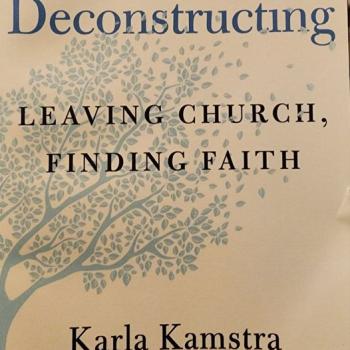
Book Review: Deconstructing, Leaving Church, Finding Faith

Consequences of Ideas: Philosophy and Deconversion
TRENDING AT PATHEOS General Christian

Seventy and Five Years Old: God Still Starts...
There is a small detail tucked into Genesis 12 that I skipped...

A Biblical Vision of Success in Christian Life...
The Concern and Quest Recent trends and tendencies I note around me...

Indigenous Peoples’ Day and the Church
Indigenous' Peoples Day or Columbus Day? Depending on where you live...

When Spiritual Growth Looks Like Losing Ground
Four Passive Spiritual Disciplines: An Introduction When I was a college freshman,...

Faith and Finding Your Current Season
“To everything there is a season,” Ecclesiastes tells us, “and a time...

Did Jesus Fear God's Wrath in Gethsemane?
That Time Jesus Was Terrified Before we begin, let me say at...
view all General Christian blogs
Ad-Free & Subscriber Log-In Subscription Support
- About Us
- 2026 Calendar
- Videos
- Podcasts
- Library of World Religions
- Faith In Media Tracker
- Advertise With Us
- Write for Us
- Privacy Policy
- Terms of Service
- Do Not Sell My Data
- Contact Us
- Radiant Digital
- Manage Newsletter Subscriptions
- Unsubscribe From Notifications
- Sitemap
Copyright 2008-2026, Patheos. All rights reserved.
Subscription Support Ad-Free & Subscriber Log-In
Follow Patheos